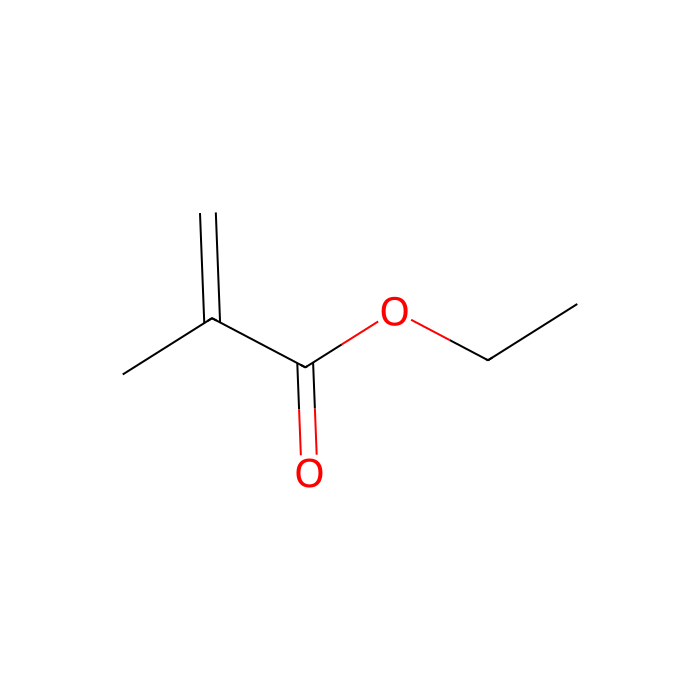
Ethyl methacrylate(EMA) - ≥99%, contains 10-20 ppm MEHQ as stabilizerr , CAS No.97-63-2

CAS: 97-63-2 Cat. No.: E103001 Molecular Weight: 114.14 EC Number: 202-597-5
AVAILABLE TO ORDER
GRADE & PURITY ≥99% contains 10-20 ppm MEHQ as stabilizerr
Synonyms
Rhoplex AC-33 | Tox21_200810 | 4-02-00-01523 (Beilstein Handbook Reference) | Methacrylic Acid Ethyl Ester | Methacrylic acid-ethyl ester | ETHYL .ALPHA.-METHYLACRYLATE | Ethyl methacrylate resin, MW. 250.000 | DTXSID1025308 | Ethyl Methacrylate (stabili
Storage
Store at 2-8°C,Protected from light
Shipped In
Wet ice,FedEx DG Service
 ·  off list, applied to all prices below.
Size
Status
Price
Qty
25ml
E103001-25ml
2
$9.90
100ml
E103001-100ml
2
$19.90
500ml
E103001-500ml
2
$41.90
Enter a quantity for the sizes you want to add.
🧪

Why this grade

≥99%, contains 10-20 ppm MEHQ as stabilizerr for sensitive chromatographic and analytical workflows requiring minimal baseline interference.

🌡

Storage & shipping

Store at 2-8°C,Protected from light Ships Wet ice,FedEx DG Service Check lot-specific COA for exact specifications.

📋

Quality documents

SDS, COA, datasheet, and spec sheet available for download. Lot-specific COA accessible via lot number lookup.

📚

Literature proof

Cited in 20 peer-reviewed publications across chromatography, organic synthesis, and cross-coupling reactions.

Overview

Ethyl methacrylate (EMA) is a monomer commonly used in the field of polymer industries. It is an ester of methacrylic acid and ethanol and is a colorless liquid with a characteristic odor. EMA is widely used in the production of various polymers such as poly(methyl methacrylate) (PMMA), poly(ethyl acrylate) (PEA), and ethylene-EMA (EE). These polymers find their application in various fields, including medical implant devices, packaging, paper coatings, textile coatings, emulsion polymers, and plastics.
Ethyl methacrylate is a readily polymerizable monomer used for certain types of acrylic resins. The monomethyl ether hydroxyl quinone present in it is an inhibitor that prevents polymerization.
Ethyl methacrylate (EMA) can be used as a monomer in the following applications:
To synthesize artificial nanosized latexes of poly(styrene-co-methyl methacrylate) or poly(styrene-co-ethyl methacrylate), which are in producing drug-releasing films.
In the production of additive-manufactured methacrylate-based resins used in dentistry.
In the synthesis of a star-shaped block copolymer electrolyte for all-solid-state lithium batteries.
In the synthesis of a copolymer used as a matrix for semiconductor nanoparticles, which is crucial for the formation of a stable matrix for the quantum dots-copolymer composite material used in optoelectronic applications.
It can also be used to prepare copolymers of EMA on waxy maize starch and hydroxypropyl starch, the potential application of these copolymers are as excipients for compressed non-disintegrating matrix tablets. It may be used to study reactions of n-butyl acrylate and EMA with ozone in the gas phase.

Specifications

Synonyms
Rhoplex AC-33 | Tox21_200810 | 4-02-00-01523 (Beilstein Handbook Reference) | Methacrylic Acid Ethyl Ester | Methacrylic acid-ethyl ester | ETHYL .ALPHA.-METHYLACRYLATE | Ethyl methacrylate resin, MW. 250.000 | DTXSID1025308 | Ethyl Methacrylate (stabili
Specifications & Purity
≥99%, contains 10-20 ppm MEHQ as stabilizerr
Storage
Store at 2-8°C, Protected from light
Shipped In
Wet ice, FedEx DG Service
This product requires cold chain shipping. Ground and other economy services are not available.
Purity
≥99%
Names and Identifiers
Canonical SmilesCCOC(=O)C(=C)C
IUPAC Nameethyl 2-methylprop-2-enoate
InChIKeySUPCQIBBMFXVTL-UHFFFAOYSA-N
INCHI1S/C6H10O2/c1-4-8-6(7)5(2)3/h2,4H2,1,3H3
Isomeric SMILES CCOC(=O)C(=C)C
UN Number 2277
Packing Group II
Molecular Weight 114.14
Reaxy-Rn 471201
Reaxys-RN_link_address https://www.reaxys.com/reaxys/secured/hopinto.do?context=S&query=IDE.XRN=471201&ln=

Documentation

📋 Safety Data Sheet (SDS)

Comprehensive hazard, handling, storage, and regulatory compliance document.

Download SDS →

✅ Certificate of Analysis (COA)

Lot-specific quality data. Enter your lot number to retrieve the exact COA.

Look up COA →

📊 Datasheet

Quick-reference summary of product specifications and applications.

View datasheet →

🔬 Specification Sheet

Full quality attributes and acceptance criteria for this grade.

View spec sheet →

Advanced Data

Taxonomic Classification

Taxonomy Tree

KingdomOrganic compounds
SuperclassOrganic acids and derivatives
ClassCarboxylic acids and derivatives
SubclassCarboxylic acid derivatives
Intermediate Tree Nodes Carboxylic acid esters - Alpha,beta-unsaturated carboxylic esters
Direct ParentEnoate esters
Alternative Parents Monocarboxylic acids and derivatives  Organic oxides  Hydrocarbon derivatives  Carbonyl compounds  
Molecular FrameworkAliphatic acyclic compounds
Substituents Enoate ester - Monocarboxylic acid or derivatives - Organic oxygen compound - Organic oxide - Hydrocarbon derivative - Organooxygen compound - Carbonyl group - Aliphatic acyclic compound
DescriptionThis compound belongs to the class of organic compounds known as enoate esters. These are an alpha,beta-unsaturated carboxylic ester of general formula R1C(R2)=C(R3)C(=O)OR4 (R4= organyl compound) in which the ester C=O function is conjugated to a C=C double bond at the alpha,beta position.
External Descriptors Not available
3D Structure
Interactive Chemical Structure Model


Certificates(CoA,COO,BSE/TSE and Analysis Chart)
C of A & Other Certificates(BSE/TSE, COO):
Analytical Chart:

Find and download the COA for your product by matching the lot number on the packaging.

28 results found

Lot NumberCertificate TypeDateItem
J2210441Certificate of AnalysisApr 07, 2026 E103001
D2412076Certificate of AnalysisJan 21, 2026 E103001
D2412075Certificate of AnalysisJan 21, 2026 E103001
G2531121Certificate of AnalysisJul 12, 2025 E103001
G2531120Certificate of AnalysisJul 12, 2025 E103001
G2531115Certificate of AnalysisJul 12, 2025 E103001
G2531116Certificate of AnalysisJul 12, 2025 E103001
G2531118Certificate of AnalysisJul 12, 2025 E103001
G2531119Certificate of AnalysisJul 12, 2025 E103001
J2210438Certificate of AnalysisMar 10, 2025 E103001
L2420524Certificate of AnalysisNov 28, 2024 E103001
K2425052Certificate of AnalysisNov 28, 2024 E103001
K2425016Certificate of AnalysisNov 28, 2024 E103001
G2430144Certificate of AnalysisAug 05, 2024 E103001
J2210442Certificate of AnalysisJul 09, 2024 E103001
G1731043Certificate of AnalysisFeb 06, 2023 E103001
A2111327Certificate of AnalysisOct 20, 2022 E103001
A2111326Certificate of AnalysisOct 20, 2022 E103001
H2315298Certificate of AnalysisSep 09, 2022 E103001
J2210439Certificate of AnalysisSep 09, 2022 E103001
J2210440Certificate of AnalysisSep 09, 2022 E103001
E2423062Certificate of AnalysisSep 09, 2022 E103001
H2219175Certificate of AnalysisAug 23, 2022 E103001
H2202295Certificate of AnalysisAug 09, 2022 E103001
H2202296Certificate of AnalysisAug 09, 2022 E103001
K1820090Certificate of AnalysisAug 08, 2022 E103001
F2008096Certificate of AnalysisApr 26, 2022 E103001
B2209157Certificate of AnalysisFeb 12, 2022 E103001

Show more ⌵

Chemical and Physical Properties
SolubilityInsoluble in water; Soluble in Ether,Alcohol
SensitivityLight sensitive;Heat sensitive
Refractive Index1.41
Flash Point(°F)66.2 °F - closed cup
Flash Point(°C)19 °C - closed cup
Boil Point(°C)119°C
Melt Point(°C)-75°C
Molecular Weight114.140 g/mol
XLogP31.900
Hydrogen Bond Donor Count0
Hydrogen Bond Acceptor Count2
Rotatable Bond Count3
Exact Mass114.068 Da
Monoisotopic Mass114.068 Da
Topological Polar Surface Area26.300 Ų
Heavy Atom Count8
Formal Charge0
Complexity105.000
Isotope Atom Count0
Defined Atom Stereocenter Count0
Undefined Atom Stereocenter Count0
Defined Bond Stereocenter Count0
Undefined Bond Stereocenter Count0
The total count of all stereochemical bonds0
Covalently-Bonded Unit Count1
Documents & Articles
Citations of This Product
References
1. Run Zheng, Baolong Wang, Kai Shi, Yanxiong Pan, Xiangling Ji.  (2023)  Preparation of Hydrophobic Functionalized Poly(vinyl alcohol) Formaldehyde-Based Composite Sponges for Highly Effective Water-in-Oil Emulsion Separation.  ACS Applied Polymer Materials,      [PMID:] [10.1021/acsapm.3c02395]
2. Jiao He, Lin Yun, Xinjian Cheng.  (2023)  Organic-soluble chitosan-g-PHMA (PEMA/PBMA)-bodipy fluorescent probes and film by RAFT method for selective detection of Hg2+/Hg+ ions.  INTERNATIONAL JOURNAL OF BIOLOGICAL MACROMOLECULES,      [PMID:36996960] [10.1016/j.ijbiomac.2023.124255]
3. Sisi Yuan, Yongjun Wang, Xiujun Wang, Donghua Liao, Ming Duan, Shenwen Fang.  (2023)  Preparation of cationic polyacrylate W/O crude oil emulsion demulsifier by free-radical solution polymerization.  JOURNAL OF APPLIED POLYMER SCIENCE,  140  (10): (e53590).  [PMID:] [10.1002/app.53590]
4. Gaopeng Shi, Xiaoning Geng, Yuanbiao Liu, Guozhang Wu.  (2022)  Nanophase Separation-Induced Anomalous Enthalpy Hysteresis in Poly(n-alkyl methacrylate)s.  MACROMOLECULES,      [PMID:] [10.1021/acs.macromol.2c00983]
5. Liu Yuncong, Chen Tao, Jin Zhekai, Li Mengxue, Zhang Dongdong, Duan Lian, Zhao Zhiguo, Wang Chao.  (2022)  Tough, stable and self-healing luminescent perovskite-polymer matrix applicable to all harsh aquatic environments.  Nature Communications,  13  (1): (1-11).  [PMID:35288556] [10.1038/s41467-022-29084-z]
6. Sisi Yuan, Yifan Wang, Xiujun Wang, Yongjun Wang, Shuai Liu, Ming Duan, Shenwen Fang.  (2022)  Efficient demulsification of cationic polyacrylate for oil-in-water emulsion: Synergistic effect of adsorption bridging and interfacial film breaking.  COLLOIDS AND SURFACES A-PHYSICOCHEMICAL AND ENGINEERING ASPECTS,      [PMID:] [10.1016/j.colsurfa.2022.128393]
7. Guiqiang Fei, Huanqiong Geng, Haihua Wang, Xuan Liu, Yong Liao, Yanming Shao, Mengxi Wang.  (2019)  Optimization of Waterborne Poly(Urethane-Acrylate) Nanoemulsions Based on Cationic Polymerizable Macrosurfactants with Different Hydrophobic Side Chain Length.  Polymers,  11  (12): (1922).  [PMID:31766546] [10.3390/polym11121922]
8. Wenzhao Jiang, Jianwei Guo, Weiqiu Wen, Yong-Guang Jia, Sa Liu.  (2019)  Nano-Carriers Based on pH-Sensitive Star-Shaped Copolymers for Drug-Controlled Release.  Materials,  12  (10): (1610).  [PMID:31100826] [10.3390/ma12101610]
9. Ding Zhang, Ping Xing, Renming Pan, Xiangyang Lin, Min Sha, Biao Jiang.  (2018)  Preparation and Surface Properties Study of Novel Fluorine-Containing Methacrylate Polymers for Coating.  Materials,  11  (11): (2258).  [PMID:30428523] [10.3390/ma11112258]
10. Enmin Zong, Xiaohuan Liu, Lina Liu, Jifu Wang, Pingan Song, Zhongqing Ma, Jie Ding, Shenyuan Fu.  (2017)  Graft Polymerization of Acrylic Monomers onto Lignin with CaCl2–H2O2 as Initiator: Preparation, Mechanism, Characterization, and Application in Poly(lactic acid).  ACS Sustainable Chemistry & Engineering,      [PMID:] [10.1021/acssuschemeng.7b02599]
11. Bo Wu, Xiaowen Wang, Jun Yang, Zan Hua, Kangzhen Tian, Ran Kou, Jian Zhang, Shuji Ye, Yi Luo, Vincent S. J. Craig, Guangzhao Zhang, Guangming Liu.  (2016)  Reorganization of hydrogen bond network makes strong polyelectrolyte brushes pH-responsive.  Science Advances,  (8):   [PMID:27532049] [10.1126/sciadv.1600579]
12. Chengling Yang, Hua Guo, Zhenpeng Hu, Zhiqing Tian, Yukun Wu, Wei Wang, Zhi Yuan.  (2015)  Controllable targeted system based on pH-dependent thermo-responsive nanoparticles.  COLLOIDS AND SURFACES B-BIOINTERFACES,      [PMID:26708979] [10.1016/j.colsurfb.2015.08.031]
13. Xiang Shen, Bing Yan.  (2014)  Polymer hybrid thin films based on rare earth ion-functionalized MOF: photoluminescence tuning and sensing as a thermometer.  DALTON TRANSACTIONS,  44  (4): (1875-1881).  [PMID:25485621] [10.1039/C4DT03213F]
14. Ji-Na Hao, Bing Yan.  (2014)  Hybrid polymer thin films with a lanthanide–zeolite A host–guest system: coordination bonding assembly and photo-integration.  NEW JOURNAL OF CHEMISTRY,  38  (8): (3540-3547).  [PMID:] [10.1039/C4NJ00466C]
15. Zheng Jinyun, Li Xiao, Yu Yujian, Zhen Xiaomin, Song Yanyao, Feng Xiangming, Zhao Yufen.  (2014)  Cross-linking copolymers of acrylates’ gel electrolytes with high conductivity for lithium-ion batteries.  JOURNAL OF SOLID STATE ELECTROCHEMISTRY,  18  (7): (2013-2018).  [PMID:] [10.1007/s10008-014-2438-7]
16. Shengyang Pan, Min Chen, Limin Wu.  (2018)  Synthesis of raspberry-like polymer/SiO2 hybrid colloidal spheres grafted by block-copolymer poly(MPC-b-MPS) for underwater superoleophobic anti-biofouling coatings.  JOURNAL OF COLLOID AND INTERFACE SCIENCE,      [PMID:29574265] [10.1016/j.jcis.2018.03.054]
17. Xinyu Wang, Rui Yang, Peng Lu, Jiabao Wang, Chunhua Lu, Kai Guo, Ning Zhu, Xin Hu.  (2025)  Improving dielectric properties and capacitive performance of P(VDF-HFP)-based dielectrics by incorporation of core-shell structured BaTiO3@polymethacrylates.  CERAMICS INTERNATIONAL,      [PMID:] [10.1016/j.ceramint.2025.06.109]
18. Huizhu Li, Chengyang Liu, Li Zhang, Jianbo Tan.  (2025)  High-Temperature Photoinitiated RAFT Dispersion Polymerization: A Light-Mediated Approach for Controlled Synthesis of Well-Defined Polymeric Microspheres.  ACS Applied Polymer Materials,      [PMID:] [10.1021/acsapm.5c03661]
19. Pan Du, Yan Wang, Xianru He.  (2026)  In Situ Formation of Breathable Elastic Nanophase Enabling Wet Adhesion Strength over Triple of Dry Adhesion.  LANGMUIR,      [PMID:41503637] [10.1021/acs.langmuir.5c05858]
20. Hao Ye, Yuan Liu, Chunpeng Zhang, Ming Duan, Shenwen Fang.  (2026)  Nanoparticle to Surfactant Transition Behavior and EOR Performance of an Alkali/Styrene-Acrylate Copolymer Emulsion Binary Flooding System.  ENERGY & FUELS,      [PMID:] [10.1021/acs.energyfuels.5c06024]
Solution Calculators
Reviews

Customer Reviews

Shall we send you a message when we have discounts available?

Remind me later

Thank you! Please check your email inbox to confirm.

Oops! Notifications are disabled.