
Common Reagents for Reducing Protein Disulfide Bonds
Common Reagents for Reducing Protein Disulfide Bonds
Precise reduction of disulfide bonds is a key pretreatment step for higher-order structure analysis, peptide mapping, and sequencing; success hinges on the choice and control of the reducing system. Common reagents include the thiols DTT and β-mercaptoethanol, which have moderate reducing power and broad applicability; for more demanding scenarios, the phosphine TCEP offers stronger reducing capacity, insensitivity to oxidation, and stability over a wide pH range. It is odorless and compatible with alkylation, making it a preferred option for advanced applications.
I. Thiol-based reducing agents
These are the most classic and widely used reducers. Their thiol group (–SH) undergoes thiol–disulfide exchange with disulfide bonds, thereby opening them.
- β-mercaptoethanol (β-ME)
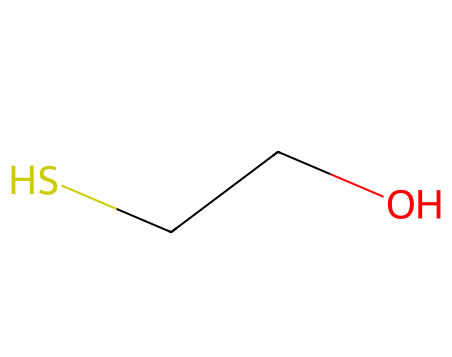
Figure 1. Chemical structure of β-ME
Features: Highly volatile with a strong, pungent odor.
Mechanism: One molecule reduces one disulfide by forming a mixed disulfide and a free thiol; typically requires excess (≈10–50 mM) to drive the equilibrium toward reduction.
Advantages: Low cost, readily available, widely used.
Limitations: Strong odor and volatility cause effective concentration drift; weaker than DTT/TCEP; stability more sensitive to pH and oxidation.
- Dithiothreitol (DTT)
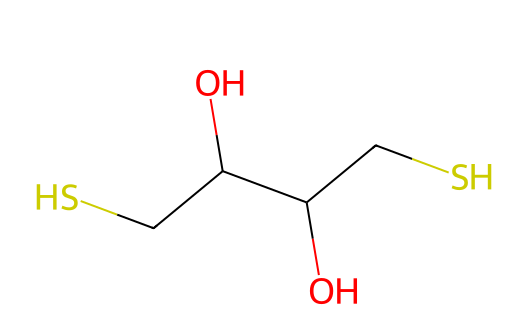
Figure 2. Chemical structure of DTT
Features: One of the most widely used and potent disulfide reducers.
Mechanism: Contains two thiols; engages in thiol exchange with the target disulfide and forms a stable intramolecular disulfide ring itself, rendering the reaction quasi-irreversible and thus more efficient than β-ME.
Advantages: Strong reducing power and rapid reaction; complete reduction at low dose (commonly 1–10 mM).
Limitations: Slowly oxidizes and loses activity under basic pH; unpleasant odor; prolonged or high-concentration exposure can irritate mucosa—operate with ventilation and personal protection.
- Tris(2-carboxyethyl)phosphine (TCEP) hydrochloride
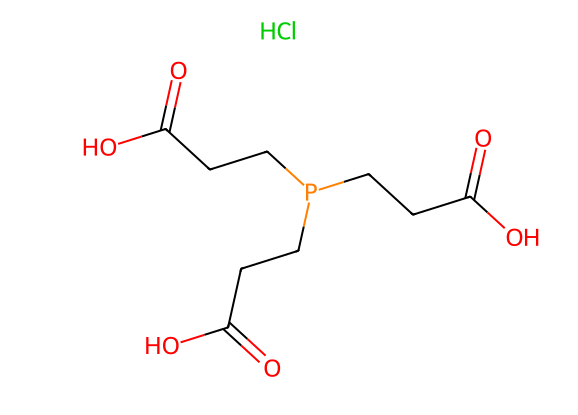
Figure 3. Chemical structure of TCEP
Features: A highly efficient and stable disulfide reducer, widely used in proteomics and other high-demand applications.
Mechanism: As a phosphine, it directly cleaves disulfides via nucleophilic attack, generating two thiols while being oxidized itself; does not rely on thiol–disulfide exchange, thus faster and more complete.
Advantages: Very strong reducing power; broad working pH range and remains effective even at pH 1–2; aqueous solutions are stable and air-resistant, often not requiring fresh preparation; odorless and operator-friendly; highly compatible with downstream alkylation and MS (thiol-free, does not interfere with iodoacetamide/iodoacetic acid blocking).
Limitations: Higher cost than DTT.
Usage note: Avoid prolonged use in PBS under neutral/alkaline conditions; if PBS is required, prepare fresh for immediate use.
II. Other reducing agents
Used in specific circumstances.
- Glutathione (GSH)
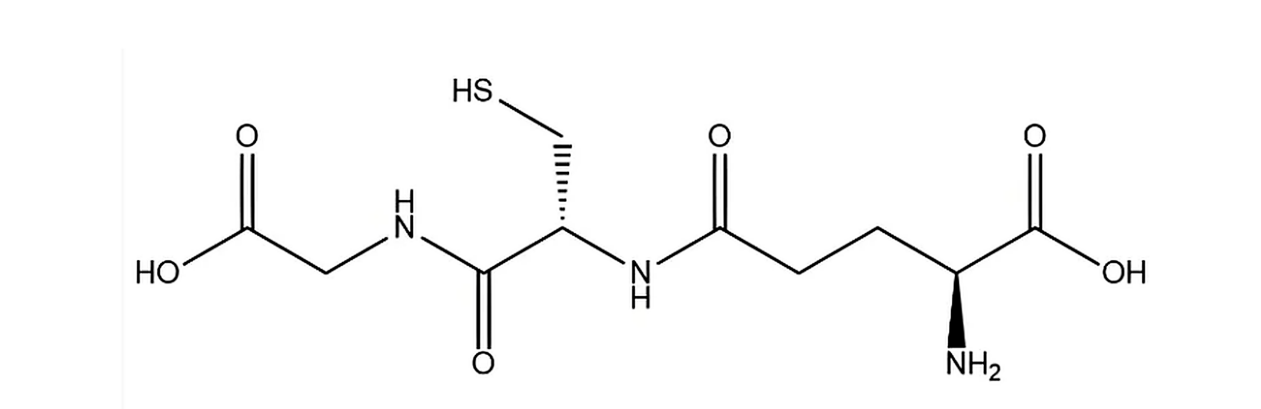
Figure 4. Chemical structure of GSH
Features: An endogenous tripeptide (γ-Glu–Cys–Gly) containing a thiol, the major cellular redox buffer.
Mechanism: The GSH/GSSG couple maintains a reducing environment; can reduce disulfides but is less nucleophilic and slower than DTT/TCEP, often requiring higher concentrations or catalytic systems.
Advantages: Physiologically compatible, odorless; suitable for folding/enzymatic systems (e.g., PDI-assisted refolding).
Limitations: Weaker reducing power and slower rate; may introduce background; not ideal as a routine in-vitro reducer (e.g., prior to SDS-PAGE).
Typical uses: Cellular/tissue redox studies; GSH/GSSG refolding buffers; control of conditions for specific enzymatic reactions.
- Sodium borohydride / sodium cyanoborohydride (NaBH₄ / NaBH₃CN)
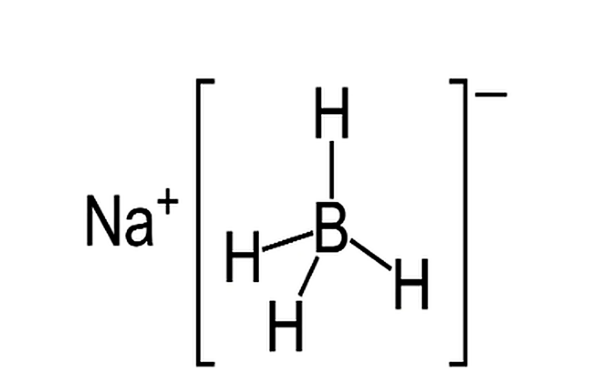
Figure 5. Chemical structure of NaBH₄
Mechanism: Hydride transfer (H⁻) directly reduces disulfides (–S–S–) to two thiols (–SH), independent of thiol exchange; also reduces carbonyls, etc.
Features: Highly reactive and relatively “harsh,” potentially reducing other sensitive groups in proteins. NaBH₃CN is milder and more selective, often used under gentle conditions.
Applications: Isotope labeling—introducing ²H/³H (deuteration/tritiation) for kinetics and structural studies. Crosslink stabilization—reducing Schiff bases (C=N) to stable secondary amines in reductive amination, used to stabilize aldehyde-based crosslinks (e.g., glutaraldehyde) or aldehyde-derivatized sites.
Usage notes: NaBH₄—commonly used in basic or buffer/alcohol systems; reacts with water/acid to release H₂; typical screening 1–10 mM; add in portions at low temperature to control rate. NaBH₃CN—effective from mildly acidic to neutral; commonly 5–50 mM; beware potential HCN release under strong acid. Evaluate specificity and side reactions (e.g., carbonyl reduction beyond disulfides); prefer DTT/TCEP when tighter control is needed.
Safety & compatibility: Ensure good ventilation; add in portions; avoid strong acids; verify compatibility with downstream alkylation/MS empirically.
III. Reductant selection and workflow
Reagent | Type | Reducing Strength | Stability / Odor | Typical Concentration | Primary Application Scenarios |
Thiol | Moderate | Average stability; strong, pungent odor; volatile | 10–50 mM | Routine biochemical experiments; cost-sensitive scenarios | |
Thiol | Strong | Good stability; no obvious odor | 1–10 mM | Routine SDS-PAGE denaturation; protein purification; enzymology (general first choice) | |
TCEP·HCl | Phosphine | Very strong | Excellent stability; odorless | 2–10 mM | Proteomics; mass-spectrometry sample prep; reductions under acidic conditions; maintaining a reduced state over time |
Recommended workflow:
1.Reduction
(1) Buffer: 6–8 M urea or 4–5 M guanidine HCl, pH 8.0.
(2) Reductant: DTT 5–10 mM or TCEP 2–5 mM.
(3) Conditions: 37 °C for 10–60 min (for rapid/complete denaturation up to 95 °C if protein tolerates heat).
2.Alkylation
(1) Purpose: Cap –SH to prevent disulfide re-formation.
(2) Reagent: Iodoacetamide (IAA) 20–50 mM, protected from light.
(3) Conditions: Room temperature 15–30 min, pH 8.0–8.5.
(4) Quench: Small amount of DTT (~5 mM) or amines to quench excess IAA.
Selection tips:
(1)Routine denaturation (e.g., SDS-PAGE): prefer DTT—economical and efficient.
(2)High-demand / need to maintain reduction long-term or for MS: prefer TCEP (more stable, low odor, highly compatible).
Aladdin: https://www.aladdinsci.com/