
16 Frequently Asked Questions About Nourseothricin
16 Frequently Asked Questions About Nourseothricin
I. What is the mechanism of action of nourseothricin?
Answer: Nourseothricin exerts antimicrobial activity primarily by inhibiting protein synthesis, with the key action occurring during the translation elongation stage.
① It interferes with the mRNA translocation step, reducing polypeptide chain elongation efficiency. At the phenotypic level, this can resemble the effects of classic protein synthesis inhibitors such as chloramphenicol and tetracycline and is therefore often used as a mechanistic comparator.
② It binds to bacterial ribosomal subunits, leading to deviations in mRNA–tRNA pairing and reading-frame positioning, thereby inducing miscoding. In parallel design with ribosome-targeting drugs such as gentamicin, it can help differentiate distinct ribosomal intervention modes.
③ Misincorporation of incorrect amino acids produces nonfunctional proteins that accumulate intracellularly, resulting in growth inhibition and potentially progressing to cell death.
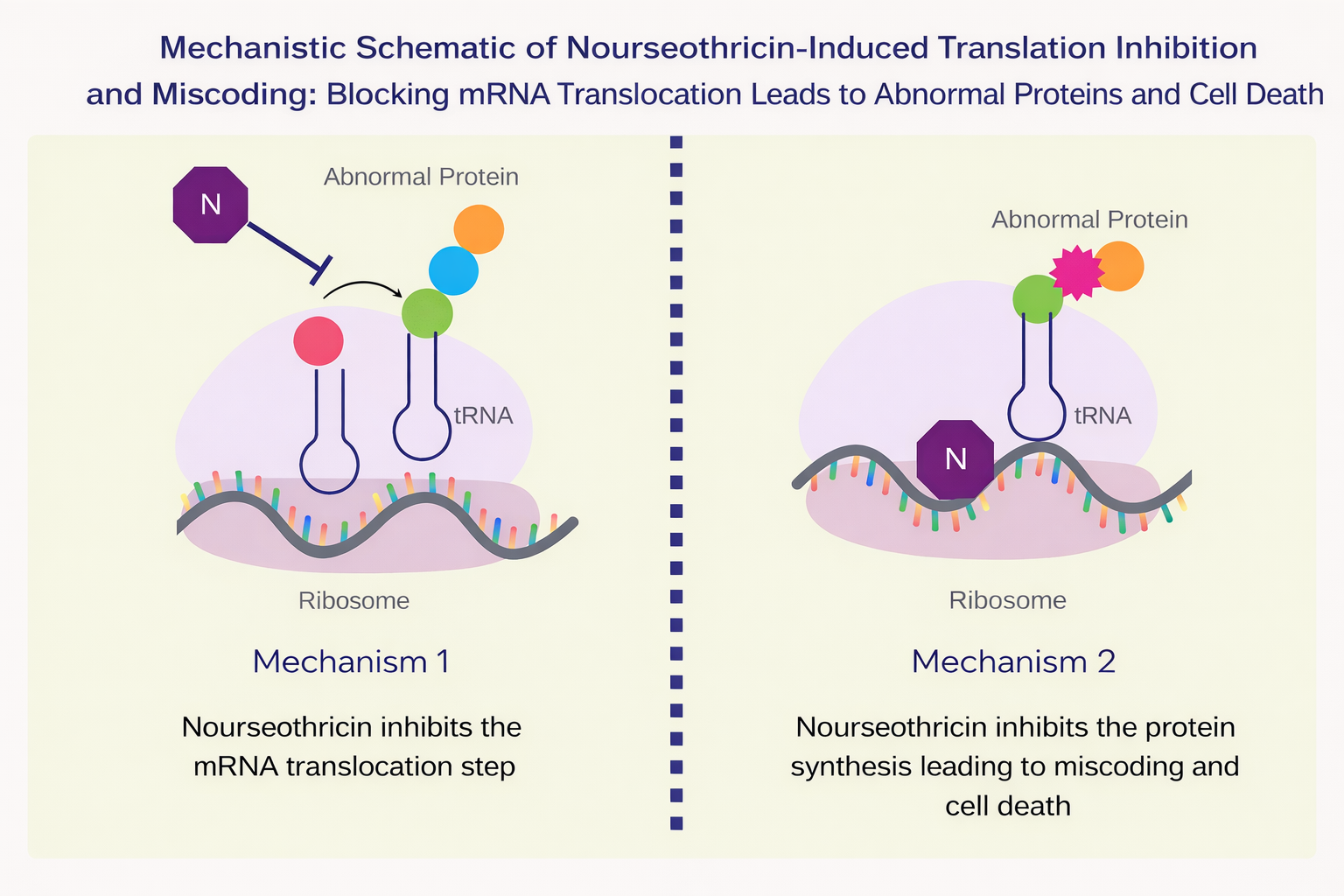
Figure 1. Schematic of nourseothricin-mediated inhibition of ribosomal translation and induction of miscoding.
II. Are clonNAT and nourseothricin the same substance?
Answer: In research contexts, clonNAT is commonly used as a conventional name or trade name for nourseothricin, and the two generally refer to the same class of antibiotic preparations used for genetic selection. Preparations from different sources may differ in salt form, purity, and formulation; however, they are typically functionally equivalent when used as “nourseothricin selection.” If plasmid backbone maintenance is also required, ampicillin or kanamycin is often applied in parallel to establish layered selection pressure for simultaneous plasmid maintenance and construct selection.
III. How is nourseothricin inactivated?
Answer: Nourseothricin can be inactivated by an acetyl-CoA-dependent streptothricin acetyltransferase (commonly denoted ACSAT). Using acetyl-CoA as the acetyl donor, the enzyme catalyzes N-acetylation at key amino sites, reducing effective binding to the target and thereby decreasing or abolishing antimicrobial activity, which results in a resistance phenotype.
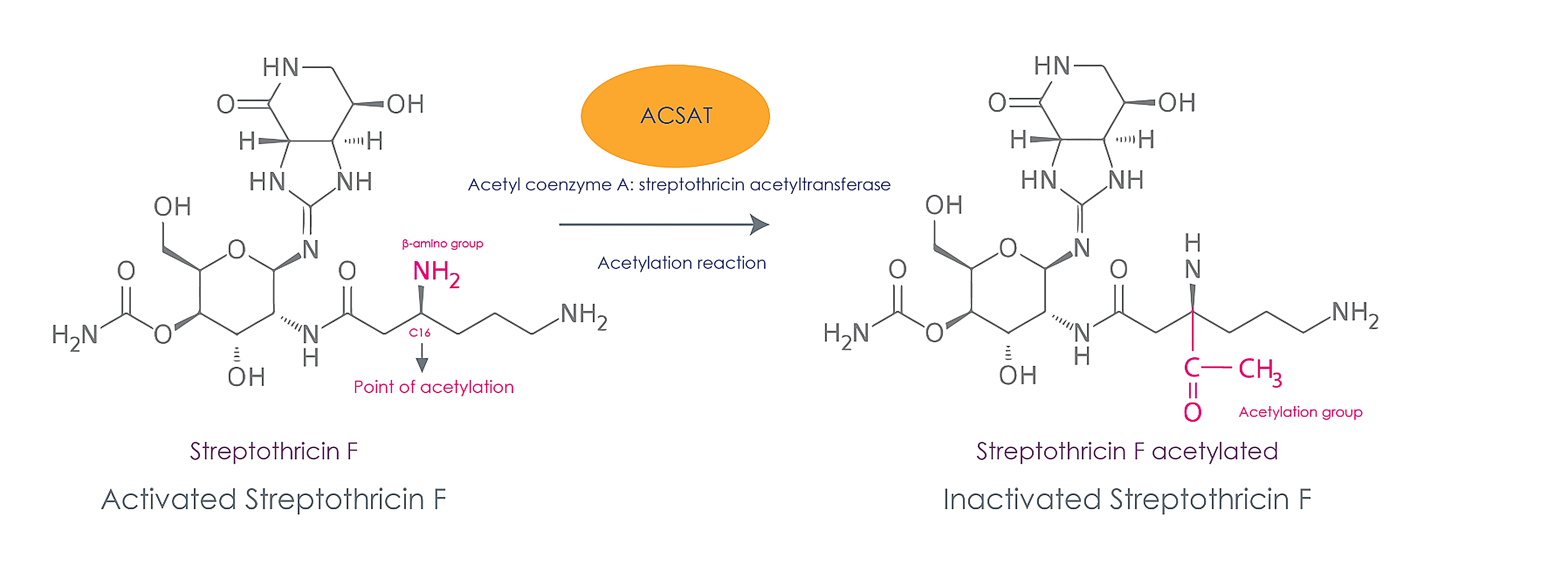
Figure 2. Schematic of ACSAT-mediated acetylation-based inactivation of streptothricin F.
IV. Is nourseothricin bacteriostatic or bactericidal?
Answer: Nourseothricin may exhibit bacteriostatic or bactericidal effects depending on species/strain, culture conditions, and drug concentration. A standardized assessment using MIC and MBC is recommended.
① MIC (minimum inhibitory concentration): the lowest concentration that inhibits visible growth within 24 h, typically determined in Mueller–Hinton broth (MH broth) or LB broth.
② MBC (minimum bactericidal concentration): the lowest concentration that produces a substantial reduction in viable bacterial counts within 24 h.
③ A commonly used criterion is MBC/MIC ≤ 4 suggesting bactericidal activity, whereas > 4 suggests bacteriostatic activity. If additional cellular-level validation is needed, membrane integrity dyes such as propidium iodide (PI) can be used to support viability interpretation.
V. What are common names or aliases for nourseothricin?
Answer: Common names include:
① Nourseothricin
② clonNAT
③ NTC
⑤ Streptothricin sulfate
VI. What are the structural features of nourseothricin?
Answer: Nourseothricin belongs to the streptothricin class of antibiotics. Its structure can be summarized as three major elements:
① An aminoglycoside-related core motif.
② A streptolidine lactam structural unit.
③ A β-lysine-related structural unit.
In analytical workflows for structural identification and stability evaluation, LC–MS-grade solvents and additives such as methanol, acetonitrile, and formic acid are commonly used for chromatographic–mass spectrometric analysis.
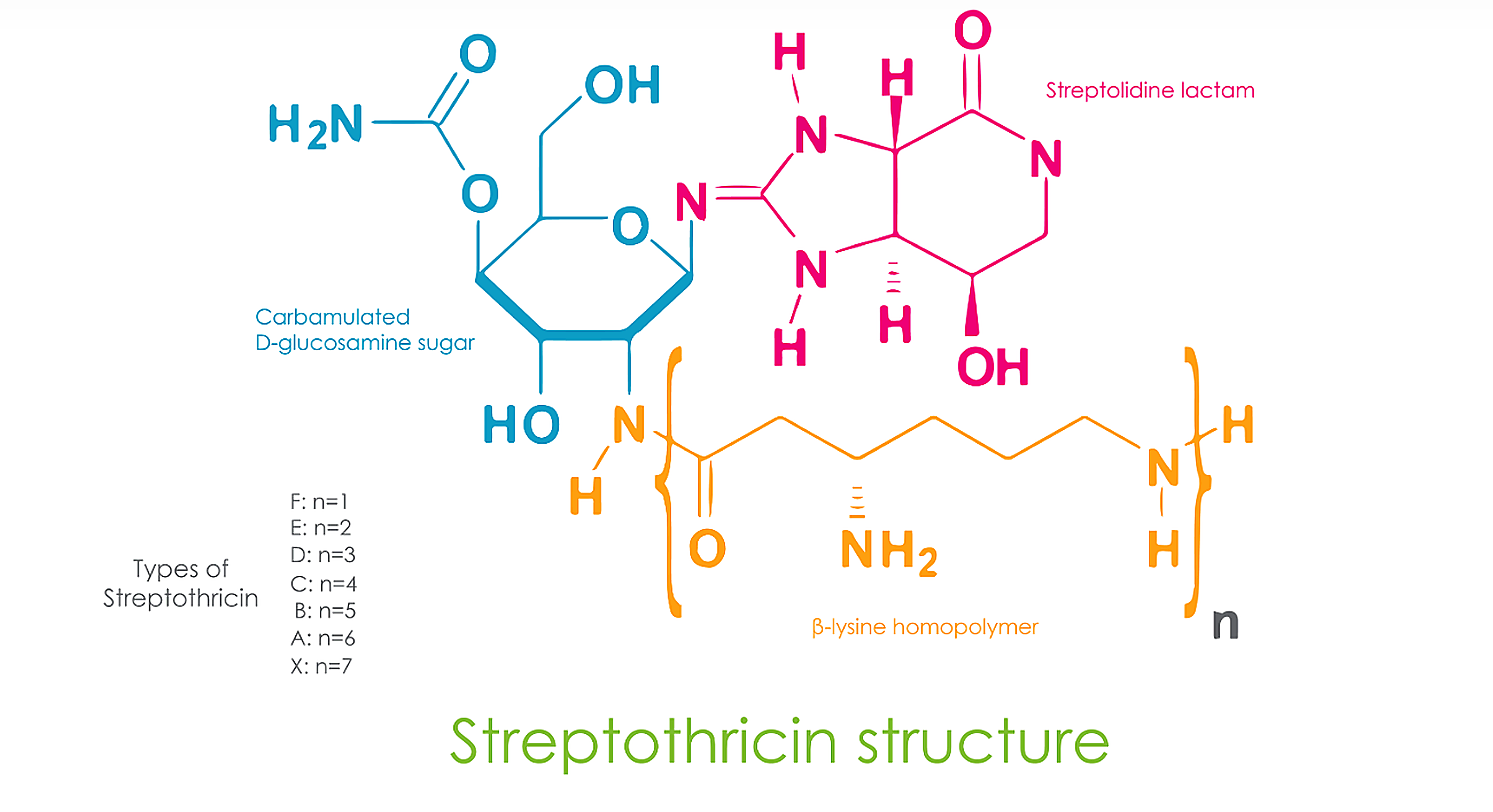
Figure 3. Structural schematic of nourseothricin: aminoglycoside core, streptolidine lactam, and β-lysine homopolymer (n).
VII. What resistance genes are commonly used for nourseothricin selection?
Answer: Common resistance genes include sat1, sat2, sat3, and sat4. sat genes encode acetyltransferases that inactivate nourseothricin via N-acetylation, thereby conferring host resistance. For molecular verification of sat expression, RNA is often extracted using TRIzol-type reagents and quantified at the transcript level using reverse transcription reagents and SYBR Green qPCR mixes.
VIII. Is nourseothricin effective against Gram-negative and/or Gram-positive bacteria?
Answer: Nourseothricin can be effective against both Gram-negative and Gram-positive bacteria. Common susceptible organisms include:
① Gram-negative: Escherichia coli, Klebsiella pneumoniae, Agrobacterium tumefaciens, Francisella tularensis, Pseudomonas aeruginosa, and others.
② Gram-positive: Bacillus subtilis, Micrococcus spp., Enterococcus faecium, Staphylococcus aureus, and others.
For Gram-positive sample preparation or transformation workflows, lysozyme is commonly used for cell-wall pretreatment; in yeast and some fungal systems, lyticase is more commonly used for cell-wall digestion.
IX. What antibiotic class does nourseothricin belong to?
Answer: A more rigorous classification places nourseothricin within the streptothricin class of antibiotics. Functionally, it targets the ribosome and induces translation inhibition and miscoding; however, structurally it should not be conflated with canonical aminoglycosides. For parallel controls, kanamycin, streptomycin, or gentamicin is often used as representative aminoglycoside comparators.
X. Which microorganisms are susceptible to nourseothricin?
Answer: Nourseothricin has a relatively broad spectrum. Beyond bacteria, it is also used for genetic selection in multiple eukaryotic model systems. Common applications include:
① Bacteria: a range of Gram-negative and Gram-positive bacteria.
② Yeasts: e.g., Saccharomyces cerevisiae and Schizosaccharomyces pombe.
③ Fungi: filamentous fungi and some basidiomycetes.
④ Protists: e.g., Leishmania spp. and Toxoplasma gondii.
⑤ Microalgae and plants: used as selection pressure in some systems.
In yeast culture practice, YPD and SD dropout media are commonly used. In plant tissue culture, basal media are often prepared with MS salts, sucrose, and agar, with phytohormones such as 6-BA and NAA configured according to the regeneration pathway.
Group | Species | MIC* (µg/mL) | Selection concentration (µg/mL) |
Gram-negative bacteria | Agrobacterium tumefaciens | 100 | — |
Gram-negative bacteria | Escherichia coli | 2–12 | 50 |
Gram-negative bacteria | Francisella tularensis | — | 50 |
Gram-negative bacteria | Pseudomonas aeruginosa | 50 | 100 |
Gram-positive bacteria | Bacillus subtilis | 5 | 50 |
Gram-positive bacteria | Enterococcus faecium | 8–256 | 500 |
Gram-positive bacteria | Staphylococcus aureus | 2–12 | 50 |
Streptomycetes | Streptomyces lividans | 6 | 100 |
Yeast | Candida albicans | 200 | 250–450 |
Yeast | Hansenula polymorpha | — | 100 |
Yeast | Kluyveromyces lactis | — | 50 |
Yeast | Pichia pastoris | — | 100 |
Yeast | Saccharomyces cerevisiae | 25 | 75–100 |
Yeast | Schizosaccharomyces pombe | 40 | 100 |
Other Ascomycota | Acremonium chrysogenum | — | 25 |
Other Ascomycota | Aspergillus nidulans | — | 120 |
Other Ascomycota | Cryphonectria parasitica | — | 100 |
Other Ascomycota | Neurospora crassa | — | 200 |
Other Ascomycota | Penicillium chrysogenum | — | 150–200 |
Other Ascomycota | Podospora anserina | — | 50 |
Other Ascomycota | Sordaria macrospora | — | 50 |
Other Ascomycota | Trichophyton mentagrophytes | — | 50 |
Basidiomycota | Cryptococcus neoformans | — | 100 |
Basidiomycota | Schizophyllum commune | 3 | 8 |
Basidiomycota | Ustilago maydis | — | 75–100 |
Protozoa | Leishmania tarentolae, L. major, etc. | — | 100 |
Protozoa | Phytomonas serpens | — | 100 |
Protozoa | Plasmodium falciparum | 75** | — |
Protozoa | Toxoplasma gondii | — | 500 |
Microalgae | Phaeodactylum tricornutum | — | 50–250 |
Microalgae | Thalassiosira pseudonana | — | 100 |
Plants | Arabidopsis thaliana | 20 | 50–200 |
Plants | Daucus carota | — | 100 |
Plants | Lotus corniculatus | — | 50 |
Plants | Nicotiana tabacum | — | 100 |
Plants | Oryza sativa | 20 | 200 |
XI. What concentration should be used for nourseothricin selection?
Answer: Nourseothricin selection concentrations are commonly in the 50–100 µg/mL range, but this range is not universal and must be determined empirically for each host system. A recommended workflow is:
① Establish a kill curve using an untransformed control across a concentration gradient.
② Identify the lowest concentration range that completely suppresses control growth within the predefined time window.
③ Use the lower bound of that range, or a slightly higher concentration, as the selection concentration to balance selection strength against growth burden in positive clones. To reduce effective-concentration drift due to pipetting error, stocks are often pre-diluted in sterile water or PBS to a working solution before addition.
Organism | Type | Concentration |
Escherichia coli | Bacterium | 50 µg/mL |
Ustilago maydis | Fungus | 75 µg/mL |
Saccharomyces cerevisiae | Yeast | 100 µg/mL |
Leishmania sp. | Protozoan | >100 µg/mL |
Cryptococcus neoformans | Fungus | 100 µg/mL |
Arabidopsis thaliana | Plant | 100 µg/mL |
XII. Is nourseothricin suitable for cell culture selection?
Answer: Nourseothricin is widely used for genetic selection in plants, fungi, yeasts, and bacteria. Because there are literature reports of toxicity risk, particularly nephrotoxicity, nourseothricin is not used as an anti-infective agent in humans or animals. In cell or tissue culture settings where environmental and surface decontamination is relevant, sodium hypochlorite solutions are commonly used disinfectants in laboratories; such use should strictly follow safety regulations and material compatibility requirements.
XIII. What are the major differences between nourseothricin and other commonly used antibiotics?
Answer: Key differences lie in structural features and resistance mechanisms:
① Structurally, it lacks the 2-deoxystreptamine ring core shared by many canonical aminoglycosides.
② Resistance is commonly mediated by sat acetyltransferases that inactivate the drug by acetylation.
③ In multi-organism selection schemes, it can be used as a parallel selection pressure alongside other resistance markers to construct multiplex selection strategies. In eukaryotic selection contexts, hygromycin B or G418 are often used in parallel to enable layered selection of distinct genetic events.
XIV. What are the primary uses of nourseothricin in biotechnology?
Answer: Its primary use is genetic engineering selection and stable maintenance, including:
① Selection of bacterial transformants (Gram-negative and Gram-positive).
② Selection of yeast and filamentous fungal transformants.
③ Selection of genetically modified protists, microalgae, and plants.
④ Use with sat resistance cassettes to build multiplex genetic marker systems and support long-term experimental maintenance. For positive clone verification, agarose, TAE/TBE buffers, and nucleic-acid stains (e.g., GelRed-type dyes) are commonly used in electrophoretic analysis.
XV. How should nourseothricin stock solutions be prepared?
Answer: A standard workflow of “sterile preparation–filter sterilization–aliquoting and frozen storage” is recommended to minimize contamination and potency drift:
① Dissolve in sterile water to the required stock concentration.
② Filter sterilize through a 0.22 µm membrane.
③ Aliquot into single-use portions to avoid repeated freeze–thaw cycles.
④ Store at −20°C protected from light, and record opening date and freeze–thaw counts during use.
XVI. Does nourseothricin have toxicity?
Answer: The literature reports toxicity risks for nourseothricin, particularly nephrotoxicity. In animal studies, high-dose intravenous administration can produce marked toxic effects. In laboratory practice it should be treated as a potentially hazardous chemical:
① Wear gloves, safety glasses, and a lab coat; avoid skin and mucosal contact.
② Prepare and aliquot under well-ventilated conditions to reduce exposure to dust and aerosols.
③ Dispose of waste liquids and contaminated consumables according to institutional hazardous waste procedures; avoid disposal into regular trash or drains.
References
[1] Cundliffe, E. (1989). How antibiotic-producing organisms avoid suicide. Annual Review of Microbiology, 207–233.
[2] Derbise, A., Dyke, K.G.H., El Solh, N. (1996). Characterization of a Staphylococcus aureus transposon, Tn5405, located within Tn5404 and carrying the aminoglycoside resistance genes, aphA-3 and aadE. Plasmid 35, 174–188.
[3] Dowgiallo, M.G., Miller, B.C., Kassu, M., Smith, K.P., Fetigan, A.D., Guo, J.J., Kirby, J.E., Manetsch, R. (2022). The convergent total synthesis and antibacterial profile of the natural product streptothricin F. Chemical Science 13, 3447–3453.
[4] Zähringer, U., Voigt, W., Seltmann, G. (1993). Nourseothricin (streptothricin) inactivated by a plasmid pIE636 encoded acetyl transferase of Escherichia coli: location of the acetyl group. FEMS Microbiology Letters 110, 331–334.
[5] Hahn, F. (1983). Modes and mechanisms of microbial growth inhibitors.
[6] Haupt, I., Hübener, R., Thrum, H. (1978). Streptothricin F, an inhibitor of protein synthesis with miscoding activity. Journal of Antibiotics (Tokyo) 31, 1137–1142.
[7] Inamori, Y., Kato, Y., Morimoto, K., Morisaka, K., Saito, G., Sawada, Y., Taniyama, H. (1979). Toxicological approaches to streptothricin antibiotics. III. Biological studies on delayed toxicity of streptothricin antibiotics in rats. Chemical and Pharmaceutical Bulletin, 2091.
[8] Makeyev, A.V., Liebhaber, S.A. (2002). The poly(C)-binding proteins: a multiplicity of functions and a search for mechanisms. RNA 8, 265–278.
[9] Robinson, H., Graessle, O., Smith, D. (1944). Studies on the toxicity and activity of streptothricin. Science (New Series) 99(2583).
[10] Schwabacher, H., Hughes, W.H. (1954). Bacterial resistance to antiseptics. British Medical Journal 2, 247.
[11] Smith, K.P., Kang, Y.-S., Green, A.B., Dowgiallo, M.G., Miller, B.C., Chiaraviglio, L., Truelson, K.A., Zulauf, K.E., Rodriguez, S., Manetsch, R., Kirby, J.E. (2021). Profiling the in vitro and in vivo activity of streptothricin-F against carbapenem-resistant Enterobacterales: a historic scaffold with a novel mechanism of action. bioRxiv.
[12] Waksman, S.A., Woodruff, H.B. (1942). Streptothricin, a new selective bacteriostatic and bactericidal agent, particularly active against Gram-negative bacteria. Proceedings of the Society for Experimental Biology and Medicine 49, 207–210.
[13] Wendlandt, S., Feßler, A.T., Monecke, S., Ehricht, R., Schwarz, S., Kadlec, K. (2013). The diversity of antimicrobial resistance genes among staphylococci of animal origin. International Journal of Medical Microbiology 303, 338–349.
For more related articles, please see below:
[1] A Practical Guide to Selecting and Using Common Antibiotics in Research
[3] Biological Characteristics and Application Value of the Aminoglycoside Antibiotic Hygromycin B
[4] Antibiotics block bacterial protein synthesis
[5] Aladdin®Antibiotics Commonly Used in Experiments
Aladdin: https://www.aladdinsci.com/