
Fusion-Protein Tag Removal: Catalytic Mechanisms, Recognition Specificity, and Selection Strategies of Common Proteases
Fusion-Protein Tag Removal: Catalytic Mechanisms, Recognition Specificity, and Selection Strategies of Common Proteases
Fusion tags can improve the expression, solubility, and purification efficiency of recombinant proteins but may also affect the structure, activity, and interactions of the target protein. Selecting an appropriate cleavage enzyme according to its recognition sequence, catalytic type, and reaction conditions is essential for obtaining a target protein that closely resembles its native state.
Keywords: fusion protein; tag removal; TEV protease; HRV 3C protease; enterokinase; thrombin; Factor Xa; SUMO protease; recognition sequence; recombinant protein purification
1 Technical Principles and Application Requirements of Fusion Tag Removal
1.1 Functions of Fusion Tags
His tags, GST tags, MBP tags, SUMO tags, and other fusion tags can provide affinity purification sites for recombinant proteins. Some tags can also improve the expression level, solubility, or folding stability of the target protein. Tags are generally attached to the N-terminus or C-terminus of the target protein, with a protease cleavage site inserted between the tag and the target protein so that the tag can be removed after expression and purification.
1.2 Technical Principle of Tag Removal
Proteases for tag removal recognize a specific amino acid sequence or the three-dimensional structure of a fusion tag and hydrolyze the peptide bond between the tag and the target protein. Cleavage efficiency depends not only on whether the recognition sequence is correctly matched but also on the spatial exposure of the site, flexibility of the linker region, conformation of the target protein, and buffer conditions. After cleavage, the sample generally contains the target protein, free tag, uncleaved fusion protein, and cleavage enzyme. Therefore, the cleavage reaction should be designed together with subsequent affinity chromatography, ion-exchange chromatography, or gel-filtration steps.
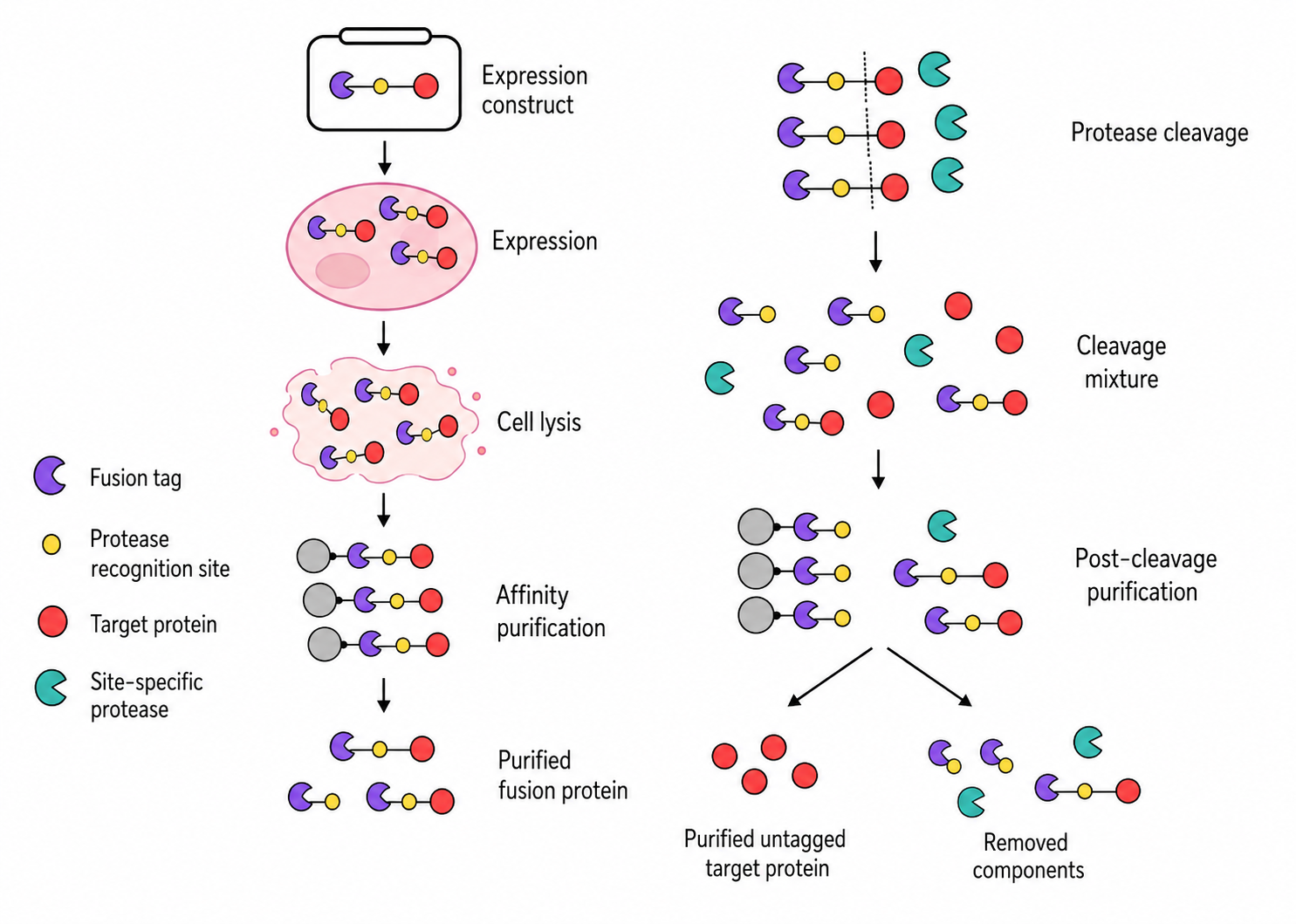
Figure 1. Workflow for fusion protein expression, tag removal, and post-cleavage purification
1.3 Application Requirements for Tag Removal
(1)Restoration of Target Protein Structure and Function
Fusion tags may affect protein folding, oligomerization, enzymatic activity, ligand binding, or subcellular localization. Removing the tag helps determine whether the experimental results are attributable to the target protein itself.
(2)Improvement of Protein Sample Homogeneity
Protein crystallography, nuclear magnetic resonance, cryo-electron microscopy, and quantitative biochemical analyses generally require samples with a homogeneous composition. Residual tags and uncleaved fusion proteins increase molecular-weight and conformational heterogeneity, thereby affecting structural analysis and functional measurements.
(3)Production of Protein Termini That Meet Experimental Requirements
The N-terminus or C-terminus of certain proteins directly participates in signal recognition, enzymatic activity, and protein interactions. Because different proteases leave different additional residues after cleavage, both cleavage efficiency and terminal accuracy should be considered during vector design.
2 Sources and Enzymatic Classification of Common Proteases for Tag Removal
2.1 Sequence-Specific Cysteine Proteases
TEV protease and HRV 3C protease are cysteine proteases that recognize relatively long amino acid sequences. Because their complete recognition sequences are relatively unlikely to occur within a target protein, they generally provide high cleavage specificity and a low risk of unintended cleavage. TEV protease is applicable to various fusion-tag systems, whereas HRV 3C protease exhibits favorable cleavage activity at low temperatures. The catalytic cysteine residues of both proteases must be maintained in an appropriate reduced state. Thiol-modifying reagents and cysteine protease inhibitors may reduce their activity.
2.2 Serine Proteases
Enterokinase, thrombin, and Factor Xa are serine proteases that hydrolyze peptide bonds through a catalytic system composed of serine, histidine, and aspartate residues. Their recognition sequences are relatively short and may be used to generate protein termini close to the native state. However, similar sequences or exposed basic residues within the target protein may also be cleaved. PMSF, AEBSF, and certain protease inhibitor cocktails can inhibit these proteases. When a fusion protein has been purified from a lysate containing inhibitors, the inhibitory components should be removed by desalting, dialysis, or buffer exchange before cleavage.
2.3 Tag-Dependent Cleavage Enzymes
SUMO proteases, ubiquitin-specific proteases, and other tag-dependent proteases recognize not only short peptide sequences but also the three-dimensional structure of the fusion tag. They can cleave at the junction between the tag and the target protein and may produce a target protein with no additional N-terminal amino acids. These proteases generally exhibit high recognition specificity but are usually restricted to their corresponding fusion-tag systems. Unlike TEV protease or HRV 3C protease, they cannot be adapted to different tags simply by inserting an independent recognition sequence.
3 Recognition Sequences and Catalytic Mechanisms of Proteases for Tag Removal
3.1 Representation of Cleavage Sites
In a protease substrate, residues on the N-terminal side of the peptide bond to be cleaved are sequentially designated P1, P2, P3, and P4, whereas residues on the C-terminal side are designated P1′, P2′, P3′, and P4′. Cleavage occurs between P1 and P1′. The corresponding substrate-binding regions in the protease are designated the S1, S2, S1′, and other binding pockets. Different proteases impose different restrictions on the P1, P2, and P1′ residues. During vector design, it is not sufficient merely to insert the classical recognition sequence. The first residue of the target protein should also be assessed for compatibility with the P1′ position; otherwise, cleavage efficiency may be reduced or additional amino acids may need to be retained at the target protein N-terminus.
3.2 Catalytic Mechanism of Cysteine Proteases
TEV protease and HRV 3C protease first recognize the target sequence through multiple binding pockets, positioning the peptide bond to be cleaved within the active site. The catalytic cysteine then attacks the carbonyl carbon of the peptide bond and forms a thioacyl-enzyme intermediate. A water molecule subsequently hydrolyzes the intermediate, releasing the cleavage products and regenerating the free protease. An appropriate amount of reducing agent helps maintain the catalytic cysteine in its reduced state, although the reducing-agent concentration should also be compatible with the stability of disulfide bonds and metal centers in the target protein.
3.3 Catalytic Mechanism of Serine Proteases
Enterokinase, thrombin, and Factor Xa use a catalytic serine residue to attack the substrate peptide bond and form an acyl-enzyme intermediate. A water molecule then completes deacylation and releases the products. Their catalytic efficiency depends not only on the core recognition sequence but also on the amino acids flanking the site, local charge, and spatial conformation.
4 Cleavage Characteristics of TEV Protease and HRV 3C Protease
4.1 TEV Protease
The commonly used recognition sequences of TEV protease are ENLYFQ↓G and ENLYFQ↓S, with cleavage occurring between Gln and the P1′ residue. This enzyme imposes relatively strict requirements on several upstream positions within the recognition sequence and generally exhibits high sequence specificity. Gly or Ser is commonly used at the P1′ position, whereas Pro is usually unfavorable for cleavage. TEV protease can be used to remove His tags, GST tags, MBP tags, and other fusion tags. Cleavage may be performed for an extended period at a relatively low temperature or at a moderately elevated temperature to shorten the reaction time when the target protein is sufficiently stable. Because the active site contains a catalytic cysteine, an appropriate reducing environment is generally required.
4.2 HRV 3C Protease
The classical recognition sequence of HRV 3C protease is LEVLFQ↓GP, with cleavage occurring between Gln and Gly. This enzyme exhibits strong selectivity for the P1 Gln residue and its upstream sequence and retains favorable cleavage activity at low temperatures. It is therefore suitable for target proteins that are prone to aggregation or degradation or that cannot tolerate incubation at room temperature. Cleavage at the classical site generally leaves Gly-Pro at the N-terminus of the target protein. When a strictly native N-terminus is required, the influence of the residual sequence should be assessed during vector design.
5 Cleavage Characteristics of Enterokinase, Thrombin, and Factor Xa
5.1 Enterokinase
The classical recognition sequence of enterokinase is DDDDK↓X, with cleavage occurring after Lys. Because the recognition sequence is located upstream of the cleavage site, the native N-terminal residue of the target protein can be positioned at P1′, facilitating the production of a target protein without additional linker residues. Enterokinase shows a clear preference for consecutive acidic residues and a Lys residue at P1, although actual cleavage efficiency is also affected by the P1′ residue and local conformation. If the target protein contains an exposed region enriched in acidic residues adjacent to Lys, excessive enzyme amounts or prolonged reaction times may increase unintended cleavage.
5.2 Thrombin
The commonly used recognition sequence of thrombin is LVPR↓GS, with cleavage occurring after Arg. This relatively short site can be readily inserted into expression vectors, and cleavage can be performed in various neutral protein-buffer systems. However, thrombin has a lower ability than TEV protease and HRV 3C protease to distinguish the intended site from exposed internal Arg-containing sites. Prolonged treatment or excessive enzyme concentrations may therefore produce additional cleavage bands. Cleavage at the classical site generally leaves Gly-Ser at the target protein terminus, and the effects of these residual residues on target protein structure and function should be evaluated.
5.3 Factor Xa
The classical recognition sequence of Factor Xa is IEGR↓X, with cleavage occurring after Arg. Because the recognition sequence is positioned upstream of the target protein, appropriate design of the P1′ residue can produce an N-terminus close to the native sequence. Factor Xa is relatively sensitive to the spatial exposure of the recognition site. When the target site is close to a stable domain or a tag–protein interface, incomplete cleavage may occur. The enzyme may also cleave other suitable exposed Arg-containing sites within the target protein. Therefore, the complete protein sequence should be examined before vector construction.
6 Comparison of the Specificity and Reaction Conditions of Common Proteases for Tag Removal
6.1 Differences in Recognition Specificity and Applications
Protease | Enzymatic Type | Common Recognition Sequence | Cleavage Position | Reaction Characteristics | Major Advantages | Major Limitations |
TEV protease | Cysteine protease | ENLYFQ↓G/S | After Gln | Cleavage can be performed for an extended period at low temperature or at a moderately elevated temperature; an appropriate reducing agent helps maintain activity | High sequence specificity and limited unintended cleavage | Requires appropriate site exposure and a compatible P1′ residue |
HRV 3C protease | Cysteine protease | LEVLFQ↓GP | After Gln | Effective cleavage can be maintained at low temperature | Suitable for unstable proteins and low-temperature treatment | The classical site generally leaves Gly-Pro |
Enterokinase | Serine protease | DDDDK↓X | After Lys | Generally reacts under neutral to mildly alkaline conditions | Facilitates production of a native N-terminus | May cleave internal acidic regions adjacent to Lys |
Thrombin | Serine protease | LVPR↓GS | After Arg | Can react in various conventional protein buffers | Mature system and convenient operation | Short recognition sequence and relatively high risk of unintended cleavage |
Factor Xa | Serine protease | IEGR↓X | After Arg | Relatively sensitive to local conformation and site exposure | Can be designed to produce an N-terminus close to the native sequence | May cleave other exposed Arg-containing sites |
SUMO protease | Tag structure-dependent protease | Recognizes the three-dimensional structure of SUMO | At the end of the SUMO tag | Restricted to SUMO fusion systems | High specificity and potential production of a native N-terminus | Cannot be used in non-SUMO tag systems |
6.2 Matching of Reaction Conditions
Cysteine proteases should generally be protected from thiol-blocking reagents and cysteine protease inhibitors, whereas serine proteases should be protected from PMSF, AEBSF, and related inhibitors. Salt concentration, imidazole, glycerol, detergents, denaturants, and metal ions affect different proteases differently. Reaction conditions established for one protease should not be directly applied to another. Activity units for different products may also be defined using different substrates, temperatures, reaction times, and endpoints. Therefore, catalytic performance cannot be compared solely according to the labeled activity units. The actual enzyme amount should be determined according to the specific enzyme preparation and the results of small-scale cleavage experiments.
7 Design of Fusion Protein Cleavage Sites and Protease Selection
7.1 Tag Position and Target Protein Termini
Removal of an N-terminal tag mainly affects the N-terminus of the target protein, whereas removal of a C-terminal tag may leave part of the recognition sequence at the C-terminus of the target protein. When the protein N-terminus participates in enzymatic activity, membrane localization, signal recognition, or complex assembly, a cleavage strategy capable of generating an accurate N-terminus should be preferred.
7.2 Spatial Exposure of the Recognition Site
The cleavage site should be positioned within a flexible region between the tag and the target protein and should not be embedded in a stable secondary structure or protein domain. A limited number of Gly or Ser residues may be added around the recognition sequence to improve accessibility when necessary. However, the linker should not be excessively long, because this may increase structural disorder, degradation risk, and residual sequence after cleavage.
7.3 Potential Internal Cleavage Sites in the Target Protein
Before designing an expression construct, the target protein should be examined for sequences identical or similar to the recognition sequence of the selected protease. For thrombin, Factor Xa, and enterokinase, exposed Arg or Lys residues and their neighboring residues should also be considered rather than searching only for sequences that exactly match the classical recognition site. If the target protein contains a high-risk internal site, a protease with a longer recognition sequence, such as TEV protease or HRV 3C protease, may be selected. Alternatively, the construct may be modified without affecting the function of the target protein.
7.4 Criteria for Protease Selection
(1)Recognition Specificity
When maintaining protein integrity is a priority, TEV protease or HRV 3C protease may be preferred. When thrombin, enterokinase, or Factor Xa is used, potential internal cleavage sites should be carefully examined.
(2)Terminal Accuracy
When an accurate N-terminus is essential, enterokinase, Factor Xa, or SUMO protease may be considered. Internal cleavage risk, compatibility of the P1′ residue, and limitations of the tag system should be evaluated simultaneously.
(3)Target Protein Stability
Proteins prone to aggregation or unable to tolerate room-temperature incubation may be processed using HRV 3C protease or TEV protease under prolonged low-temperature conditions. For proteins containing essential disulfide bonds or showing sensitivity to reducing environments, the reducing-agent concentration should be decreased or an alternative cleavage system should be selected.
8 Optimization of Tag-Removal Reactions and Interpretation of Abnormal Results
8.1 Small-Scale Screening of Reaction Conditions
Before scaling up the cleavage reaction, gradients of protease amount, reaction temperature, and reaction time should be established while maintaining consistent fusion protein concentration and buffer conditions. Changes in the uncleaved fusion protein, target protein, and free tag should be compared by SDS-PAGE to identify conditions that provide complete cleavage with minimal unintended bands. Activity-unit definitions differ among proteases, and the enzyme-to-substrate ratio should be determined according to the specific product and experimentally measured cleavage results. Before scale-up, it should also be confirmed that the target protein does not spontaneously precipitate or degrade during the anticipated reaction period.
8.2 Incomplete Cleavage
(1)Recognition Site Occlusion
The recognition sequence may be occluded by protein folding, interactions between the tag and the target protein, or an oligomeric interface. Potential solutions include reducing the protein concentration, adjusting the salt concentration, adding a short flexible linker, or changing the tag position.
(2)Incompatible Reaction Conditions
Residual pH conditions, salt, reducing agents, imidazole, glycerol, detergents, or inhibitors may reduce enzyme activity. The fusion protein should first be transferred into a buffer compatible with the selected protease before increasing the enzyme amount or extending the reaction time.
(3)Loss of Protease Activity
Repeated freeze–thaw cycles, prolonged storage, oxidation, or inhibitor contamination may inactivate the protease. A known cleavable substrate can be included as a positive control to distinguish protease inactivation from poor accessibility of the target site.
(1)Excessive Enzyme Amount or Prolonged Reaction Time
Excessive protease and prolonged incubation increase the probability of cleavage at low-affinity sites. The enzyme amount or reaction time should be reduced, or the reaction temperature should be lowered. Purification should be initiated promptly after the required extent of cleavage has been achieved.
(2)Presence of an Internal Cleavage Site in the Target Protein
When stable lower-molecular-weight fragments appear after cleavage, potential internal recognition sequences should be examined. Mass spectrometry, N-terminal analysis, or fragment-specific antibodies can be used to determine the actual cleavage position.
(3)Sample Degradation Before Cleavage
A matched incubation control without the tag-removal protease should be included. If the same degradation bands appear in the control, the problem may be caused by host proteases, storage conditions, or intrinsic instability of the target protein.
8.4 Protein Precipitation After Tag Removal
GST, MBP, and SUMO tags may enhance protein solubility and stability. After tag removal, the target protein may expose hydrophobic surfaces and aggregate. Potential solutions include reducing the protein concentration and reaction temperature, adjusting the pH, salt concentration, or glycerol content, or using on-column cleavage with simultaneous separation. If the target protein remains unstable after tag removal, retaining a small tag, changing the tag position, or redesigning the protein-domain boundaries should be considered instead of simply increasing the amount of tag-removal protease.
8.5 Confirmation of Cleavage Results
A reduction in band molecular weight after cleavage indicates that protein cleavage has occurred but does not independently demonstrate that cleavage took place at the intended site. Tag-specific antibody detection, target protein antibody detection, mass spectrometry, or N-terminal analysis should be used to confirm complete tag removal. The expected activity of the target protein should also be evaluated.
9 Fusion-Tag Removal Proteases and Supporting Verification Products
Catalog | Product Name | Grade & Purity | Research Stage | Main Application |
TEV Protease (GST/His-tag) | — | TEV recognition-site cleavage and protease removal | Used for cleavage at ENLYFQ↓G/S sites; the GST/His tags facilitate removal of the protease after the reaction | |
Recombinant EN-TEV Protease Protein | Carrier-free, bioactive, ActiBioPure™, azide-free, His-tagged, ≥98% (SDS-PAGE), see COA | TEV-site cleavage | Used for highly specific tag removal from His-, GST-, MBP-, and other fusion proteins | |
Recombinant EN-TEV Protease Protein | Carrier-free, bioactive, ActiBioPure™, His-tagged, ≥98% (SDS-PAGE), see COA | Optimization of TEV cleavage conditions | Used to screen enzyme-to-substrate ratios, reaction temperatures, and reaction times | |
Recombinant Human HRV 3C Protein | Carrier-free, bioactive, ActiBioPure™, azide-free, His-tagged, PBS Only, ≥95% (SDS-PAGE), see COA | HRV 3C-site cleavage | Used for cleavage at LEVLFQ↓GP sites and suitable for low-temperature treatment of target proteins with poor stability | |
hrv 3c Protease | — | HRV 3C-site cleavage | Used for fusion-tag removal and investigation of low-temperature reaction conditions | |
SUMO Protease, Biotin tagged | Recombinant, aqueous solution, ≥25,000 units/mL | SUMO-tag removal | Recognizes the SUMO structure and releases the target protein; the biotin tag facilitates capture and removal of the protease | |
Recombinant Sumo Protease Protein | Carrier-free, bioactive, ActiBioPure™, azide-free, high-performance, His-tagged, ≥90% (SDS-PAGE) | SUMO-tag removal | Used for structure-dependent cleavage of SUMO fusion proteins and preparation of proteins with native N-termini | |
Recombinant Sumo Protease Protein | Carrier-free, His-tagged, ≥90% (SDS-PAGE), see COA | SUMO-tag removal | Used for SUMO fusion-tag removal and screening of cleavage conditions | |
Recombinant Enterokinase | Animal-origin-free, carrier-free, bioactive, ActiBioPure™, EnzymoPure™, ≥5.0 U/μL | Enterokinase-site cleavage | Used for fusion-tag removal and preparation of target proteins with N-termini close to the native state | |
Recombinant Enterokinase | Animal-origin-free, carrier-free, bioactive, ActiBioPure™, EnzymoPure™, ≥10 U/μL | High-activity enterokinase cleavage | Used for cleavage at DDDDK recognition sites and high-enzyme-activity reaction systems | |
Recombinant Enterokinase | Bioactive, recombinant, ActiBioPure™, high-performance, EnzymoPure™, ≥5 units/μL, expressed in E. coli | Routine enterokinase cleavage | Used for fusion-tag removal and optimization of enzyme amount, reaction time, and temperature | |
Enterokinase human | Recombinant, suitable for cell culture, ≥90% (SDS-PAGE & HPLC), expressed in CHO cells | Human enterokinase cleavage | Used for tag removal applications with specific requirements for purity, expression system, or suitability for cell culture | |
Enterokinase human | Recombinant, ≥90% (SDS-PAGE), expressed in CHO cells | Human enterokinase cleavage | Used for cleavage at DDDDK↓X sites and fusion-protein tag removal | |
Enterokinase from porcine intestine | Lyophilized powder, ≥100 units/mg protein | Native enterokinase cleavage | Used for cleavage at enterokinase recognition sites and investigation of native enzyme reactions | |
Enterokinase from porcine intestine | ≥0.5 units/mg solid | Basic enterokinase reaction | Used for preliminary screening of fusion-protein cleavage conditions | |
Recombinant enterokinase freeze-dried powder (bovine) | Animal-origin-free, carrier-free, bioactive, ActiBioPure™, EnzymoPure™, ≥1,000 U/mg protein | High-specific-activity enterokinase cleavage | Used for fusion-protein processing requiring a lyophilized preparation with high specific activity | |
α-Thrombin | Bioactive, ActiBioPure™, native, high-performance, EnzymoPure™, derived from human plasma; ≥2,700 NIH U/mg protein; concentration before lyophilization, see COA | Thrombin-site cleavage | Used for cleavage at LVPR↓GS and other recognition sites and for high-activity reaction systems | |
Thrombin | Bioactive, ActiBioPure™, native, high-performance, EnzymoPure™, derived from human plasma; 400–1,000 NIH U/mg protein | Routine thrombin cleavage | Used for removal of fusion tags at thrombin sites and optimization of enzyme-amount gradients | |
Recombinant Human Coagulation Factor II/Thrombin Protein | Animal-origin-free, carrier-free, bioactive, ActiBioPure™, high-performance, ≥95% (SDS-PAGE), see COA | Recombinant thrombin cleavage | Used for fusion-tag removal when reducing the influence of plasma-derived impurities is required | |
Liquid — High Purity Thrombin (> 2700 U/mg Protein) | EnzymoPure™, >500 units/mL | Liquid thrombin cleavage | Used for tag removal without reconstitution and can be added directly to the reaction system | |
High Purity Bovine Thrombin (> 1500 U/Mg Protein) | EnzymoPure™, >200,000 units/g powder | Bovine thrombin cleavage | Used for cleavage at thrombin recognition sites and screening of enzyme-amount conditions | |
High Purity Bovine Thrombin (> 2200 U/Mg Protein) | EnzymoPure™, >200,000 units/g powder | High-specific-activity thrombin cleavage | Used for fusion-protein cleavage requiring high thrombin-specific activity | |
H-D-Phe-Pip-Arg-pNA dihydrochloride | BioReagent, ≥98% (HPLC) | Evaluation of thrombin activity | Used to confirm thrombin activity and evaluate the effects of storage or reaction conditions on enzyme activity | |
Sumo tag Mouse mAb | Carrier-free, ExactAb™, azide-free, validated, high-performance, PBS Only, 1.0 mg/mL | Verification of SUMO-tag removal | Used to detect uncleaved fusion proteins and residual SUMO tags after cleavage | |
Sumo tag Mouse mAb | Carrier-free, ExactAb™, azide-free, validated, high-performance, PBS Only, 1.0 mg/mL | Verification of SUMO-tag removal | Used for Western blot detection of SUMO-tag removal efficiency | |
Sumo tag Mouse mAb | Carrier-free, ExactAb™, azide-free, validated, high-performance, PBS Only, 1.0 mg/mL | Verification of SUMO-tag removal | Used to detect uncleaved fusion proteins and residual SUMO tags | |
Sumo tag Mouse mAb | Carrier-free, ExactAb™, azide-free, validated, high-performance, PBS Only, 1.0 mg/mL | Verification of SUMO-tag removal | Used to compare SUMO-tag signals before and after cleavage | |
Sumo tag Mouse mAb | Carrier-free, ExactAb™, azide-free, validated, high-performance, PBS Only, 1.0 mg/mL | Verification of SUMO-tag removal | Used to confirm fusion-protein cleavage results | |
Sumo tag Mouse mAb (HRP) | ExactAb™, validated, high-performance, 0.5 mg/mL | Detection of SUMO-tag cleavage results | Used for direct chemiluminescent detection of uncleaved proteins or proteins containing residual SUMO tags | |
Sumo tag Mouse mAb (Biotin) | ExactAb™, validated, high-performance, 0.5 mg/mL | SUMO-tag detection and enrichment | Used for biotin–streptavidin detection or capture of SUMO-tagged proteins |
The selection of a protease for tag removal should simultaneously consider the recognition sequence, site accessibility, residual terminal residues, target protein stability, and the post-cleavage purification procedure. Performing small-scale experiments to confirm cleavage efficiency, unintended proteolysis, and protein solubility before scaling up can reduce problems such as incomplete cleavage, protein degradation, and precipitation after tag removal.
For more related articles, please see below:
[2] Experimental purification of fusion proteins by glutathione agarose affinity chromatography
[3] Protein-protein interaction assay with GST fusion proteins
[4] Expression and purification experiments of glutathione S-transferase fusion protein
[5] Expression and purification experiments of thioredoxin fusion protein