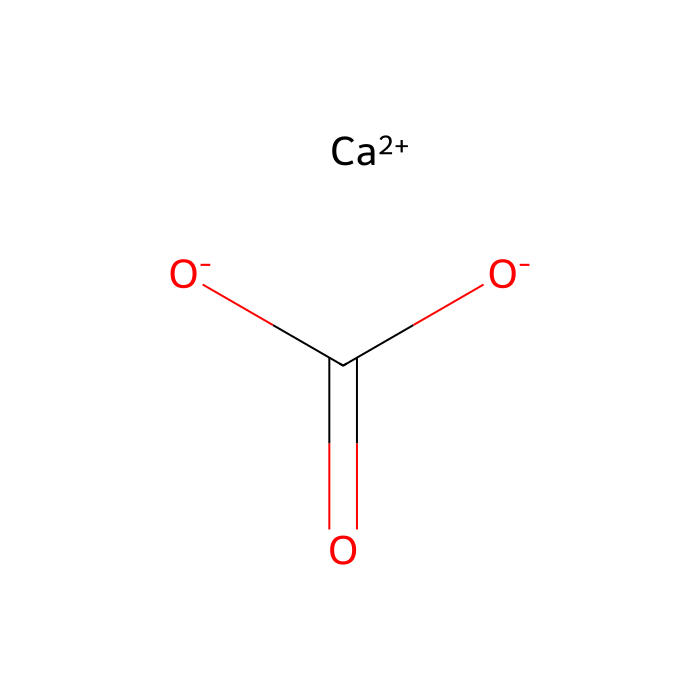
IC calcium standard - Calcium Standard for IC,1000 mg/L Ca2+ in nitric acid , CAS No.471-34-1

CAS: 471-34-1 Cat. No.: C301706 Formula: CaCO3 Molecular Weight: 100.09 Beilstein Registry Number: 8008338 EC Number: 207-439-9
AVAILABLE TO ORDER
GRADE & PURITY Calcium Standard for IC,1000 mg/L Ca2+ in nitric acid
Synonyms
Aragonite|CALCIUM CARBONATE|471-34-1|Limestone|Calcite|Chalk|Calcium carbonate (1:1)|Carbonic acid calcium salt (1:1)|Calofort U|Aeromatt|Caltrate|Calwhite|Hydrocarb|Microcarb|Micromya|Atomite|calciumcarbonate|Calmote|Caltec|Marfil|Allied whiting|Levigate
Storage
Room temperature
Shipped In
Normal
★
Size
USA
Germany (EU)*
Price
Qty
20ml
C301706-20ml
3 In stock
—

$23.90

$35.90
Save $12.00 (33.43%)
50ml
C301706-50ml
2 In stock
—

$44.90

$66.90
Save $22.00 (32.88%)
Enter a quantity for the sizes you want to add.
🧪
Why this grade

Calcium Standard for IC,1000 mg/L Ca2+ in nitric acid for sensitive chromatographic and analytical workflows requiring minimal baseline interference.

🌡

Storage & shipping

Room temperature Ships Normal Check lot-specific COA for exact specifications.

📋

Quality documents

SDS, COA, datasheet, and spec sheet available for download. Lot-specific COA accessible via lot number lookup.

📚

Literature proof

Cited in 775 peer-reviewed publications across chromatography, organic synthesis, and cross-coupling reactions.

Specifications

Synonyms
Aragonite | CALCIUM CARBONATE | 471-34-1 | Limestone | Calcite | Chalk | Calcium carbonate (1:1) | Carbonic acid calcium salt (1:1) | Calofort U | Aeromatt | Caltrate | Calwhite | Hydrocarb | Microcarb | Micromya | Atomite | calciumcarbonate | Calmote | Caltec | Marfil | Allied whiting | Levigate
Specifications & Purity
Calcium Standard for IC,1000 mg/L Ca2+ in nitric acid
Storage
Room temperature
Shipped In
Normal
Names and Identifiers
Pubchem Sid528764866
Canonical SmilesC(=O)([O-])[O-].[Ca+2]
IUPAC Namecalcium;carbonate
InChIKeyVTYYLEPIZMXCLO-UHFFFAOYSA-L
INCHI1S/CH2O3.Ca/c2-1(3)4;/h(H2,2,3,4);/q;+2/p-2
Isomeric SMILES C(=O)([O-])[O-].[Ca+2]
RTECS FF9335000
Molecular Weight 100.09
Beilstein 8008338
Reaxy-Rn 8008338
Reaxys-RN_link_address https://www.reaxys.com/reaxys/secured/hopinto.do?context=S&query=IDE.XRN=8008338&ln=

Documentation

📋 Safety Data Sheet (SDS)

Comprehensive hazard, handling, storage, and regulatory compliance document.

Download SDS →

✅ Certificate of Analysis (COA)

Lot-specific quality data. Enter your lot number to retrieve the exact COA.

Look up COA →

📊 Datasheet

Quick-reference summary of product specifications and applications.

View datasheet →

🔬 Specification Sheet

Full quality attributes and acceptance criteria for this grade.

View spec sheet →

Advanced Data

Taxonomic Classification

Taxonomy Tree

KingdomOrganic compounds
SuperclassOrganic acids and derivatives
ClassOrganic carbonic acids and derivatives
SubclassOrganic carbonic acids
Intermediate Tree Nodes Not available
Direct ParentOrganic carbonic acids
Alternative Parents Carbonate salts  Organic calcium salts  Organic oxides  Hydrocarbon derivatives  Carbonyl compounds  
Molecular FrameworkAliphatic acyclic compounds
Substituents Carbonate salt - Carbonic acid - Organic calcium salt - Organic oxygen compound - Organic oxide - Hydrocarbon derivative - Organic salt - Organooxygen compound - Carbonyl group - Aliphatic acyclic compound
DescriptionThis compound belongs to the class of organic compounds known as organic carbonic acids. These are compounds comprising the carbonic acid functional group.
External Descriptors calcium salt - one-carbon compound - carbonate salt
3D Structure
Interactive Chemical Structure Model


Certificates(CoA,COO,BSE/TSE and Analysis Chart)
C of A & Other Certificates(BSE/TSE, COO):
Analytical Chart:
Chemical and Physical Properties
Melt Point(°C)800°C
Molecular Weight100.090 g/mol
XLogP3
Hydrogen Bond Donor Count0
Hydrogen Bond Acceptor Count3
Rotatable Bond Count0
Exact Mass99.9473 Da
Monoisotopic Mass99.9473 Da
Topological Polar Surface Area63.200 Ų
Heavy Atom Count5
Formal Charge0
Complexity18.800
Isotope Atom Count0
Defined Atom Stereocenter Count0
Undefined Atom Stereocenter Count0
Defined Bond Stereocenter Count0
Undefined Bond Stereocenter Count0
The total count of all stereochemical bonds0
Covalently-Bonded Unit Count2
Documents & Articles
Selection of Common Research Salts: A Task Map for Alkali Metal Salts & Alkaline Earth Metal Salts (with Product Tables 1–6)
Titanate Coupling Agents: Structural Features, Classification, Typical Applications, and Differences from Silane Coupling Agents
Experimental Selection and Outcome Assessment of Heterogeneous Metal Catalysts in Organic Synthesis
Perovskite Oxides for Energy and Environmental Catalysis: How Oxygen Vacancies, B-Site Metals, and the Metal–Oxygen Bond Network Regulate Reaction Performance
From Barium Titanate Dielectrics to Multilayer Ceramic Capacitors: Dielectric Properties and Experimental Evaluation of Barium Titanate-Based Ceramics
How Matting Agents in Coatings Build Low-Gloss Coating Surfaces: Mechanisms, Formulation Trade-Offs, and Product Selection
Application and Selection Guide for Alkyd Resin Coatings: Advantages, Limitations, Formulation Control, and Modification Directions
Guide to Epoxy Resin Performance Design: System Composition, Key Properties, Process Control, and Application Selection
Silicone Resin Coating Formulation Design: From Application Conditions to Matching Resins, Pigments and Fillers, Curing, and Substrates
Applications and Selection of Acrylic Resins in Coatings: Analysis of Architectural, Industrial, and Supporting Materials
Capable of Swelling, Adsorption, and Cation Exchange: What Makes Montmorillonite Clay Different?
Vinyl Acetate-Acrylic Emulsion (Vinyl Acrylic Emulsion): A Cost-Performance Balance Solution for Architectural Coatings
Vinyl Ester Resin Systems: Structural Features, Curing Mechanism, and Key Application Considerations
PVAc, VAE, and Vinyl Acetate-Based Emulsions: Film-Forming Logic and Performance Boundaries in Architectural Coatings
Application Positioning, Scenario Selection, and Key Use Considerations for Chlorinated Rubber Resin in Coatings
Formulation Design of Chlorinated Rubber Coatings: Component Synergy and Performance Control
Applications and Selection of Polyester Resins in Industrial Coatings: Powder, Coil, Baking, Packaging, and Metal Coating Scenarios
How to Select Vinyl-Related Resins: Building Formulation Judgment Based on Substrate, Performance Targets, and Failure Risks
Waterborne Resin Application Guide: Formulation Synergy, Troubleshooting, and Technology Development Trends
Mechanisms and Control of Coating Yellowing: From Chromophoric Structure Formation to Source Diagnosis and Formulation Optimization
Resin Polarity in Coating Formulations: From Molecular Structure to Dissolution, Compatibility, Interfacial Interactions, and Formulation Design
Why Do Daily Chemical Products Become Opaque? Formation Mechanisms of Milky Turbidity, Pearlescence, and Coverage, and How to Select the Right Ingredients
Color-Development Mechanisms, Formulation Forms, and Selection/Application Logic of Colorants in Personal Care Products
Analysis of the Production Process of Hydroxypropyl Methylcellulose (HPMC) for Putty: Understanding Differences in Substitution Structure and Gelation Temperature from High-Ratio and Low-Ratio Formulations
Types, Mechanisms of Action, Key Quality Indicators, and Selection and Application of Common Cellulose Ethers in Wall Putty
Influencing Factors and Control Strategies for Blistering in Neutral Wall Putty: An Experimental Analysis Based on HPMC Dosage, Viscosity, and Ground Calcium Carbonate Fineness
How to Select Binding/Gel Materials for Neutral Wall Putty? A Comparison of Pregelatinized Starch, PVA, and Redispersible Polymer Powder Based on Four Application Trials
Causes and Mechanism Analysis of Delamination During Sanding of Water-Resistant Putty
What Are the Differences Between Polyvinyl Alcohol 1788, 2488, and 2699? Understanding Workability, Bonding Strength, and Relative Water Resistance from the Perspective of Degree of Polymerization and Degree of Hydrolysis
Why Do Rust Spots Appear on Neutral Wall Putty? Iron Sources, Moisture Migration, Oxidative Color Development, and Prevention Measures
Common Problems and Formulation Adjustment Strategies for Neutral Putty Under High Summer Temperatures
Differences and Application Selection of Cassava- and Corn-Based Pregelatinized Starch in Neutral Putty Formulations
The Role, Selection, Cracking Risk Analysis, and Dosage Control of Bentonite in Neutral Putty
Analysis of Hydrolyzed Pearl as a Cosmetic Raw Material: Preparation Process, Active Components, and Skincare Formulation Applications
What Is Direct Compression? Process Characteristics, Suitability Criteria, and Excipient Selection
Citations of This Product
Solution Calculators
Reviews

Customer Reviews

Shall we send you a message when we have discounts available?

Remind me later

Thank you! Please check your email inbox to confirm.

Oops! Notifications are disabled.