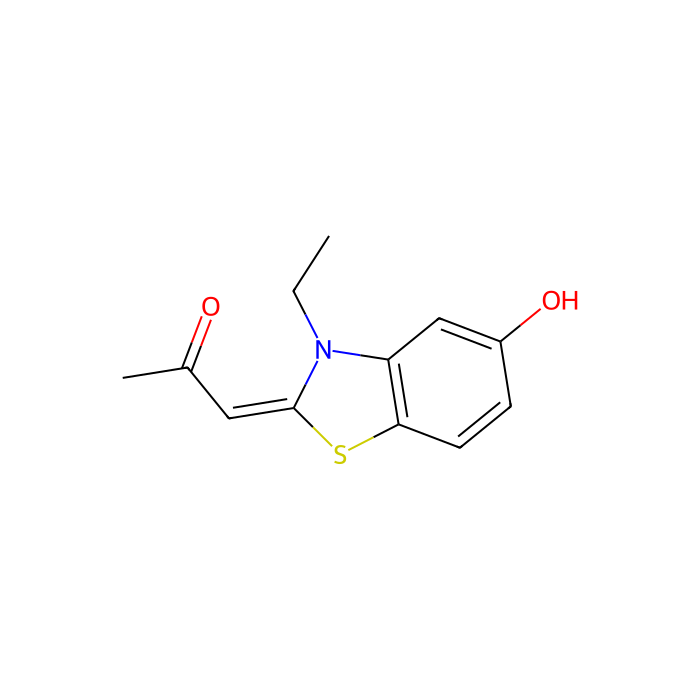
Potent DYRK1A/B inhibitor (IC 50 values are 0.23 and 0.24\xa0µM for DYRK1B and DYRK1A respectively). Also inhibits DYRK2, DTRK4, CLK1, CLK4, casein kinase 1 and PIM1 (> 90% inhibition at 10 μM).
Storage
Store at -20°C
Shipped In
Ice chest + Ice pads
This product requires cold chain shipping. Ground and other economy services are not available.
Action Type
INHIBITOR
Note
Wherever possible, you should prepare and use solutions on the same day. However, if you need to make up stock solutions in advance, we recommend that you store the solution as aliquots in tightly sealed vials at -20°C. Generally, these will be useable for up to one month. Before use, and prior to opening the vial we recommend that you allow your product to equilibrate to room temperature for at least 1 hour. Need more advice on solubility, usage and handling? Please visit our frequently asked questions (FAQ) page for more details.
Determine the necessary mass, volume, or concentration for preparing a solution.
Dilution Calculator
Determine the dilution needed to prepare a stock solution.
Reconstitution Calculator
Reviews
Customer Reviews
Application Protocols
Item-specific (Product Data)
No validated application protocols are provided for this item.
General protocols for small-molecule library compounds (not item-specific)
DMSO stock preparation
Warm DMSO to room temperature. Add compound to achieve 10–50 mM (or maximum soluble concentration). Vortex and, if needed, sonicate briefly. Optional: nitrogen backfill. Record exact concentration gravimetrically or by UV if chromophore is present.
Aliquot into amber, low-bind vials or 96/384-well plates; seal (heat-seal foil or cap mats). Store at −20 °C.
Working solution for cell assays
Thaw once, mix gently. Add to media to reach desired final concentration with ≤0.1–0.5% DMSO. Mix thoroughly and use promptly. Include vehicle controls matched for DMSO content.
LC–MS reference solution
Prepare 0.1–1.0 mg/mL in ACN or MeOH. Filter 0.2 µm PTFE. Store at 4 °C short-term or −20 °C long-term in amber vials.
Plate handling
Limit freeze–thaw cycles to one. Centrifuge plates briefly to collect condensate. Inspect for precipitate before use.
All parameters are general starting points and should be optimized for your assay system.
Biological Roles
Item-specific (Product Data)
No biological function, pathway, or target information is provided for this item. It is supplied for research use only.
General considerations (not item-specific)
As a small-molecule library member, this compound may be used as a probe candidate in discovery biology once its structure and properties are verified. Any biological role should be established experimentally with appropriate controls and orthogonal assays.
When evaluating biological activity:
Confirm identity/purity (LC–MS/NMR) of the working lot.
Assess solubility limits and aggregation (e.g., detergent-sensitive activity, DLS) to avoid false positives.
Evaluate stability in assay buffers and in microsomes or plasma if ADME profiling is intended.
Record the exact salt form and hydrate state from the CoA to ensure accurate concentration calculations in biological testing.
Buffer Applications
Applicability
This product is not a buffering agent. No intrinsic pKa/pH range is provided.
Practical guidance (general; for using small molecules in buffers)
Prepare concentrated DMSO stocks and dilute into assay buffers (PBS, HEPES, Tris, etc.) keeping final DMSO typically ≤0.1–1% v/v to minimize biological interference.
To mitigate precipitation on dilution, add DMSO stock slowly into vigorously mixed buffer, or pre-equilibrate buffer with 1–5% co-solvent (MeOH/EtOH/ACN) if assay-tolerated.
For pH-sensitive compounds (unknown here), use buffers at least 1 pH unit from the compound’s pKa to maintain a single ionization state; verify by UV–Vis or LC–MS.
Filter sterilize (0.22 µm) only if the compound is stable to the filter polymer and shear; otherwise, prepare fresh and use aseptically in cell culture assays.
Green Alternatives
Context
Specific green metrics for INDY are not available. Guidance below is general and not item-specific.
Greener handling and solvent choices (general)
Prefer DMSO and ethanol over DMF/NMP where solubility allows due to better hazard profiles and regulatory acceptance.
Replace dichloromethane and other chlorinated solvents for workup with ethyl acetate or MTBE when compatible with the compound’s polarity.
For chromatography, use heptane/ethyl acetate gradients instead of hexane when feasible.
Minimize solvent volumes by microplate-based assays and acoustic dispensing to reduce DMSO consumption in HTS.
Trade-offs (general)
DMSO is less volatile and more hygroscopic than ACN; while greener, it can accumulate moisture affecting compound stability. ACN has favorable volatility and MS compatibility but higher environmental burden.
Ethanol is greener but may impact certain enzyme assays; ACN/MeOH give cleaner baselines for LC–MS but have higher solvent waste concerns.
Suggested practice
Perform a small solvent-solubility matrix to identify the greenest acceptable solvent meeting assay or analytical constraints.
Implement closed-container storage and aliquoting to minimize evaporative loss and waste.
Collect solvent waste streams separately to enable appropriate disposal or recycling.
Pharmaceutical Uses
Item-specific (Product Data)
No pharmacopeial status, excipient role, or formulation use is specified for this item. It is supplied strictly for research use only.
General preformulation/use in R&D (not item-specific)
Early-stage developability assessments may include solubility (pH/CoS), stability (pH/light/oxidation), and permeability screens (PAMPA/Caco-2). These evaluations are user-run and not implied for this specific item.
If converting to a salt to improve solubility, select counterions with established safety profiles for subsequent studies; document salt stoichiometry on labels and in ELNs.
For analytical reference purposes, prepare certified secondary standards by cross-qualifying against NMR/LC–MS and assigning potency on an anhydrous, free-base/acid basis.
Physical Properties
Item-specific (Product Data)
Appearance: Not specified for this item; refer to CoA/Spec Sheet.
Melting point: Not specified for this item; refer to CoA/Spec Sheet.
Boiling point: Not specified for this item; refer to CoA/Spec Sheet.
Density: Not specified for this item; refer to CoA/Spec Sheet.
Refractive index: Not specified for this item; refer to CoA/Spec Sheet.
LogP/logD, pKa, solubility: Not specified for this item; refer to CoA/Spec Sheet.
General guidance (literature/typical for small-molecule library solids)
Many library members are delivered as off-white to yellow solids or films; solubility frequently favors polar aprotic solvents (DMSO, DMF) and alcohols (MeOH, EtOH). This is general guidance only and not item-specific.
Practical solubility screening (recommendation): test serially in DMSO (up to 10–50 mg/mL), DMF, MeOH/EtOH, then water or PBS with 1–5% DMSO or 10–20% co-solvent. Filter through 0.2 µm PTFE prior to assays when feasible.
If the structure becomes available, computed properties (cLogP, TPSA, HBD/HBA) can be predicted to guide formulation and permeability expectations.
Hygroscopicity, polymorphism, or hydrate formation: unknown for this item; check CoA/SDS and perform a small-scale Karl Fischer or TGA screen if critical to your workflow.
Quality & Grades
Item-specific (Product Data)
Grade/Purity: Not specified for this item; refer to CoA/Spec Sheet.
How to interpret grade and documentation (general guidance)
CoA/Spec Sheet typically lists identity (NMR/LC–MS/HPLC), purity (% area by HPLC), residual solvents, and water content. Absent explicit values in this listing, rely on the CoA accompanying your lot.
If designated as “library grade” or “screening grade,” expect purity commonly ≥95% by HPLC (literature convention), with identity confirmed by MS and/or NMR. This is not a specification for this specific item.
UV cutoff, metal content, and stabilizers: Not specified for this item; refer to CoA/Spec Sheet. If UV transparency is critical (e.g., enzyme kinetics), request the UV trace.
Batch-to-batch: Record lot numbers and retain chromatograms/spectra to ensure reproducibility across screening campaigns.
If stabilizers or salt forms are present, they will be disclosed on the CoA; adjust molecular weight for dosing calculations accordingly.
Reaction & Applications
Item-specific (Product Data)
Manufacturer Applications: Not specified in the listing; this product is categorized under small-molecule/compound libraries and is intended for research use only.
General applications for a library compound (not item-specific)
Biochemical and cell-based screening: Use as a test article in HTS, fragment/lead profiling, orthogonal counterscreens, or phenotypic assays. Maintain accurate dosing by normalizing to the free-base/free-acid equivalent weight if salt form is disclosed on the CoA.
Analytical controls: Spike into matrices for LC–MS method development, retention-time locking, and stability-indicating assays.
SAR exploration: If related analogs are available, design mini-panels to probe substituent effects; apply matched molecular pair analysis once the structure is known.
Reference standardization: Generate extinction coefficients empirically (UV–Vis) in assay-relevant solvents if absorbance quantitation is desired; document λmax and pathlength.
Practical tips:
Pre-screen solubility and precipitation on dilution at experimental temperatures.
Minimize freeze–thaw by preparing single-use aliquots of DMSO stocks.
For uncertain photostability, wrap solutions/plates in foil and avoid prolonged bright light exposure.
Track plate maps and barcodes to ensure traceability across replicate experiments.
Reaction Conditions
Applicability
No reaction conditions are specified for this catalog item, and it is not primarily offered as a reagent for synthetic transformations.
General guidance (not item-specific)
If employing the compound as a reactant or reference in method development, standard anhydrous conditions, inert atmosphere, and controlled temperature may be required depending on functional groups present (unknown here).
For solution preparation (assay-focused):
Stock: dissolve in dry DMSO at 10–50 mM as solubility permits.
Working solutions: dilute into buffer or media with gentle mixing to avoid local supersaturation; maintain final organic content within assay tolerance (commonly ≤1% v/v DMSO).
Stability checks: run short-term stability by LC–MS after 0, 4, and 24 h at room temperature and 37 °C in assay matrix to detect degradation or adsorption.
For LC–MS methods: start with water/ACN + 0.1% formic acid, 5–95% gradient over 5–10 min on C18; adjust based on retention and ionization (ESI+/-). These are general starting points, not item-specific directions.
Safety & Handling
Item-specific (Product Data)
GHS classification: Not specified for this item; refer to SDS.
Signal word / Hazard statements / Pictograms: Not specified for this item; refer to SDS.
Research use: For research use only.
Storage condition: Store at −20 °C (Product Data). Shipped in an ice chest with ice pads.
General laboratory precautions (not item-specific; consult SDS for authoritative guidance)
PPE: lab coat, safety glasses, and appropriate chemically resistant gloves (e.g., nitrile). Handle powders/solid residues in a fume hood to avoid inhalation of dust or aerosols.
Avoid incompatibilities when unknown: segregate from strong oxidizers and acids/bases; prevent contact with ignition sources. Use secondary containment for freezer storage.
First aid (overview): upon skin contact wash with soap/water; eye contact rinse with water for ≥15 min and seek medical attention; inhalation move to fresh air; ingestion seek medical attention. Bring SDS to healthcare provider.
Spill response: contain with inert absorbent (for liquids) or gently scoop (for solids) minimizing dust; dispose of waste following institutional and local regulations.
Stability notes: Unknown sensitivity to moisture, oxygen, light, or heat. Store tightly capped under dry, inert atmosphere if feasible; minimize freeze–thaw by aliquoting.
Always defer to the item’s SDS for definitive hazard, toxicology, and handling information.
Solvent Selection
Item-specific (Product Data)
Solubility information: Not specified for this item; refer to CoA/Spec Sheet.
General solvent strategy for small-molecule library compounds (not item-specific)
Primary stock solvent: DMSO is the default for discovery compounds due to broad solvency, compatibility with HTS, and low volatility. Prepare 10–50 mM stocks where solubility permits.
Secondary options: DMF or NMP (for difficult solutes), methanol/ethanol (analytical work), and acetonitrile (chromatography compatibility). For aqueous assays, dilute DMSO stocks into buffer keeping final DMSO ≤0.1–1% v/v as assay permits.
Miscibility and handling:
DMSO, DMF, MeOH, EtOH, ACN are fully miscible with water; use co-solvent strategies (e.g., 5–20% organic) to avoid precipitation on dilution.
Filter through 0.2 µm PTFE for analytical injections; use PVDF/nylon for aqueous-organic mixtures if PTFE is unavailable.
When to choose alternatives:
Select MeOH/EtOH for UV-based kinetics to minimize DMSO effects on enzymes.
Choose ACN for LC–MS sample preparation due to volatility and elution strength.
If the compound is highly lipophilic (unknown here), consider co-solvents with surfactants (e.g., 0.01–0.05% Tween-20) or cyclodextrins to maintain solution stability in bioassays.
Storage & Reconstitution
Item-specific (Product Data)
Storage: Store at −20 °C.
Shipping: Ice chest with ice pads.
Appearance and reconstitution solvent: Not specified for this item; refer to CoA/Spec Sheet.
General guidance (not item-specific)
Upon receipt: allow container to equilibrate to room temperature in a desiccator before opening to prevent moisture condensation.
Reconstitution: if solid, dissolve in anhydrous DMSO to prepare concentrated stocks (e.g., 10–50 mM as solubility permits). If supplied in solution, verify the solvent and concentration on the label/CoA before use.
Aliquoting: divide into single-use portions in amber vials or sealed microplates to avoid repeated freeze–thaw. Backfill headspace with inert gas if the compound is air/moisture sensitive (unknown here).
Stability: Unknown for this specific item; perform periodic QC (HPLC/LC–MS) on stored stocks. Protect from light until photostability is known.
Freeze–thaw: Minimize to preserve integrity. Thaw at room temperature, mix gently, and promptly return unused material to −20 °C.
Documentation: Record lot number, preparation date, solvent, and calculated concentration in your ELN to ensure traceability.
Structure & Identity
Item-specific (Product Data)
SKU: I275280
Product name: INDY
CAS: 1169755-45-6
PubChem CID: 69538603
InChIKey: 98602 (as provided)
SMILES: Not specified for this item; refer to CoA/Spec Sheet.
Molecular formula: Not specified for this item; refer to CoA/Spec Sheet.
Molecular weight: Not specified for this item; refer to CoA/Spec Sheet.
Structural features: Not provided for this catalog entry. Without a structure, functional groups, ring systems, and stereochemistry cannot be enumerated.
2D description: Not available; obtain the structure file (SDF/Mol/SMILES) from the CoA/Spec Sheet or supplier support to enable cheminformatics workflows (fingerprints, substructure, PAINS filters, and property prediction).
Synthetic Utility
Applicability
This listing is a small-molecule library member intended for screening and analytical use. Without structural information, specific synthetic transformations or reactivity cannot be proposed for this item.
General notes (not item-specific)
If the structure is obtained and contains common handles (e.g., aryl halides, carboxylic acids, amines), typical derivatizations may include: Suzuki/Negishi/Buchwald couplings, amide couplings (EDC/HATU), reductive amination, esterification, or protection–deprotection sequences.
For generating analogs, consider late-stage diversification strategies (C–H activation, Minisci alkylation) if heteroarenes are present. Reaction planning should be informed by the actual structure and functional-group compatibility.
Use orthogonal analytical methods (LC–MS, 1H/13C NMR, HRMS) to confirm identity and purity if any transformations are attempted.
Target Specificity
Item-specific (Product Data)
No target, pathway, or selectivity profile is provided for this item.
Guidance (general, not item-specific)
Establish target engagement with orthogonal biochemical and biophysical assays (e.g., enzyme activity, DSF, SPR, ITC) and confirm cellular on-target effects with genetics (knockdown/knockout) where applicable.
Evaluate promiscuity risks (aggregation, redox cycling, covalency) using appropriate counterscreens (detergent sensitivity, AmpC/ALDH reactivity, PAINS substructures once structure is available).
We use cookies to ensure the website functions properly and, where permitted, to improve your experience. You can manage your preferences at any time in Settings. Learn more in our Cookie Policy.
Shall we send you a message when we have discounts available?
Remind me later
Thank you! Please check your email inbox to confirm.
Products are supplied to verified businesses, institutions, and qualified professionals for research and development use only. Not for use in humans, animals, diagnosis, or therapy.

 B2320038