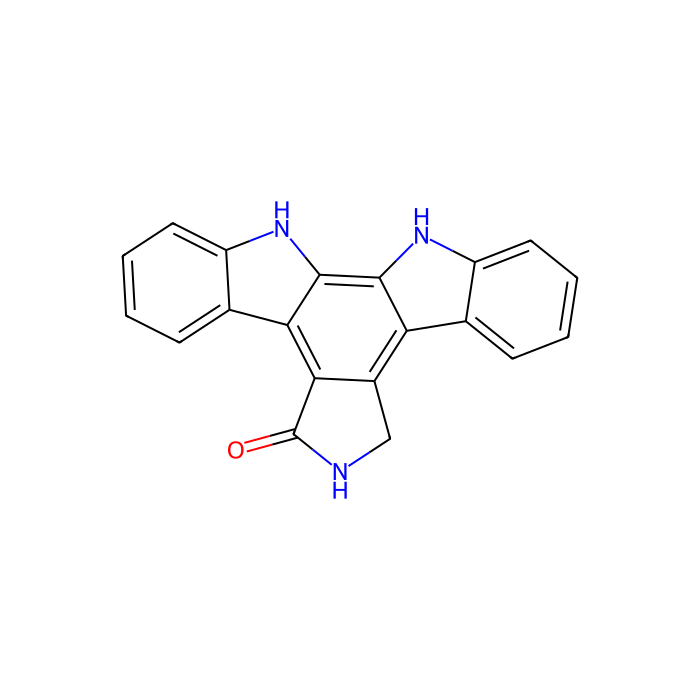
K-252c - Moligand™,≥98% , CAS No.85753-43-1

CAS: 85753-43-1 Cat. No.: K276286 Formula: C20H13N3O Molecular Weight: 311.34 EC Number: 632-917-2
AVAILABLE TO ORDER
GRADE & PURITY Moligand™ ? Moligand™ — Aladdin's line of ligands and bioactive small molecules. Use for receptor, pathway, and binding studies needing defined small-molecule tools. ≥98%
Synonyms
3,13,23-triazahexacyclo[14.7.0.0^{2,10}.0^{4,9}.0^{11,15}.0^{17,22}]tricosa-1(16),2(10),4(9),5,7,11(15),17(22),18,20-nonaen-12-one|SD-1825|staurosporinone|K-252c - CAS 85753-43-1|Staurosporine aglycone|SDCCGSBI-0633718.P001|5H-Indolo[2,3-a]pyrrolo[3,4-c]carbazol-5-one, 6,7,12,13-tetrahydro-|3,13,23-triazahexacyclo[14.7.0.02,10.04,9.011,15.017,22]tricosa-1,4,6,8,10,15,17,19,21-nonaen-12-one|2,3,8,9-tetrahydro-1H-indolo[2,3-a]pyrrolo[3,4-c]carbazol-1-one|K252c; Staurosporine Aglycone|6,7,12,13-Tetrahydro-5H-indolo(2,3-a)pyrrolo(3,4-C)carbazol-5-one|6,7,12,13-Tetrahydro-5H-indolo-[2,3-a]pyrrolo[3,4-c]carbazol-5-one|6,7,12,13-tetrahydro-5H-indolo[2,3-a]pyrrolo[3,4-c]carbazol-5-one|5H-Indolo(2,3-a)pyrrolo(3,4-C)carbazol-5-one, 6,7,12,13-tetrahydro-|6,7,12,13-tetrahydro-5-oxo-5H-indolo[2.3-a]pyrrolo [3,4-c]carbazole|Pentafluorobenzoicacid|K-252c|K-252c; Staurosporinone
Storage
Store at -20°C,Desiccated
Shipped In
Ice chest + Ice pads
★
Size
USA
Germany (EU)*
Price
Qty
1mg
K276286-1mg
Made to order · 8–12 wks
$116.90
5mg
K276286-5mg
Made to order · 8–12 wks
$379.90
25mg
K276286-25mg
Made to order · 8–12 wks
$1,299.90
50mg
K276286-50mg
Made to order · 8–12 wks
$1,819.90
Enter a quantity for the sizes you want to add.

Overview

Store at +4°C. Store under desiccating conditions. The product can be stored for up to 12 months.

K-252c, a staurosporine analog isolated from Nocardiopsis sp., is a cell-permeable PKC inhibitor, with an IC50 of 2.45 µM. K-252c induces apoptosis in human chronic myelogenous leukemia cancer cells. K-252c also inhibits β-lactamase, chymotrypsin, and malate dehydrogenase.

Specifications

Synonyms
3,13,23-triazahexacyclo[14.7.0.0^{2,10}.0^{4,9}.0^{11,15}.0^{17,22}]tricosa-1(16),2(10),4(9),5,7,11(15),17(22),18,20-nonaen-12-one | SD-1825 | staurosporinone | K-252c - CAS 85753-43-1 | Staurosporine aglycone | SDCCGSBI-0633718.P001 | 5H-Indolo[2,3-a]pyrrolo[3,4-c]carbazol-5-one, 6,7,12,13-tetrahydro- | 3,13,23-triazahexacyclo[14.7.0.02, Show more
Specifications & Purity
Moligand™,≥98%
Biochemical and Physiological Mechanisms
Potent, cell-permeable protein kinase C (PKC) inhibitor (IC 50 are 2.45 and 25.7 μM for PKC and PKA respectively). Cytotoxic and antitumor agent. Active in vitro and in vivo .
Storage
Store at -20°C,Desiccated
Shipped In
Ice chest + Ice pads
This product requires cold chain shipping. Ground and other economy services are not available.
Grade
Moligand™
Action Type
INHIBITOR
Note
Wherever possible, you should prepare and use solutions on the same day. However, if you need to make up stock solutions in advance, we recommend that you store the solution as aliquots in tightly sealed vials at -20°C. Generally, these will be useable for up to one month. Before use, and prior to opening the vial we recommend that you allow your product to equilibrate to room temperature for at least 1 hour. Need more advice on solubility, usage and handling? Please visit our frequently asked questions (FAQ) page for more details.
Purity
≥98%
Names and Identifiers
SMILES
C1C2=C3C4=CC=CC=C4NC3=C5C(=C2C(=O)N1)C6=CC=CC=C6N5
IUPAC Name
3,13,23-triazahexacyclo[14.7.0.02,10.04,9.011,15.017,22]tricosa-1,4,6,8,10,15,17,19,21-nonaen-12-one
InChIKey
MEXUTNIFSHFQRG-UHFFFAOYSA-N
InChI
1S/C20H13N3O/c24-20-17-12(9-21-20)15-10-5-1-3-7-13(10)22-18(15)19-16(17)11-6-2-4-8-14(11)23-19/h1-8,22-23H,9H2,(H,21,24)
Isomeric SMILES
C1C2=C3C4=CC=CC=C4NC3=C5C(=C2C(=O)N1)C6=CC=CC=C6N5
Molecular Weight
311.34
Reaxys
4204106
Reaxys-RN_link_address
https://www.reaxys.com/reaxys/secured/hopinto.do?context=S&query=IDE.XRN=4204106&ln=

Advanced Data

Taxonomic Classification

Taxonomy Tree

KingdomOrganic compounds
SuperclassOrganoheterocyclic compounds
ClassIndoles and derivatives
SubclassCarbazoles
Intermediate Tree Nodes Pyrrolocarbazoles
Direct ParentIndolocarbazoles
Alternative Parents Pyrrolo[2,3-a]carbazoles  Pyrroloindoles  Isoindolones  Indoles  Benzenoids  Pyrroles  Heteroaromatic compounds  Secondary carboxylic acid amides  Lactams  Azacyclic compounds  Organopnictogen compounds  Organooxygen compounds  Organonitrogen compounds  Organic oxides  Hydrocarbon derivatives  
Molecular FrameworkAromatic heteropolycyclic compounds
Substituents Indolocarbazole - Pyrrolo[2,3-a]carbazole - Pyrroloindole - Isoindolone - Indole - Isoindoline - Isoindole or derivatives - Benzenoid - Pyrrole - Heteroaromatic compound - Carboxamide group - Lactam - Secondary carboxylic acid amide - Carboxylic acid derivative - Azacycle - Organooxygen compound - Organonitrogen compound - Hydrocarbon derivative - Organic oxide - Organopnictogen compound - Organic oxygen compound - Organic nitrogen compound - Aromatic heteropolycyclic compound
DescriptionThis compound belongs to the class of organic compounds known as indolocarbazoles. These are polycyclic aromatic compounds containing an indole fused to a carbazole.
External Descriptors an indolocarbazole alkaloid
3D Structure
Interactive Chemical Structure Model


Associated Targets(Human)
TOP1 Tclin DNA topoisomerase I (7553 Activities)
Activity TypeRelationActivity valueUnitsAction TypeJournalPubMed IddoiAssay Aladdin ID
MAPK11 Tchem MAP kinase p38 beta (2785 Activities)
Activity TypeRelationActivity valueUnitsAction TypeJournalPubMed IddoiAssay Aladdin ID
LCK Tclin Tyrosine-protein kinase LCK (9212 Activities)
Activity TypeRelationActivity valueUnitsAction TypeJournalPubMed IddoiAssay Aladdin ID
MAPK14 Tchem MAP kinase p38 alpha (12866 Activities)
Activity TypeRelationActivity valueUnitsAction TypeJournalPubMed IddoiAssay Aladdin ID
GSK3B Tclin Glycogen synthase kinase-3 beta (11785 Activities)
Activity TypeRelationActivity valueUnitsAction TypeJournalPubMed IddoiAssay Aladdin ID
CHAT Tchem Choline acetylase (63 Activities)
Activity TypeRelationActivity valueUnitsAction TypeJournalPubMed IddoiAssay Aladdin ID
MYLK Tchem Myosin light chain kinase, smooth muscle (1267 Activities)
Activity TypeRelationActivity valueUnitsAction TypeJournalPubMed IddoiAssay Aladdin ID
JAK3 Tclin Tyrosine-protein kinase JAK3 (8349 Activities)
Activity TypeRelationActivity valueUnitsAction TypeJournalPubMed IddoiAssay Aladdin ID
RPS6KA5 Tchem Ribosomal protein S6 kinase alpha 5 (3355 Activities)
Activity TypeRelationActivity valueUnitsAction TypeJournalPubMed IddoiAssay Aladdin ID
CTRB1 Tchem Beta-chymotrypsin (261 Activities)
Activity TypeRelationActivity valueUnitsAction TypeJournalPubMed IddoiAssay Aladdin ID
MAPK13 Tchem MAP kinase p38 delta (2605 Activities)
Activity TypeRelationActivity valueUnitsAction TypeJournalPubMed IddoiAssay Aladdin ID
MAPKAPK2 Tchem MAP kinase-activated protein kinase 2 (4814 Activities)
Activity TypeRelationActivity valueUnitsAction TypeJournalPubMed IddoiAssay Aladdin ID
MAPKAPK5 Tchem MAP kinase-activated protein kinase 5 (2831 Activities)
Activity TypeRelationActivity valueUnitsAction TypeJournalPubMed IddoiAssay Aladdin ID
ROCK2 Tclin Rho-associated protein kinase 2 (6206 Activities)
Activity TypeRelationActivity valueUnitsAction TypeJournalPubMed IddoiAssay Aladdin ID
PRKCA Tchem Protein kinase C alpha (5923 Activities)
Activity TypeRelationActivity valueUnitsAction TypeJournalPubMed IddoiAssay Aladdin ID
MAP3K11 Tchem Mitogen-activated protein kinase kinase kinase 11 (808 Activities)
Activity TypeRelationActivity valueUnitsAction TypeJournalPubMed IddoiAssay Aladdin ID
PRKACA Tchem cAMP-dependent protein kinase alpha-catalytic subunit (3475 Activities)
Activity TypeRelationActivity valueUnitsAction TypeJournalPubMed IddoiAssay Aladdin ID
TOP2B Tclin DNA topoisomerase II beta (959 Activities)
Activity TypeRelationActivity valueUnitsAction TypeJournalPubMed IddoiAssay Aladdin ID
MAP3K9 Tchem Mitogen-activated protein kinase kinase kinase 9 (945 Activities)
Activity TypeRelationActivity valueUnitsAction TypeJournalPubMed IddoiAssay Aladdin ID
MAPK8 Tchem c-Jun N-terminal kinase 1 (5038 Activities)
Activity TypeRelationActivity valueUnitsAction TypeJournalPubMed IddoiAssay Aladdin ID
PRKCQ Tchem Protein kinase C theta (3319 Activities)
Activity TypeRelationActivity valueUnitsAction TypeJournalPubMed IddoiAssay Aladdin ID
AKT1 Tchem Serine/threonine-protein kinase AKT (9192 Activities)
Activity TypeRelationActivity valueUnitsAction TypeJournalPubMed IddoiAssay Aladdin ID
PDK1 Tchem Pyruvate dehydrogenase kinase isoform 1 (2021 Activities)
Activity TypeRelationActivity valueUnitsAction TypeJournalPubMed IddoiAssay Aladdin ID
SGK1 Tchem Serine/threonine-protein kinase Sgk1 (2343 Activities)
Activity TypeRelationActivity valueUnitsAction TypeJournalPubMed IddoiAssay Aladdin ID
RPS6KB1 Tchem Ribosomal protein S6 kinase 1 (4456 Activities)
Activity TypeRelationActivity valueUnitsAction TypeJournalPubMed IddoiAssay Aladdin ID
CHEK1 Tchem Serine/threonine-protein kinase Chk1 (6846 Activities)
Activity TypeRelationActivity valueUnitsAction TypeJournalPubMed IddoiAssay Aladdin ID
MAPK12 Tchem MAP kinase p38 gamma (2776 Activities)
Activity TypeRelationActivity valueUnitsAction TypeJournalPubMed IddoiAssay Aladdin ID
K562 (73714 Activities)
Activity TypeRelationActivity valueUnitsAction TypeJournalPubMed IddoiAssay Aladdin ID
PANC-1 (6144 Activities)
Activity TypeRelationActivity valueUnitsAction TypeJournalPubMed IddoiAssay Aladdin ID
HCT-116 (91556 Activities)
Activity TypeRelationActivity valueUnitsAction TypeJournalPubMed IddoiAssay Aladdin ID
HepG2 (196354 Activities)
Activity TypeRelationActivity valueUnitsAction TypeJournalPubMed IddoiAssay Aladdin ID
NCI-H460 (60772 Activities)
Activity TypeRelationActivity valueUnitsAction TypeJournalPubMed IddoiAssay Aladdin ID
Jurkat (10389 Activities)
Activity TypeRelationActivity valueUnitsAction TypeJournalPubMed IddoiAssay Aladdin ID
GLI1 Tchem Zinc finger protein GLI1 (201 Activities)
Activity TypeRelationActivity valueUnitsAction TypeJournalPubMed IddoiAssay Aladdin ID
GLI2 Tchem Zinc finger protein GLI2 (13 Activities)
Activity TypeRelationActivity valueUnitsAction TypeJournalPubMed IddoiAssay Aladdin ID
TDP1 Tchem Tyrosyl-DNA phosphodiesterase 1 (345557 Activities)
Activity TypeRelationActivity valueUnitsAction TypeJournalPubMed IddoiAssay Aladdin ID
SMAD3 Tchem Mothers against decapentaplegic homolog 3 (68039 Activities)
Activity TypeRelationActivity valueUnitsAction TypeJournalPubMed IddoiAssay Aladdin ID
EYA2 Tbio Eyes absent homolog 2 (5884 Activities)
Activity TypeRelationActivity valueUnitsAction TypeJournalPubMed IddoiAssay Aladdin ID
HSPA5 Tchem 78 kDa glucose-regulated protein (3319 Activities)
Activity TypeRelationActivity valueUnitsAction TypeJournalPubMed IddoiAssay Aladdin ID
CDK4 Tclin Cyclin-dependent kinase 4/cyclin D1 (2340 Activities)
Activity TypeRelationActivity valueUnitsAction TypeJournalPubMed IddoiAssay Aladdin ID
PRKD3 Tchem Protein kinase C (PKC) (1010 Activities)
Activity TypeRelationActivity valueUnitsAction TypeJournalPubMed IddoiAssay Aladdin ID
CCNE1 Tchem Cyclin-dependent kinase 2/cyclin E (1410 Activities)
Activity TypeRelationActivity valueUnitsAction TypeJournalPubMed IddoiAssay Aladdin ID
CDK1 Tchem Cyclin-dependent kinase 1/cyclin B (899 Activities)
Activity TypeRelationActivity valueUnitsAction TypeJournalPubMed IddoiAssay Aladdin ID
PRKACB Tchem cAMP-dependent protein kinase (PKA) (929 Activities)
Activity TypeRelationActivity valueUnitsAction TypeJournalPubMed IddoiAssay Aladdin ID
CSNK2B Tbio Casein kinase II (1406 Activities)
Activity TypeRelationActivity valueUnitsAction TypeJournalPubMed IddoiAssay Aladdin ID
Associated Targets(non-human)
ampC Beta-lactamase AmpC (62480 Activities)
Activity TypeRelationActivity valueUnitsAction TypeJournalPubMed IddoiAssay Aladdin ID
Mapk1 MAP kinase ERK2 (650 Activities)
Activity TypeRelationActivity valueUnitsAction TypeJournalPubMed IddoiAssay Aladdin ID
PRKG1 cGMP-dependent protein kinase 1 alpha (35 Activities)
Activity TypeRelationActivity valueUnitsAction TypeJournalPubMed IddoiAssay Aladdin ID
Bacillus cereus (7522 Activities)
Activity TypeRelationActivity valueUnitsAction TypeJournalPubMed IddoiAssay Aladdin ID
Mus musculus (284745 Activities)
Activity TypeRelationActivity valueUnitsAction TypeJournalPubMed IddoiAssay Aladdin ID
B16 (5829 Activities)
Activity TypeRelationActivity valueUnitsAction TypeJournalPubMed IddoiAssay Aladdin ID
P388 (20296 Activities)
Activity TypeRelationActivity valueUnitsAction TypeJournalPubMed IddoiAssay Aladdin ID
Splenocyte (1641 Activities)
Activity TypeRelationActivity valueUnitsAction TypeJournalPubMed IddoiAssay Aladdin ID
mdh Malate dehydrogenase (29 Activities)
Activity TypeRelationActivity valueUnitsAction TypeJournalPubMed IddoiAssay Aladdin ID
Hes1 Transcription factor HES-1 (13 Activities)
Activity TypeRelationActivity valueUnitsAction TypeJournalPubMed IddoiAssay Aladdin ID
Nfe2l2 Nuclear factor erythroid 2-related factor 2 (214 Activities)
Activity TypeRelationActivity valueUnitsAction TypeJournalPubMed IddoiAssay Aladdin ID
Mechanisms of Action
Certificates (CoA,COO,BSE/TSE and Analysis Chart)
C of A & Other Certificates(BSE/TSE, COO):
Analytical Chart:

Find and download the COA for your product by matching the lot number on the packaging.

4 results found

Lot NumberCertificate TypeDateItem
D2608366D2608366Certificate of AnalysisMar 30, 2026 K276286
D2608370D2608370Certificate of AnalysisMar 30, 2026 K276286
D2608371D2608371Certificate of AnalysisMar 30, 2026 K276286
D2608374D2608374Certificate of AnalysisMar 30, 2026 K276286
Chemical and Physical Properties
SolubilityDMF: 500 µg/ml;DMSO: 25 mg/ml;DMSO:PBS(pH 7.2) (1:3): 0.25 mg/ml;Ethanol: slightly soluble
SensitivityHeat sensitive;Moisture sensitive
Molecular Weight311.3
XLogP33.700
Hydrogen Bond Donor Count3
Hydrogen Bond Acceptor Count1
Rotatable Bond Count0
Exact Mass311.106 Da
Monoisotopic Mass311.106 Da
Topological Polar Surface Area60.700 Ų
Heavy Atom Count24
Formal Charge0
Complexity551.000
Isotope Atom Count0
Defined Atom Stereocenter Count0
Undefined Atom Stereocenter Count0
Defined Bond Stereocenter Count0
Undefined Bond Stereocenter Count0
The total count of all stereochemical bonds0
Covalently-Bonded Unit Count1
Safety and Hazards(GHS)
Pictogram(s)
Signal
Warning
Hazard Statements

H302:Harmful if swallowed

H319:Causes serious eye irritation

Precautionary Statements

P264:Wash hands [and …] thoroughly after handling.

P270:Do not eat, drink or smoke when using this product.

P280:Wear protective gloves/protective clothing/eye protection/face protection.

P330:Rinse mouth.

P305+P351+P338:IF IN EYES: Rinse cautiously with water for several minutes. Remove contact lenses if present and easy to do - continue rinsing.

P501:Dispose of contents/container to an approved waste disposal plant.

P264+P265:Wash hands [and …] thoroughly after handling. Do not touch eyes.

P301+P317:IF SWALLOWED: Get medical help.

P337+P317:If eye irritation persists: Get medical help.

Reaxys
4204106
Reaxys-RN_link_address
https://www.reaxys.com/reaxys/secured/hopinto.do?context=S&query=IDE.XRN=4204106&ln=
Solution Calculators
Reviews

Customer Reviews

Application Protocols

No vendor-validated application protocols are specified for this item. The following general procedures reflect common practices for small-molecule kinase inhibitors in biochemical and cellular assays (literature guidance):

  • DMSO stock preparation:

    • Weigh compound quickly to minimize moisture exposure.
    • Prepare a 10–50 mM stock in anhydrous DMSO. Vortex and sonicate briefly if required. Aliquot into amber vials (single-use volumes) and store at −20°C, desiccated.
  • Biochemical kinase inhibition assay (generic):

    • Buffer: 50 mM HEPES pH 7.5, 10 mM MgCl2, 1 mM DTT, 0.01% Tween 20 (optimize per enzyme).
    • Preincubate enzyme with serially diluted inhibitor (final DMSO ≤1% v/v) for 10 min at 25–30°C.
    • Initiate with substrate and ATP (tune ATP near Km to assess competitive behavior). Readout via ADP-Glo, radiometric transfer, or FRET-based formats.
    • Analyze IC50 and convert to Ki with appropriate models when ATP-competitive.
  • Cell-based assays (generic):

    • Prepare working solutions in medium with ≤0.1–0.5% DMSO final.
    • Treat cells for 1–24 h depending on endpoint (e.g., phospho-protein Western blot, reporter assays). Verify compound solubility and absence of precipitation under culture conditions.

Note: Optimize conditions for your specific targets and detection methods. Always include vehicle controls and at least one orthogonal reference inhibitor.

Biological Roles

K-252c belongs to the indolocarbazole family of microbial alkaloids (literature), a class renowned for potent, ATP-competitive binding to protein kinases. While item-specific target data are not provided here, the scaffold is widely used in chemical biology as a reference inhibitor for kinase-centric pathways.

General biological context (literature):

  • Mode of interaction: The rigid, planar indolocarbazole core mimics adenine engagement within kinase ATP sites, forming conserved hinge-region hydrogen bonds and hydrophobic contacts. Substituent variation modulates selectivity across kinase families.
  • Pathways commonly interrogated with K-252-class tools: PKC signaling, neurotrophin receptor (Trk) pathways, and broader serine/threonine kinase cascades implicated in cell cycle and stress responses.
  • Cellular effects at research concentrations: Suppression of phosphorylation events downstream of sensitive kinases; potential induction of cytostasis or apoptosis-like signatures at higher exposures (assay- and cell-type dependent; literature observation).

Utility in research:

  • Benchmark compound for assay qualification (determining dynamic range and sensitivity).
  • Comparative profiling across kinase panels to map selectivity landscapes and off-target liabilities.
  • Phosphoproteomic experiments to connect target engagement with network-level signaling changes.

Caution:

  • Biological potency can be high; adopt careful dose–response design and verify on-target effects with orthogonal methods (e.g., genetic knockdown/CRISPR or structurally unrelated inhibitors). No clinical or therapeutic claims are made; for research use only.
Buffer Applications

This product is not a buffer reagent. However, appropriate buffer selection is essential for reproducible biochemical assays with indolocarbazole inhibitors.

General guidance (assay-focused, literature):

  • Kinase assays: Use HEPES or Tris buffers (pH 7.0–7.5) with Mg2+ (or Mn2+ as applicable), 0.01–0.05% nonionic surfactant (Tween 20/80 or Triton X-100) to reduce adsorption/aggregation, and 1–5 mM DTT or TCEP if the enzyme requires a reducing environment.
  • DMSO tolerance: Validate enzyme activity across 0–1% DMSO to confirm acceptable solvent tolerance for your final inhibitor concentration.
  • Protein stabilization: Include BSA (0.01–0.1%) where compatible to minimize nonspecific binding to plastics and proteins.
  • Filtration and degassing: Filter buffers (0.22 µm) and degas to reduce bubbles in plate readers or microfluidic setups.

Practical tips:

  • Add the DMSO inhibitor stock last, with mixing, to minimize local supersaturation.
  • For fluorescence-based readouts, verify that the compound does not interfere (inner filter, quenching); adjust buffer composition or detection wavelength accordingly.

Item-specific buffer compatibility data are not provided; optimize conditions empirically for your assay.

Green Alternatives

Green chemistry considerations for this product focus on solvent choice and assay workflow, since the compound itself is a fixed bioactive scaffold rather than a process reagent.

  • Reduce DMSO load: While DMSO is widely accepted, minimizing final DMSO concentration (e.g., ≤0.5% v/v where compatible) reduces solvent burden and potential biological artifacts.
  • Alternative vehicles (literature):
    • Aqueous cyclodextrin complexes (e.g., HP-β-CD) to enhance apparent solubility and reduce reliance on high DMSO fractions.
    • Ethanol (≤0.5–1% v/v) as a co-solvent where assay-tolerated; balance volatility and effects on cells/enzymes.
    • PEG 300/400 microdosing for in vivo-like formulations (for non-clinical research only), noting viscosity and assay interference risks.
  • Process scale considerations: If larger solution preparations are needed (e.g., plate fills), employ solvent recovery (DMSO reclamation) and minimize single-use plastics (use glass reservoirs, washable plates where feasible).

Comparison of common vehicles (general guidance):

  • DMSO: Highest solvency, excellent stability; potential to perturb protein dynamics at higher %.
  • Ethanol: Greener sourcing possible; flammable and more evaporative, watch for concentration drift.
  • Aqueous cyclodextrin: Water-based, non-volatile; may interact with hydrophobic pockets and influence binding data—control experiments recommended.

Note: No item-specific green metrics (e.g., E-factor, PMI) are provided. Select greener options consistent with your assay and data quality requirements.

Pharmaceutical Uses

No pharmacopeial status or excipient role is provided for this item. K-252c is offered strictly for research use (screening-grade Moligand™).

Research and development context (non-clinical, literature):

  • Employed as a reference tool compound in drug discovery to benchmark kinase assay performance, evaluate selectivity across kinase panels, and support structure–activity relationship (SAR) studies of related scaffolds.
  • Utilized in formulation feasibility studies at the discovery stage to understand solubility and stability constraints for indolocarbazole-like chemotypes.

Important limitations:

  • Not for human or veterinary use.
  • Not formulated or qualified as an API, excipient, or for GMP manufacturing.
  • Any translation to in vivo research requires institutionally approved protocols and additional qualification (stability, sterility, endotoxin, etc.), which are outside the scope of this catalog item.

For regulated applications, consult your QA unit and request expanded documentation or alternate materials specifically designed for clinical development if needed.

Physical Properties

Item-specific physicochemical specifications have not been provided in the Product Data for SKU K276286.

  • Appearance: Not specified for this item; refer to CoA/Spec Sheet.
  • Melting point: Not specified for this item; refer to CoA/Spec Sheet.
  • Boiling point: Not applicable (decomposes before boiling, literature trend for indolocarbazoles; verify on CoA).
  • Density: Not specified for this item; refer to CoA/Spec Sheet.
  • Refractive index: Not applicable for solids.
  • pKa/logP: Not specified for this item; refer to CoA/Spec Sheet.
  • Solubility (general, literature guidance for indolocarbazoles):
    • Typically soluble in polar aprotic organic solvents (DMSO, DMF) at assay-concentration ranges; sparingly soluble in water without co-solvent or complexation.
    • Aqueous compatibility can be improved via co-solvents (DMSO, ethanol), surfactants (0.01–0.1% Tween 80), or cyclodextrin inclusion.

Computed/literature notes (non-item-specific):

  • Indolocarbazole cores are aromatic, relatively lipophilic, and often exhibit strong UV absorbance (useful for HPLC/UV detection), with limited volatility and a propensity to form strong π–π interactions in the solid state.

Practical considerations:

  • Prepare concentrated DMSO stocks (e.g., 10–50 mM, literature practice) and dilute into buffered media immediately before use to limit precipitation.
  • Filter (0.22 µm PTFE) if particulate forms upon dilution; avoid cellulose ester filters with strong organic solvents.

For definitive, item-specific physical property values, consult the CoA/Spec Sheet.

Quality & Grades
  • Grade/Purity: Moligand™ (as listed for this item). Exact assay purity and analytical limits are Not specified for this item; refer to CoA/Spec Sheet.

What Moligand™ typically denotes (general description):

  • A screening-grade, bioactive small-molecule offering intended for ligand discovery, target validation, and assay development.
  • Emphasis on structural identity and fitness for biochemical/cellular screening rather than preparative synthesis.
  • Typical QC elements for such offerings include identity confirmation by LC–MS and/or NMR, and purity by HPLC/UPLC; specific methods and thresholds should be confirmed on the item’s CoA.

Implications for users:

  • Suitable for high-throughput screening (HTS), probe development, and reference control experiments where consistent identity and practical solubility are critical.
  • If ultra-trace impurity control (e.g., metal content, residual solvents at specified ppm, water content) or certified UV cutoff is required for your workflow, verify on the CoA/Spec Sheet. Those parameters are Not specified for this item.

Best practices:

  • Record lot number and retain a reference aliquot for long campaigns.
  • For quantitative biology, verify concentration by UV-Vis or quantitative NMR using your in-house standard curves.
  • If using in regulated environments, request extended documentation (e.g., expanded analytical package) in advance to ensure alignment with internal quality systems.
Reaction & Applications

This product is positioned as a bioactive small molecule (Moligand™) rather than a synthetic reagent. Accordingly, its primary applications are in biochemical and cellular assays, not as a stoichiometric or catalytic reagent in organic synthesis.

Research applications (literature/general for K-252 family indolocarbazoles):

  • Reference inhibitor in kinase-focused studies: Indolocarbazoles often act as ATP-competitive inhibitors across serine/threonine kinases and some receptor tyrosine kinases. K-252 variants have been used to probe protein kinase C (PKC), Trk family, and other kinases in pathway mapping and target validation.
  • Chemical biology probes: Useful to benchmark assay performance (Z′ factor), to generate IC50/KT values across panels, and to validate assay formats (radiometric, ADP-Glo, FRET, TR-FRET, NanoBRET).
  • Phenotypic screening controls: Employed to elicit pathway-specific phenotypes (e.g., alterations in phosphorylation signatures) in cells, facilitating mechanism-of-action deconvolution with phosphoproteomics (general literature practice).

Assay design notes:

  • Confirm compatibility with the enzyme and detection chemistry at the chosen DMSO percentage (common window 0.1–1% v/v).
  • Establish a dilution series spanning ≥3 logs around anticipated potency; include time-dependence checks to distinguish reversible vs. slowly reversible binding.
  • For cellular assays, verify permeability and solubility under culture conditions; monitor for precipitation and adsorption to plastic.

Not a typical reagent for named organic reactions; if used in medicinal chemistry, it is more often a reference scaffold for SAR benchmarking than a coupling partner.

Reaction Conditions

This product is intended for use as a bioactive reference ligand rather than as a substrate, catalyst, or reagent in chemical transformations. Therefore, no item-specific reaction conditions are provided.

Assay preparation conditions (general, literature):

  • Stock solutions: Prepare in anhydrous DMSO at 10–50 mM. Vortex and, if needed, sonicate briefly to ensure dissolution. Filter through 0.22 µm PTFE if particulates persist.
  • Working solutions: Dilute into assay buffer to the desired concentration range (e.g., serial 1:3 or 1:2 dilutions over 8–12 points) while maintaining final DMSO typically ≤1% v/v, as tolerated by the system.
  • Incubation: For enzyme inhibition, preincubate inhibitor with enzyme for 5–15 minutes at assay temperature to approach steady-state binding (verify time-dependence experimentally).
  • Controls: Include vehicle controls (matching DMSO), positive inhibition controls (orthogonal chemotype), and, where relevant, ATP concentration controls to assess competitive behavior.

Because this section typically covers chemical reaction parameters (solvent, temperature, catalysts, yields), and those are not applicable here, please refer instead to Assay Development SOPs and the SDS/CoA for handling and compatibility details.

Safety & Handling

Hazard classification details were not provided in the Product Data for SKU K276286. Always consult the SDS for authoritative safety information.

  • GHS Classification/Pictograms/Signal Word/H-Statements: Not specified for this item; refer to SDS.

General laboratory safety (best practices for bioactive kinase inhibitors and aromatic alkaloids, literature/experience-based):

  • Potential hazards: May be harmful if swallowed, inhaled, or absorbed through skin; bioactive inhibitors may exhibit cytotoxicity at low concentrations. Avoid exposure by all routes.
  • PPE: Use lab coat, safety glasses, and appropriate chemically resistant gloves (nitrile). Handle powders in a fume hood or ventilated enclosure to minimize dust/aerosol.
  • Engineering controls: Work in a chemical fume hood; use closed containers and secondary containment for solutions.
  • Incompatibilities: Strong oxidizing agents; strong acids/bases can cause decomposition. Avoid prolonged exposure to light and moisture.
  • First aid (overview; defer to SDS):
    • Inhalation: Move to fresh air; seek medical advice.
    • Skin/eye contact: Rinse with water for ≥15 minutes; remove contaminated clothing; seek medical advice.
    • Ingestion: Rinse mouth; do not induce vomiting; seek medical attention.
  • Spill response: Avoid dust; dampen solid gently with solvent-compatible absorbent; collect for disposal as hazardous chemical waste.
  • Waste disposal: Dispose per institutional and local regulations; incineration via licensed contractor preferred for bioactive organics.

Storage and shipping (from Product Data):

  • Store at −20°C, desiccated. Protect from light. Shipped in an ice chest with ice pads to maintain low temperature.
Solvent Selection

As a polycyclic, aromatic indolocarbazole, K-252c behaves as a moderately lipophilic, weakly basic/neutral heteroaromatic scaffold. Although item-specific solubilities are not provided, the following guidance reflects common practice for indolocarbazole screening ligands (literature):

  • Primary stock solvent: DMSO (anhydrous) is preferred due to high solvating power and assay compatibility.
  • Secondary solvents: DMF or NMP can dissolve challenging solids but may be less assay-friendly; ethanol or isopropanol can be used for intermediates before buffer dilution.
  • Aqueous systems: Poor intrinsic aqueous solubility is typical; use co-solvent (final DMSO 0.1–1%) or solubilization aids (≤0.1% nonionic surfactant or cyclodextrins) as compatible with the assay.
  • Filtration: Use PTFE or PVDF syringe filters for organic-rich solutions.

Comparison (general characteristics, literature):

  • DMSO: Highest solvency, broad assay compatibility; may affect some enzyme kinetics above 1–2% v/v.
  • DMF: Strong solvency; higher background in some spectroscopic readouts; handle with care toxicologically.
  • Ethanol: Volatile; lower solvency but benign in many biochemical systems up to ~1% v/v.

Practical tips:

  • Prepare concentrated stocks (e.g., 10–50 mM in DMSO) and store aliquots at −20°C, desiccated, protected from light.
  • Warm to room temperature and vortex/sonicate before use; avoid repeated freeze–thaw.
  • Upon dilution into buffer, add the DMSO stock slowly with mixing to minimize precipitation. Verify clarity before running assays.
Storage & Reconstitution

Storage conditions (from Product Data):

  • Store at −20°C, desiccated. Shipments are provided in an ice chest with ice pads to maintain low temperature during transit.

General handling and reconstitution (best practice for small-molecule kinase inhibitors):

  • Protect from light and moisture. Allow the container to equilibrate to room temperature in a desiccator before opening to minimize condensation.
  • For initial reconstitution, use anhydrous DMSO to prepare a concentrated stock solution (e.g., 10–50 mM; literature practice). Record exact concentration and date.
  • Aliquot stocks into amber, airtight vials or microtubes to avoid repeated freeze–thaw cycles. Flush headspace with inert gas if available for long-term storage.
  • Working solutions should be prepared fresh on the day of use by diluting the DMSO stock into the desired assay buffer or culture medium with vigorous mixing to avoid precipitation.

Stability notes:

  • Long-term stability, hygroscopicity, and light sensitivity are Not specified for this item; refer to CoA/Spec Sheet and SDS. As a precaution, minimize freeze–thaw events and prolonged exposure to ambient humidity.

Disposal:

  • Discard unused solutions according to institutional hazardous waste procedures for bioactive organic compounds. Decontaminate surfaces and tools after use.

For research use only.

Structure & Identity

K-252c is a bioactive small molecule in the K-252 (indolocarbazole) family commonly used as a kinase-focused screening ligand.

  • SKU: K276286
  • Product Name: K-252c
  • CAS: 85753-43-1
  • PubChem CID: 3815 (literature identifier)
  • InChIKey: Not specified for this item; refer to CoA/Spec Sheet.
  • SMILES: Not specified for this item; refer to CoA/Spec Sheet.
  • Molecular Formula: Not specified for this item; refer to CoA/Spec Sheet.
  • Molecular Weight: Not specified for this item; refer to CoA/Spec Sheet.

Structural features (general, literature):

  • K-252 family members are indolocarbazole alkaloids with a fused polycyclic core derived from bis-indole condensation.
  • Typical features include: two indole units fused through a central carbazole-like framework, multiple ring junctions, and an amide/ketone functionality; many members are planar and aromatic, conferring strong π–π interactions.
  • The scaffold is known to bind ATP sites of kinases (ATP-competitive mode, literature), reflecting a rigid, heteroatom-bearing polycycle with H-bond donor/acceptor sites.

2D structure description (general for indolocarbazoles, literature):

  • A central tricyclic carbazole-like ring system with two appended indole-like moieties; exocyclic carbonyl/nitrogen substituents present depending on the K-252 variant. Substituent patterns modulate solubility and kinase selectivity.

Note: Exact stereochemistry, substitution, and identifiers specific to this item are not provided above and should be confirmed against the supplied CoA/Spec Sheet.

Synthetic Utility

K-252c is supplied as a bioactive small molecule rather than a synthetic building block. It is not typically used as a reagent or intermediate in routine synthetic transformations.

General chemistry context (literature for indolocarbazoles):

  • The indolocarbazole core is synthetically challenging, often accessed via oxidative coupling of indole precursors, intramolecular cyclizations, or biomimetic condensations, followed by late-stage functionalization.
  • Derivatization strategies for SAR commonly target N-positions or peripheral substituents to tune kinase selectivity, solubility, and metabolic stability.
  • The rigid, polyaromatic framework can complicate further cross-couplings due to limited reactive handles and steric congestion; protecting-group strategies and C–H activation approaches have been explored.

If users intend to modify the scaffold:

  • Consider late-stage diversification via selective N-alkylation/acylation or electrophilic aromatic substitution on activated positions (where feasible), monitoring for loss of planarity or hinge-binding capacity.
  • Employ high-dilution and strong, non-nucleophilic bases with polar aprotic solvents for challenging substitutions; verify stability by analytical HPLC and LC–MS.

Note: No item-specific reactivity, impurity profile, or stabilizers are provided. For synthetic campaigns, request additional characterization or obtain analogs explicitly sold as synthetic intermediates.

Target Specificity

Item-specific biological target data are not provided in the Product Data for SKU K276286.

  • Antigen/epitope/clone/isotype (for biologics): Not applicable.
  • Known targets (general, literature for K-252 family): Indolocarbazole scaffolds commonly engage ATP-binding sites of serine/threonine kinases (e.g., PKC isoforms) and can affect receptor tyrosine kinases (e.g., Trk family), typically as ATP-competitive inhibitors. Exact potency and selectivity for K-252c should be confirmed from primary literature or the supplier’s CoA if available.

Recommendation:

  • If your application requires confirmed activity against a particular kinase panel, request or generate profiling data under your assay conditions, as kinase selectivity can vary with ATP concentration, cofactors, and buffer composition.

Frequently Asked Questions

What is the purity of this product?
This product is supplied at ≥98% purity (chemical assay). Lot-specific values are stated on the Certificate of Analysis.
What is Moligand??
Moligand? is one of Aladdin Scientific's premium product lines, formulated for high-purity applications across multiple workflows. Compared to standard grades in the same workflow, Moligand? products typically offer tighter specifications, more rigorous QC, and stronger lot-to-lot consistency.
How should this product be stored?
Store at ?20 °C, desiccated. Keep the container tightly closed with desiccant — the material is moisture-sensitive.
How is this product shipped?
This product ships in an insulated container with ice pads. Unpack on arrival and transfer it to the storage condition stated above.
What are the CAS number, molecular formula and molecular weight?
The CAS Number is 85753-43-1, the molecular formula is C20H13N3O, and the molecular weight is 311.34 g/mol. InChIKey MEXUTNIFSHFQRG-UHFFFAOYSA-N.
What documentation is provided?
Available product documentation, including Certificates of Analysis (COA), Safety Data Sheets (SDS), and specification sheets, is shown in the product document area. Document availability and access follow the current site policy.

Need help choosing the grade?

Our grade selection guide covers purity, stabilizer status, and application suitability for all variants in our catalog.

View Moligand™ grade guide →

Shall we send you a message when we have discounts available?

Remind me later

Thank you! Please check your email inbox to confirm.

Oops! Notifications are disabled.