≥99% for sensitive chromatographic and analytical workflows requiring minimal baseline interference.
🌡
Storage & shipping
Store at -20°C Ships Ice chest + Ice pads Check lot-specific COA for exact specifications.
📋
Quality documents
SDS, COA, datasheet, and spec sheet available for download. Lot-specific COA accessible via lot number lookup.
📚
Literature proof
Cited in 0 peer-reviewed publications across chromatography, organic synthesis, and cross-coupling reactions.
Overview
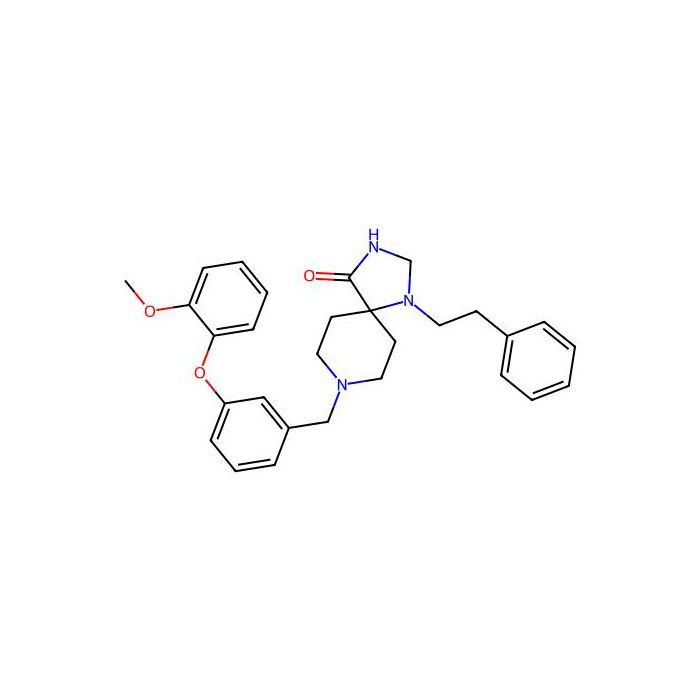
LMD-009 is a selective CCR8 nonpeptide agonist. LMD-009 mediates chemotaxis, inositol phosphate accumulation, and calcium release in high potencies with EC 50 s from 11 to 87 nM
In Vitro
LMD-009 (0-20 nM; 90 min) stimulates inositol phosphate accumulation in COS-7 cells expressing the human CCR8 receptor. LMD-009 (0-100 nM; 1 h) mediates calcium release in Chinese hamster ovary cells. LMD-009 (0.1 nM-100 μM; 40 min) induces L1.2 cells migration. LMD-009 (0-10 μM; 90 min) exhibits different molecular interaction with CCR8 mutations in COS-7 cells. LMD-009 (0-10 nM; 90 min) exhibits no antagonist activity to other human chemokine receptors. MCE has not independently confirmed the accuracy of these methods. They are for reference only. Cell Viability AssayCell Line: COS-7 cells Concentration: 0-20 nM Incubation Time: 90 min Result: Stimulated inositol phosphate accumulation in COS-7 cells expressing the human CCR8 receptor with an EC 50 value of 11 nM. Inhibited none of the receptors of other human chemokine receptors. Cell Viability AssayCell Line: Chinese hamster ovary cells Concentration: 0-100 nM Incubation Time: 1 hour Result: Regulated calcium release in Chinese hamster ovary cells with an EC 50 value 87 nM. Cell Migration AssayCell Line: Lymphocyte L1.2 cells. Concentration: 0.1 nM- 100 μM Incubation Time: 40 min Result: Exhibited an K i value of 66 nM with L1.2 cells and specifically bound 125 I-CCL1.
Form:Solid
IC50& Target:CCR8 11-87 nM (EC 50 )
Specifications
Specifications & Purity
≥99%
Biochemical and Physiological Mechanisms
LMD-009 is a selective CCR8 nonpeptide agonist. LMD-009 mediates chemotaxis, inositol phosphate accumulation, and calcium release in high potencies with EC 50 s from 11 to 87 nM.
Storage
Store at -20°C
Shipped In
Ice chest + Ice pads
This product requires cold chain shipping. Ground and other economy services are not available.
Determine the necessary mass, volume, or concentration for preparing a solution.
Dilution Calculator
Determine the dilution needed to prepare a stock solution.
Reconstitution Calculator
Reviews
Customer Reviews
Application Protocols
No item-specific, tested application protocols are provided for LMD-009. The following outlines general, non-item-specific workflows for small-molecule testing.
Stock preparation:
Prepare 10–50 mM stocks in anhydrous DMSO. Vortex and sonicate if needed. Record exact concentration by weight-in-volume and, where critical, confirm by quantitative NMR or UV if the chromophore is known.
Serial dilution for potency assays:
Perform 1:3 or 1:2 serial dilutions across 8–12 points in DMSO; back-dilute into assay buffer to a final DMSO level typically ≤0.1–0.5% (check assay tolerance).
Controls:
Include vehicle-only controls and, if available, a positive control compound to establish assay window and Z′ factor.
Plate handling:
Use low-binding plates for lipophilic compounds; pre-wet tips with dosing solution to reduce adsorption.
Data quality checks:
Inspect for precipitation (turbidity), edge effects, and compound autofluorescence/inner-filter effects where applicable; apply counterscreens.
Storage of working solutions:
Keep on ice or at 4°C during use; discard after session unless stability is verified.
Note: These are generic guidelines. Optimize parameters for the specific assay modality and obtain any missing compound-specific details from the CoA/Spec Sheet.
Biological Roles
Item-specific biological targets, pathways, or modes of action are not provided for LMD-009.
General considerations for small-molecule library members (non-item-specific):
Potential bioactivity: Library compounds may interact with diverse protein classes (enzymes, GPCRs, ion channels, transporters). Absent a defined target, handle as potentially bioactive and evaluate off-target liabilities early (CYP inhibition, hERG binding in vitro, covalency risk if electrophilic motifs are present—structure not provided here).
ADME-relevant profiling: If intended for cellular studies, consider generating foundational in vitro data: solubility (pH 2/7.4), permeability (PAMPA or Caco-2), metabolic stability (HLM), and plasma protein binding. These are general recommendations and not specific to this item.
Aggregation/artifacts: Screen for colloidal aggregation (e.g., 0.01% Triton X-100 counterscreen) and redox or PAINS liabilities if structure becomes available.
Chemical liabilities: Without structural details, avoid assumptions about reactivity. If electrophiles (e.g., Michael acceptors) exist, use appropriate controls and glutathione reactivity assays.
Note: No medical or clinical use is intended or implied. This product is for research use only, consistent with the Product Data statement.
Buffer Applications
This product is not a buffering agent, and no item-specific pKa or buffer-capable functional groups are provided. Therefore, conventional buffer applications do not apply.
Practical notes for assay buffer preparation with small-molecule stocks (general guidance):
Prepare compound master stocks in DMSO or ethanol, then dilute into the assay buffer (e.g., PBS, HEPES, Tris) while maintaining a low final cosolvent fraction (commonly ≤0.1–0.5%).
Add compound last, under vigorous mixing, to minimize local supersaturation and precipitation.
Temporarily adjusting pH to favor soluble ionization states, followed by re-equilibration to the assay pH.
Always include a vehicle control matching the final cosolvent percentage.
Item-specific buffer formulations or pH ranges: Not specified for this item; refer to CoA/Spec Sheet if applicable.
Green Alternatives
No item-specific solvent or process data are provided for LMD-009. The following suggestions address greener handling of small molecules during dissolution, storage, and routine testing.
Prefer benign solvents when feasible:
Ethanol and isopropanol can partially replace acetonitrile or DMF for intermediate solubility compounds (verify assay compatibility).
Aqueous buffers with minimal DMSO (≤0.5%) are typically acceptable for many biochemical assays.
Reduce solvent volumes:
Prepare higher-concentration master stocks (as solubility permits) to minimize total DMSO usage while observing precipitation risk upon dilution.
Alternative vehicles for in vitro work:
PEG-400 or Captisol can aid solubilization in certain biophysical assays; assess interference and clean-up.
Procurement and packaging:
Favor amber vials and minimize headspace to reduce oxidative/light degradation, thereby preventing wasteful re-preparation.
Illustrative comparison (general, not item-specific):
DMSO vs DMF for stock solutions:
DMSO: Relatively low volatility, widely accepted in bioassays; greener profile than DMF; hygroscopic.
DMF: Strong solvent but with higher toxicity concerns and less biocompatibility; avoid when possible in screening contexts.
Acetonitrile vs ethanol in workups:
MeCN provides strong elution in LC but is petro-derived and toxic; ethanol is renewable and safer but may not match solvency or chromatographic performance.
Always validate greener substitutions experimentally to ensure no impact on data quality.
Pharmaceutical Uses
No pharmacopeial status, excipient role, or formulation specifications are provided for LMD-009, and the product is explicitly designated “For research use only.” It is not intended for human or veterinary use, clinical applications, or ex vivo manufacturing of therapeutics.
General context (non-item-specific):
Early discovery: Compounds like LMD-009 may be used in target validation, hit identification, and SAR studies. Any preformulation or developability assessments (solubility, stability, lipophilicity) should be conducted solely for research decision-making.
If formulation-like studies are performed for in vivo research models within institutional approvals, establish compound-specific safety data and consult relevant regulatory guidance; this listing does not provide such data and Aladdin does not endorse clinical use.
Item-specific formulation guidance, compendial references (USP/EP/JP), or impurity limits: Not specified for this item; refer to CoA/Spec Sheet.
Physical Properties
Item-specific data currently provided in this listing:
Appearance: Not specified for this item; refer to CoA/Spec Sheet.
Melting/Boiling point: Not specified for this item; refer to CoA/Spec Sheet.
Density/Refractive index: Not specified for this item; refer to CoA/Spec Sheet.
Solubility: Not specified for this item; refer to CoA/Spec Sheet.
LogP/pKa: Not specified for this item; refer to CoA/Spec Sheet.
General characterization guidance (literature/practice-based, not item-specific):
Melting point: For solid small molecules, determine by DSC or capillary method (USP <741>) to assess batch integrity and polymorphism.
Solubility screening: Perform a mini-panel in DMSO, DMF, MeCN, ethanol, isopropanol, PBS (with 0.5–2% DMSO), and pH-adjusted buffers (pH 2–9). Report kinetic vs equilibrium solubility.
Aqueous stability: Check in PBS (pH 7.4) at 37°C by LC–UV/MS over 24–48 h for hydrolysis/oxidation.
Lipophilicity: Compute clogP/cLogD (pH 7.4) using standard tools (e.g., ACD/Percepta, ChemAxon) and corroborate with experimental shake–flask or HPLC retention.
Solid-state form: If relevant, assess crystallinity by PXRD and residual solvent by GC–HS per ICH Q3C.
Important: Do not treat any generalized values as product specifications. For exact numbers and acceptance criteria, consult the specific CoA/Specification Sheet for SKU L651817.
Quality & Grades
Item-specific grade/purity information in this listing:
Grade/Purity: Not specified for this item; refer to CoA/Spec Sheet.
How to interpret and qualify library compounds (general guidance):
Purity metrics: Discovery libraries commonly target ≥95% purity by HPLC/LC–UV. If biological assays are planned, request or generate purity by orthogonal detection (UV + CAD/ELSD) to account for chromophore bias.
Identity: Confirm by HRMS (|Δm| ≤ 5 ppm) and 1H NMR. Where applicable, verify counterion content for salts and determine water content (Karl Fischer) if hygroscopic—these are not specified here for this item.
Residual solvents/metals: For sensitive applications, evaluate GC–MS for residual solvents (ICH Q3C) and ICP–MS for metals if the synthesis route suggests potential carryover. Not specified for this item; refer to CoA/Spec Sheet for any established limits.
Stabilizers: Not specified for this item; refer to CoA/Spec Sheet. If none are used, protect from light/air/moisture as prudent practice.
Batch-to-batch consistency: Record lot number and retain a reference aliquot at −20°C. Compare retention times and spectra for future lots.
Documentation:
For GLP-adjacent workflows, request a comprehensive CoA including: structure (SMILES), exact mass, HPLC method/trace, purity %, water and residual solvent content, and storage recommendations specific to the lot.
Reaction & Applications
This product is categorized as a small-molecule/compound-library member for research use. No specific synthetic or reagent applications are stated in the Product Data.
Applications (general, non-item-specific):
Screening and SAR: Use as a test article in biochemical, biophysical (e.g., thermal shift, SPR), and cell-based assays to explore structure–activity relationships when combined with analogs.
Probe development: If activity is observed, consider tagging strategies (e.g., biotin/fluorophore handles) via linkers at noncritical positions—requires structural knowledge from CoA.
Benchmarking: Employ as a control comparator against internal hits to validate assay robustness (Z′ factor) and dynamic range.
Not typically used as a reagent:
Without a disclosed structure or functional handles, LMD-009 should not be assumed to participate in named synthetic transformations. If derivatization is intended, acquire structural details and perform pilot reactions on milligram scale with orthogonal analytics.
Assay-specific practical tips (general):
Verify solubility at working concentrations and ensure final cosolvent level does not compromise assay biology.
Perform concentration–response testing (e.g., 10-point, 1:3 serial dilutions) and include vehicle controls.
Establish compound stability in assay media (37°C) across the assay window; check for adsorption to plastics by comparing glass vs polypropylene containers.
Reaction Conditions
No synthetic transformations or reaction conditions are specified for LMD-009 in the Product Data, and the compound is not presented as a reagent. Accordingly, there are no item-specific reaction parameters to report.
General notes (non-item-specific) relevant to handling small molecules in solution during assays rather than chemical reactions:
Dissolution: Warm gently (≤40°C water bath) and sonicate if needed. Avoid prolonged heating that may induce degradation.
Filtration: If particulates persist, sterile-filter through 0.2 μm (nylon/PTFE) for cell-based assays, confirming no sorptive loss.
Stability checks: Monitor by LC–MS/UV at initial and post-incubation time points to detect degradation, isomerization, or adsorption to plastics.
If users intend to use LMD-009 in synthetic chemistry (off-label relative to its library role), first obtain the detailed structure and then consult reaction-specific literature for conditions suited to the functional groups present.
Safety & Handling
Item-specific hazard data in this listing:
GHS Classification: Not specified for this item; refer to SDS.
Signal word / H-statements / Pictograms: Not specified for this item; refer to SDS.
General laboratory safety guidance for unknown or partially characterized small molecules (defer to SDS as authoritative):
PPE: Wear lab coat, safety glasses, and appropriate chemically resistant gloves (nitrile recommended). Handle powders in a fume hood to avoid inhalation and dust dispersion.
Avoid exposure: Treat as potentially bioactive. Prevent skin contact and ingestion; avoid aerosol generation. Wash thoroughly after handling.
Solvent carriers: If preparing DMSO/DMF stocks, avoid skin contact—these solvents can enhance dermal absorption of solutes.
Incompatibilities: Until specific data are known, segregate from strong oxidizers, strong acids/bases, and reducing agents. Avoid heat and direct sunlight.
First aid (overview; consult SDS):
Inhalation: Move to fresh air; seek medical attention if symptoms persist.
Skin contact: Wash with soap and water; remove contaminated clothing.
Eye contact: Rinse cautiously with water for several minutes; remove contact lenses if present and easy to do; continue rinsing.
Ingestion: Rinse mouth; seek medical advice. Do not induce vomiting unless directed.
Spills: Avoid dust; wet-wipe small spills or use HEPA-filtered vacuum. Dispose of according to institutional hazardous waste procedures.
Stability: Store at −20°C per Product Data. Allow vials to equilibrate to room temperature in a desiccator before opening to minimize moisture uptake/condensation.
Always consult the product-specific SDS for definitive hazard and response information.
Solvent Selection
Item-specific solubility data are not provided for LMD-009; consult the CoA or perform a solubility screen. The following is general, practice-based guidance for small-molecule dissolution and assay preparation.
Primary stock solvent (discovery workflows):
DMSO is typically preferred due to broad solvating power and compatibility with biological assays at low final percentages (≤0.1–0.5%).
Alternatives: DMF (strong, but less biocompatible), NMP, or anhydrous MeCN for nonpolar/neutral species.
Cosolvent systems for aqueous use:
PBS or assay buffer with 1–5% DMSO or ethanol can aid dissolution; verify assay tolerance.
Add wetting agents (e.g., minimal Tween-80 or Pluronic F-127) cautiously if precipitation is observed; confirm no assay interference.
Protonation/deprotonation strategies:
For basic compounds, prepare HCl salt in situ (gaseous HCl in IPA/Et2O or 1–2 M HCl in dioxane) to improve aqueous solubility (general approach; not item-specific).
For acids, transiently raise pH to 8–9 for dissolution, then back-titrate to assay pH.
Practical workflow:
Start with a 10–50 mM DMSO stock; sonicate gently; filter through 0.2 μm PTFE/NYLON if needed (avoid adsorption losses for highly lipophilic compounds).
Confirm clarity and stability over intended assay time by visual inspection and LC–MS.
Note: Select solvents in alignment with safety, downstream assay compatibility, and institutional green-chemistry guidelines.
Storage & Reconstitution
Item-specific conditions (from Product Data):
Storage: Store at −20°C.
Shipping: Shipped in ice chest with ice pads.
General best practices for small-molecule solids and DMSO stocks (non-item-specific):
Upon receipt: Allow the sealed vial to warm to room temperature in a desiccator before opening to prevent moisture condensation. If supplied as a solution, inspect for leaks, precipitation, or discoloration.
Solid material:
Store tightly sealed in amber vials under dry, inert atmosphere if feasible. Add desiccant to secondary container.
If hygroscopic or air-sensitive (not specified here), minimize headspace and avoid repeated vial openings by pre-aliquoting.
Reconstitution:
Prepare a concentrated stock in anhydrous DMSO (e.g., 10–50 mM) or another suitable solvent after confirming solubility. Vortex and sonicate gently to fully dissolve.
Optionally sterile-filter (0.2 μm) for cell-based assays, monitoring for sorptive loss.
Aliquoting and stability:
Dispense single-use aliquots to avoid freeze–thaw cycles. Store aliquots at −20°C or −80°C based on stability data (not specified for this item; refer to CoA/Spec Sheet).
Protect from light if chromophore is suspected; use amber tubes/foil wrap.
Documentation: Record lot number, preparation date, solvent, and concentration on aliquot labels and in ELN.
Research Use Note: For research use only.
Structure & Identity
Brief overview: LMD-009 (SKU L651817) is listed as a research-use small molecule/compound library member. Limited structural metadata is available in the current product record.
SMILES: Not specified for this item; refer to CoA/Spec Sheet.
Molecular formula: Not specified for this item; refer to CoA/Spec Sheet.
Molecular weight: Not specified for this item; refer to CoA/Spec Sheet.
Structural features (descriptive):
Not specified for this item; refer to CoA/Spec Sheet.
Identity confirmation guidance (general):
For compound-library members, verify identity and purity upon receipt via orthogonal methods:
1H/13C NMR (400–600 MHz) and HSQC/HMBC as needed.
LC–MS (ESI±) with purity determination by UV/CAD/ELSD.
HRMS for exact mass confirmation; compare to CoA values.
If a stereochemical assignment exists (not provided here), consider optical rotation or chiro-HPLC.
Notes:
This listing does not include structure graphics or a SMILES string. Where necessary, request the current CoA/structure disclosure from Aladdin Scientific for internal registration and ELN compliance.
Because InChIKey appears truncated or non-standard here, treat it as a placeholder until verified against the CoA or a trusted database entry.
Synthetic Utility
Item-specific functional groups, reactivity, and derivatization handles are not disclosed for LMD-009. Consequently, no compound-specific synthetic roles can be assigned.
General guidance (non-item-specific) if derivatization is contemplated after structure disclosure:
Handle identification: Map non-essential regions via SAR or docking to select positions for linker installation (e.g., amide coupling, click handles, photoaffinity tags) without compromising activity.
Protecting-group strategy: If multiple nucleophiles/electrophiles are present, plan orthogonal protection (Boc/CBz for amines; TBDMS/TBS for alcohols) and mild deprotection to preserve sensitive motifs.
Late-stage diversification: Employ C–H activation, Minisci, or photoredox-mediated functionalization to explore analog space rapidly if the scaffold supports such reactions.
Analytical control: Use LC–MS and NMR at each stage; track stereochemical integrity if chiral centers are present (chiral HPLC/GC, VCD/ORD as needed).
Because this product is sold as a finished small molecule for research testing, it is not typically positioned as a building block. Confirm the full structure via CoA before planning any synthetic transformations.
Target Specificity
Item-specific biological target(s), binding partner(s), or mechanism of action for LMD-009 are not provided in this listing.
Target/Pathway: Not specified for this item; refer to CoA/Spec Sheet or internal screening results.
Species reactivity or selectivity: Not specified for this item; refer to CoA/Spec Sheet.
Assay-validated activity: Not specified for this item; refer to CoA/Spec Sheet.
Guidance (general):
Establish target engagement using orthogonal assays (e.g., biochemical IC50 with mechanism-of-action analysis, biophysical KD by SPR/ITC, cellular target engagement by CETSA or NanoBRET).
Confirm selectivity profiles against close homologs or family panels to mitigate off-target effects.
We use cookies to ensure the website functions properly and, where permitted, to improve your experience. You can manage your preferences at any time in Settings. Learn more in our Cookie Policy.
Shall we send you a message when we have discounts available?
Remind me later
Thank you! Please check your email inbox to confirm.
Products are supplied to verified businesses, institutions, and qualified professionals for research and development use only. Not for use in humans, animals, diagnosis, or therapy.