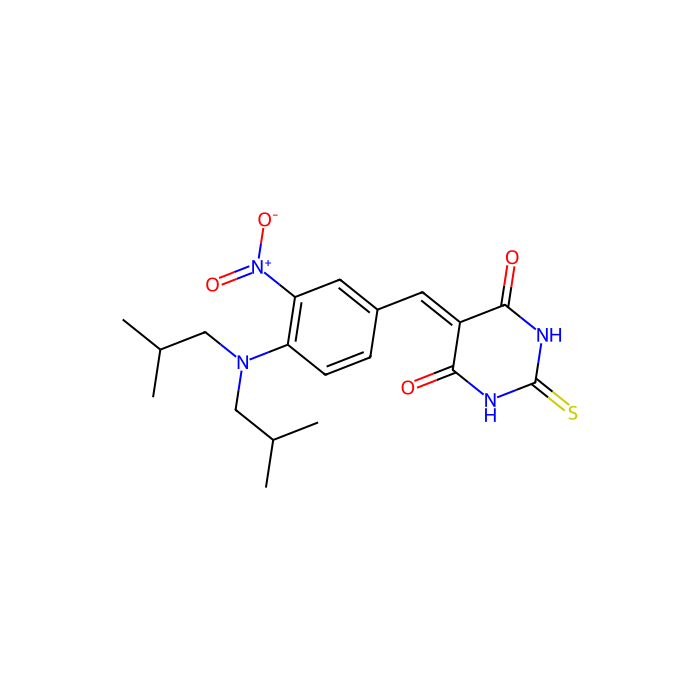
M2I-1 - ≥98% , CAS No.312271-03-7

CAS: 312271-03-7 Cat. No.: M412228 Formula: C19H24N4O4S Molecular Weight: 404.48
AVAILABLE TO ORDER
GRADE & PURITY ≥98%
Synonyms
M2I-1|312271-03-7|MLS000572003|5-[4-(diisobutylamino)-3-nitrobenzylidene]-2-thioxodihydro-4,6(1H,5H)-pyrimidinedione|M2I1|5-(4-(diisobutylamino)-3-nitrobenzylidene)-2-thioxodihydropyrimidine-4,6(1H,5H)-dione|5-[[4-[bis(2-methylpropyl)amino]-3-nitrophenyl]
Storage
Store at -20°C
Shipped In
Ice chest + Ice pads
★
Size
USA
Germany (EU)*
Price
Qty
1mg
M412228-1mg
5 In stock
—
$69.90
5mg
M412228-5mg
5 In stock
—
$200.90
10mg
M412228-10mg
5 In stock
—
$330.90
25mg
M412228-25mg
3 In stock
—
$696.90
50mg
M412228-50mg
3 In stock
—
$1,044.90
100mg
M412228-100mg
3 In stock
—
$1,740.90
Enter a quantity for the sizes you want to add.
🧪
Why this grade

≥98% for sensitive chromatographic and analytical workflows requiring minimal baseline interference.

🌡

Storage & shipping

Store at -20°C Ships Ice chest + Ice pads Check lot-specific COA for exact specifications.

📋

Quality documents

SDS, COA, datasheet, and spec sheet available for download. Lot-specific COA accessible via lot number lookup.

📚

Literature proof

Cited in 0 peer-reviewed publications across chromatography, organic synthesis, and cross-coupling reactions.

Overview

Information

M2I-1 M2I-1 is an inhibitor of Mad2 (mitotic arrest deficient 2) targeting the binding of Mad2 to Cdc20, an essential protein-protein interaction (PPI) within the SAC (spindle assembly checkpoint).


Targets

Mad2

Specifications

Synonyms
M2I-1 | 312271-03-7 | MLS000572003 | 5-[4-(diisobutylamino)-3-nitrobenzylidene]-2-thioxodihydro-4,6(1H,5H)-pyrimidinedione | M2I1 | 5-(4-(diisobutylamino)-3-nitrobenzylidene)-2-thioxodihydropyrimidine-4,6(1H,5H)-dione | 5-[[4-[bis(2-methylpropyl)amino]-3-nitrophenyl]
Specifications & Purity
≥98%
Biochemical and Physiological Mechanisms
M2I-1 is an inhibitor of Mad2 (mitotic arrest deficient 2) targeting the binding of Mad2 to Cdc20, an essential protein-protein interaction (PPI) within the SAC (spindle assembly checkpoint).
Storage
Store at -20°C
Shipped In
Ice chest + Ice pads
This product requires cold chain shipping. Ground and other economy services are not available.
Action Type
INHIBITOR
Purity
≥98%
Names and Identifiers
Pubchem Sid
Pubchem Sid Url
https://pubchem.ncbi.nlm.nih.gov/substance/488194114
Canonical Smiles
CC(C)CN(CC(C)C)C1=C(C=C(C=C1)C=C2C(=O)NC(=S)NC2=O)[N+](=O)[O-]
IUPAC Name
5-[[4-[bis(2-methylpropyl)amino]-3-nitrophenyl]methylidene]-2-sulfanylidene-1,3-diazinane-4,6-dione
InChIKey
BWEKPQUKWLNUKX-UHFFFAOYSA-N
INCHI
1S/C19H24N4O4S/c1-11(2)9-22(10-12(3)4)15-6-5-13(8-16(15)23(26)27)7-14-17(24)20-19(28)21-18(14)25/h5-8,11-12H,9-10H2,1-4H3,(H2,20,21,24,25,28)
Isomeric SMILES
CC(C)CN(CC(C)C)C1=C(C=C(C=C1)C=C2C(=O)NC(=S)NC2=O)[N+](=O)[O-]
Molecular Weight
404.48
Reaxy-Rn
35177792
Reaxys-RN_link_address
https://www.reaxys.com/reaxys/secured/hopinto.do?context=S&query=IDE.XRN=35177792&ln=

Documentation

📋 Safety Data Sheet (SDS)

Comprehensive hazard, handling, storage, and regulatory compliance document.

Download SDS →

✅ Certificate of Analysis (COA)

Lot-specific quality data. Enter your lot number to retrieve the exact COA.

Look up COA →

📊 Datasheet

Quick-reference summary of product specifications and applications.

View datasheet →

🔬 Specification Sheet

Full quality attributes and acceptance criteria for this grade.

View spec sheet →

Advanced Data

Taxonomic Classification

Taxonomy Tree

KingdomOrganic compounds
SuperclassOrganoheterocyclic compounds
ClassDiazines
SubclassPyrimidines and pyrimidine derivatives
Intermediate Tree Nodes Pyrimidones
Direct ParentThiobarbituric acid derivatives
Alternative Parents Nitrobenzenes  Nitroaromatic compounds  Dialkylarylamines  Aniline and substituted anilines  Diazinanes  Thioureas  Amino acids and derivatives  Propargyl-type 1,3-dipolar organic compounds  Organic oxoazanium compounds  Azacyclic compounds  Organopnictogen compounds  Organic zwitterions  Organic oxides  Hydrocarbon derivatives  Carbonyl compounds  
Molecular FrameworkAromatic heteromonocyclic compounds
Substituents Nitrobenzene - Thiobarbiturate - Nitroaromatic compound - Tertiary aliphatic/aromatic amine - Dialkylarylamine - Aniline or substituted anilines - Monocyclic benzene moiety - 1,3-diazinane - Benzenoid - Amino acid or derivatives - C-nitro compound - Tertiary amine - Thiourea - Organic nitro compound - Organic 1,3-dipolar compound - Propargyl-type 1,3-dipolar organic compound - Allyl-type 1,3-dipolar organic compound - Azacycle - Carboxylic acid derivative - Organic oxoazanium - Organooxygen compound - Organonitrogen compound - Carbonyl group - Organopnictogen compound - Amine - Organic oxygen compound - Organosulfur compound - Organic oxide - Hydrocarbon derivative - Organic nitrogen compound - Organic zwitterion - Aromatic heteromonocyclic compound
DescriptionThis compound belongs to the class of organic compounds known as thiobarbituric acid derivatives. These are organic compounds containing a 2-thioxodihydropyrimidine-4,6(1H,5H)-dione skeleton.
External Descriptors Not available
3D Structure
Interactive Chemical Structure Model


Associated Targets(Human)
VDR Tclin Vitamin D receptor (26531 Activities)
Activity TypeRelationActivity valueUnitsAction TypeJournalPubMed IddoiAssay Aladdin ID
POLB Tchem DNA polymerase beta (23632 Activities)
Activity TypeRelationActivity valueUnitsAction TypeJournalPubMed IddoiAssay Aladdin ID
PLK1 Tchem Serine/threonine-protein kinase PLK1 (28605 Activities)
Activity TypeRelationActivity valueUnitsAction TypeJournalPubMed IddoiAssay Aladdin ID
ALOX15B Tchem Arachidonate 15-lipoxygenase, type II (7244 Activities)
Activity TypeRelationActivity valueUnitsAction TypeJournalPubMed IddoiAssay Aladdin ID
ALDH1A1 Tchem Aldehyde dehydrogenase 1A1 (77053 Activities)
Activity TypeRelationActivity valueUnitsAction TypeJournalPubMed IddoiAssay Aladdin ID
ALOX12 Tchem Arachidonate 12-lipoxygenase (3262 Activities)
Activity TypeRelationActivity valueUnitsAction TypeJournalPubMed IddoiAssay Aladdin ID
GLP1R Tclin Glucagon-like peptide 1 receptor (111429 Activities)
Activity TypeRelationActivity valueUnitsAction TypeJournalPubMed IddoiAssay Aladdin ID
HEK293 (82097 Activities)
Activity TypeRelationActivity valueUnitsAction TypeJournalPubMed IddoiAssay Aladdin ID
GNAS Tbio Guanine nucleotide-binding protein G(s), subunit alpha (103405 Activities)
Activity TypeRelationActivity valueUnitsAction TypeJournalPubMed IddoiAssay Aladdin ID
POLK Tbio DNA polymerase kappa (8653 Activities)
Activity TypeRelationActivity valueUnitsAction TypeJournalPubMed IddoiAssay Aladdin ID
POLI Tchem DNA polymerase iota (116820 Activities)
Activity TypeRelationActivity valueUnitsAction TypeJournalPubMed IddoiAssay Aladdin ID
POLH Tchem DNA polymerase eta (21678 Activities)
Activity TypeRelationActivity valueUnitsAction TypeJournalPubMed IddoiAssay Aladdin ID
KDM4A Tchem Lysine-specific demethylase 4A (52245 Activities)
Activity TypeRelationActivity valueUnitsAction TypeJournalPubMed IddoiAssay Aladdin ID
EHMT2 Tchem Histone-lysine N-methyltransferase, H3 lysine-9 specific 3 (93046 Activities)
Activity TypeRelationActivity valueUnitsAction TypeJournalPubMed IddoiAssay Aladdin ID
TDP1 Tchem Tyrosyl-DNA phosphodiesterase 1 (345557 Activities)
Activity TypeRelationActivity valueUnitsAction TypeJournalPubMed IddoiAssay Aladdin ID
L3MBTL1 Tchem Lethal(3)malignant brain tumor-like protein 1 (14536 Activities)
Activity TypeRelationActivity valueUnitsAction TypeJournalPubMed IddoiAssay Aladdin ID
KDM4E Tchem Lysine-specific demethylase 4D-like (40243 Activities)
Activity TypeRelationActivity valueUnitsAction TypeJournalPubMed IddoiAssay Aladdin ID
HPGD Tchem 15-hydroxyprostaglandin dehydrogenase [NAD+] (24926 Activities)
Activity TypeRelationActivity valueUnitsAction TypeJournalPubMed IddoiAssay Aladdin ID
SMAD3 Tchem Mothers against decapentaplegic homolog 3 (68039 Activities)
Activity TypeRelationActivity valueUnitsAction TypeJournalPubMed IddoiAssay Aladdin ID
GMNN Tbio Geminin (128009 Activities)
Activity TypeRelationActivity valueUnitsAction TypeJournalPubMed IddoiAssay Aladdin ID
KMT2A Tchem Histone-lysine N-methyltransferase MLL (17327 Activities)
Activity TypeRelationActivity valueUnitsAction TypeJournalPubMed IddoiAssay Aladdin ID
MBNL1 Tbio Muscleblind-like protein 1 (34431 Activities)
Activity TypeRelationActivity valueUnitsAction TypeJournalPubMed IddoiAssay Aladdin ID
BAZ2B Tchem Bromodomain adjacent to zinc finger domain protein 2B (56204 Activities)
Activity TypeRelationActivity valueUnitsAction TypeJournalPubMed IddoiAssay Aladdin ID
HSPA5 Tchem 78 kDa glucose-regulated protein (3319 Activities)
Activity TypeRelationActivity valueUnitsAction TypeJournalPubMed IddoiAssay Aladdin ID
USP1 Tchem Ubiquitin carboxyl-terminal hydrolase 1 (22556 Activities)
Activity TypeRelationActivity valueUnitsAction TypeJournalPubMed IddoiAssay Aladdin ID
RGS4 Tchem Regulator of G-protein signaling 4 (13867 Activities)
Activity TypeRelationActivity valueUnitsAction TypeJournalPubMed IddoiAssay Aladdin ID
IDH1 Tclin Isocitrate dehydrogenase [NADP] cytoplasmic (40980 Activities)
Activity TypeRelationActivity valueUnitsAction TypeJournalPubMed IddoiAssay Aladdin ID
RAPGEF3 Tchem Rap guanine nucleotide exchange factor 3 (15528 Activities)
Activity TypeRelationActivity valueUnitsAction TypeJournalPubMed IddoiAssay Aladdin ID
MEN1 Tchem Menin/Histone-lysine N-methyltransferase MLL (48157 Activities)
Activity TypeRelationActivity valueUnitsAction TypeJournalPubMed IddoiAssay Aladdin ID
Associated Targets(non-human)
Cruzipain (33337 Activities)
Activity TypeRelationActivity valueUnitsAction TypeJournalPubMed IddoiAssay Aladdin ID
Plasmodium falciparum (966862 Activities)
Activity TypeRelationActivity valueUnitsAction TypeJournalPubMed IddoiAssay Aladdin ID
Dengue virus type 2 NS3 protein (2214 Activities)
Activity TypeRelationActivity valueUnitsAction TypeJournalPubMed IddoiAssay Aladdin ID
GCN5 Histone acetyltransferase GCN5 (89 Activities)
Activity TypeRelationActivity valueUnitsAction TypeJournalPubMed IddoiAssay Aladdin ID
Npsr1 Neuropeptide S receptor (260 Activities)
Activity TypeRelationActivity valueUnitsAction TypeJournalPubMed IddoiAssay Aladdin ID
Txnrd1 Thioredoxin reductase 1, cytoplasmic (45279 Activities)
Activity TypeRelationActivity valueUnitsAction TypeJournalPubMed IddoiAssay Aladdin ID
Eif4e Eukaryotic translation initiation factor 4E (654 Activities)
Activity TypeRelationActivity valueUnitsAction TypeJournalPubMed IddoiAssay Aladdin ID
TGR Thioredoxin glutathione reductase (28579 Activities)
Activity TypeRelationActivity valueUnitsAction TypeJournalPubMed IddoiAssay Aladdin ID
Mapt Microtubule-associated protein tau (6 Activities)
Activity TypeRelationActivity valueUnitsAction TypeJournalPubMed IddoiAssay Aladdin ID
Nfe2l2 Nuclear factor erythroid 2-related factor 2 (214 Activities)
Activity TypeRelationActivity valueUnitsAction TypeJournalPubMed IddoiAssay Aladdin ID
fba Putative fructose-1,6-bisphosphate aldolase (15559 Activities)
Activity TypeRelationActivity valueUnitsAction TypeJournalPubMed IddoiAssay Aladdin ID
ffp 4'-phosphopantetheinyl transferase ffp (24982 Activities)
Activity TypeRelationActivity valueUnitsAction TypeJournalPubMed IddoiAssay Aladdin ID
FTL Ferritin light chain (43324 Activities)
Activity TypeRelationActivity valueUnitsAction TypeJournalPubMed IddoiAssay Aladdin ID
Trpc4 Short transient receptor potential channel 4 (1615 Activities)
Activity TypeRelationActivity valueUnitsAction TypeJournalPubMed IddoiAssay Aladdin ID
Mechanisms of Action
Certificates(CoA,COO,BSE/TSE and Analysis Chart)
C of A & Other Certificates(BSE/TSE, COO):
Analytical Chart:

Find and download the COA for your product by matching the lot number on the packaging.

12 results found

Lot NumberCertificate TypeDateItem
C23311184Certificate of AnalysisJan 20, 2026 M412228
C23311187Certificate of AnalysisJan 20, 2026 M412228
C23311189Certificate of AnalysisJan 20, 2026 M412228
C23311190Certificate of AnalysisJan 20, 2026 M412228
C23311191Certificate of AnalysisJan 20, 2026 M412228
C23311195Certificate of AnalysisJan 20, 2026 M412228
C23311196Certificate of AnalysisJan 20, 2026 M412228
C23311197Certificate of AnalysisJan 20, 2026 M412228
C23311198Certificate of AnalysisJan 20, 2026 M412228
C23311199Certificate of AnalysisJan 20, 2026 M412228
C23311206Certificate of AnalysisJan 20, 2026 M412228
C23311213Certificate of AnalysisJan 20, 2026 M412228
Chemical and Physical Properties
SolubilitySolubility (25°C) In vitro DMSO: 80 mg/mL (197.78 mM); Water: Insoluble; Ethanol: Insoluble;
Molecular Weight404.500 g/mol
XLogP34.200
Hydrogen Bond Donor Count2
Hydrogen Bond Acceptor Count6
Rotatable Bond Count6
Exact Mass404.152 Da
Monoisotopic Mass404.152 Da
Topological Polar Surface Area139.000 Ų
Heavy Atom Count28
Formal Charge0
Complexity639.000
Isotope Atom Count0
Defined Atom Stereocenter Count0
Undefined Atom Stereocenter Count0
Defined Bond Stereocenter Count0
Undefined Bond Stereocenter Count0
The total count of all stereochemical bonds0
Covalently-Bonded Unit Count1
Solution Calculators
Reviews

Customer Reviews

Application Protocols

No validated application protocols (e.g., tested assays, recommended concentrations, or positive controls) are provided in the Product Data for this SKU.

General starting points for small‑molecule probes (not item‑specific recommendations):

  • Stock solutions: 10–50 mM in dry DMSO. Confirm solubility and stability experimentally for your lot.
  • Cellular assays: Typical screening ranges span 10 μM down to 1–10 nM in serial dilutions. Include vehicle controls and cytotoxicity assessment. Optimize exposure time based on pathway kinetics.
  • Biochemical assays: Establish substrate/enzymatic conditions first, then run 10‑point dose–response (1:3 or 1:2 serial). Assess assay interference (fluorescence/absorbance) from the compound.
  • Data quality: Use technical triplicates, Z’ factor, and replicate on separate days to confirm reproducibility.

These are general practices only; users must adapt protocols to their targets and verify all parameters locally.

Biological Roles

The Product Data do not specify a biological target or mode of action for M2I‑1. The following notes outline how small‑molecule research probes are generally positioned; consult primary literature tied to the provided CAS (312271‑03‑7) and CID (2883762) for target‑specific details.

  • Intended use: Research chemical for exploratory biology, screening, and pathway studies. No medical or clinical use is implied or supported.
  • Target engagement (general): Chemical probes may interact with proteins (enzymes, receptors) or modulate protein–protein interactions. Validate binding with orthogonal assays (e.g., thermal shift, CETSA, SPR/ITC, enzymology) as appropriate.
  • Cellular studies: Determine effective concentration ranges empirically; document cytotoxicity and off‑target liabilities. Include vehicle controls and plate‑based QC (Z’ factor) for assay robustness.
  • Selectivity profiling: Use counterscreens and broad profiling panels (e.g., kinome, GPCRome, proteome reactivity) to define specificity and potential polypharmacology.
  • ADME considerations (in vitro): Solubility, permeability, and chemical stability strongly influence observed biology. Quantify stability in assay buffer and microsomes if mechanistic studies require it.

Because item‑specific biological mechanisms are not provided here, users should perform due diligence using the cited identifiers and validate all findings under their own laboratory conditions.

Buffer Applications

This product is a small‑molecule research compound rather than a buffering agent. No buffer system parameters (pKa values, effective pH range) are provided in the Product Data.

  • If solutions are prepared for biochemical assays, use established biological buffers (e.g., HEPES, PBS, Tris) appropriate to your target system, and dissolve the compound first in a miscible organic co‑solvent (commonly DMSO) before dilution into buffer.
  • Verify that the final co‑solvent percentage is compatible with your assay and does not alter buffer capacity or target function.

No direct buffer recipes or pH control applications apply to this item.

Green Alternatives

Green chemistry considerations are generally framed for solvents and high‑volume reagents. This product is a low‑mass, specialty research small molecule, so substitution for a “greener” alternative is typically not applicable.

  • Use context: Employed at micromole–millimole scale in screening or mechanistic studies; environmental impact is dominated by the choice of solvents and workflow, not by the compound identity.
  • Recommendations (general):
    • Optimize assays to minimize DMSO percentage and total organic solvent consumption.
    • Favor greener chromatographic solvents (e.g., ethanol, water‑rich gradients) when compatible with detection and retention.
    • Consolidate analytical runs and use microplate formats to reduce waste.
  • Waste management: Segregate halogenated vs non‑halogenated organic waste; implement solvent recycling where infrastructure allows.

There is no direct “green substitute” for this specific small molecule; instead, improve the sustainability of surrounding processes (solvent selection, energy use, waste minimization).

Pharmaceutical Uses

No pharmacopeial grade, excipient function, or formulation role is specified for this product. It is supplied strictly for research use only, not for human or veterinary use.

  • Regulatory/compendial status: Not specified for this item; refer to CoA/Spec Sheet. There is no indication of USP/EP/JP compliance.
  • Typical laboratory context: Employed as a research chemical probe or screening hit/lead in non‑clinical experiments.
  • Formulation notes (research scale only): If in vitro or ex vivo studies require dosing solutions, prepare concentrated stocks in DMSO and dilute into vehicle systems validated for the model (e.g., buffered saline with solubilizers) while documenting stability and compatibility. These steps are for research only and do not imply suitability for clinical development.

Do not use this material as a drug substance, API intermediate, or excipient in any product intended for administration to humans or animals.

Physical Properties

Item‑specific physicochemical parameters have not been provided for this SKU. Do not treat the following placeholders as specifications for this lot.

  • Appearance: Not specified for this item; refer to CoA/Spec Sheet.
  • Melting/boiling point: Not specified for this item; refer to CoA/Spec Sheet. Any literature values should be verified against the supplied lot.
  • Density / refractive index: Not specified for this item; refer to CoA/Spec Sheet.
  • Solubility: Not specified for this item; refer to CoA/Spec Sheet. As a general practice for small molecules, initial dissolution trials commonly use dry DMSO, DMF, or ethanol before aqueous dilution, but confirm compatibility experimentally.
  • LogP / pKa: Not specified for this item; refer to CoA/Spec Sheet or cheminformatics predictions (literature/computed values only; not product specs).
  • UV–vis profile: Not specified for this item; refer to CoA/Spec Sheet.

Practical guidance (general, not item‑specific):

  • If the compound is hydrophobic, dissolve first in anhydrous DMSO, then dilute with buffered aqueous media while maintaining final DMSO ≤0.1–1% v/v as required by the assay.
  • Filter sterilize solutions for cell‑based work through 0.22 μm where appropriate; assess compound adsorption to filters.
  • Record solution stability (temperature, light sensitivity) empirically; aliquot to avoid repeated freeze–thaw. All stability claims must be validated on your instruments for your matrix.
Quality & Grades
  • Grade/purity (as sold): Not specified for this item; refer to CoA/Spec Sheet.
  • Stabilizers / additives: Not specified for this item; refer to CoA/Spec Sheet. If present, stabilizers can influence solubility, UV background, and bioassay readouts.

How to interpret grades (general guidance for small‑molecule research chemicals):

  • Research grade: Suitable for discovery biology, target validation, and screening. May not meet pharmacopeial criteria. Trace impurities can affect potency/phenotype—validate with orthogonal assays.
  • Analytical grade (if applicable): Tight controls on purity and common residuals; typically supported by HPLC and spectral data.
  • Screening library compounds: Often provided with identity confirmation (LC–MS) and purity by HPLC/UPLC. Verify threshold (e.g., ≥95% by HPLC) on the CoA for your lot.

Recommended QC on receipt (practical tips):

  • Review CoA for purity method (UV vs ELSD), solvent system, and reference wavelength; cross‑check against your detection method.
  • Spot‑check identity by LC–MS (single dominant ion) and optionally 1H NMR.
  • Assess assay interference potential (autofluorescence, aggregation) using control assays before large campaigns.

If grade/purity is critical (e.g., chemoproteomics), request or perform additional testing (water content, residual solvents, metals) as needed.

Reaction & Applications

This listing is for a small‑molecule research compound (screening/chemical probe context). It is not positioned as a synthetic reagent or catalyst in the Product Data.

  • Synthetic reaction roles: Not typically applicable; no manufacturer guidance indicates use in named reactions or as a coupling/catalytic agent.
  • Assay applications (general): Small molecules of this class are commonly used in target engagement assays, phenotypic screens, and mechanism‑of‑action studies at the bench scale. Specific applications for M2I‑1 are not provided here; consult primary literature using the provided CAS/CID for context.
  • Analytical confirmation: Prior to biological testing, confirm identity/purity by LC–MS and HPLC; evaluate stability under assay conditions (pH, temperature, light).
  • Controls: Include vehicle controls (DMSO) and, if known from literature, positive/negative reference ligands for the same pathway to calibrate assay response.

If you intend to use this material as a reagent in organic synthesis, develop conditions de novo and validate feasibility; no reaction guidance is provided by the manufacturer for this item.

Reaction Conditions

Not applicable in the usual sense: this product is supplied as a research small molecule rather than a reagent/catalyst for named organic reactions, and the Product Data provide no synthetic reaction guidance.

If you intend to handle it under conditions relevant to analytical or assay preparation, consider the following general practices (not item‑specific specifications):

  • Solution preparation: Dissolve in dry DMSO at room temperature with gentle vortex/sonication; avoid heating unless stability is known. Filter if particulate persists.
  • Aqueous dilution: Add stock to vigorously stirred buffer to minimize precipitation; confirm clarity and stability over the experiment timeframe.
  • Light/air sensitivity: Unknown for this item—perform a small pilot under inert atmosphere or amber protection if instability is suspected.
  • Temperature: Store working solutions on ice during setup if thermal lability is possible; otherwise maintain room temperature if validated stable.

These are general handling conditions for small‑molecule assay solutions, not reaction conditions for chemical synthesis.

Safety & Handling

Safety information specific to this item is not provided in the Product Data and must be taken from the official SDS for this SKU/lot. The following are general laboratory precautions for small‑molecule reagents.

  • GHS classification / signal word / pictograms / H‑statements: Not specified for this item; refer to SDS.
  • Primary hazards (general): Unknown toxicity profile; handle as a potentially harmful organic compound. Avoid inhalation, ingestion, skin/eye contact. Many screening molecules may cause irritation or systemic effects.
  • PPE: Lab coat, safety glasses, and appropriate chemically resistant gloves (e.g., disposable nitrile). Use a certified chemical fume hood for weighing, solution prep, and transfers.
  • Incompatibilities (general): Avoid strong oxidizers and strong acids/bases until compatibility is known. Prevent contact with reactive metals if formulation contains strong donor/acceptor groups.
  • Hygiene measures: Wash hands after handling; avoid cross‑contamination of screening plates and shared equipment.
  • First aid (general guidance; not a substitute for SDS):
    • Skin/eye contact: Rinse with water for ≥15 min; remove contaminated clothing. Seek medical attention if irritation persists.
    • Inhalation: Move to fresh air; obtain medical attention if symptoms occur.
    • Ingestion: Rinse mouth; do not induce vomiting; seek medical attention.
  • Waste: Dispose per institutional and local regulations for organic chemical waste; segregate halogenated vs non‑halogenated if applicable.

Always defer to the official SDS for authoritative hazard, first‑aid, firefighting, accidental release, and transport classifications.

Solvent Selection

This product is a research small molecule rather than a bulk process reagent or chromatographic solvent. Item‑specific solubility and polarity data are not provided in the Product Data.

Practical selection guidance (general, not item‑specific specifications):

  • Stock preparation: Start with anhydrous DMSO for most drug‑like small molecules; typical stock concentrations are 10–50 mM. If insoluble, trial DMF or ethanol. Avoid prolonged heating to force dissolution.
  • Aqueous work: Prepare concentrated DMSO stocks and dilute into buffer with vigorous mixing to avoid precipitation. Maintain final DMSO within assay‑tolerated limits (commonly ≤0.1–1% v/v).
  • Alternative co‑solvents: For sensitive biochemical assays, consider PEG‑400 or cyclodextrin complexation; validate that vehicles do not perturb readouts.
  • Chromatography: For analytical verification, gradient LC using water (0.1% formic acid) and acetonitrile or methanol is typical. Optimize based on observed retention and UV profile.

Since no solubility profile is specified for this item, confirm solvent compatibility empirically and document any light/air sensitivity during solution prep and storage.

Storage & Reconstitution
  • Storage (as supplied): Store at −20°C (per Product Data). Protect from moisture and, if relevant, from light until use. Keep container tightly closed.
  • Shipping: Shipped in an ice chest with ice pads (per Product Data) to help maintain a low temperature during transit.
  • Stability: Item‑specific shelf life and stability are not specified; consult the CoA/Spec Sheet and SDS. Upon receipt, allow container to equilibrate to room temperature in a desiccated environment before opening to prevent moisture condensation.

Reconstitution (general guidance for small molecules; not item‑specific specifications):

  • Use anhydrous DMSO to prepare a concentrated stock (e.g., 10–50 mM), if compatible. Actual solubility for this item is not specified—verify experimentally.
  • Mix gently (vortex/brief sonication). Avoid heating unless stability is established. If insoluble, trial DMF or ethanol.
  • After dissolution, aliquot into low‑bind tubes to avoid repeated freeze–thaw cycles; store aliquots at −20°C (or below) and protect from light if sensitivity is suspected.
  • For working solutions, dilute the DMSO stock into buffer or culture medium with thorough mixing; maintain DMSO within assay‑tolerated limits.

Always consult the lot‑specific CoA and SDS for definitive storage stability, compatibility, and handling instructions.

Structure & Identity

Brief overview: This product is listed as the small‑molecule research reagent M2I‑1 (SKU: M412228), supplied for research use only.

  • Product name: M2I‑1 (research chemical)
  • CAS: 312271-03-7 (per Product Data)
  • PubChem CID (literature cross‑reference): 2883762
  • InChIKey: 35895 (as provided; canonical format not specified in Product Data)
  • SMILES: Not specified for this item; refer to CoA/Spec Sheet.
  • Molecular formula: Not specified for this item; refer to CoA/Spec Sheet.
  • Molecular weight: Not specified for this item; refer to CoA/Spec Sheet.

Structural features (general notes):

  • Item‑specific 2D structure is not provided in the Product Data. For structural confirmation and cheminformatics work, please consult the CoA, SDS, or authoritative databases linked by the provided CAS/CID.
  • When available, structure verification should include orthogonal identifiers (CAS match, NMR, LC–MS) and a check of functional groups, ring systems, and potential stereochemical elements.

2D structure description (general guidance):

  • Without an item‑specific structure, a descriptive 2D narrative cannot be provided. Users should verify key functional motifs (e.g., aromatic systems, heteroatoms, H‑bond donors/acceptors) directly from the supplier CoA or literature associated with the cited identifiers.

Identity best practices:

  • Cross‑check at least two independent identifiers (e.g., CAS and CID) before integrating into screening libraries.
  • Confirm lot identity by LC–MS and 1H NMR against literature spectra when available.
Synthetic Utility

This item is not presented as a building block or reagent for synthesis in the Product Data; therefore, synthetic utility is limited/not typically applicable.

General guidance if repurposed in synthesis (user‑driven exploration):

  • Assess the molecule’s functional groups (from literature structure) for potential transformations (e.g., cross‑coupling handles, reducible/oxidizable motifs). Such assessments require verified structural information from the CoA or literature; none is provided here.
  • Evaluate stability under common reaction conditions (acid/base, redox, heat) before using as a substrate.
  • If analogs are desired, consider retrosynthetic disconnections based on the literature scaffold, then procure appropriate building blocks instead of modifying the final probe.

Since structure and reactivity data are not specified for this item, no named reactions or condition sets can be responsibly recommended.

Target Specificity

Target, binding site/epitope, species selectivity, and other specificity details are not provided in the Product Data for this item.

  • Specified target/epitope: Not specified for this item; refer to CoA/Spec Sheet and primary literature for M2I‑1 (CAS 312271‑03‑7; CID 2883762).
  • Selectivity profile: Not specified for this item.
  • Assay‑validated potency/affinity: Not specified for this item.

Users should establish target engagement and selectivity in their own systems using orthogonal biochemical and cellular assays.

Shall we send you a message when we have discounts available?

Remind me later

Thank you! Please check your email inbox to confirm.

Oops! Notifications are disabled.