
Determine the necessary mass, volume, or concentration for preparing a solution.
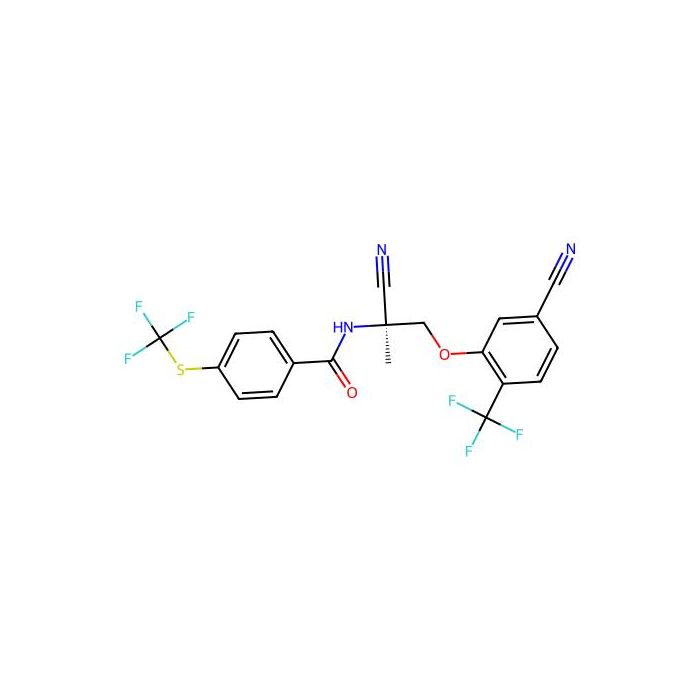
Monepantel - 10mM in DMSO , CAS No.887148-69-8
AVAILABLE TO ORDER
GRADE & PURITY 10mM in DMSO
Storage
Store at -80°C
Shipped In
Dry ice packs + Cold packs
10mM in DMSO for sensitive chromatographic and analytical workflows requiring minimal baseline interference.
Store at -80°C Ships Dry ice packs + Cold packs Check lot-specific COA for exact specifications.
SDS, COA, datasheet, and spec sheet available for download. Lot-specific COA accessible via lot number lookup.
Cited in 0 peer-reviewed publications across chromatography, organic synthesis, and cross-coupling reactions.
Monepantel is organic anthelmintic, and acts as a positive allosteric modulator of a nematode-specific clade of nicotinic acetylcholine receptor ( nAChR ) subunits.
In Vitro
The metallocenyl analogues of monepantel shows nematocidal activity. Monepantel (25 µM) induces accumulation of acidic vacuoles. Ovarian cancer cell lines are highly sensitive to Monepantel with IC 50 values of 7.2±0.2 µM (OVCAR-3) and 10.5±0.4 μM (A2780). Monepantel (0, 10 and 25 µM) induces autophagosome formation in these cancer cell lines. Monepantel (0, 10 and 25 µM) exhibits a markedly reduced level of punctate staining indicating the suppression of phosphorylated mTOR at Ser2448. Monepantel also decreases the expression of phosphorylated Raptor at Ser792, which is one of the mTORC1 coMonepantelex members. Monepantel (250 μg/mL) leads multiple ABC transporter genes higher transcription in both worm isolates. Larvae exposed to monepantel at 250 μg/mL shows an increased efflux of rhodamine-123 and a proportion of the larval population shows an ability to subsequently tolerate higher concentrations of IVM in migration assays. MCE has not independently confirmed the accuracy of these methods. They are for reference only.
In Vivo
Monepantel (10 μM) significantly increased all CYP-related activities and CYP3A24 mRNA in sheep. MCE has not independently confirmed the accuracy of these methods. They are for reference only.
Cell Assay
The effect of monepantel with or without other agents on cell proliferation is assessed using the sulforhodamine B (SRB) assay. Briefly, cells are seeded in 96-well plates (2500 cells/well) overnight followed by treatment with desired concentrations of Monepantel. After 72 h cells are fixed with 200 µL of 0.1% TCA, washed with tap water and stained with 100 µL of 0.4% (w/v) SRB dissolved in 1% acetic acid. Unbound dye is removed by five ishes with 1% acetic acid before air drying. Bound SRB is solubilized with 100 µL of 10 mM Tris base (pH 10.5) and the absorbance read at 570 nm. Each concentration is tested in replications of 8 and each experiment is repeated twice. Data represent mean±SEM from two independent experiments combined. MCE has not independently confirmed the accuracy of these methods. They are for reference only.
| Isomeric SMILES | C[C@@](COC1=C(C=CC(=C1)C#N)C(F)(F)F)(C#N)NC(=O)C2=CC=C(C=C2)SC(F)(F)F |
|---|---|
| PubChem CID | 44449087 |
| Molecular Weight | 473.39 |
Comprehensive hazard, handling, storage, and regulatory compliance document.
Download SDS →Lot-specific quality data. Enter your lot number to retrieve the exact COA.
Look up COA →Full quality attributes and acceptance criteria for this grade.
View spec sheet →