GRADE & PURITYMoligand™?Moligand™ — Aladdin's line of ligands and bioactive small molecules. Use for receptor, pathway, and binding studies needing defined small-molecule tools.10 mM in DMSO
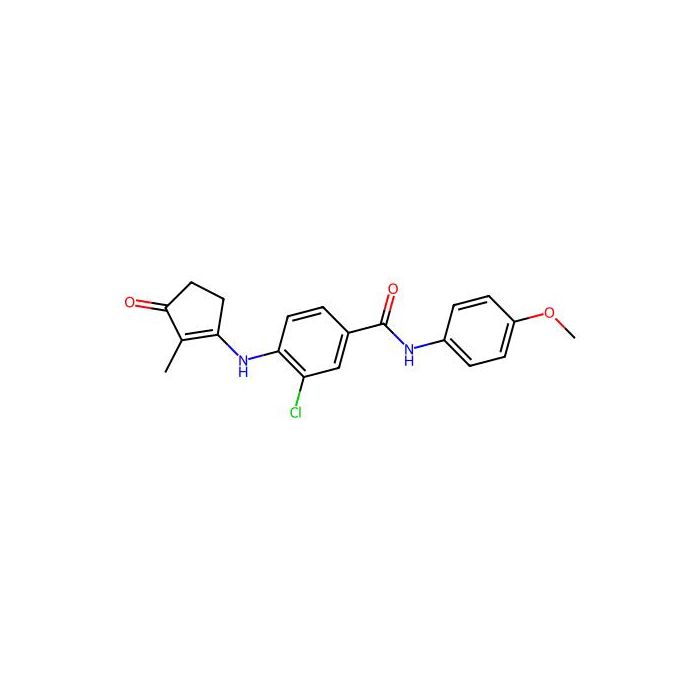
MS402 is a BD1 -selective BET BrD inhibitor with K i s of 77 nM, 718 nM, 110 nM, 200 nM, 83 nM, and 240 nM for BRD4(BD1) , BRD4(BD2) , BRD3(BD1) , BRD3(BD2) , BRD2(BD1) and BRD2(BD2) , respectively. MS402 blocks Th17 cell differentiation and ameliorates colitis in mice.
Specifications
Specifications & Purity
Moligand™, 10 mM in DMSO
Storage
Store at -80°C
Shipped In
Dry ice packs + Cold packs
This product requires cold chain shipping. Ground and other economy services are not available.
Determine the necessary mass, volume, or concentration for preparing a solution.
Dilution Calculator
Determine the dilution needed to prepare a stock solution.
Reconstitution Calculator
Reviews
Customer Reviews
Application Protocols
The Product Data does not include validated protocols or tested applications for MS402.
General protocol framework for small-molecule screening compounds (to be adapted and validated):
Stock preparation:
Determine molecular weight from CoA. Prepare a 10–50 mM DMSO stock solution under dry conditions. Record concentration, lot, and date. Filter sterilize (0.2 µm) if required by your assay and if the compound is stable.
Working solution:
Dilute into assay buffer (e.g., PBS, HEPES, or Tris) keeping DMSO ≤0.5–1% v/v. Include vehicle controls. Verify absence of precipitation.
Plate handling:
Use low-binding plasticware. Avoid excessive freeze–thaw; aliquot stocks for single use when possible.
Data quality controls:
Include positive/negative controls. Run concentration–response curves (10-point, 3-fold dilutions typical) to estimate potency. Assess cytotoxicity in parallel for cell-based assays.
Item-specific recommendations, dilutions, or positive controls: Not specified for this item; refer to CoA/Spec Sheet and validate in your system.
Biological Roles
Item-specific biological function, targets, or mechanisms for MS402 are not provided in the Product Data. No claims are made regarding potency, selectivity, or mode of action.
General context for small-molecule screening compounds (non-item-specific):
Potential roles in research include acting as chemical probes for pathways of interest once characterized for on-target activity and off-target liabilities.
Compounds may serve as starting points for hit-to-lead campaigns, enabling SAR development around efficacy, selectivity, and ADME properties.
In cellular systems, observable effects can arise from multiple mechanisms (on-target modulation, pathway crosstalk, or assay artifacts). Proper controls (counterscreens, orthogonal assays, cytotoxicity checks) are essential.
Data gaps for MS402 (must be resolved from CoA/primary literature before biological use claims):
Target(s), binding constants, EC50/IC50 values: Not specified for this item; consult literature or internal screening data.
Cell permeability, metabolic stability, efflux liability, and protein binding: Not specified.
Spectral properties (autofluorescence/interference risk): Not specified.
Note: For research use only. No medical, diagnostic, or clinical claims are made or implied for MS402.
Buffer Applications
This product is a small-molecule screening compound and is not itself a buffering agent.
Applicability:
Not typically used to prepare buffer systems or adjust pH.
Practical handling in buffered assays (general guidance):
Prepare concentrated DMSO (or ethanol) stocks and dilute into assay buffers such as PBS, HEPES, or Tris, keeping final organic co-solvent at ≤0.5–1% v/v to maintain protein integrity and assay performance.
Pre-check for precipitation upon dilution by visual inspection or nephelometry; adjust co-solvent percentage if needed within assay tolerance.
Include matched vehicle controls to account for solvent effects on pH and biological readouts.
Item-specific buffer compatibility for MS402:
Not specified for this item; refer to CoA/Spec Sheet and validate empirically.
Green Alternatives
Because MS402 is a screening compound (not a solvent or bulk reagent), “green alternatives” considerations focus on handling solvents for stock preparation and assay work rather than replacing the compound itself.
Greener choices for dissolution and processing (general guidance):
Prefer ethanol or water/ethanol blends over DMF/NMP when solubility permits.
Limit DMSO to the minimum effective concentration in assays (typ. ≤0.5–1% v/v final).
For chromatography, consider ethanol or ethyl acetate/heptane systems instead of dichloromethane or acetonitrile when compatible.
Operational best practices:
Scale down: miniaturize assay volumes to reduce solvent usage and waste.
Closed systems and solvent recovery where practical.
Use aqueous workups and solid-phase extraction to minimize halogenated solvent waste.
Trade-offs (general):
Ethanol and 2-propanol have lower toxicity profiles than DMF/NMP but may not dissolve highly lipophilic scaffolds.
Aqueous buffers reduce solvent exposure but can precipitate hydrophobic compounds—validate solubility/aggregation.
Item-specific green metrics:
Not specified for this item; refer to CoA/Spec Sheet for any recommended handling or validated solvent systems.
In summary, prioritize greener co-solvents and minimal volumes while confirming assay compatibility for MS402.
Pharmaceutical Uses
No pharmacopeial listing or excipient/processing role is provided for MS402, and no therapeutic claims are made. This product is supplied strictly for research use.
Regulatory/compendial status:
Not specified for this item; refer to CoA/Spec Sheet. No USP/EP monograph is indicated in the Product Data.
Potential roles in pharmaceutical R&D (general, non-therapeutic):
Tool compound for target validation in discovery.
Hit matter for medicinal chemistry optimization (subject to established potency, selectivity, and safety—none provided here).
Reference control in screening cascades where appropriate characterization exists.
Formulation considerations for research use (general):
DMSO stock solutions for in vitro work; for in vivo enabling research, additional data on solubility, stability, and tolerability would be required (not provided).
Item-specific notes:
No data on dosage forms, excipient compatibility, or manufacturing relevance are provided. Treat MS402 solely as a research chemical.
Physical Properties
Item-specific properties (from Product Data):
Appearance: Not specified for this item; refer to CoA/Spec Sheet.
Molecular weight: Not specified for this item; refer to CoA/Spec Sheet.
Literature/database values (for the exact structure):
For MS402 (CAS 1672684-68-2; CID 90718189), definitive physical constants such as melting point, boiling point, density, refractive index, logP, pKa, and aqueous/organic solubility must be sourced from the CoA or authoritative databases. They are not provided here.
General handling expectations for small-molecule library compounds (context; not specifications):
Many screening molecules are shipped as solids or as DMSO solutions in microplates/vials.
If solid, typical practice is to prepare concentrated DMSO stocks (e.g., 10–50 mM) based on accurately measured molecular weight (confirm via CoA).
If the compound has limited aqueous solubility, serial dilution into assay buffer commonly uses co-solvent strategies (e.g., ≤0.5–1% DMSO final), often aided by gentle warming or sonication.
Important: Do not treat any generalized values as specifications. For this item, all quantitative physical property values are “Not specified for this item; refer to CoA/Spec Sheet.”
Quality & Grades
Item-specific grade: Moligand™.
What Moligand™ implies (general description):
Moligand™ designates small molecules prepared and qualified for discovery screening, target engagement studies, and chemical biology exploration. Emphasis is placed on identity confirmation and suitability for research assays, including compatibility with DMSO stock preparation and microplate handling.
Typical quality controls for library-grade small molecules include structural identity confirmation (NMR/HRMS), purity by LC/UV or LC/MS, and documentation of storage/shipping history. Specific tests and thresholds for this item are Not specified; refer to CoA/Spec Sheet.
Purity/assay details for this item:
Grade/Purity value: Not specified for this item; refer to CoA/Spec Sheet.
Stabilizers, counter-ions, salt form, and residual solvent limits: Not specified for this item; refer to CoA/Spec Sheet.
Practical implications:
For screening and SAR work, verify lot-specific purity and identity to ensure consistent bioassay performance and to avoid off-target artifacts from impurities.
If planning quantitative biophysics or in vivo enabling studies, you may require analytical re-verification (orthogonal purity methods, water content, salt content) as dictated by your internal SOPs.
Documentation:
Certificate of Analysis (CoA) and Spec Sheet provide the authoritative grade specifications for the shipped lot.
Reaction & Applications
This product is positioned as a research screening compound rather than a synthetic reagent. No item-specific reactivity or application claims are provided in the Product Data.
Item-specific applications (from Product Data): Not specified.
General research applications for small-molecule library members (non-exhaustive; verify suitability for MS402):
High-throughput screening (HTS) or focused screening against biochemical/biophysical targets.
Hit validation, preliminary SAR, and orthogonal assay confirmation.
Cellular target engagement studies (e.g., thermal shift, CETSA, DARTS) when solubility and permeability permit.
Mechanistic probes in chemical biology, contingent on confirmed selectivity and potency (not provided here).
Practical notes:
Ensure compound identity and purity are fit for purpose (see CoA). Track freeze–thaw cycles to maintain integrity of DMSO stocks.
Control for aggregation and assay interference (use detergent, counterscreens, redox/fluorescence interference panels as needed).
For biophysical assays, determine exact concentration via UV (if chromophore present) or quantitative NMR; item-specific extinction coefficients are not provided.
Synthetic reaction usage:
No recommendations; this item is not presented as a building block or reagent. If used in synthesis, consult primary literature for the specific scaffold.
Reaction Conditions
No item-specific reaction conditions are provided because MS402 is not presented as a reagent for named chemical reactions.
General considerations if derivatization is attempted (based on typical small-molecule chemistry; verify against the actual structure and stability profile from the CoA):
Solvent selection should balance solubility and stability (DMSO, DMF, MeCN, toluene, alcohols), and avoid conditions that degrade sensitive motifs (e.g., strong base for ester-labile compounds, strong acid for acetal-labile scaffolds).
Temperature: Start at ambient (20–25°C) and increase cautiously; monitor by TLC/LC–MS.
Atmosphere: Use inert gas (N2/Ar) if air- or moisture-sensitive groups are present.
Catalysts/bases/acids: Choose based on the actual functional groups (e.g., Pd for cross-coupling, carbodiimide or uronium reagents for amide formation). No item-specific recommendations can be made without structure.
Workup/purification: Standard aqueous quench, extraction, and silica gel or reverse-phase chromatography as compatible with the scaffold.
For this item, all quantitative or prescriptive conditions are “Not specified for this item; refer to CoA/Spec Sheet.”
Safety & Handling
Authoritative safety data must be taken from the product’s SDS. The Product Data provided does not list specific hazards for MS402.
GHS classification, signal word, H-statements, pictograms: Not specified for this item; refer to SDS.
General laboratory precautions for small-molecule research compounds (not item-specific):
PPE: Use lab coat, safety glasses or goggles, and appropriate chemically resistant gloves (e.g., nitrile). Work in a fume hood to avoid inhalation of dusts or vapors.
Avoid ingestion, inhalation, and skin/eye contact. Wash thoroughly after handling.
Handling: Minimize exposure to ambient moisture/air if the compound is hygroscopic or air-sensitive (status unknown; check CoA/SDS). When opening cryostored vials, allow to equilibrate to reduce condensation ingress.
First aid (general): If on skin or in eyes, rinse with water for several minutes; remove contaminated clothing. If inhaled, move to fresh air. If ingested, rinse mouth. Seek medical attention in all cases. Follow SDS instructions.
Incompatibilities: Not specified for this item. As a precaution, store away from strong oxidizers/reducers and acids/bases unless compatibility is known.
Waste: Dispose of contents/container in accordance with institutional and governmental regulations.
Always defer to the SDS for definitive hazard, exposure limits, and response measures.
Solvent Selection
Item-specific solubility parameters are not provided in the Product Data. The following guidance is general for small-molecule screening compounds and should be validated empirically for MS402.
Primary stock solvent for screening libraries:
DMSO is commonly used owing to broad solubilizing power and assay compatibility at ≤0.5–1% v/v final concentration.
Alternative solvents (general, verify compatibility):
DMF or NMP for difficult-to-dissolve compounds (handle with care; higher toxicity profiles).
Volatile organics for preparative work: acetonitrile, methanol, ethanol, isopropanol, ethyl acetate (selection based on polarity and stability of the analyte).
Aqueous buffers with co-solvent: PBS, HEPES, or Tris with 0.1–1% DMSO or up to 10–20% ethanol, as assay permits.
Polarity/miscibility notes:
Not specified for this item; refer to CoA/Spec Sheet for any recommended solvents.
Practical tips:
Warm mildly (25–37°C) and vortex/sonicate to aid dissolution; avoid prolonged heating.
Filter 0.2 µm if particulate persists and the compound is not adsorptive/unstable.
Confirm absence of precipitation at the intended working concentration after dilution into assay buffer.
Comparison point:
If DMSO sensitivity is a concern, ethanol or PEG400/water blends can reduce DMSO usage, but may affect assay readouts—validate accordingly.
Storage & Reconstitution
Item-specific facts (from Product Data):
Storage conditions: Store at −80°C.
Shipped in: Dry ice packs + Cold packs.
Appearance: Not specified for this item; refer to CoA/Spec Sheet.
General guidance for small-molecule screening compounds (apply with validation for MS402):
Long-term storage:
Maintain at −80°C in tightly sealed containers under inert atmosphere or desiccation if moisture/air sensitive (sensitivity not specified). Protect from light if chromophore present (unknown).
Short-term handling:
Keep on dry ice during transfers. Minimize time at ambient temperature. Record cumulative time out of freezer.
Reconstitution:
Confirm molecular weight from the CoA. Prepare concentrated DMSO stock (e.g., 10–50 mM). Vortex and, if needed, sonicate briefly. Avoid prolonged heating.
Filter (0.2 µm PTFE) only if the compound is known to be stable and non-adsorptive.
Aliquoting and freeze–thaw:
Prepare single-use aliquots to limit freeze–thaw cycles. Document the number of freeze–thaw events if aliquoting is not possible.
Stability and retest period:
Not specified for this item; refer to CoA/Spec Sheet.
Research use only: Not for human or veterinary use.
Structure & Identity
Brief overview: MS402 is a cataloged small-molecule screening compound in the Moligand™ collection. Item-specific structural identifiers are not provided in the Product Data and should be confirmed from the CoA/SDS.
Item-specific facts (from Product Data):
SKU: M1495243
Product Name: MS402
CAS: 1672684-68-2
PubChem CID: 90718189
Grade: Moligand™ (small-molecule library grade)
InChIKey: Not specified for this item; refer to CoA/Spec Sheet.
SMILES: Not specified for this item; refer to CoA/Spec Sheet.
Molecular formula: Not specified for this item; refer to CoA/Spec Sheet.
Molecular weight: Not specified for this item; refer to CoA/Spec Sheet.
Structural features (general guidance):
Functional groups, ring systems, heteroatoms, and stereochemistry are not disclosed in the Product Data. Obtain definitive structure and stereochemical description from the Certificate of Analysis or PubChem record for CID 90718189 (literature/database).
2D structure description (general):
Without the SMILES/InChI, a textual 2D description cannot be provided for this specific item. Please consult the CoA or trusted databases for atom connectivity, ring topology, substitution pattern, and any chiral centers (if present).
Synthetic Utility
MS402 is offered as a research screening compound rather than a synthetic building block. The Product Data does not disclose functional groups or reactivity, so no specific synthetic transformations can be recommended.
General guidance (non-item-specific):
If the structure is available (via CoA or CID 90718189), chemists may assess:
Functional handles (e.g., halides, boronates, acids, amines) for diversification.
Opportunities for late-stage functionalization to explore SAR.
Stability to common reaction conditions (acid/base, redox, heat) and protecting group strategies if derivatization is planned.
Typical transformations for small-molecule scaffolds (examples; literature-level):
Cross-couplings (Suzuki–Miyaura, Buchwald–Hartwig) if appropriate handles exist.
Amide couplings or reductive aminations to vary substituents.
Heteroatom alkylations/acylations or ring modifications for analog generation.
Item-specific takeaway:
Without structural disclosure in the Product Data, synthetic utility for MS402 remains unspecified. Consult the structural data and evaluate reactivity before planning derivatization.
Target Specificity
Item-specific biological target(s), selectivity profile, and binding mode for MS402 are not provided in the Product Data.
Antigen/epitope/clone/isotype information: Not applicable; this product is a small-molecule, not an antibody.
Known targets, IC50/Kd, or pathway associations: Not specified for this item; consult primary literature or screening data.
General guidance for establishing target specificity (for research planning):
Use multiple orthogonal assays (biochemical, biophysical, and cellular) to confirm on-target activity.
Employ counterscreens against homologous enzymes/receptors to profile selectivity.
Apply chemoproteomics or CETSA for cellular target engagement where feasible.
We use cookies to ensure the website functions properly and, where permitted, to improve your experience. You can manage your preferences at any time in Settings. Learn more in our Cookie Policy.
Shall we send you a message when we have discounts available?
Remind me later
Thank you! Please check your email inbox to confirm.
Products are supplied to verified businesses, institutions, and qualified professionals for research and development use only. Not for use in humans, animals, diagnosis, or therapy.