GRADE & PURITYMoligand™?Moligand™ — Aladdin's line of ligands and bioactive small molecules. Use for receptor, pathway, and binding studies needing defined small-molecule tools.10 mM in DMSO
Moligand™, 10 mM in DMSO Moligand™ for sensitive chromatographic and analytical workflows requiring minimal baseline interference.
🌡
Storage & shipping
Store at -80°C Ships Dry ice packs + Cold packs Check lot-specific COA for exact specifications.
📋
Quality documents
SDS, COA, datasheet, and spec sheet available for download. Lot-specific COA accessible via lot number lookup.
📚
Literature proof
Cited in 0 peer-reviewed publications across chromatography, organic synthesis, and cross-coupling reactions.
Overview
Ogremorphin (OGM) is a G protein coupled sensor GPR68 inhibitor with anti-inflammatory and anti-tumor activities. Ogremorphin can inhibit the migration of human melanoma cells and induce ferroptosis in glioblastoma cells.
Specifications
Specifications & Purity
Moligand™, 10 mM in DMSO
Storage
Store at -80°C
Shipped In
Dry ice packs + Cold packs
This product requires cold chain shipping. Ground and other economy services are not available.
Grade
Moligand™
Names and Identifiers
Molecular Weight
359.44
Documentation
📋 Safety Data Sheet (SDS)
Comprehensive hazard, handling, storage, and regulatory compliance document.
Determine the necessary mass, volume, or concentration for preparing a solution.
Dilution Calculator
Determine the dilution needed to prepare a stock solution.
Reconstitution Calculator
Reviews
Customer Reviews
Application Protocols
Manufacturer-tested applications are not provided for this item. The following are general, literature‑informed practices for bioactive small molecules targeting GPCRs. Adjust to your model system and confirm experimentally.
General cell-based assay workflow
Reconstitution: Prepare a 10–50 mM DMSO stock (solubility permitting). Vortex and, if needed, briefly sonicate. Filter through a 0.22 µm PTFE filter for sterility if required.
Aliquoting: Dispense single‑use aliquots (e.g., 10–50 µL) to avoid repeated freeze–thaw. Store at −80°C.
Dosing: Dilute stock into pre‑warmed assay medium to achieve the desired concentration with ≤0.1–0.5% DMSO final. Include vehicle-only controls.
pH control: For GPR68 studies, pre‑equilibrate buffers and maintain stable pH during assays. Validate that medium pH remains within the intended window after adding the compound.
Readouts: Common endpoints include calcium flux, β‑arrestin recruitment, RhoA/ROCK activity, and migration assays (scratch, transwell) depending on the biological question.
Data quality tips
Perform eight‑point titrations for potency profiling.
Include time‑course and washout studies to probe reversibility.
Confirm on‑target action with genetic controls where feasible.
Note: No item-specific validated protocols or dilution factors are claimed for this product.
Biological Roles
Biological context (literature)
Primary target: Ogremorphin is reported as an inhibitor of GPR68 (OGR1), a proton‑sensing G protein–coupled receptor that responds to extracellular acidification.
Signaling pathways: GPR68 activation can couple to Gq/11 and downstream Ca2+ mobilization, as well as RhoA/ROCK pathways influencing cytoskeletal dynamics; ogremorphin provides a means to attenuate these signals in cells.
Physiological relevance: Proton‑sensing GPCRs participate in pH homeostasis, mechanotransduction, and migration responses in various cell types. Ogremorphin is used to dissect the contribution of GPR68 to these phenomena in vitro and in model organisms.
Developmental biology origins: Identified in phenotypic screens in zebrafish, where perturbation of GPR68 signaling altered craniofacial patterning and neural crest cell behavior.
Research utility
Target validation: Aids in distinguishing GPR68-dependent from independent effects by pharmacological inhibition, potentially in tandem with CRISPR knockouts or siRNA.
Chemical probe considerations: Users should establish selectivity in their system, as GPCR ligand selectivity can vary by assay format and species ortholog.
Note
The above roles reflect general literature insights and do not represent medical or clinical claims. All uses are for research only.
Buffer Applications
This product is not a buffering agent and is not typically used to prepare physiological buffers.
Practical notes for assay buffers (general)
Vehicle control: When ogremorphin stocks are prepared in DMSO, maintain matched vehicle controls in all buffer‑only wells to account for solvent effects.
pH considerations: Because the target GPCR is proton‑sensing (literature), carefully control extracellular pH in experiments (e.g., use HEPES or MOPS where appropriate) to ensure reproducible activation states.
No item-specific buffer recipes or pKa values are provided for this product.
Green Alternatives
As a bioactive ligand, ogremorphin itself is not readily substituted by a “greener” reagent without changing biological activity. However, greener practices can be applied to its use.
Greener handling strategies (general)
Solvent choices: Prefer aqueous buffers with minimal DMSO carryover (≤0.1–0.2% where assay-compatible). When possible, use ethanol as a co‑solvent instead of DMF for cytocompatibility; confirm solubility.
Scale minimization: Use micro‑aliquots and miniaturized assay formats (384/1536‑well) to minimize solvent and compound consumption.
Waste reduction: Consolidate organic waste streams and employ high‑efficiency pipetting workflows to reduce plastic use.
Shipping/storage: The product ships on dry ice/cold packs as specified; coordinate deliveries to avoid re‑shipments and reduce cold‑chain impact.
Illustrative comparison of vehicles (general)
DMSO: High solvency; moderate environmental impact; low volumes used in screening.
Ethanol: Renewable feedstock potential; good biocompatibility at low %; may have lower solubility for hydrophobic ligands.
Aqueous with solubilizers: Reduces organic solvents; requires validation to ensure assay fidelity.
Note: No greener “alternative compound” can be proposed without altering the target engagement profile; ogremorphin’s target selectivity must be preserved for its intended research use.
Pharmaceutical Uses
Pharmaceutical/formulation status
Intended use: Research use only. Not for human or veterinary use, diagnostic procedures, or clinical applications.
Excipient/compendial status: No pharmacopeial monograph is indicated. This item is not offered as a GMP‑grade material.
Relevance to drug discovery (general)
Screening tool: Ogremorphin can serve as a reference antagonist in early discovery studies targeting GPR68 to help benchmark assay performance and SAR trends (literature context).
Formulation for research: For in vitro studies, DMSO stock solutions are typical. For in vivo research in model organisms, formulation strategies (e.g., co‑solvent systems, cyclodextrins) must be developed and validated by the user; no item-specific guidance is provided here.
Regulatory note
No claims of safety, efficacy, or therapeutic utility are made. All handling and use should follow institutional policies for investigational research chemicals.
Physical Properties
Only item-specific values listed on the CoA/Spec Sheet should be treated as specifications. The following fields are not provided in the current catalog entry:
Item-specific specifications
Appearance: Not specified for this item; refer to CoA/Spec Sheet.
Molecular weight: Not specified for this item; refer to CoA/Spec Sheet.
Molecular formula: Not specified for this item; refer to CoA/Spec Sheet.
Melting point: Not specified for this item; refer to CoA/Spec Sheet.
Boiling point: Not applicable/rarely specified for non-volatile, high-MW solids; Not specified for this item.
Density: Not specified for this item.
Refractive index: Not applicable to solids; Not specified for this item.
Solubility: Not specified for this item; refer to CoA/Spec Sheet.
LogP/logD, pKa: Not specified for this item.
General guidance for small-molecule ligands (literature/general)
Solubility practice: Bioactive screening ligands are commonly reconstituted in anhydrous DMSO at 10–50 mM stock, then diluted into aqueous buffers containing 0.1–1% DMSO final. Actual solubility and stability must be verified for this item.
Stability considerations: Many GPCR ligands are light- and air-sensitive to varying degrees; minimize exposure to light, moisture, and repeated freeze–thaw. Confirm with the item’s CoA/SDS.
Quality & Grades
Grade for this item
Grade/Purity: Moligand™ (as listed). Specific purity metrics and analytical data are not provided in this entry; refer to the CoA/Spec Sheet.
What Moligand™ typically signifies (general description)
Research ligand focus: Moligand™ denotes inclusion in a research-use small‑molecule ligand collection suitable for biochemical/cellular screening, target validation, and SAR exploration.
Identity confirmation: For compounds in such libraries, identity is generally established by spectroscopic and/or chromatographic methods (e.g., LC–MS, NMR). For this specific item, consult the CoA for the exact testing performed.
Practical considerations: Aliquoting for single-use can help preserve integrity across screening campaigns. Low UV background and counter‑ion information, if applicable, should be checked on the CoA when planning optical assays.
What is specific to this item
Item-specific stabilizers, residual solvent limits, metal content, water/peroxide content, and UV cutoffs: Not specified for this item; refer to CoA/Spec Sheet.
Appearance and purity assay values: Not specified for this item; refer to CoA/Spec Sheet.
Reaction & Applications
This compound is primarily a bioactive research ligand rather than a synthetic reagent. As such, it is not typically used to drive chemical transformations in bench chemistry.
Research applications (literature/general)
GPCR pharmacology: Ogremorphin is reported as a tool inhibitor of the proton‑sensing GPCR GPR68 (OGR1), enabling interrogation of pH‑dependent signaling in cells.
Cell migration and mechanobiology: Used in phenotypic and target-based assays exploring pH-mediated effects on cytoskeletal dynamics and migration (literature).
Developmental biology: Originally identified in zebrafish screens impacting craniofacial development; useful for studying neural crest cell behavior (literature).
Chemical biology: Serves as a probe to test pathway dependence on GPR68 in gene‑edited or pharmacologically manipulated systems.
Practical notes
Titrate concentrations across a broad window (e.g., nanomolar to low micromolar) to establish potency in your assay; verify solvent tolerance.
Include appropriate controls: vehicle-only, unrelated GPCR antagonist, and (where available) rescue by pH modulation or genetic perturbation to confirm on‑target effects.
Item-specific applications listed by the manufacturer
None beyond research use; this catalog entry does not include additional application notes.
Reaction Conditions
Not typically applicable. Ogremorphin is used as a bioactive ligand in biological assays rather than as a reagent in synthetic transformations.
Assay-related conditions (general guidance)
Stock solutions: Commonly prepared at 10–50 mM in anhydrous DMSO; store at −80°C in aliquots to minimize freeze–thaw (verify solubility for this item).
Working concentrations: Users often explore ranges from low nanomolar to low micromolar in cellular assays to map potency and off‑target profiles; exact values must be established empirically for the intended system.
Assay media: Maintain consistent pH and DMSO percentage across treatments. Because the nominal target is proton‑sensing (literature), pH control is critical.
Exposure time: Time‑course studies (acute minutes to chronic hours) help distinguish direct receptor effects versus downstream transcriptional changes.
No item-specific kinetic, stability, or degradation parameters are provided in this catalog entry.
Safety & Handling
Authoritative safety information is provided in the product SDS. The present catalog entry does not list specific hazard classifications for this item.
Item-specific safety status
GHS classification: Not specified for this item; refer to SDS.
Signal word: Not specified for this item; refer to SDS.
H-statements/Pictograms: Not specified for this item; refer to SDS.
General laboratory precautions (good practice)
PPE: Wear lab coat, nitrile gloves, and safety glasses when handling powders/solutions. Work in a fume hood to avoid inhalation of dust or aerosols.
Avoid: Inhalation, ingestion, and skin/eye contact. Prevent cross-contamination of screening libraries by using clean, low‑binding tips/tubes.
Incompatibilities: Avoid strong oxidizers and strong acids/bases unless compatibility is confirmed. Do not mix with unknown reagents.
First aid overview: In case of contact, rinse affected area with water for 15 minutes and remove contaminated clothing. If inhaled, move to fresh air. Seek medical attention if symptoms persist. See SDS for detailed guidance.
Waste: Dispose of solutions and contaminated materials as organic hazardous waste in accordance with institutional and local regulations.
Special notes for small-molecule libraries
Minimize freeze–thaw cycles and moisture uptake during handling. Cap vials promptly; permit materials to equilibrate to room temperature in a desiccator before opening to reduce condensation.
Solvent Selection
This product is a bioactive research ligand, typically used in solution for screening or cell-based assays.
General solvent guidance (literature/general)
Stock preparation: DMSO is the most common vehicle for small-molecule ligands. Typical stock concentrations: 10–50 mM, contingent on actual solubility of this item (verify experimentally).
Compatibility profile: DMSO stocks are commonly diluted into aqueous assay buffers (e.g., HBSS, PBS, or culture media) maintaining 0.1–1.0% DMSO final to balance solubility with cellular tolerance.
Alternative organic solvents: If required for intermediate dilutions or analytics, DMF, ethanol, or acetonitrile may be used. Confirm compatibility with your assay and this specific compound.
Surfactants/solubilizers: Non-ionic surfactants (e.g., 0.01–0.05% Pluronic F‑127) or cyclodextrins can aid aqueous delivery for hydrophobic ligands; validate for your system.
Comparison (general)
DMSO: Highest solvating power for diverse ligands; widely accepted in bioassays.
Ethanol: Good biocompatibility at ≤0.5% v/v in many cell systems; lower solvating power than DMSO.
DMF/ACN: Useful for analytics or chemical manipulations; more cytotoxic—limit carryover.
Item-specific solubility data
Not specified for this item; refer to CoA/Spec Sheet and confirm empirically.
General handling guidance for small-molecule ligands
Upon receipt: Keep frozen. Allow vials to equilibrate to room temperature in a desiccator before opening to minimize moisture condensation.
Aliquoting: If the product is supplied as a solid, aliquot under dry conditions. If supplied as a solution, partition into single‑use volumes to avoid repeated freeze–thaw.
Reconstitution: In the absence of item‑specific solubility data, DMSO is the recommended initial solvent. Typical stock concentrations are 10–50 mM if solubility permits. Filter sterilize if using in cell culture.
Storage of stocks: Store reconstituted stocks at −80°C, protected from light. Avoid more than 2–3 freeze–thaw cycles. Record preparation date and solvent.
Stability: Item-specific stability and degradation pathways are Not specified for this item; refer to CoA/SDS and validate stability in your lab (e.g., LC–MS check after storage).
Safety note
For research use only. Follow institutional guidelines for handling investigational research chemicals and consult the SDS for authoritative safety information.
Structure & Identity
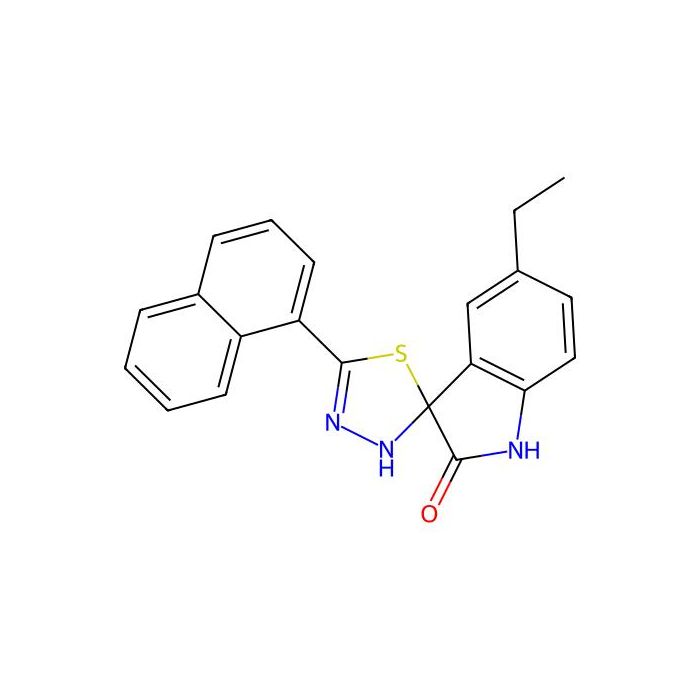
Ogremorphin is supplied as a research-use small-molecule ligand in our Moligand™ collection. It is widely cited in the literature as a tool inhibitor of the proton‑sensing GPCR GPR68 (also known as OGR1).
Item-specific identifiers
SKU: O1498051
Product name: Ogremorphin
CAS: 352563-21-4
Category: Small molecules and compound libraries (研究/筛选用途)
Structure information for this catalog item
Molecular formula: Not specified for this item; refer to CoA/Spec Sheet.
Molecular weight: Not specified for this item; refer to CoA/Spec Sheet.
SMILES: Not specified for this item; refer to CoA/Spec Sheet.
InChIKey: Not specified for this item; refer to CoA/Spec Sheet.
Structural features: The specific substitution pattern and heterocycles vary by reported analogs in the ogremorphin series; consult primary references and the item’s CoA for definitive structure.
Stereochemistry: Not specified for this item; refer to CoA/Spec Sheet.
2D structure description (general)
Literature reports depict ogremorphin scaffolds as compact, drug-like heteroaromatic systems consistent with GPCR ligand space. Exact ring systems and functional groups for this item are not specified here and should be confirmed from the supplied documentation.
Synthetic Utility
This compound is supplied as a bioactive ligand for biological research and is not typically employed as a synthetic reagent or building block.
General considerations (if used in chemistry workflows)
Functional group reactivity: Without a disclosed structure in this listing, no actionable guidance on reactivity or derivatization can be provided for this specific item; refer to the CoA/structure for any custom conjugation or immobilization strategies.
Analytical characterization: If users derivatize ogremorphin for probe development, confirm identity and purity by LC–MS, NMR, and HRMS as appropriate. Establish that modifications preserve target engagement.
Bottom line
Not a general-purpose reagent for named organic reactions; its value is as a selective tool compound in chemical biology (literature).
Target Specificity
Item-specific target validation data are not provided in this entry.
Literature/general context
Primary reported target: GPR68 (OGR1), a proton‑sensing GPCR. Ogremorphin is described as an antagonist/inhibitor used to suppress GPR68 signaling in cells and organisms.
Selectivity considerations: As with many GPCR ligands, selectivity may depend on assay type (e.g., β‑arrestin vs. Gq‑Ca2+ mobilization), cell background, and species orthologs. Users should profile off‑target activity relevant to their system.
Controls: Employ genetic knockdown/knockout or orthogonal pharmacology to corroborate on‑target effects.
Note: For this specific catalog item, any quantitative potency, Ki/IC50 values, or cross‑reactivity data are Not specified; consult primary literature and the item’s CoA if available.
Frequently Asked Questions
What is Moligand??
Moligand? is one of Aladdin Scientific's premium product lines, formulated for high-purity applications across multiple workflows. Compared to standard grades in the same workflow, Moligand? products typically offer tighter specifications, more rigorous QC, and stronger lot-to-lot consistency.
How should this product be stored?
Store at ?80 °C. Ultra-low temperature storage is required to maintain the specified shelf life.
How is this product shipped?
This product ships frozen with dry ice and cold packs. Unpack on arrival and transfer it to the storage condition stated above; handle dry ice with insulated gloves in a ventilated area.
What are the CAS number, molecular formula and molecular weight?
The CAS Number is 352563-21-4, the molecular formula is C21H17N3OS, and the molecular weight is 359.44 g/mol.
What documentation is provided?
Available product documentation, including Certificates of Analysis (COA), Safety Data Sheets (SDS), and specification sheets, is shown in the product document area. Document availability and access follow the current site policy.
Need help choosing the grade?
Our grade selection guide covers purity, stabilizer status, and application suitability for all variants in our catalog.
We use cookies to ensure the website functions properly and, where permitted, to improve your experience. You can manage your preferences at any time in Settings. Learn more in our Cookie Policy.
Shall we send you a message when we have discounts available?
Remind me later
Thank you! Please check your email inbox to confirm.
Products are supplied to verified businesses, institutions, and qualified professionals for research and development use only. Not for use in humans, animals, diagnosis, or therapy.