GRADE & PURITYMoligand™?Moligand™ — Aladdin's line of ligands and bioactive small molecules. Use for receptor, pathway, and binding studies needing defined small-molecule tools.10 mM in DMSO
1.Liang Li, Hui Jiang, Tingting Xu, Xi Wang. (2025) Engineering Bienzymatic Cascade for Efficient Biosynthesis of Citronellal and Citronellol. BIOTECHNOLOGY AND BIOENGINEERING, [PMID:40820658][10.1002/bit.70044]
Solution Calculators
Molarity Calculator
Determine the necessary mass, volume, or concentration for preparing a solution.
Dilution Calculator
Determine the dilution needed to prepare a stock solution.
Reconstitution Calculator
Reviews
Customer Reviews
Application Protocols
Validated application protocols are not provided for this item.
Item-specific protocols (this product):
Recommended assay types, working concentrations, and positive controls: Not specified for this item; refer to CoA/Spec Sheet.
General HTS/assay handling (best practice):
Stock preparation: make a 10–50 mM solution in dry DMSO; vortex and, if needed, sonicate briefly. Filter through 0.2 µm PTFE for clarity.
Plate handling: minimize DMSO carryover; include vehicle controls on every plate. Use randomized layouts to mitigate edge effects.
Concentration response: perform 10‑point, 3‑fold serial dilutions for robust curve fitting; include counterscreens for fluorescence/absorbance interference.
Data quality: track Z′ factor, signal window, and intra/inter‑plate CVs. Confirm actives in fresh powder lots when possible.
Biological Roles
Item-specific biological mechanism and target annotations are not provided in this listing.
Item-specific notes (this product):
Target(s), pathway associations, and MoA: Not specified for this item; refer to CoA/Spec Sheet or inquire for literature dossier.
General literature context for small-molecule ligands:
Compounds in the Moligand collection are typically selected to explore chemical space relevant to enzyme modulation, receptor/ion channel interactions, or pathway perturbation in discovery research. Any specific biological role of Pheneturide should be validated experimentally in your system of interest.
For new projects, consider running a mechanism‑agnostic profiling panel (e.g., broad receptor/enzyme binding panel or transcriptomic profiling) to map primary vs secondary pharmacology and to detect potential off‑target liabilities.
Practical considerations:
Confirm identity and purity (HPLC, LC–MS, NMR) before biological testing.
Establish solubility and stability in the exact assay buffer and temperature used; evaluate adsorption to plasticware at low micromolar concentrations.
Incorporate orthogonal counterscreens (redox cycling, thiol reactivity, detergent sensitivity) to flag assay interference and aggregation.
No medical, diagnostic, or therapeutic uses are intended or implied; this product is strictly for research use only.
Buffer Applications
Pheneturide is a discrete small molecule used as a ligand/tool compound. It is not a buffer component and does not define a buffering range.
Applicability:
Not typically applicable as a buffering agent. Any presence in buffers would be as a test article dissolved in a vehicle (e.g., DMSO) rather than as a pH buffer constituent.
Practical notes:
If dosing into aqueous buffers, pre-dissolve in DMSO to a clear stock, then add to buffer with rapid mixing to the desired final concentration and minimal DMSO percentage (commonly ≤1% v/v).
Verify compound stability at the working pH and ionic strength of your chosen buffer by short-term incubation studies and LC–MS analysis.
Green Alternatives
This product is a discrete small molecule (not a solvent or bulk reagent), so substitution with a “greener” chemical is generally not applicable. However, you can adopt greener practices around its use:
Solvent choices (general):
Prefer water‑miscible, lower-toxicity solvents when feasible (e.g., ethanol) and minimize DMSO/DMF volumes. For chromatographic work, consider ethanol or ethyl acetate in place of more hazardous solvents when compatible with the molecule’s polarity.
Process and waste minimization:
Use miniaturized assay formats (384/1536‑well) to reduce material use and solvent waste.
Implement solvent recycling for MeCN/MeOH where local infrastructure allows.
Choose energy‑efficient storage and shipping consolidation to lower cold‑chain impact.
Comparison context (general):
Because Pheneturide is a target compound rather than a functional solvent/reagent, there is no direct “green alternative” compound that can replace it without altering experimental outcomes. Greener choices should focus on the surrounding workflow (solvents, consumables, and energy usage).
Pharmaceutical Uses
This catalog item is supplied strictly for research use and is not intended for human or veterinary applications.
Excipient/formulation status (item-specific):
No pharmacopeial status or excipient designation is provided for this product.
Research formulation context (general):
For preclinical in vitro work, typical practice is to dose from DMSO stocks into culture media or assay buffers at low final DMSO percentages.
For exploratory in vivo method development (research only, subject to institutional approvals), investigators often develop vehicle systems (e.g., PEG/solutol/saline or cyclodextrin complexes) tailored to the compound’s solubility and stability; such uses are at the user’s discretion and responsibility.
Compliance reminder:
No claims of therapeutic efficacy, safety, or clinical suitability are made. This product is not supplied under GMP and is not accompanied by a Drug Master File. Any pharmaceutical development activities require independent qualification of raw materials and processes by the user.
Physical Properties
Item-specific physicochemical specifications are not provided in this listing.
Item-specific values (this product):
Appearance: Not specified for this item; refer to CoA/Spec Sheet.
Melting point / boiling point: Not specified for this item; refer to CoA/Spec Sheet.
Density / refractive index: Not specified for this item; refer to CoA/Spec Sheet.
Solubility: Not specified for this item; refer to CoA/Spec Sheet.
logP / pKa: Not specified for this item; refer to CoA/Spec Sheet.
General guidance for library small molecules (literature/practice):
Many Moligand library members are crystalline or amorphous solids with moderate lipophilicity and limited aqueous solubility at neutral pH; DMSO stock solutions (10–50 mM) are commonly prepared for screening. Always confirm solubility experimentally for your batch.
For assay preparation, a common workflow is: dissolve in anhydrous DMSO, then dilute into buffer with vigorous mixing while keeping final DMSO ≤1% v/v to minimize assay artifacts.
If a melting endotherm is required for QC, use DSC with a dry nitrogen purge. Karl Fischer moisture content, if relevant to your method, should be measured on receipt.
Note: Reported literature values for Pheneturide may exist, but they are not verified for this specific catalog item; rely on the CoA/Spec Sheet for authoritative, lot-specific data.
Quality & Grades
Grade: Moligand (from Product Data)
The Moligand designation indicates the compound is curated for small‑molecule screening and ligand discovery workflows. Emphasis is on identity confirmation and suitability for biochemical/cell‑based assays rather than chromatographic solvent specifications.
What Moligand typically entails (program-level, general):
QC package oriented to screening needs: identity by LC–MS and/or NMR; purity by HPLC/UPLC to an internal threshold suitable for HTS and medicinal chemistry exploration; salt/form annotation when applicable.
Packaging to minimize moisture/oxidation pickup and cross‑contamination; batch traceability with lot numbers.
Item-specific notes (this product):
Purity level, residual solvent limits, water content, and salt/form are Not specified for this item; refer to CoA/Spec Sheet.
Stabilizers/inhibitors: Not specified for this item; refer to CoA/Spec Sheet.
Practical guidance:
For biochemical screening, many users prepare fresh DMSO stocks upon receipt and store single‑use aliquots to preserve integrity across freeze–thaw cycles.
If your application requires elevated thresholds (e.g., quantitative SAR, in vivo enabling chemistry), request extended QC (qNMR, residual metals, endotoxin where relevant) at time of order.
Reaction & Applications
As offered here, Pheneturide is positioned as a Moligand screening compound rather than a synthetic reagent. Consequently, it is primarily used as a tool/ligand in biochemical or cell‑based discovery workflows.
Screening applications (general):
Tool compound in phenotypic or target‑based high‑throughput screens (HTS) to probe pathway responses.
Orthogonal validation in secondary assays (biochemical binding/functional readouts; counterscreens for off‑target or assay interference).
If used in synthesis (general notes):
Without item-specific functional group disclosure in this listing, no particular named-reaction guidance is provided. If you plan derivatization (e.g., for probe development or linker installation), request the structure dossier and consider protecting-group and chemoselectivity planning accordingly.
Typical operations may include amide coupling, N-alkylation/acylation, or heteroatom substitutions depending on the actual scaffold; conditions should be chosen once the confirmed structure is in hand.
Practical handling for screening:
Prepare fresh DMSO stocks; minimize freeze–thaw. Confirm concentration by UV or quantitative NMR when precise dosing is critical.
Evaluate aggregation risk (e.g., detergent-sensitive IC50 shifts) and redox activity (e.g., HRP/Amplex counterscreens) for clean SAR.
Please consult the lot-specific CoA/Spec Sheet for any functional group details that may enable more tailored application planning.
Reaction Conditions
Specific reaction conditions are not applicable because this catalog item is supplied as a screening ligand rather than a reagent for executing named reactions.
If chemical modification is planned (general guidance):
Solvents: anhydrous DCM, THF, DMF, or MeCN are common starting points; select based on functional group compatibility once the confirmed structure is known.
Bases/acids: DIPEA, TEA, DBU, or pyridine for acylations/carbamoylations; mild acids (AcOH, TFA) for deprotections; always tailor to the actual scaffold.
Temperatures: 0–80°C for most condensations/couplings; inert atmosphere (N2/Ar) when moisture/oxygen sensitive moieties are present.
Workup/purification: aqueous quench, LLE, silica gel chromatography with polarity‑matched eluents; final polish by preparative HPLC if necessary for bioassay-grade purity.
These are literature-style generalities and are not item-specific specifications. For authoritative instructions tied to this product, consult the lot’s CoA and any provided method notes.
Safety & Handling
Safety information specific to this catalog item is not fully specified in the Product Data. Handle as a research-use small organic molecule with prudent laboratory precautions.
GHS and hazard details (this product):
Signal word: Not specified for this item; refer to SDS.
H-statements: Not specified for this item; refer to SDS.
GHS classification/pictograms: Not specified for this item; refer to SDS.
General laboratory precautions (best practice):
Use in a chemical fume hood. Avoid inhalation of dust/aerosols and contact with skin/eyes.
Wear appropriate PPE: lab coat, safety glasses, and chemically resistant gloves (e.g., nitrile). For weighing fine powders, consider a mask or particulate respirator as dictated by your risk assessment.
Avoid incompatible operations: do not expose to strong oxidizers, strong acids/bases, or elevated temperatures unless your procedure requires it and controls are in place.
First aid (overview; defer to SDS): rinse skin/eyes with water for ≥15 minutes upon contact; move to fresh air if inhaled; seek medical attention if symptoms persist.
Hygiene and waste:
Prevent release to drains. Collect organic waste in appropriate halogenated/non‑halogenated containers per your facility SOPs.
Documentation: Obtain and review the item’s SDS and lot-specific CoA before experimental use; these documents provide the authoritative safety and handling information.
Solvent Selection
Pheneturide is supplied as a research-use small molecule. Item-specific solubility data are not provided.
Item-specific solubility: Not specified for this item; refer to CoA/Spec Sheet.
General solvent strategy for library compounds (literature/practice):
Primary stock solvent: anhydrous DMSO for 10–50 mM stocks; confirm clarity and absence of precipitate. Filter (0.2 µm PTFE) if particulates remain.
Secondary solvents for method development: DMF, ethanol, methanol, or acetonitrile depending on polarity; for aqueous work, cosolvent systems (DMSO 0.1–1% v/v) with surfactants (e.g., 0.01% Tween‑20) can improve apparent solubility.
For preparative purification or recrystallization, gradients of MeOH/EtOAc/hexanes or MeCN/H2O (with 0.1% FA/NH4OH, as appropriate) are common starting points; adjust based on TLC/HPLC behavior.
Comparison notes (general):
DMSO vs DMF: DMSO is broadly compatible with biochemical assays at low %; DMF can be more cytotoxic and is less preferred in live-cell contexts.
Aqueous buffers: use after stepwise dilution from a clear, homogeneous DMSO stock to avoid microprecipitation in plates.
Always verify solvent choice empirically with the specific lot; if you require guaranteed solubility in a given medium, contact us for pre-shipment testing.
Storage & Reconstitution
Storage conditions (this product):
Store at −80°C (from Product Data). Maintain in tightly closed, inerted primary packaging to minimize moisture/oxygen exposure.
Shipped on dry ice packs + cold packs (from Product Data). Inspect immediately upon receipt and return to recommended storage.
Stability considerations (general for library compounds):
Protect from light and humidity. Where feasible, handle under dry nitrogen/argon and allow vials to equilibrate to room temperature in a desiccator before opening to prevent condensation.
Avoid repeated freeze–thaw cycles; prepare single‑use aliquots upon first opening.
Reconstitution (general practice):
For screening: dissolve in anhydrous DMSO to prepare a clear stock (e.g., 10–50 mM). Verify concentration by UV or qNMR if dosing precision is critical.
If aqueous use is required, dilute the DMSO stock into buffer with vigorous mixing; confirm absence of precipitation by visual inspection and, if necessary, light scattering or analytical HPLC.
Shelf-life:
Item-specific expiry and retest intervals are Not specified for this item; refer to CoA/Spec Sheet. Periodically re-check purity by HPLC/LC–MS for long-term studies.
Research use note: For research use only (from Product Data). No medical or clinical use is intended.
Structure & Identity
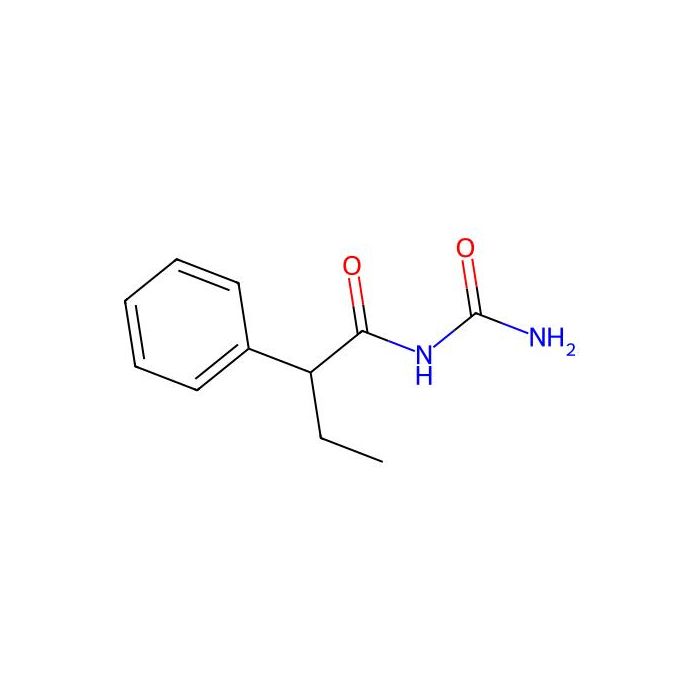
Pheneturide is listed in our Moligand small‑molecule library offering as an individual, research‑use ligand. Item‑specific structural identifiers are not provided in this listing.
Item-specific identifiers (this product):
CAS: 90-49-3 (from Product Data)
Molecular formula: Not specified for this item; refer to CoA/Spec Sheet.
Molecular weight: Not specified for this item; refer to CoA/Spec Sheet.
SMILES: Not specified for this item; refer to CoA/Spec Sheet.
InChIKey: Not specified for this item; refer to CoA/Spec Sheet.
General chemistry notes (literature):
“Pheneturide” is reported in the literature as a neutral, non-ionic small organic molecule used historically as a CNS-active research tool. Specific structural features and stereochemistry should be verified against authoritative databases or the CoA for the exact lot you receive.
If you require exact 2D/3D structure files (SDF/MOL2), please request them with your PO; we can provide structure documentation tied to the shipped lot.
Practical identity guidance:
For screening libraries, identity is best confirmed by orthogonal methods (LC–MS accurate mass and isotopic pattern; 1H/13C NMR in an appropriate deuterated solvent; HPLC purity trace). Retain the lot-specific CoA for regulatory and data provenance.
If you are building SAR or docking sets, align identifiers (CAS/CID/InChIKey) programmatically across databases to avoid synonym ambiguity; confirm against the CoA to prevent mis-annotation.
Synthetic Utility
As listed, Pheneturide is offered as a ready-to-use small molecule for screening rather than a building block. Without item-specific structural details in this listing, no targeted synthetic transformations can be recommended.
General considerations if derivatization is desired:
Obtain the confirmed structure (CoA/Spec Sheet) and evaluate functional handles amenable to diversification (e.g., anilides, ureas, amides, heteroaryl positions). Plan protecting-group strategies and chemoselectivity accordingly.
For probe development, biotin/fluorophore conjugation is often accomplished via amide coupling or click chemistry from an introduced linker; the feasibility depends entirely on the available functional groups in the scaffold.
Workflow tips:
Map liabilities (hydrolysis, oxidation) before synthesis to avoid degradation during coupling or purification.
If a salt change or prodrug strategy is required to modulate solubility, ensure that the parent integrity and counterion identity are well characterized (qNMR, HRMS, XRPD for crystalline salts).
Documentation:
If you require a derivatization-ready analog set or custom synthesis based on Pheneturide’s scaffold, contact us with your target vector(s); our team can advise on routes once the structural dossier is in scope.
Target Specificity
No target specificity data are provided for this product.
Item-specific details (this product):
Primary target(s), Ki/IC50 values, selectivity profiles, and species cross-reactivity: Not specified for this item; refer to CoA/Spec Sheet or request a literature summary.
Guidance for users:
If Pheneturide is to be used as a tool compound, establish its activity profile in your assay system and run orthogonal counterscreens to contextualize potency and selectivity.
Use reference standards and positive controls relevant to the hypothesized pathway to benchmark responses and ensure assay sensitivity.
We use cookies to ensure the website functions properly and, where permitted, to improve your experience. You can manage your preferences at any time in Settings. Learn more in our Cookie Policy.
Shall we send you a message when we have discounts available?
Remind me later
Thank you! Please check your email inbox to confirm.
Products are supplied to verified businesses, institutions, and qualified professionals for research and development use only. Not for use in humans, animals, diagnosis, or therapy.