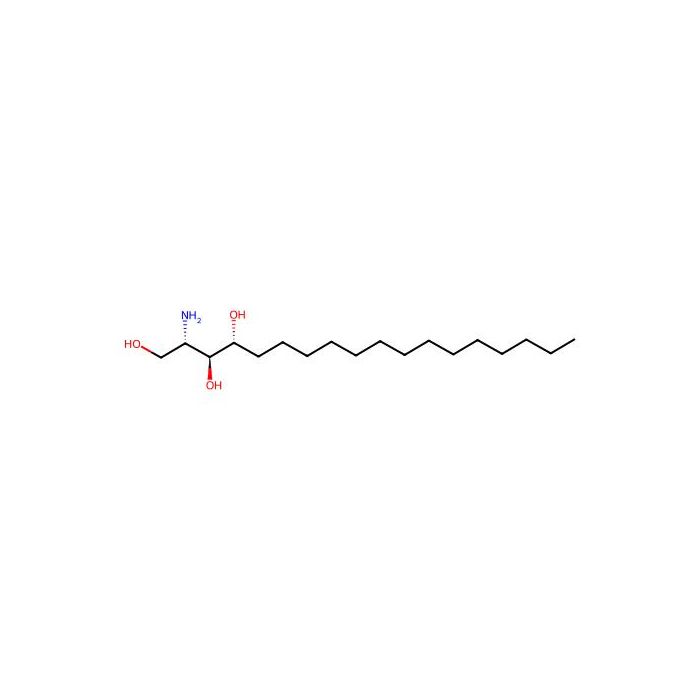
Phytosphingosine - Moligand™, 10 mM in DMSO , CAS No.554-62-1

CAS: 554-62-1 Cat. No.: P1500391 Formula: C18H39NO3 Molecular Weight: 317.51 Beilstein Registry Number: 4(4)1906 EC Number: 439-210-6
AVAILABLE TO ORDER
GRADE & PURITY Moligand™ ? Moligand™ — Aladdin's line of ligands and bioactive small molecules. Use for receptor, pathway, and binding studies needing defined small-molecule tools. 10 mM in DMSO
Storage
Store at -80°C
Shipped In
Dry ice packs + Cold packs
★
Size
USA
Germany (EU)*
Price
Qty
1ml
P1500391-1ml
Made to order · 8–12 wks
$37.90
Enter a quantity for the sizes you want to add.
🧪
Why this grade

Moligand™, 10 mM in DMSO Moligand™ for sensitive chromatographic and analytical workflows requiring minimal baseline interference.

🌡

Storage & shipping

Store at -80°C Ships Dry ice packs + Cold packs Check lot-specific COA for exact specifications.

📋

Quality documents

SDS, COA, datasheet, and spec sheet available for download. Lot-specific COA accessible via lot number lookup.

📚

Literature proof

Cited in 2 peer-reviewed publications across chromatography, organic synthesis, and cross-coupling reactions.

Overview

Phytosphingosine is a phospholipid with anti-inflammatory, antibacterial , and anti-cancer activities, which can induce apoptosis . Phytosphingosine is an immune regulator and can be used in the study of inflammatory skin diseases. Phytosphingosine is also an activator of GPR120 with an IC 50 value of 33.4 μM and can be used in the study of type II diabetes .

Specifications

Specifications & Purity
Moligand™, 10 mM in DMSO
Storage
Store at -80°C
Shipped In
Dry ice packs + Cold packs
This product requires cold chain shipping. Ground and other economy services are not available.
Grade
Moligand™
Action Type
INHIBITOR
Names and Identifiers
Isomeric SMILES
CCCCCCCCCCCCCC[C@H]([C@H]([C@H](CO)N)O)O
Molecular Weight
317.51
Beilstein
4(4)1906
Reaxy-Rn
1725300
Reaxys-RN_link_address
https://www.reaxys.com/reaxys/secured/hopinto.do?context=S&query=IDE.XRN=1725300&ln=

Documentation

📋 Safety Data Sheet (SDS)

Comprehensive hazard, handling, storage, and regulatory compliance document.

Download SDS →

✅ Certificate of Analysis (COA)

Lot-specific quality data. Enter your lot number to retrieve the exact COA.

Look up COA →

📊 Datasheet

Quick-reference summary of product specifications and applications.

View datasheet →

🔬 Specification Sheet

Full quality attributes and acceptance criteria for this grade.

View spec sheet →

Advanced Data

Certificates(CoA,COO,BSE/TSE and Analysis Chart)
C of A & Other Certificates(BSE/TSE, COO):
Analytical Chart:
Chemical and Physical Properties
Specific Rotation[α]9° (C=1,Pyridine)
Melt Point(°C)102°C(lit.)
Documents & Articles
Understanding Ceramides from the Perspective of the Stratum Corneum Lipid Barrier: Moisturizing and Barrier-Repair Mechanisms, Ingredient Selection, and Formulation Research Considerations
Analysis of Hydrolyzed Pearl as a Cosmetic Raw Material: Preparation Process, Active Components, and Skincare Formulation Applications
Probiotics, Prebiotics, and Postbiotics in Skin Care: Conceptual Distinctions, Mechanisms of Action, and Their Applications in the Care of Dry, Itchy, and Rough Skin
The Moisturizing and Low-Moisture Protective Mechanisms of Trehalose: From Its α,α-1,1 Structure and Hydration Dynamics to In Vitro Skin Barrier Research
Protective and Potential Reparative Mechanisms of Prinsepia utilis Seed Oil on the Skin Barrier: Fatty Acid Composition, Epidermal Lipid Metabolism, and Research Evidence
Structure, Stratum Corneum Distribution, and Stratum Corneum Conditioning Mechanism of Capryloyl Salicylic Acid: Barrier Effects and Safety Evaluation
Mechanism of Action of Tranexamic Acid in Pigmentation Care: From the Plasmin System to Regulation of Inflammation-Driven Pro-Melanogenic Signaling
Mechanisms by Which Fructan-Rich Ophiopogon japonicus Tuberous Root Extract Supports Skin Moisturization and Barrier Function
How Ectoine Regulates Skin Hydration: Zwitterionic Structure, Preferential Hydration, and Barrier-Support Mechanisms
Bakuchiol Is Not “Plant Retinol”: Chemical Structure, Anti-Aging Mechanisms, and Functional Similarities and Differences Compared with Retinol
Stratum Corneum Penetration and Skin Mechanisms of Panthenol: Moisturization, Barrier Repair, and Soothing Effects
Citations of This Product
Solution Calculators
Reviews

Customer Reviews

Frequently Asked Questions

What is Moligand??
Moligand? is one of Aladdin Scientific's premium product lines, formulated for high-purity applications across multiple workflows. Compared to standard grades in the same workflow, Moligand? products typically offer tighter specifications, more rigorous QC, and stronger lot-to-lot consistency.
How should this product be stored?
Store at ?80 °C. Ultra-low temperature storage is required to maintain the specified shelf life.
How is this product shipped?
This product ships frozen with dry ice and cold packs. Unpack on arrival and transfer it to the storage condition stated above; handle dry ice with insulated gloves in a ventilated area.
What are the CAS number, molecular formula and molecular weight?
The CAS Number is 554-62-1, the molecular formula is C18H39NO3, and the molecular weight is 317.51 g/mol.
What documentation is provided?
Available product documentation, including Certificates of Analysis (COA), Safety Data Sheets (SDS), and specification sheets, is shown in the product document area. Document availability and access follow the current site policy.

Shall we send you a message when we have discounts available?

Remind me later

Thank you! Please check your email inbox to confirm.

Oops! Notifications are disabled.