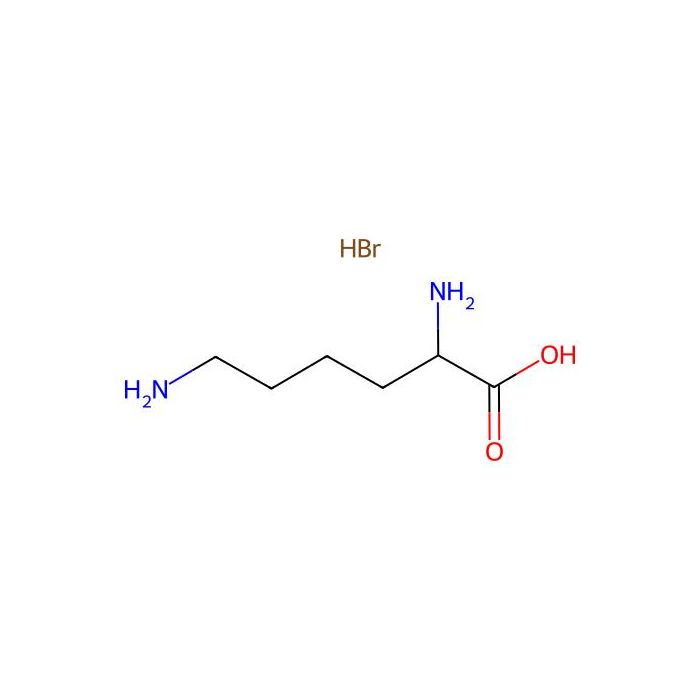
Poly-D-lysine hydrobromide - γ-irradiated, BioReagent, for cell culture, average mol wt 30,000-70,000, lyophilized powder , CAS No.27964-99-4

CAS: 27964-99-4 Cat. No.: P755746 Formula: D-Lys-(D-Lys)n-D-Lys·xHBr EC Number: 959-037-4 PubChem CID: 87493163
AVAILABLE TO ORDER
GRADE & PURITY BioReagent ? BioReagent grade — tested suitable for life-science and molecular-biology use. Use for cell culture, assays, and biochemical work needing biological compatibility. for Cell culture ? Cell-culture grade — low endotoxin and contaminants to support viable cell growth. Use in mammalian/other cell culture media and supplements. γ-irradiated ? Gamma-irradiated — sterilized by gamma radiation for assured sterility. Use for single-use bioprocess and culture items needing terminal sterilization. average mol wt 30,000-70,000, lyophilized powder
Storage
Store at -20°C
Shipped In
Ice chest + Ice pads
★
Size
USA
Germany (EU)*
Price
Qty
5mg
P755746-5mg
Made to order · 8–12 wks
$167.90
5×5mg
P755746-5×5mg
Made to order · 8–12 wks
$694.90
Enter a quantity for the sizes you want to add.
🧪
Why this grade

BioReagent, for cell culture, γ-irradiated, average mol wt 30,000-70,000, lyophilized powder BioReagent,for Cell culture,γ-irradiated for sensitive chromatographic and analytical workflows requiring minimal baseline interference.

🌡

Storage & shipping

Store at -20°C Ships Ice chest + Ice pads Check lot-specific COA for exact specifications.

📋

Quality documents

SDS, COA, datasheet, and spec sheet available for download. Lot-specific COA accessible via lot number lookup.

📚

Literature proof

Cited in 1 peer-reviewed publications across chromatography, organic synthesis, and cross-coupling reactions.

Overview

Poly-D-Lysine Hydrobromide (PDL), a positively charged polymer consisting of lysine residues, where each lysine unit is associated with a hydrobromide molecule. This hydrobromide molecule gives the poly-D-lysine a unique characteristic, enabling it to form crystals and making it easily soluble in water-based solutions. 
Function and advantages:Sterilized using γ-irradiation
Preparation Instructions:This product has a molecular weight of 30,000-70,000 and is cell culture tested and gamma-irradiated. To remove the HBr, dissolve this product in a neutral buffer and dialyze to remove the salts. In general, to use this product as an attachment factor, add 50 mL of sterile tissue culture grade water to 5 mg of poly-lysine, and aseptically coat the surface with 1 mL per 25 cm2 of solution. After 5 minutes, remove the solution through aspiration and thoroughly rinse the surface. Let dry for two hours before introducing cells and medium
Other precautions:Poly-D-lysine is a positively charged amino acid polymer with approximately one HBr per lysine residue. The hydrobromide allows the poly-D-lysine to be in a crystalline form soluble in water. A small amount of product may be found in the β structure because the HBr interferes with hydrogen bonding between amino and either the carboxyl groups or N or O containing moieties.

Specifications

Specifications & Purity
BioReagent, for cell culture, γ-irradiated, average mol wt 30,000-70,000, lyophilized powder
Biochemical and Physiological Mechanisms
Poly-D-lysine (PDL) hydrobromide is a nonspecific attachment factor for cells useful in promoting cell adhesion to solid substrates by enhancing electrostatic interaction between negatively charged ions of the cell membrane and the culture surface. After
Application
Poly d lysine hydrobromide coating has been used: In coating tissue culture plate wells and coverslips for immunofluorescence microscopy of primary neuronal culture to study neurological disorders associated with Zika virus infection. To coat the coversli
Storage
Store at -20°C
Shipped In
Ice chest + Ice pads
This product requires cold chain shipping. Ground and other economy services are not available.
Grade
BioReagent, for Cell culture, γ-irradiated
Names and Identifiers
Canonical Smiles
C(CCN)CC(C(=O)O)N.Br
IUPAC Name
(2R)-2,6-diaminohexanoic acid;hydrobromide
InChIKey
MEXAGTSTSPYCEP-NUBCRITNSA-N
INCHI
1S/C6H14N2O2.BrH/c7-4-2-1-3-5(8)6(9)10;/h5H,1-4,7-8H2,(H,9,10);1H/t5-;/m1./s1
Isomeric SMILES
C(CCN)C[C@H](C(=O)O)N.Br
PubChem CID
87493163

Documentation

📋 Safety Data Sheet (SDS)

Comprehensive hazard, handling, storage, and regulatory compliance document.

<<<<<<< HEAD Download SDS → ======= Download SDS → >>>>>>> release248-p3

✅ Certificate of Analysis (COA)

Lot-specific quality data. Enter your lot number to retrieve the exact COA.

Look up COA →

📊 Datasheet

Quick-reference summary of product specifications and applications.

View datasheet →

🔬 Specification Sheet

Full quality attributes and acceptance criteria for this grade.

View spec sheet →

Advanced Data

Taxonomic Classification

Taxonomy Tree

KingdomOrganic compounds
SuperclassOrganic acids and derivatives
ClassCarboxylic acids and derivatives
SubclassAmino acids, peptides, and analogues
Intermediate Tree Nodes Amino acids and derivatives - Alpha amino acids and derivatives - Alpha amino acids
Direct ParentD-alpha-amino acids
Alternative Parents Medium-chain fatty acids  Amino fatty acids  Amino acids  Monocarboxylic acids and derivatives  Carboxylic acids  Organic oxides  Monoalkylamines  Hydrocarbon derivatives  Hydrobromides  Carbonyl compounds  
Molecular FrameworkAliphatic acyclic compounds
Substituents D-alpha-amino acid - Medium-chain fatty acid - Amino fatty acid - Fatty acid - Fatty acyl - Amino acid - Carboxylic acid - Monocarboxylic acid or derivatives - Amine - Hydrobromide - Hydrocarbon derivative - Primary amine - Organooxygen compound - Organonitrogen compound - Organic oxide - Primary aliphatic amine - Organic oxygen compound - Carbonyl group - Organic nitrogen compound - Aliphatic acyclic compound
DescriptionThis compound belongs to the class of organic compounds known as d-alpha-amino acids. These are alpha amino acids which have the D-configuration of the alpha-carbon atom.
External Descriptors Not available
3D Structure
Interactive Chemical Structure Model


Certificates (CoA,COO,BSE/TSE and Analysis Chart)
C of A & Other Certificates(BSE/TSE, COO):
Analytical Chart:
Chemical and Physical Properties
SolubilityH 2 O: soluble 50 mg/mL, clear, colorless
Flash Point(°F)Not applicable
Flash Point(°C)Not applicable
Documents & Articles
Citations of This Product
Solution Calculators
Reviews

Customer Reviews

Need help choosing the grade?

Our grade selection guide covers purity, stabilizer status, and application suitability for all variants in our catalog.

View BioReagent grade guide → View for Cell culture grade guide → View γ-irradiated grade guide →

Shall we send you a message when we have discounts available?

Remind me later

Thank you! Please check your email inbox to confirm.

Oops! Notifications are disabled.