GRADE & PURITYMoligand™?Moligand™ — Aladdin's line of ligands and bioactive small molecules. Use for receptor, pathway, and binding studies needing defined small-molecule tools.10 mM in DMSO
Moligand™, 10 mM in DMSO Moligand™ for sensitive chromatographic and analytical workflows requiring minimal baseline interference.
🌡
Storage & shipping
Store at -80°C Ships Dry ice packs + Cold packs Check lot-specific COA for exact specifications.
📋
Quality documents
SDS, COA, datasheet, and spec sheet available for download. Lot-specific COA accessible via lot number lookup.
📚
Literature proof
Cited in 0 peer-reviewed publications across chromatography, organic synthesis, and cross-coupling reactions.
Overview
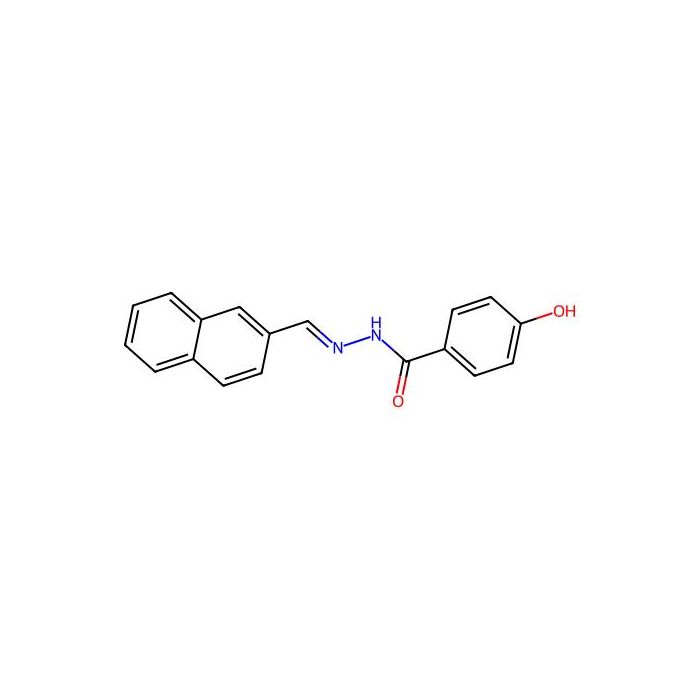
SLU-PP-332 is a pan- Estrogen Receptor/ERR agonist with EC 50 values of 98, 230 and 430 nM for ERRα , ERRβ and ERRγ , respectively. SLUPP-332 enhances mitochondrial function and cellular respiration in skeletal muscle cell lines. SLU-PP-332 has the potential to study metabolic diseases as well as improve muscle function.
Specifications
Specifications & Purity
Moligand™, 10 mM in DMSO
Storage
Store at -80°C
Shipped In
Dry ice packs + Cold packs
This product requires cold chain shipping. Ground and other economy services are not available.
Grade
Moligand™
Names and Identifiers
Molecular Weight
290.32
Documentation
📋 Safety Data Sheet (SDS)
Comprehensive hazard, handling, storage, and regulatory compliance document.
Determine the necessary mass, volume, or concentration for preparing a solution.
Dilution Calculator
Determine the dilution needed to prepare a stock solution.
Reconstitution Calculator
Reviews
Customer Reviews
Application Protocols
Item-specific facts (from Product Data)
No tested application list, recommended dilutions, or specific assay protocols are provided for SLU-PP-332.
General usage templates (not item-specific)
Stock solution: Prepare 10–50 mM in anhydrous DMSO. Aliquot into low-bind, amber vials; store at -80°C. Record exact concentration by weight and confirm by UV or qNMR where possible.
Biochemical assay dosing: Prepare a 10-point 3-fold serial dilution in assay buffer with matched final DMSO (e.g., 0.3%). Include vehicle controls and known reference inhibitors/ligands.
Cell-based assay dosing: Prepare intermediate dilutions in media to minimize DMSO shock; keep final DMSO ≤0.1–0.5% as permitted by the cell line. Include cytotoxicity counterscreens.
Orthogonal confirmation: Validate hits using an alternative readout to rule out reporter interference or fluorescence quenching.
Data recording: Document lot number, plate map, thaw history, and freeze–thaw count to ensure traceability and reproducibility.
For plate logistics
Use pre-chilled blocks during transfers to minimize thaw time. Employ acoustic dispensing or calibrated pin-tools for low-volume accuracy.
Biological Roles
Item-specific facts (from Product Data)
No biological target, pathway, or mechanism information is provided for SLU-PP-332.
General context for small-molecule ligands in research (not item-specific)
Discovery role: Library members are typically used to perturb biological systems to uncover target-function relationships, validate hypotheses, or phenotypically cluster responses.
Target deconvolution strategies: If activity is observed, apply chemoproteomics (photoaffinity or clickable probes), CETSA/thermal proteome profiling, CRISPR modifier screens, or resistance mutation mapping to identify on-target vs off-target effects.
ADME liabilities to explore during triage: Permeability (PAMPA/Caco-2), metabolic stability (microsomes/hepatocytes), plasma protein binding, and CYP inhibition. Early profiling reduces false leads.
Important notes
No clinical or therapeutic claims apply to this product; it is designated strictly for research use.
For any biological interpretations, confirm identity/purity and replicate activity with independently sourced material or a new lot to rule out artifacts.
Buffer Applications
This product is a small-molecule screening ligand rather than a buffering reagent.
Not typically applicable: SLU-PP-332 is not intended to act as a pH buffer or conductivity modifier. No pKa or buffering range is provided.
Practical guidance: Prepare assay buffers based on your biological system (e.g., HEPES, Tris, PBS) and dissolve the compound in a compatible cosolvent such as DMSO before spiking into the buffer. Keep final organic content within tolerated limits (commonly 0.1–1% DMSO in biochemical/cellular assays).
If compound ionization affects solubility or activity, perform small-scale pH scouting of the buffer independently of the compound to avoid precipitation during dosing.
Green Alternatives
Context
Without structural information, specific solvent/process greenness for SLU-PP-332 cannot be assigned. However, screening and small-molecule handling often involve choices that affect environmental footprint.
Greener practice suggestions (general)
Prefer greener solvents for workup and chromatography when compatible with the compound: ethyl acetate, 2-MeTHF, CPME, isopropanol, and water-rich mobile phases.
Stock preparation: Use minimal DMSO volumes and adopt plate formats that reduce dead volume. Implement plate sealing to avoid evaporation and waste.
Analytics: Favor LC–MS with water/acetonitrile and low buffer concentrations over halogenated solvent systems when possible.
Illustrative comparison (general; not item-specific)
THF vs 2-MeTHF: 2-MeTHF (biorenewable, higher boiling point) can be a greener alternative for extractions or reactions if the compound is compatible.
Dichloromethane vs ethyl acetate/CPME: Replace chlorinated solvents in chromatography and extractions where resolution allows.
Operational notes
Institute solvent recycling for ACN/MeOH in LC where feasible.
Right-size batches to minimize decomposed material from repeated freeze–thaw, reducing chemical waste.
Trade-offs
Greener solvents may change solubility, reaction rate, or selectivity. Validate on small scale before process adoption.
Pharmaceutical Uses
Item-specific facts (from Product Data)
Designated for research use only. No pharmacopeial status, excipient role, or clinical use is provided.
General context (not item-specific)
Early discovery: Compounds like SLU-PP-332 can serve as hits/leads in preclinical research programs, informing SAR and aiding tool compound development.
Formulation for research: For in vitro work, DMSO stocks are common. For in vivo exploratory studies (if permitted by your institution and regulations), vehicles often include aqueous buffers with cosolvents/surfactants (e.g., PEG400, Tween 80); however, no dosing guidance is provided or implied for this item.
Manufacturing/regulatory: This listing does not include GMP documentation or pharmacopeial monographs. If material is needed for later-stage development, request custom synthesis, impurity profiling, and stability studies.
No medical claims
This product is not an approved drug, API, or excipient and should not be used for clinical or diagnostic purposes.
Physical Properties
Item-specific facts (from Product Data)
Appearance: Not specified for this item; refer to CoA/Spec Sheet.
Storage: Store at -80°C (provided).
Typical/literature-style properties for small-molecule screening ligands (general guidance; not item-specific)
Aggregated physical constants such as melting point, boiling point, density, logP, pKa, refractive index, UV/Vis profile, and aqueous/organic solubility are not provided for SLU-PP-332 in the listing. For plate preparation and analytical QC, determine solubility empirically in anhydrous DMSO first (e.g., 10–50 mM stock), then evaluate aqueous compatibility after serial dilution into assay buffer containing appropriate cosolvent (commonly 0.1–1% DMSO).
If the compound contains ionizable groups (unknown here), pKa will strongly influence assay behavior and microsomal stability. We recommend experimental pKa screening (UV or potentiometric) where relevant.
Hygroscopicity and polymorphism: Unknown for this item; check CoA and perform a quick Karl Fischer or TGA if water sensitivity or form control is critical to your application.
Notes for analytics (general)
Confirm identity and purity by LC–MS and 1H NMR upon receipt when used for SAR or hit validation. Establish a reference retention time and MS m/z for your chromatography method. If UV cutoff is needed for HPLC method development, determine empirically using a diode array detector.
Quality & Grades
Item-specific facts (from Product Data)
Grade: Moligand™
Storage: -80°C; shipped on dry ice + cold packs.
What Moligand™ typically signifies (general explanation)
Moligand™ denotes a screening- and discovery-ready small-molecule ligand quality suitable for hit finding, SAR exploration, phenotypic screening, and orthogonal assay validation. While the exact acceptance criteria for this SKU are not listed here, such grades generally emphasize: identity confirmation (LC–MS and/or NMR), assay-ready purity, and plate compatibility (e.g., DMSO solubility at stock concentrations such as 10–50 mM).
Spectroscopic/analytical documentation: CoA typically includes purity by HPLC/UPLC and MS identity. For lot-specific details (e.g., residual solvent, water content, polymorph), consult the CoA/Spec Sheet. Not specified for this item; refer to CoA/Spec Sheet.
Implications for use: This grade is appropriate for biochemical/biophysical assays (e.g., enzyme, receptor, and cell-based assays) and for medicinal chemistry triage. For regulated workflows (GMP) or reference standard applications, request upgraded documentation or additional testing.
Practical notes
Upon receipt, verify purity by your in-house method to ensure platform compatibility (mobile phases, detection wavelengths). If low UV background is required (e.g., HPLC analytics), empirically determine the UV profile since a “low UV” grade is not specified for this item.
Reaction & Applications
Item-specific facts (from Product Data)
Manufacturer applications: Not specified beyond classification as a small molecule/compound library member (Moligand™). Research use only.
General applications of screening ligands (not item-specific)
Biochemical/biophysical assays: Use in enzyme inhibition or receptor-binding assays, thermal shift (DSF), MST/SPR, and CETSA to evaluate target engagement.
Cellular assays: Phenotypic screens to uncover bioactive chemotypes; confirm activity with orthogonal readouts and counter-screens to assess PAINS/aggregators.
Probe development: Starting point for optimization into tool compounds via SAR, improving potency, selectivity, permeability, and metabolic stability.
Practical tips
Pre-assay QC: Verify purity and concentration by LC–UV and quantitative 1H NMR (qNMR) where feasible.
Aggregation controls: Include detergent controls (e.g., 0.01–0.1% Triton X-100 or 0.02% CHAPS) and perform concentration-response with data quality checks (Hill slopes, max effect) to detect nonspecific mechanisms.
Redox/photolability: Unknown for this item; reduce light exposure by using amber vials and limit oxygen exposure if oxidation is a risk in your chemistry class.
Interference testing: Run orthogonal assay formats (fluorescence vs luminescence vs radiometric) to rule out fluorescence quenching/inner filter effects.
Downstream chemistry
If advancing SLU-PP-332, consider parallel synthesis around the core scaffold once structural data are available to map SAR hot spots and liability vectors.
Reaction Conditions
Item-specific facts (from Product Data)
No synthetic route, reaction conditions, or processing parameters are provided for SLU-PP-332.
General guidance for small-molecule library synthesis/handling (not item-specific)
Dissolution for stocks: Dissolve in anhydrous DMSO at 10–50 mM; vortex and sonicate if needed. Filter through 0.2 µm PTFE to remove particulates. Avoid prolonged heating unless stability is known.
Assay dilution: Add DMSO stock to buffer as the final step under vigorous mixing; maintain consistent final DMSO across controls and treated samples (commonly 0.1–1% v/v).
Stability testing: Run isothermal stability in DMSO and in assay buffer at room temperature and 37°C over 24–72 h, monitoring by LC–MS for degradation.
Storage conditions: Aliquot and store at -80°C. Use amber vials if chromophoric groups exist (unknown). Minimize headspace to reduce oxidative degradation.
If synthesis is undertaken (post-structure disclosure)
Select solvents and catalysts based on scaffold functionality. For heteroaryl couplings, consider Pd(II) precatalysts with tailored ligands and base/solvent systems (e.g., K3PO4 in 2-MeTHF/H2O). For amide couplings, use modern reagents (HATU, T3P) with base and minimal DMF.
Safety & Handling
Item-specific facts (from Product Data)
GHS signal word: Not specified for this item; refer to SDS.
H-statements: Not specified for this item; refer to SDS.
Pictograms/classification: Not specified for this item; refer to SDS.
Research use: For research use only.
Storage: Store at -80°C. Shipped on dry ice + cold packs.
General laboratory guidance (not item-specific; defer to SDS as authoritative)
Handle unknown small molecules as potentially harmful: avoid inhalation, ingestion, and skin/eye contact. Use suitable PPE (lab coat, safety glasses, and nitrile gloves). Work in a fume hood during weighing, dissolution, and transfer operations.
Incompatibilities: Unknown; avoid strong oxidizers and strong acids/bases until compatibility is established. Protect from moisture if hygroscopicity is suspected.
First aid overview: In case of skin/eye contact, rinse with water for at least 15 minutes and seek medical attention. If inhaled, move to fresh air. If ingested, do not induce vomiting; seek immediate medical assistance. Present SDS to responders.
Spill/leak: Absorb with inert material, collect in a chemical waste container. Decontaminate area and ventilate. Dispose of according to institutional and local regulations.
Stability considerations: Maintain cold chain. Minimize freeze–thaw cycles by aliquoting DMSO stocks. Protect from light if chromophoric groups are present (unknown; adopt caution).
Always consult the product’s SDS for definitive hazard and handling instructions.
Solvent Selection
Item-specific facts (from Product Data)
Solubility and solvent preferences: Not specified for this item; refer to CoA/Spec Sheet.
General guidance for small-molecule library compounds (not item-specific)
Primary solvent for stocks: DMSO is the default for screening stocks due to broad solubilizing power and assay compatibility. Start at 10–50 mM; filter if needed (0.2 µm PTFE) to remove particulates.
Alternative solvents (if needed): DMF, NMP, or ethanol can assist with dissolution; subsequently back-dilute into DMSO to maintain assay consistency. For preparative work, ACN, MeOH, EtOAc, or MTBE may be useful depending on polarity.
Miscibility and polarity: Without a structure, dielectric and logP are unknown. If precipitation occurs on aqueous dilution, include co-solvent (0.1–1% DMSO or 0.01–0.1% nonionic surfactant) and add compound last into vigorously mixed buffer.
Salt formation and pH: If the compound is ionizable (unknown), pH adjustment of aqueous media can dramatically affect solubility. Perform a quick pH–solubility screen (pH 2–10) at analytical scale.
Comparison snapshot (general)
DMSO: Highest success rate for organic ligands; compatible with most bioassays up to 0.1–1% v/v.
DMF/NMP: Strong solvents; consider cytotoxicity in cell assays at very low final %.
EtOH/MeOH: Useful when DMSO-sensitive systems are used; watch volatility and evaporation during plate handling.
Storage & Reconstitution
Item-specific facts (from Product Data)
Storage conditions: Store at -80°C.
Shipping: Dry ice packs + cold packs.
Appearance: Not specified for this item; refer to CoA/Spec Sheet.
General best practices (not item-specific)
Upon receipt: Keep frozen. Allow the shipment to equilibrate in a -80°C freezer before unpacking to avoid condensation. Open vials only after they reach room temperature in a desiccated environment to prevent moisture ingress.
Reconstitution: Prepare concentrated stocks in anhydrous DMSO (typical 10–50 mM). Mix thoroughly (vortex/brief sonication). If necessary, warm gently to room temperature; avoid elevated temperatures unless stability is known.
Aliquoting: Dispense single-use aliquots (e.g., 10–50 µL) into low-bind, amber microtubes or 384-well source plates. Minimize headspace and flush with inert gas if oxidation is a concern.
Freeze–thaw management: Avoid repeated freeze–thaw cycles; track the number of thaws. Store working aliquots at -20°C for short-term use (days) and master aliquots at -80°C for long-term.
Stability monitoring: Periodically check for precipitation, discoloration, or LC–MS evidence of degradation in stored stocks.
Disclaimer
For research use only. For lot-specific solubility, purity, and stability, consult the CoA/Spec Sheet and SDS.
Structure & Identity
Item-specific facts (from Product Data)
Product name: SLU-PP-332 (SKU: S1498114)
CAS: 303760-60-3
Grade: Moligand™
Molecular formula: Not specified for this item; refer to CoA/Spec Sheet.
Molecular weight: Not specified for this item; refer to CoA/Spec Sheet.
SMILES: Not specified for this item; refer to CoA/Spec Sheet.
InChIKey: Not specified for this item; refer to CoA/Spec Sheet.
Interpretive notes (general)
Structural features: The exact functional groups, ring systems, and stereochemistry are not provided in the listing. For definitive identity confirmation, consult the product’s CoA/SDS or request structural documentation.
2D structure description: Not available in the provided data. If you require a structure for cheminformatics registration or ELN indexing, please contact us for the current structure file (SDF/Molfile) tied to CAS 303760-60-3, or verify via your in-house registry prior to use.
Registry considerations: When working with screening ligands, ensure the CAS, lot number, and any project-specific internal IDs are cross-mapped to avoid plate mis-annotation and to ensure reproducibility across HTS/assay campaigns.
Synthetic Utility
Item-specific facts (from Product Data)
No structural information or functional group annotation is provided for SLU-PP-332; synthetic transformations specific to this molecule cannot be described.
General considerations for advancing a screening hit (not item-specific)
Functional group scouting: Once the scaffold is known, map vectors amenable to diversification (halogens, aryl C–H for late-stage functionalization, amine/alcohol handles for amide/ester/urea formation).
Parallel synthesis: Build focused libraries varying electronics and topology to probe potency/selectivity. Utilize modern cross-couplings (Suzuki–Miyaura, Buchwald–Hartwig, Negishi) and heteroatom couplings (sulfonylation, urea/carbamate formation) as appropriate.
Property tuning: Balance lipophilicity (clogP), polarity (PSA), and aromatic ring count to manage permeability and solubility. Introduce solubilizing groups or salts if solubility limits assays.
Late-stage diversification: Consider C–H activation, Minisci, photoredox, or SuFEx handles where compatible with the scaffold, to accelerate SAR without re-synthesizing cores.
Analytical control
Establish robust LC–MS methods and characterize impurities. If multiple tautomers or atropisomers are plausible, evaluate with variable-temperature NMR or chiral HPLC as relevant.
Target Specificity
Item-specific facts (from Product Data)
No target, selectivity profile, or off-target panel data are provided for SLU-PP-332.
General guidance (not item-specific)
If biological activity is observed, profile against relevant isoforms and counterscreens to define selectivity. Utilize kinase/receptor/enzyme panels, safety pharmacology off-targets (hERG, CYPs), and cellular selectivity markers as appropriate.
Employ concentration–response curves with appropriate controls to estimate potency and evaluate Hill slopes for potential nonspecific mechanisms.
Confirm target engagement via orthogonal biophysical methods (SPR/MST/DSF/ITC) or cellular engagement (CETSA/TPP).
Note: No antibody/biologic attributes apply to this product; it is a small-molecule reagent.
Frequently Asked Questions
How should this product be stored?
Store at ?80 °C. Ultra-low temperature storage is required to maintain the specified shelf life.
What is Moligand??
Moligand? is one of Aladdin Scientific's premium product lines, formulated for high-purity applications across multiple workflows. Compared to standard grades in the same workflow, Moligand? products typically offer tighter specifications, more rigorous QC, and stronger lot-to-lot consistency.
How is this product shipped?
This product ships frozen with dry ice and cold packs. Unpack on arrival and transfer it to the storage condition stated above; handle dry ice with insulated gloves in a ventilated area.
What are the CAS number, molecular formula and molecular weight?
The CAS Number is 303760-60-3, the molecular formula is C18H14N2O2, and the molecular weight is 290.32 g/mol.
What documentation is provided?
Available product documentation, including Certificates of Analysis (COA), Safety Data Sheets (SDS), and specification sheets, is shown in the product document area. Document availability and access follow the current site policy.
Need help choosing the grade?
Our grade selection guide covers purity, stabilizer status, and application suitability for all variants in our catalog.
We use cookies to ensure the website functions properly and, where permitted, to improve your experience. You can manage your preferences at any time in Settings. Learn more in our Cookie Policy.
Shall we send you a message when we have discounts available?
Remind me later
Thank you! Please check your email inbox to confirm.
Products are supplied to verified businesses, institutions, and qualified professionals for research and development use only. Not for use in humans, animals, diagnosis, or therapy.