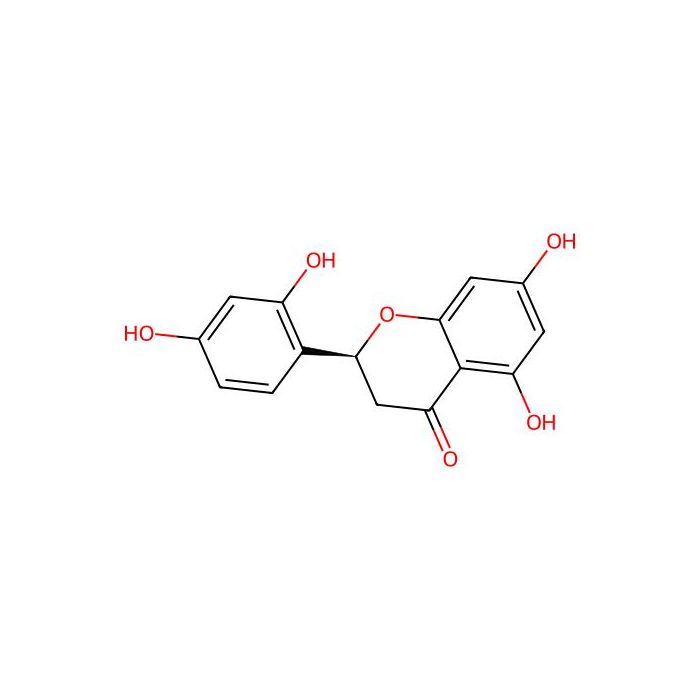
Steppogenin , CAS No.56486-94-3

CAS: 56486-94-3 Cat. No.: S648955 Formula: C15H12O6 Molecular Weight: 288.25 PubChem CID: 10356745
AVAILABLE TO ORDER
Synonyms
(2S)-2-(2,4-dihydroxyphenyl)-5,7-dihydroxy-2,3-dihydrochromen-4-one|(2S)-5,7,2'',4''-tetrahydroxyflavanone|(2S)-5,7,2',4'-tetrahydroxyflavanone|steppogenin|(S)-2-(2,4-dihydroxyphenyl)-5,7-dihydroxychroman-4-one
Storage
Store at -20°C
Shipped In
Ice chest + Ice pads
★
Size
USA
Germany (EU)*
Price
Qty
1mg
S648955-1mg
Made to order · 8–12 wks
$680.90
5mg
S648955-5mg
Made to order · 8–12 wks
$1,690.90
Enter a quantity for the sizes you want to add.

Overview

Steppogenin is a potent inhibitor of HIF-1α and DLL4 , with IC 50 values of 0.56 and 8.46 μM, respectively. Steppogenin can be sued for the research of angiogenic diseases, such as those involving solid tumors

In Vitro

Steppogenin (0-10 μM, 24 h) inhibit the transcriptional activity of HIF-1α under hypoxic conditions in HEK293T cells and VEGF-induced DLL4 expression in vascular endothelial cells (ECs) in a dose-dependent manner. Steppogenin (0-3 μM, 6 h) suppresses the mRNA expression of HIF-1α target genes (VEGF, GLUT1, CXCR4, and CA9) under hypoxic conditions. Steppogenin (0-3 μM, 16 h) suppresses HIF-1α protein levels, and inhibits protein levels of VEGF, CXCR4, and CA9. Steppogenin (0-3 μM, 24 h) suppresses hypoxia-induced vascular EC proliferation and migration as well as VEGF-induced sprouting of EC spheroids. MCE has not independently confirmed the accuracy of these methods. They are for reference only. RT-PCRCell Line: A549 cells Concentration: 0, 0.3, 1, 3 μM Incubation Time: 6 h Result: Suppressed the mRNA expression of HIF-1α target genes (VEGF, GLUT1, CXCR4, and CA9) under hypoxic conditions. Western Blot AnalysisCell Line: HEK293T, A549, ARPE19 cells Concentration: 0, 0.3, 1, 3 μM Incubation Time: 16 h Result: Significantly suppressed HIF-1α protein levels in a dose-dependent manner. reduced nuclear expression of HIF-1α under hypoxic conditions. Inhibited protein levels of VEGF, CXCR4, and CA9 compared with the levels detected in the vehicle control group. Suppresseed VEGF-induced DLL4 protein expression.

In Vivo

Steppogenin (2 mg/kg, IP, once) inhibits tumor growth and angiogenesis . Steppogenin (2 mg/kg, IP, once) shows the highest distribution to the liver and spleen (25.5-fold and 9.74-fold AUC ratio, respectively) with significantly higher T 1/2 . Pharmacokinetic Parameters of Steppogenin in male C57BL/6 J mice . C max (ng/mL) T max (h) T 1/2 (h) AUC 8h (ng/mL∗h) AUC ∞ (ng/mL∗h) AUC ratio Plasma 448 ± 113 0.25 0.49 ± 0.14 283 ± 98.9 284 ± 97.8 1 Tumor 635 ± 114 0.3 ± 0.1 1.87 ± 0.87 1078 ± 494 1252 ± 547 4.58 Liver 4319 ± 1063 0.25 1.72 ± 0.26 6733 ± 1300 6967 ± 1200 25.5 Lung 521 ± 181 0.25 0.36 ± 0.12 261 ± 96.1 280 ± 106 1.02 Heart 285 ± 15.2 0.25 0.2 107 ± 44.3 176.9 0.65 Kidney 1225 ± 463 0.25 0.33 ± 0.01 628 ± 234 624.7 ± 238 2.35 Spleen 6110 ± 2954 0.25 0.47 ± 0.01 2443 ± 1155 2663 ± 1289 9.74 Brain 309 ± 95.7 0.25 1.36 ± 0.46 191 ± 67 241 ± 75.4 0.88 MCE has not independently confirmed the accuracy of these methods. They are for reference only. Animal Model: C57BL/6 J mice (6-week-old, male, Lewis lung carcinoma (LLC) allograft tumor model) Dosage: 2 mg/kg Administration: IP, once Result: Significantly suppressed tumor growth. Animal Model: C57BL/6 J mice (6-week-old, male, Lewis lung carcinoma (LLC) allograft tumor model) Dosage: 2 mg/kg Administration: IP, once (Pharmacokinetic Analysis) Result: Showed the highest distribution to the liver and spleen (25.5-fold and 9.74-fold AUC ratio, respectively) with significantly higher T 1/2 . may not be accumulated even in the highly distributed tissues after the repeated administration of steppogenin.

IC50& Target:IC50: 0.56 ± 0.043 μM (HIF-1α), 8.46 ± 1.08 μM (DLL4)

Specifications

Synonyms
(2S)-2-(2,4-dihydroxyphenyl)-5,7-dihydroxy-2,3-dihydrochromen-4-one | (2S)-5,7,2'',4''-tetrahydroxyflavanone | (2S)-5,7,2',4'-tetrahydroxyflavanone | steppogenin | (S)-2-(2,4-dihydroxyphenyl)-5,7-dihydroxychroman-4-one
Biochemical and Physiological Mechanisms
Steppogenin is a potent inhibitor of HIF-1α and DLL4 , with IC 50 values of 0.56 and 8.46 μM, respectively. Steppogenin can be sued for the research of angiogenic diseases, such as those involving solid tumors.
Storage
Store at -20°C
Shipped In
Ice chest + Ice pads
This product requires cold chain shipping. Ground and other economy services are not available.
Names and Identifiers
SMILES
C1C(OC2=CC(=CC(=C2C1=O)O)O)C3=C(C=C(C=C3)O)O
IUPAC Name
(2S)-2-(2,4-dihydroxyphenyl)-5,7-dihydroxy-2,3-dihydrochromen-4-one
InChIKey
QBLQLKNOKUHRCH-ZDUSSCGKSA-N
InChI
1S/C15H12O6/c16-7-1-2-9(10(18)3-7)13-6-12(20)15-11(19)4-8(17)5-14(15)21-13/h1-5,13,16-19H,6H2/t13-/m0/s1
Isomeric SMILES
C1[C@H](OC2=CC(=CC(=C2C1=O)O)O)C3=C(C=C(C=C3)O)O
Alternate CAS
56486-94-3
PubChem CID
10356745
MeSH Entry Terms
steppogenin
Molecular Weight
288.25

Advanced Data

Taxonomic Classification

Taxonomy Tree

KingdomOrganic compounds
SuperclassPhenylpropanoids and polyketides
ClassFlavonoids
SubclassFlavans
Intermediate Tree Nodes Not available
Direct ParentFlavanones
Alternative Parents 7-hydroxyflavonoids  5-hydroxyflavonoids  4'-hydroxyflavonoids  Chromones  Resorcinols  Aryl alkyl ketones  Alkyl aryl ethers  1-hydroxy-4-unsubstituted benzenoids  1-hydroxy-2-unsubstituted benzenoids  Benzene and substituted derivatives  Vinylogous acids  Oxacyclic compounds  Organic oxides  Hydrocarbon derivatives  
Molecular FrameworkAromatic heteropolycyclic compounds
Substituents 4'-hydroxyflavonoid - 5-hydroxyflavonoid - 7-hydroxyflavonoid - Flavanone - Hydroxyflavonoid - Chromone - Chromane - Benzopyran - 1-benzopyran - Aryl alkyl ketone - Aryl ketone - Resorcinol - 1-hydroxy-4-unsubstituted benzenoid - 1-hydroxy-2-unsubstituted benzenoid - Alkyl aryl ether - Phenol - Monocyclic benzene moiety - Benzenoid - Vinylogous acid - Ketone - Organoheterocyclic compound - Ether - Oxacycle - Hydrocarbon derivative - Organic oxide - Organooxygen compound - Organic oxygen compound - Aromatic heteropolycyclic compound
DescriptionThis compound belongs to the class of organic compounds known as flavanones. These are compounds containing a flavan-3-one moiety, with a structure characterized by a 2-phenyl-3,4-dihydro-2H-1-benzopyran bearing a ketone at the carbon C3.
External Descriptors Not available
3D Structure
Interactive Chemical Structure Model


Associated Targets(Human)
TYR Tclin Tyrosinase (1 Activities)
Activity TypeActivity Value -log(M)Mechanism of ActionActivity ReferencePublications (PubMed IDs)
CYP19A1 Tclin Cytochrome P450 19A1 (6099 Activities)
Activity TypeRelationActivity valueUnitsAction TypeJournalPubMed IddoiAssay Aladdin ID
TYR Tclin Tyrosinase (717 Activities)
Activity TypeRelationActivity valueUnitsAction TypeJournalPubMed IddoiAssay Aladdin ID
Mechanisms of Action
Certificates (CoA,COO,BSE/TSE and Analysis Chart)
C of A & Other Certificates(BSE/TSE, COO):
Analytical Chart:
Chemical and Physical Properties
Molecular Weight288.25
XLogP32.000
Hydrogen Bond Donor Count4
Hydrogen Bond Acceptor Count6
Rotatable Bond Count1
Exact Mass288.063 Da
Monoisotopic Mass288.063 Da
Topological Polar Surface Area107.000 Ų
Heavy Atom Count21
Formal Charge0
Complexity400.000
Isotope Atom Count0
Defined Atom Stereocenter Count1
Undefined Atom Stereocenter Count0
Defined Bond Stereocenter Count0
Undefined Bond Stereocenter Count0
The total count of all stereochemical bonds0
Covalently-Bonded Unit Count1
Solution Calculators
Reviews

Customer Reviews

Application Protocols
  • Item-specific (from Product Data)
    • No validated application protocols are provided.
  • General research protocols (guidance; not product specifications)
    • Stock solution preparation: Accurately weigh material (weigh-by-difference), dissolve in dry DMSO to 10–50 mM, vortex and sonicate briefly if needed. Record final concentration correcting for assay purity if listed on the CoA.
    • Working solution preparation: Dilute stock into assay buffer or mobile phase, keeping final DMSO typically ≤0.5–1% v/v for biological assays. Inspect for precipitation; if present, increase cosolvent slightly or reduce concentration.
    • LC–MS reference standard: Prepare gravimetric standards across a relevant range (e.g., 1–1000 ng/mL) in MeOH/H2O or ACN/H2O with 0.1% formic acid. Use internal standards where available and bracket samples with calibration/QC.
    • Stability checks: Store aliquots at -20°C; run freeze–thaw stability and short-term bench-top stability before critical studies. Protect from light if chromophoric groups are suspected.
  • Documentation
    • Capture exact solvent composition, vial type, and storage conditions in ELN/LIMS for reproducibility.
Biological Roles
  • Item-specific (from Product Data)
    • No biological role or pathway information is provided for this item. Research use only.
  • Literature/general context (not product claims)
    • Many plant-derived small molecules are investigated as secondary metabolites that may participate in plant defense, pigmentation, or signaling. Whether and how Steppogenin participates in such roles should be confirmed from primary literature specific to CAS 56486-94-3.
    • In cellular assay contexts, unknown small molecules can exhibit assay interference, redox reactivity, or nonspecific binding; incorporate appropriate controls (counter-screens, redox probes, detergent) to deconvolute mechanisms.
  • Practical considerations for biological testing
    • Assess cytotoxicity baselines and solubility limits in the relevant medium; avoid exceeding tolerated cosolvent levels (commonly ≤0.1–1% DMSO depending on cell type or enzyme).
    • Evaluate stability in culture media or assay buffers (pH, light, and oxidative conditions) before running long incubations; consider time-course sampling for LC–MS verification of parent integrity.
    • For omics or target deconvolution, combine chemoproteomics or thermal profiling with orthogonal biochemical assays to mitigate false positives.
  • Compliance
    • This product is supplied strictly for research use only and is not intended for human or veterinary use, diagnostic procedures, or clinical applications.
Buffer Applications
  • Applicability statement
    • Steppogenin is a discrete small molecule and not a buffering agent. Conventional buffer systems (phosphate, HEPES, Tris, MOPS, etc.) are more appropriate for pH control.
  • Practical guidance (general)
    • If Steppogenin must be delivered into buffered systems, first dissolve in a compatible organic cosolvent (e.g., DMSO or MeOH), then dilute into the buffer while monitoring for precipitation.
    • Verify that the buffer components do not chemically modify the compound (avoid strong base or nucleophiles if sensitive functionalities are present; confirm via stability testing).
    • For spectroscopy or enzyme assays, select buffers with minimal background absorbance/fluorescence in the wavelengths of interest.
  • Item-specific data
    • No item-specific pKa or buffer compatibility data are provided; perform empirical tests as required for your application.
Green Alternatives
  • Applicability statement
    • This section typically addresses greener choices when a product is used as a solvent or reagent. Steppogenin is a discrete small molecule standard, so “greener alternative chemicals” are not generally relevant.
  • Greener handling choices (general guidance)
    • Prefer greener solvents for dissolution and processing when feasible (e.g., ethanol or 2-MeTHF over chlorinated solvents), provided solubility and stability are adequate.
    • Minimize DMSO volumes in biological assays by optimizing stock concentrations and avoiding unnecessary over-concentration that leads to precipitation on dilution.
    • Reduce waste by preparing only the quantity needed for the experiment and by adopting microscale workflows for screening.
    • Use closed, low-loss vials to limit volatilization and contamination; segregate waste streams for solvent recycling where available.
  • Documentation
    • Track solvent usage and waste to support internal green chemistry metrics.
    • When publishing, report solvent choices and waste minimization strategies alongside assay performance to promote reproducibility and sustainability.
Pharmaceutical Uses
  • Applicability statement
    • No pharmacopeial status, excipient role, or GMP applicability is provided in the Product Data. This product is offered for research use only.
  • Research and development contexts (general)
    • May be used as a reference standard in analytical method development for natural product-containing matrices, pending verification of identity and purity against a CoA.
    • Can support pre-formulation screening as a surrogate compound to evaluate solubility enhancement techniques (cosolvents, cyclodextrins, amorphous dispersions) in a non-clinical research setting.
    • Any consideration of formulation excipients, stability, or dosage forms must remain within non-clinical, exploratory studies and adhere to institutional safety and regulatory policies.
  • Documentation and controls
    • Maintain full traceability (CoA, SDS, batch records). For any GLP-like workflows, establish incoming QC acceptance criteria and retain representative chromatograms and spectra.
    • Do not use in humans or animals for therapeutic purposes.
Physical Properties
  • Item-specific (from Product Data)
    • Appearance: Not specified for this item; refer to CoA/Spec Sheet.
    • No item-specific values for MP/BP/density/solubility/logP/refractive index are provided in the Product Data.
  • Literature/general notes (clearly not specifications)
    • Public literature and databases should be consulted for Steppogenin’s experimentally determined physical constants. If such data are used for method development, they should be verified against a Certificate of Analysis (CoA) for the lot received.
    • Solubility behavior for many plant phenolics often favors polar aprotic organics (e.g., DMSO, DMF, acetone) and alcohols (MeOH, EtOH) over water. This is general guidance only; actual solubility of Steppogenin must be empirically confirmed.
  • Practical guidance
    • If properties are unknown, perform a small-scale solubility screen across DMSO, MeOH, EtOH, acetonitrile, and buffer with incremental cosolvent. Record concentration limits and any precipitation upon dilution.
    • For analytical purposes, determine extinction characteristics and LC–MS response empirically, and avoid assuming UV cutoffs or ionization preferences without data.
    • Always prioritize lot-specific data from the CoA for any numerical property required in regulated or quantitative workflows.
Quality & Grades
  • Item-specific (from Product Data)
    • Grade/purity: Not specified for this item; refer to CoA/Spec Sheet.
  • How to interpret grades (general guidance)
    • Research grade typically indicates suitability for discovery, screening, and general laboratory use, without certification for GMP use.
    • HPLC or analytical reference grades prioritize tight purity specifications, low non-volatile residue, and defined chromatographic behavior; if required, confirm that this item’s CoA states these attributes.
    • Natural product standards may be specified by assay (HPLC/UV/ELSD), residual solvents, and identifiable impurity profiles. Always consult the lot-specific CoA.
  • Quality control considerations
    • Verify identity by orthogonal methods (e.g., HRMS and 1H/13C NMR, or HPLC retention match with a known standard) when application-critical.
    • Review CoA for water content (KF), residual solvents, assay purity, and any stabilizers. If a stabilizer is present (none stated here), note possible interference in bioassays or analytics.
    • For quantitative work, establish system suitability with your chromatography method and document purity on receipt.
  • Documentation
    • If this material is to be used as an analytical reference, retain CoA, SDS, chromatograms, and spectra for audit trails. Request additional documentation (trace impurity profile, elemental analysis) as needed.
Reaction & Applications
  • Item-specific (from Product Data)
    • Category: Small molecules and compound libraries (小分子和化合物库)
    • Manufacturer applications: Not specified beyond listing; see below for general research uses.
  • General research applications for a library natural product standard (literature/general guidance)
    • Reference standard: Use in LC–MS/HPLC method development and quantitative calibration curves for natural product analytics, provided purity and identity are verified via CoA.
    • Screening: Inclusion in phenotypic or target-agnostic screening panels. Maintain robust controls for solubility, aggregation, and fluorescence interference.
    • Metabolomics/biotransformation: Serve as a parent compound in microsomal/S9 or microbial biotransformations to profile metabolites and stability (verify safety and handling first).
  • Practical tips
    • Prepare accurately quantified stocks (weigh-by-difference; correct for assay purity from CoA if provided).
    • Use serial dilution in compatible solvents to minimize precipitation on aqueous dilution; verify assay tolerance to cosolvent (commonly ≤0.5–1% DMSO).
    • For fluorescence-based assays, pre-check intrinsic absorbance/fluorescence to avoid artifacts.
    • Implement PAINS/aggregator checks where applicable; incorporate detergent controls (e.g., 0.01% Tween-20) if nonspecific inhibition is suspected.
  • Note
    • No reaction chemistry specific to Steppogenin is claimed in the Product Data. Any synthetic or derivatization chemistry should be planned only after confirming the exact structure and functional groups from the CoA or a trusted database.
Reaction Conditions
  • Applicability statement
    • No reaction conditions are item-specifically provided, and Steppogenin is not presented as a reagent for a named transformation.
  • General literature-style guidance (only if derivatization is pursued; verify structure first)
    • O-derivatization for analytics: Phenolic compounds (in general) are often silylated using BSTFA + 1% TMCS at 60–70°C for 15–30 min for GC–MS; applicability depends on Steppogenin’s actual functional groups.
    • Esterification/acylation: Typical conditions include acyl chlorides or anhydrides with base (e.g., pyridine or DMAP catalysis) at 0–25°C; monitor selectivity by LC–MS.
    • Hydrogenation or demethylation steps, if relevant to the scaffold, require careful selection of catalysts/reagents (e.g., Pd/C hydrogenolysis; BBr3 for aryl O-demethylation) and must be validated for this exact compound.
  • Caution
    • These are general examples for phenolic/aromatic compounds and are not specifications for Steppogenin. Use only after confirming functional groups and ensuring suitable safety measures.
Safety & Handling
  • Item-specific (from Product Data)
    • Storage: Store at -20°C
    • Shipping: Ice chest + ice pads
    • GHS signal word, hazard statements, classification, and pictograms: Not specified for this item; refer to SDS.
  • General laboratory precautions (not a substitute for SDS)
    • Handle in a chemical fume hood; avoid inhalation of dust/aerosols and contact with skin/eyes.
    • Recommended PPE: lab coat, safety glasses or splash goggles, and appropriate chemical-resistant gloves.
    • Avoid incompatible materials until known (strong oxidizers, strong acids/bases, and reactive chlorinating agents are common incompatibilities for many organic compounds).
    • If solid: minimize dust generation; use antistatic measures and clean handling tools.
  • First-aid overview (consult SDS for authoritative instructions)
    • Inhalation: Move to fresh air; seek medical attention if symptoms persist.
    • Skin/eye contact: Rinse with water for at least 15 minutes; remove contaminated clothing; seek medical advice if irritation continues.
    • Ingestion: Rinse mouth; do not induce vomiting unless instructed by medical personnel.
  • Fire and stability
    • Many organic solids are combustible. Use CO2, dry chemical, or foam extinguishers; avoid water jets that may spread material.
    • Thermal decomposition can produce irritating or toxic fumes; store tightly sealed at -20°C and protect from humidity. Always defer to the SDS for definitive hazard and incompatibility information.
Solvent Selection
  • Item-specific (from Product Data)
    • No solvent or solubility specifications are provided for this item.
  • General solvent strategy for small, neutral-to-weakly polar natural products (literature/general guidance; verify empirically)
    • Primary stock preparation: DMSO is commonly used at 10–50 mM for screening libraries due to broad solvency and assay compatibility at ≤1% v/v in final wells.
    • Alternative organics: Methanol, ethanol, acetonitrile, ethyl acetate, or acetone can be evaluated depending on target application (analytical vs biological).
    • Aqueous systems: If aqueous delivery is required, pre-dissolve in a miscible organic cosolvent (e.g., DMSO or MeOH), then dilute into buffer with vigorous mixing. Monitor for precipitation.
  • Selection tips
    • Choose higher-permittivity solvents (DMSO, DMF, MeOH, ACN) for polar phenolics; choose less polar (EtOAc, CPME) for more hydrophobic profiles. Confirm by small-scale tests.
    • For LC–MS sample prep, ACN/H2O or MeOH/H2O with 0.1% formic acid are common mobile phase systems; ensure compound stability under chosen pH and redox conditions.
  • Practical notes
    • Filter or centrifuge to remove particulates before sensitive analytical injections.
    • Avoid prolonged exposure to strong base or strong acid unless stability is documented for Steppogenin.
    • Record exact solvent lots and compositions for reproducibility.
Storage & Reconstitution
  • Item-specific (from Product Data)
    • Storage conditions: Store at -20°C
    • Shipping: Ice chest + ice pads
  • General best practices (supplemental guidance)
    • Upon receipt, allow the sealed container to equilibrate to room temperature before opening to prevent moisture condensation. If hygroscopicity is unknown, handle rapidly under dry conditions and reseal promptly.
    • For long-term stability, keep tightly closed in an inert atmosphere (e.g., argon/nitrogen) and store in a desiccated environment. Protect from repeated freeze–thaw cycles by aliquoting into single-use vials.
    • Light sensitivity for the specific item is not provided; if the compound is chromophoric (common for many natural products), store in amber vials as a precaution.
  • Reconstitution guidance (not item-specific specifications)
    • If solid: Prepare a concentrated stock in a suitable solvent such as DMSO, MeOH, or ACN after confirming solubility. Filter (0.2 µm PTFE) if particulate is observed and compatible with the solvent.
    • Document concentration and solvent on the label; record preparation date and lot number.
    • Stability/shelf-life: Not specified for this item; refer to CoA/Spec Sheet and perform fit-for-use checks (e.g., periodic HPLC) for critical applications.
Structure & Identity
  • Item-specific (from Product Data)
    • Product name: Steppogenin (SKU: S648955)
    • CAS: 56486-94-3
    • PubChem CID: 10356745
    • InChIKey: 292586 (as provided)
    • SMILES: Not specified for this item; refer to CoA/Spec Sheet.
    • Molecular formula: Not specified for this item; refer to CoA/Spec Sheet.
    • Molecular weight: Not specified for this item; refer to CoA/Spec Sheet.
  • Literature/general context (not item-specific specifications)
    • Steppogenin is reported in natural products literature as a plant-derived small molecule (phenolic-type secondary metabolite). Specific structural assignment should be verified from an authoritative database or the item’s CoA.
    • Typical structural features for many plant phenolics include aromatic rings and oxygenated functionalities (e.g., phenolic OH, methoxy, carbonyl), but the exact functional groups for Steppogenin must be confirmed from primary structural data.
  • Descriptive 2D structure (general guidance)
    • Without an item-specific SMILES or structure, a definitive 2D description cannot be provided here. Please consult the CoA/SDS or a trusted structural database entry corresponding to CAS 56486-94-3 for the ring system(s), substitution pattern, and functional groups.
Synthetic Utility
  • Applicability statement
    • The Product Data do not specify functional groups or reactivity, and Steppogenin is supplied as a small-molecule standard rather than a synthetic reagent.
  • General considerations (literature/general guidance; verify structure first)
    • If the confirmed structure includes phenolic hydroxyls or carbonyl groups (common in many plant-derived phenolics), derivatization strategies can include O-alkylation/acylation, silylation for GC analysis, or formation of stable isotopologues for internal standards.
    • Conjugation handles (e.g., carbonate/carbamate linkages) may be introduced for probe development after establishing the precise substitution pattern.
    • Protective group strategies and selective functionalization rely on the exact arrangement of phenolic vs. methoxy groups; consult primary structural data before planning.
  • Analytical utility
    • As an identity/purity benchmark, it can serve to validate synthetic routes that target the same scaffold, enabling retention time and spectral matching in HPLC/LC–MS and NMR.
Target Specificity
  • Item-specific (from Product Data)
    • No biological target, enzyme, receptor, or pathway specificity is provided for this item.
  • Guidance
    • For screening campaigns, treat Steppogenin as target-agnostic unless you have independent literature evidence for a defined mechanism. Incorporate orthogonal assays and counter-screens to identify off-target or assay-interference effects.
    • Document any observed activity with full context (assay format, counters, solubility behavior, and control compounds) for future reproducibility.

Frequently Asked Questions

How should this product be stored?
Store at ?20 °C. Freezer storage is required to maintain the specified shelf life.
How is this product shipped?
This product ships in an insulated container with ice pads. Unpack on arrival and transfer it to the storage condition stated above.
What are the CAS number, molecular formula and molecular weight?
The CAS Number is 56486-94-3, the molecular formula is C15H12O6, and the molecular weight is 288.25 g/mol. InChIKey QBLQLKNOKUHRCH-ZDUSSCGKSA-N.
What documentation is provided?
Available product documentation, including Certificates of Analysis (COA), Safety Data Sheets (SDS), and specification sheets, is shown in the product document area. Document availability and access follow the current site policy.

Shall we send you a message when we have discounts available?

Remind me later

Thank you! Please check your email inbox to confirm.

Oops! Notifications are disabled.