
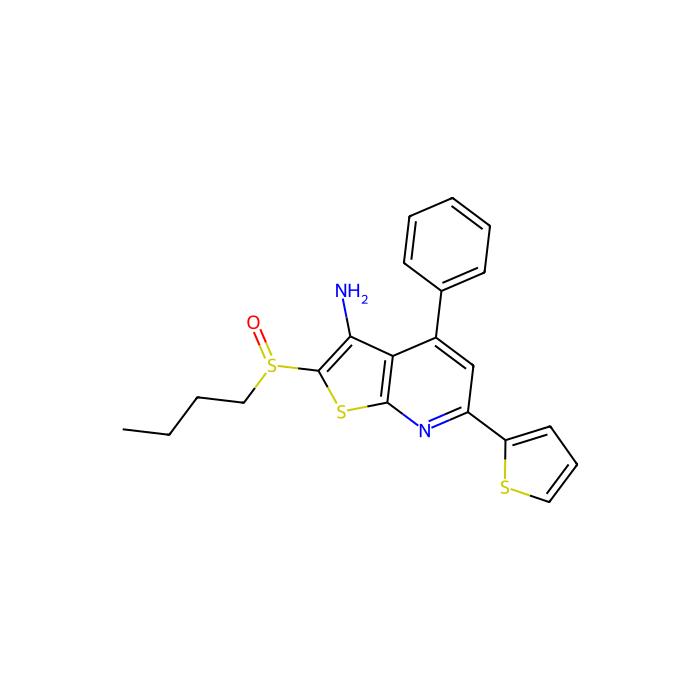
Determine the necessary mass, volume, or concentration for preparing a solution.
| Activity Type | Activity Value -log(M) | Mechanism of Action | Activity Reference | Publications (PubMed IDs) |
|---|
≥98%(HPLC) for sensitive chromatographic and analytical workflows requiring minimal baseline interference.
Store at -20°C Ships Ice chest + Ice pads Check lot-specific COA for exact specifications.
SDS, COA, datasheet, and spec sheet available for download. Lot-specific COA accessible via lot number lookup.
Cited in 0 peer-reviewed publications across chromatography, organic synthesis, and cross-coupling reactions.
Description
SW033291 is a selective inhibitor of 15-hydroxyprostaglandin dehydrogenase (15-PGDH) with IC50 and Kiapp of 1.5 nM and 0.1 nM, respectively.
Comprehensive hazard, handling, storage, and regulatory compliance document.
Download SDS →Lot-specific quality data. Enter your lot number to retrieve the exact COA.
Look up COA →Full quality attributes and acceptance criteria for this grade.
View spec sheet →Taxonomy Tree
| Kingdom | Organic compounds |
|---|---|
| Superclass | Organoheterocyclic compounds |
| Class | Pyridines and derivatives |
| Subclass | Phenylpyridines |
| Intermediate Tree Nodes | Not available |
| Direct Parent | Phenylpyridines |
| Alternative Parents | Thienopyridines Benzene and substituted derivatives Aminothiophenes Heteroaromatic compounds Sulfoxides Sulfinyl compounds Azacyclic compounds Primary amines Organic oxides Hydrocarbon derivatives |
| Molecular Framework | Aromatic heteropolycyclic compounds |
| Substituents | 4-phenylpyridine - Thienopyridine - Aminothiophene - Monocyclic benzene moiety - Benzenoid - Heteroaromatic compound - Thiophene - Sulfoxide - Azacycle - Sulfinyl compound - Hydrocarbon derivative - Primary amine - Organic oxide - Organosulfur compound - Organonitrogen compound - Organic oxygen compound - Amine - Organic nitrogen compound - Aromatic heteropolycyclic compound |
| Description | This compound belongs to the class of organic compounds known as phenylpyridines. These are polycyclic aromatic compounds containing a benzene ring linked to a pyridine ring through a CC or CN bond. |
| External Descriptors | Not available |
| Activity Type | Activity Value -log(M) | Mechanism of Action | Activity Reference | Publications (PubMed IDs) |
|---|
| Activity Type | Relation | Activity value | Units | Action Type | Journal | PubMed Id | doi | Assay Aladdin ID |
|---|
| Activity Type | Relation | Activity value | Units | Action Type | Journal | PubMed Id | doi | Assay Aladdin ID |
|---|
| Activity Type | Relation | Activity value | Units | Action Type | Journal | PubMed Id | doi | Assay Aladdin ID |
|---|
| Activity Type | Relation | Activity value | Units | Action Type | Journal | PubMed Id | doi | Assay Aladdin ID |
|---|
| Activity Type | Relation | Activity value | Units | Action Type | Journal | PubMed Id | doi | Assay Aladdin ID |
|---|
Find and download the COA for your product by matching the lot number on the packaging.
| Lot Number | Certificate Type | Date | Item |
|---|---|---|---|
 E2629029 E2629029 | Certificate of Analysis | Jun 04, 2026 | S288218 |
| E2620083 | Certificate of Analysis | May 29, 2026 | S288218 |
| F2204862 | Certificate of Analysis | Mar 04, 2025 | S288218 |
| F2204863 | Certificate of Analysis | Mar 04, 2025 | S288218 |
| F2204864 | Certificate of Analysis | Mar 04, 2025 | S288218 |
| F2204865 | Certificate of Analysis | Mar 04, 2025 | S288218 |
| F2204866 | Certificate of Analysis | Mar 04, 2025 | S288218 |
| F2204960 | Certificate of Analysis | Mar 04, 2025 | S288218 |
| Solubility | Solvent:DMSO, Max Conc. mg/mL: 41.26, Max Conc. mM: 100; Solvent:ethanol, Max Conc. mg/mL: 8.25, Max Conc. mM: 20 |
|---|---|
| Melt Point(°C) | >99°C (Dec) |
| Molecular Weight | 412.600 g/mol |
| XLogP3 | 5.700 |
| Hydrogen Bond Donor Count | 1 |
| Hydrogen Bond Acceptor Count | 6 |
| Rotatable Bond Count | 6 |
| Exact Mass | 412.074 Da |
| Monoisotopic Mass | 412.074 Da |
| Topological Polar Surface Area | 132.000 Ų |
| Heavy Atom Count | 27 |
| Formal Charge | 0 |
| Complexity | 514.000 |
| Isotope Atom Count | 0 |
| Defined Atom Stereocenter Count | 0 |
| Undefined Atom Stereocenter Count | 1 |
| Defined Bond Stereocenter Count | 0 |
| Undefined Bond Stereocenter Count | 0 |
| The total count of all stereochemical bonds | 0 |
| Covalently-Bonded Unit Count | 1 |
No item-specific tested application protocols are provided in the Product Data for SKU S288218.
General guidance for small‑molecule tool compounds (to be adapted/validated by the user): • Stock preparation: Prepare a concentrated stock solution in anhydrous DMSO (e.g., 10–50 mM). Filter through 0.22 μm PTFE if particulate is observed. Store as single-use aliquots at −20°C. • Biochemical assay setup: Maintain a fixed final DMSO concentration (commonly 0.1–1.0% v/v). Perform an 8–12 point half‑log dose–response. Include vehicle and, if available, positive control inhibitors. • Cell-based assays: Dilute DMSO stocks into prewarmed medium to the desired final concentration while keeping DMSO constant across wells. Precipitation checks and medium compatibility should be confirmed visually and by LC when possible. • Data quality: Use duplicate/triplicate technical replicates and independent biological repeats. Confirm on-target action via orthogonal readouts (e.g., thermal shift/CETSA, rescue experiments).
Note: These are general best practices, not validated protocols for this specific item. Consult the primary literature for SW 033291 for detailed conditions relevant to your assay.
Biochemical function (literature): • SW 033291 is reported as a selective small‑molecule inhibitor of 15‑hydroxyprostaglandin dehydrogenase (15‑PGDH, HPGD), the key NAD+-dependent enzyme responsible for the oxidative inactivation of prostaglandins such as PGE2. By inhibiting 15‑PGDH, SW 033291 is used to interrogate prostaglandin turnover and signaling cascades in cells and tissues.
Research applications: • Pathway interrogation: Dissect roles of prostaglandin metabolism in developmental biology, hematopoiesis, mucosal biology, and tissue homeostasis using chemical inhibition as a reversible, titratable perturbation. • Target validation: Compare genetic knockdown/knockout of HPGD with chemical inhibition to triangulate on-target phenotypes; apply thermal shift or activity-based assays to confirm target engagement. • Systems biology: Quantify downstream effects on COX-derived eicosanoids and gene-expression programs using LC–MS lipidomics and RNA-seq after treatment.
Selectivity considerations (general): • Comparative profiling across dehydrogenase/reductase families is recommended to establish selectivity in your system. Employ counter-assays and chemoproteomics where accessible.
Important note: • All uses are for laboratory research only. No medical, diagnostic, or therapeutic claims are made or implied for this product. Researchers should consult primary literature for detailed potency/selectivity data and tailor dosing to their specific model and readouts.
This item is a bioactive small molecule and is not used as a buffering agent. There are no canonical buffer recipes associated with it.
Practical guidance for assay buffers (general): • Dissolve concentrated stocks in DMSO, then dilute into biological buffers (e.g., PBS, HBSS, HEPES-buffered media) keeping final DMSO constant across conditions. • To reduce precipitation and nonspecific adsorption, consider including 0.01–0.05% nonionic surfactant (e.g., Tween 80 or Pluronic F-68) and/or 0.1–0.5% fatty acid–free BSA when compatible with the assay. • Filter sterilize final working solutions if sterility is needed for cell culture work.
For detailed buffer composition or compatibility, validate empirically under your assay conditions.
This product is a bioactive small molecule, not a process solvent or commodity reagent; thus, the “green alternative” framework does not directly apply. Nevertheless, sustainable practices can be incorporated into its handling and use:
• Solvent minimization: Use the highest practical stock concentration in DMSO to reduce total solvent volumes in assays; dispense via acoustic or low-volume robotics when available. • Safer solvent choices for cleaning/dilution: Favor ethanol or isopropanol over chlorinated solvents for bench cleanup where compatible. • Waste reduction: Aliquot into single-use vials to minimize degradation and waste of partially used material. • Energy considerations: Consolidate freezer access (−20°C) and use insulated secondary containers during bench work to limit temperature excursions and refreezing cycles. • Data efficiency: Adopt well-designed dose–response experiments with appropriate controls to reduce repeat experiments and resource usage.
If you are evaluating alternative tool compounds for the same biological target, consider factors such as potency allowing lower dosing (thereby reducing solvent/waste), higher aqueous solubility, and improved chemical stability; these can indirectly contribute to greener laboratory practice.
No pharmacopeial monograph or excipient status is provided for this item. It is supplied strictly for laboratory research use.
Formulation considerations for research workflows (general): • Stock solutions: DMSO stocks (e.g., 10–50 mM) are commonly used for small molecules in screening and mechanistic studies. Maintain constant vehicle concentration in all controls and treated samples. • Vehicle selection for non-clinical method development: When solubility in aqueous systems is limited, co‑solvents (PEG 400, ethanol), surfactants (Tween 80), or cyclodextrins may be explored in accordance with institutional policies; thoroughly evaluate stability and compatibility. • Stability: Assess freeze–thaw stability and light sensitivity using LC or HPLC-UV.
Regulatory note: • This product is not intended for human or veterinary drug use and should not be incorporated into any clinical or diagnostic formulation. Any non-clinical in vivo use must comply with institutional and regulatory guidelines.
Item-specific specifications are not provided in the Product Data.
• Appearance: Not specified for this item; refer to CoA/Spec Sheet. • Melting point: Not specified for this item; refer to CoA/Spec Sheet. • Boiling point: Not applicable/unknown for a nonvolatile small molecule; specific value not specified for this item; refer to CoA/Spec Sheet. • Density: Not specified for this item; refer to CoA/Spec Sheet. • Solubility: Not specified for this item; refer to CoA/Spec Sheet. (General practice for small-molecule screening compounds is to prepare concentrated stocks in anhydrous DMSO and dilute into aqueous buffers with surfactant or carrier protein to mitigate precipitation; confirm suitability experimentally.) • LogP, pKa, refractive index: Not specified for this item; refer to CoA/Spec Sheet.
General guidance (literature/practice – not item specifications): • Many heteroaromatic enzyme modulators display limited aqueous solubility at neutral pH; solubility may improve in acidic or basic media depending on ionizable groups. Carry out a small solubility screen across cosolvents (DMSO, DMF, ethanol) and pH if needed. • Verify stability under assay conditions (light, oxidative media). Conduct a short-term LC profile before and after incubation at assay temperature to check for degradation or adsorption losses.
• Grade/purity: Not specified for this item; refer to CoA/Spec Sheet for assay/purity, residual solvent profile, and analytical data (HPLC/LC–MS/NMR). • What to expect in the CoA: Typical small-molecule tool compound CoAs include chromatographic purity, identity (MS/HRMS), and, where applicable, 1H NMR and water/solvent content. If UV cutoff/trace metals/peroxides are relevant to your application, confirm explicitly on the batch CoA. • Stabilizers: Not specified for this item; refer to CoA/Spec Sheet. If no stabilizer is present, protect from light/oxidants and limit exposure to air and moisture. • Category: Listed under small molecules/compound libraries, suitable for biochemical or cellular research workflows. • Fit-for-purpose guidance:
This compound is supplied as a bioactive small molecule for research use, not as a synthetic reagent. It is not typically employed as a solvent, base, nucleophile, or coupling partner in preparative chemistry.
Applicable research uses (general/literature for SW 033291): • Frequently used as a tool compound to modulate enzyme activity in biochemical assays and cellular systems. Literature describes SW 033291 as an inhibitor of 15‑hydroxyprostaglandin dehydrogenase (15‑PGDH/HPGD), enabling studies of prostaglandin metabolism and signaling. Verify batch identity and purity prior to quantitative studies. • Method development: Employed to probe pathway dependence, validate target engagement (e.g., CETSA/thermal shift, cellular activity assays), and to benchmark assay performance.
Practical guidance: • Confirm working concentration ranges empirically; begin with a wide titration (e.g., 0.001–30 μM) while maintaining constant vehicle percentage across samples. • Include vehicle controls and, if available, orthogonal tool compounds to confirm on-target effects. • Monitor compound stability and solubility over assay time by LC or UV where feasible.
Note: If your intended use is synthetic derivatization or SAR, request structural documentation (SDF) and consider re-purification to secure a single polymorph/salt form if that is critical to your workflow.
Not typically applicable. This product is a research tool compound rather than a reagent used to promote or undergo named synthetic reactions.
General laboratory guidance if conducting derivatization for SAR: • Solvents: Dry DMF, DCM, THF, MeCN, or toluene as appropriate for the transformation; maintain anhydrous conditions for moisture-sensitive steps. • Temperatures: Many heteroaromatic substitutions proceed from 0°C to reflux depending on electrophile/nucleophile reactivity; optimize to minimize decomposition of the core scaffold. • Catalysts: For aryl functionalization, standard Pd-catalyzed cross-couplings (Suzuki, Buchwald–Hartwig) are common when compatible handles are present. • Workup: Avoid strong basic/acidic aqueous workups if the scaffold is labile; consider neutral quench and gentle extraction. • Yields: Strongly method- and scaffold-dependent; establish LC conversion and isolate on small scale before scale-up.
For use as a biochemical tool, establish assay “conditions” (vehicle %, incubation time, temperature, readout) empirically; there are no item-specific reaction parameters to report.
• GHS classification, signal word, hazard statements, pictograms: Not specified for this item; refer to the product SDS for authoritative safety information. • Storage: Store at −20°C (per Product Data). Protect from light and moisture. Minimize freeze–thaw cycles by aliquoting. • Shipping: Ice chest with ice pads (per Product Data). Inspect upon receipt and return to −20°C storage promptly. • Incompatibilities (general): Avoid strong oxidizers and strong acids/bases unless compatibility is verified. Use dry, oxygen-free conditions if the compound is air/moisture sensitive (confirm from CoA/SDS). • PPE: Laboratory coat, safety glasses, and appropriate chemical-resistant gloves (e.g., nitrile). Handle powders in a fume hood to avoid inhalation and to control dust. • Hygiene: Avoid breathing dust/vapors. Avoid contact with skin/eyes. Do not eat/drink/smoke in work area. Wash thoroughly after handling. • First aid (general overview; defer to SDS):
This product is a small-molecule research compound rather than a process solvent. The following guidance addresses dissolution and assay vehicle selection.
• Primary stock solvent (general practice):
• Storage temperature: Store at −20°C (per Product Data). Protect from light and moisture. Keep container tightly closed. • Shipping: Ice chest with ice pads (per Product Data). Upon receipt, allow the sealed container to reach room temperature before opening to minimize moisture condensation, then promptly return to −20°C. • Stability: Item-specific stability data (solid-state or in solution) are not specified for this item; refer to CoA/Spec Sheet. • Reconstitution: Not specified for this item; refer to CoA/Spec Sheet. General practice for small molecules is to prepare concentrated stocks in anhydrous DMSO, verify complete dissolution, and aliquot to avoid repeated freeze–thaw. • Freeze–thaw: Minimize cycles. Use single-use aliquots. If repeated access is unavoidable, store at −20°C in a desiccated environment and limit bench time. • Handling: Equilibrate closed vial to room temperature before opening to reduce moisture ingress. If hygroscopicity is suspected, handle under dry inert atmosphere or quickly recap after dispensing. • Research use only: For laboratory research use; not for human or veterinary applications.
• Item name: SW 033291 (small‑molecule research compound) • CAS: 459147-39-8 (literature) • PubChem CID: 3337839 (literature) • Molecular formula: Not specified for this item; refer to CoA/Spec Sheet. • Molecular weight: Not specified for this item; refer to CoA/Spec Sheet. • InChIKey: Not specified for this item; refer to CoA/Spec Sheet. • SMILES: Not specified for this item; refer to CoA/Spec Sheet. • Structural class (literature): Reported in the literature as a synthetic, non-peptidic small molecule used as a biochemical tool compound. • 2D structure description (general): As reported in literature sources, SW 033291 contains multiple heteroatoms and aromatic features consistent with enzyme-binding chemotypes; exact ring/functional group annotation should be confirmed from the CoA/structure file supplied with the batch. • Stereochemistry: Not specified for this item; refer to CoA/Spec Sheet.
Notes: • Provide your internal structure file (SDF/MOL) for definitive identity checks (NMR/HRMS/LC), and reconcile against batch CoA.
SW 033291 is provided as a finished bioactive small molecule and is not typically employed as a synthetic building block or reagent.
If derivatization/SAR is of interest (general considerations): • Functional handles: Review the structure (from CoA/SDF) to identify modifiable motifs (e.g., aryl substituents, heteroatom linkages) that tolerate substitution without abolishing activity. Prior literature on SW 033291 analogs may guide substitutions. • Late-stage diversification: Employ cross-coupling or amide/urea exchange strategies if the scaffold contains aryl halides or carbamoyl linkages. Ensure that chemoselectivity is compatible with the rest of the framework. • Protecting groups: Choose conditions that avoid harsh acids/bases or strong oxidants if the core contains sensitive heterocycles. • Analytics: Track purity and identity by LC–MS and 1H/13C NMR; for chiral variants, evaluate enantiopurity by chiral HPLC if stereocenters are introduced.
Because specific functional groups for this item are not provided in the Product Data, consult the detailed structural file and CoA before planning any synthetic transformations.
Target/antigen, epitope, species reactivity, clone, and isotype data apply to antibodies and are not applicable to this small-molecule product.
Item-specific target information: Not specified for this item; refer to CoA/Spec Sheet.
General literature note: SW 033291 is reported as a small‑molecule inhibitor of 15‑hydroxyprostaglandin dehydrogenase (HPGD). Users should verify target engagement and selectivity in their own system using appropriate biochemical and cellular assays.