GRADE & PURITYMoligand™?Moligand™ — Aladdin's line of ligands and bioactive small molecules. Use for receptor, pathway, and binding studies needing defined small-molecule tools.≥97%
Moligand™, ≥97% Moligand™ for sensitive chromatographic and analytical workflows requiring minimal baseline interference.
🌡
Storage & shipping
Store at -20°C Ships Ice chest + Ice pads Check lot-specific COA for exact specifications.
📋
Quality documents
SDS, COA, datasheet, and spec sheet available for download. Lot-specific COA accessible via lot number lookup.
📚
Literature proof
Cited in 0 peer-reviewed publications across chromatography, organic synthesis, and cross-coupling reactions.
Overview
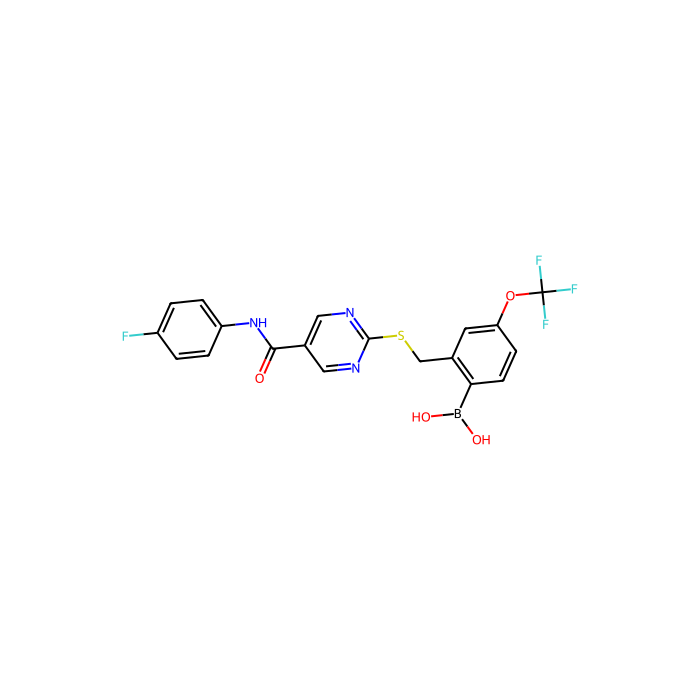
SX-682 is a potent, selective and orally bioavailable inhibitor of CXCR1/2 ,has the potential to treat castration-resistant prostate cancer.
Information
SX-682 SX-682 is an orally bioavailable small-molecule allosteric inhibitor of CXCR1 and CXCR2 that blocks tumor MDSC recruitment and enhances T cell activation and antitumor immunity.
Targets
CXCR1 ; CXCR2
In vivo
SX-682 significantly inhibited trafficking of PMN-MDSCs without altering CXCR2 ligand expression.?Trafficking of CXCR1+ macrophages was unaltered, possibly due to coexpression of CSF1R.?Reduced PMN-MDSC tumor infiltration correlated with enhanced accumulation of endogenous or adoptively transferred T cells.?Accordingly, tumor growth inhibition or the rate of established tumor rejection following programed death-axis (PD-axis) immune checkpoint blockade or adoptive cell transfer of engineered T cells was enhanced in combination with SX-682.
SX-682 is an orally bioavailable small-molecule allosteric inhibitor of CXCR1 and CXCR2 that blocks tumor MDSC recruitment and enhances T cell activation and antitumor immunity.
Storage
Store at -20°C
Shipped In
Ice chest + Ice pads
This product requires cold chain shipping. Ground and other economy services are not available.
This compound belongs to the class of organic compounds known as aromatic anilides. These are aromatic compounds containing an anilide group in which the carboxamide group is substituted with an aromatic group. They have the general structure RNC(=O)R', where R= benzene, and R = aryl group.
External Descriptors
Not available
1. Djoumbou Feunang Y, Eisner R, Knox C, Chepelev L, Hastings J, Owen G, Fahy E, Steinbeck C, Subramanian S, Bolton E, Greiner R, and Wishart DS. ClassyFire: Automated Chemical Classification With A Comprehensive, Computable Taxonomy. Journal of Cheminformatics, 2016, 8:61.
Determine the necessary mass, volume, or concentration for preparing a solution.
Dilution Calculator
Determine the dilution needed to prepare a stock solution.
Reconstitution Calculator
Reviews
Customer Reviews
Application Protocols
No item-specific, validated application protocols are provided for this SKU. The following outlines general small-molecule handling suitable for screening contexts.
Preparation of DMSO stock: Warm vial to ambient in a desiccator. Accurately weigh compound (analytical balance). Add anhydrous DMSO to achieve 10–50 mM. Vortex and sonicate briefly if needed. Record exact concentration.
Working solutions: Prepare serial dilutions in DMSO (e.g., 3-fold or 10-fold series). Transfer to assay buffer/media to achieve desired final concentrations with ≤0.1–0.5% DMSO.
Plate handling: Use low-bind polypropylene plates/tubes. For HTS, seal plates to limit evaporation; equilibrate to room temperature before reading to reduce edge effects.
Controls: Include vehicle controls, positive controls (orthogonal chemotype if possible), and negative controls. For fluorescence assays, include inner-filter effect controls or test for intrinsic fluorescence/absorbance.
Stability checks: After the run, inspect wells for precipitation; retest any anomalous data with freshly prepared solutions.
Any recommended dilutions, specific assay types (WB, IHC, IF, FC), or positive-control references: Not specified for this item; refer to CoA/Spec Sheet.
Biological Roles
Item-specific biological target and mechanism are not provided in the current listing for SX-682. The following guidance reflects general practices for small-molecule tools in research. No medical or clinical claims are made.
Role in research: Library-grade small molecules are used to probe biochemical pathways, validate targets, and generate structure–activity relationships (SAR) through iterative testing.
Assay contexts: Applicable to enzyme assays, receptor/ion channel studies, and cellular phenotypic screens. Always include appropriate positive/negative controls and vehicle controls.
Selectivity profiling: Once preliminary activity is observed, design counterscreens against related targets to map selectivity windows and reduce polypharmacology confounds.
Artifacts to monitor: Fluorescence interference, redox cycling, PAINS-like motifs, and colloidal aggregation. Employ orthogonal readouts (e.g., label-free binding assays) to confirm true activity.
Pathway mapping (general): Combine the small molecule with transcriptomics/proteomics or chemical proteomics (photoaffinity/biotinylated analogs if available) to identify on-target and off-target networks.
Notes:
Target specificity for this SKU is Not specified for this item; refer to CoA/Spec Sheet. Do not infer mechanism without direct data.
For research use only; not for diagnostic or therapeutic applications.
Buffer Applications
This product is not a buffering agent. However, preparing reliable assay buffers for small-molecule screening is essential.
General buffer guidance (assay-focused):
Aqueous vehicle: Phosphate-buffered saline (PBS, pH 7.2–7.4) or HEPES-buffered saline (10–25 mM HEPES, pH 7.4) are common. For enzyme assays, choose buffers that maintain enzyme stability (e.g., Tris-HCl pH 7.5–8.0 for many hydrolases) and include required cofactors (Mg2+, ATP, etc.).
Additives: 0.01–0.05% Tween-20 or 0.01% CHAPS can suppress nonspecific adsorption and aggregation. Include BSA (0.05–0.1%) where protein stabilization is needed, checking for background effects.
DMSO carryover: Validate assay tolerance across 0–1% DMSO; match vehicle in controls and samples.
pH and ionic strength: Maintain within ±0.1 pH units during the assay window; use adequate buffering capacity (≥10 mM) and isotonic salt (e.g., 150 mM NaCl) for cell assays.
Light/oxidation: If the compound is photosensitive/oxidation-sensitive (unknown here), use amberware and degassed buffers when feasible; prepare fresh working solutions.
Item-specific buffer recommendations: Not specified for this item; refer to CoA/Spec Sheet and adapt to your biological system.
Green Alternatives
As a discovery-grade small molecule, SX-682’s environmental footprint is primarily influenced by solvent usage in handling and assays rather than the molecule itself.
Greener solvent handling (general guidance):
Prefer water-based assay buffers with the lowest feasible co-solvent content. Validate activity at ≤0.1–0.2% DMSO when possible.
If concentrating or washing, choose ethyl acetate or IPA over chlorinated solvents when chemically compatible. Avoid DMF/NMP unless required for solubility.
For small-scale purification (if you repurify), consider ethanol/water or acetone/hexanes systems and supercritical CO2 where applicable.
Comparison of common laboratory solvents (general, literature-based):
DMSO: High boiling point; low volatility reduces VOC emissions but complicates waste; readily biodegradable; minimize volumes and segregate waste.
Ethanol/IPA: Preferable for cleaning and some formulations; lower toxicity profile; ensure compatibility with plastics and assays.
Chlorinated solvents (DCM, chloroform): Avoid for routine handling due to environmental and health impacts; reserve for cases where no alternative achieves the needed performance.
Operational practices:
Miniaturize assays (384/1536-well) to reduce solvent and compound consumption.
Implement solvent-recovery where feasible and consolidate waste streams to streamline disposal and reduce environmental burden.
Use amber vials and low-bind plastics to reduce losses and avoid repeated dissolutions.
Pharmaceutical Uses
This product is supplied strictly for research use and is not intended for diagnostic, therapeutic, or human/animal consumption. No pharmacopeial status or excipient designation is provided.
Relevant formulation context for research (general guidance):
Preclinical formulation screening (in vitro): For solubility and stability studies, prepare DMSO concentrates and dilute into media or buffered saline with minimal co-solvent. Evaluate adsorption to plastics and protein binding.
Ex vivo studies: When applicable under institutional approvals, maintain vehicle control consistency (e.g., matching DMSO/PEG content). This SKU provides no dosing or formulation specifications.
Solid handling: If milling or preparing suspensions for non-clinical studies, assess particle size and polymorph; include wetting agents (e.g., polysorbate 80) as appropriate.
Regulatory note:
No claims are made or implied regarding therapeutic use. There is no GMP/GLP certification associated with this listing unless explicitly stated on the batch documentation (not provided here).
Physical Properties
Item-specific physico-chemical specifications are not included in the current listing.
Appearance: Not specified for this item; refer to CoA/Spec Sheet.
Melting/Boiling Point: Not specified for this item; refer to CoA/Spec Sheet.
Density: Not specified for this item; refer to CoA/Spec Sheet.
Solubility: Not specified for this item; refer to CoA/Spec Sheet.
LogP/logD: Not specified for this item; refer to CoA/Spec Sheet.
pKa(s): Not specified for this item; refer to CoA/Spec Sheet.
Refractive index: Not applicable/unknown for solid powders; if liquid, Not specified for this item; refer to CoA/Spec Sheet.
General guidance (literature/practice, not item-specific):
Many discovery-stage small molecules are formulated as DMSO stocks (e.g., 10–50 mM); aqueous solubility typically depends on ionizable groups and salt form.
If poor solubility is observed, common cosolvents include DMSO, DMF, ethanol; for biological assays, dilute DMSO stocks into buffered saline or culture media, keeping final DMSO ≤0.1–0.5% v/v unless your assay tolerates more.
Hygroscopicity and polymorphism can affect apparent melting points and handling; confirm by DSC/TGA or Karl Fischer moisture if performance is sensitive.
For unknown pKa, a quick potentiometric or UV-metric titration can guide salt selection and assay pH.
Quality & Grades
Grade/Purity: Moligand™ (as provided). Moligand™ indicates suitability for small-molecule discovery workflows where library-grade identity/purity and consistency are prioritized for screening, hit triage, and early SAR. It is not a clinical/GLP/GMP grade.
What Moligand™ typically implies (general guidance):
Emphasis on identity confirmation (e.g., LC-MS/HPLC) and a purity specification appropriate for screening assays. Exact purity, counterion/salt form, residual solvent, water, and metal content for this SKU are Not specified for this item; refer to CoA/Spec Sheet.
Lot-specific analytical data (e.g., LC purity trace, MS) are generally provided on the CoA to support reproducible bioassay performance.
How to use this grade effectively:
For primary/secondary screening, prepare DMSO stock solutions from the as-received solid (or concentrate if supplied as solution); filter sterilization is optional and should be guided by assay needs and compound stability.
For mechanistic or biophysical assays, consider supplemental QC (orthogonal HPLC method, HRMS, and quick 1H NMR) to exclude minor degradants that may bias results.
If LC-UV background is critical, request the UV cutoff or blank traces from the CoA; otherwise assume normal small-molecule UV absorbance in the 200–300 nm region.
Regulatory note:
For research use only; not for diagnostic, therapeutic, or human/animal consumption.
Reaction & Applications
This SKU is positioned as a screening-grade small molecule rather than a synthetic reagent; therefore, it is not typically used as a stoichiometric reactant or solvent in transformations.
Research applications (general, non-clinical):
Chemical biology and screening: Suitable for inclusion in biochemical, biophysical, or cell-based assays to explore target engagement, pathway modulation, and phenotypic responses. Employ concentration-response testing (e.g., 10-point half-log dilutions) and counter-screens to deconvolute off-target effects.
ADME/PK profiling in vitro: While no specific properties are provided, typical workflows include microsomal stability, plasma protein binding, and permeability (PAMPA/MDCK). Report actual lot identity/purity with results to ensure data traceability.
Orthogonal validation: Combine biochemical assays with label-free readouts (SPR, MST, DSF) where feasible to confirm binding versus assay interference.
Assay design considerations:
Solubility and aggregation: Include nonionic detergents (e.g., 0.01–0.05% Tween-20) and use detergent-sensitive counterscreens to identify colloidal aggregation artifacts.
Redox/photolability: Protect from strong light and oxidants unless stability is documented on the CoA. Prepare fresh dilutions immediately before use.
Data integrity: Control for vehicle (DMSO) and plate effects; randomize plate maps and include inter-plate controls for HTS/fragment-style experiments.
Reaction Conditions
Not typically applicable. This SKU is a screening-grade small molecule rather than a reagent used as a solvent, catalyst, or stoichiometric substrate in named reactions.
General guidance (if using the compound in chemical biology conjugations after structural confirmation):
Stock handling: Prepare 10–50 mM solutions in anhydrous DMSO; store aliquots at −20 °C to minimize freeze–thaw.
Light/oxygen sensitivity: Unknown for this item; protect from light and air as a precaution until stability is verified (use amber vials, inert headspace if feasible).
Aqueous dilution: Add DMSO stock to vigorously stirred buffer to target final DMSO ≤0.1–0.5% v/v. Inspect for precipitation; if observed, reduce concentration or adjust pH/ionic strength.
If planning derivatization (after confirming structure): Choose reaction media and temperatures according to the functional groups present; start with mild conditions (room temperature, neutral pH or weak base) to preserve integrity of the parent scaffold.
Item-specific reaction parameters, temperatures, catalysts, or yields: Not specified for this item; refer to CoA/Spec Sheet or primary literature for the verified structure.
Safety & Handling
Safety data are not fully specified for this item; consult the SDS shipped with the product for authoritative guidance.
GHS Classification: Not specified for this item; refer to CoA/Spec Sheet and SDS.
Signal Word / H-Statements / Pictograms: Not specified for this item; refer to SDS.
General laboratory precautions (good practice):
Handle in a chemical fume hood; avoid inhalation of dust/aerosols. Wear appropriate PPE: lab coat, safety glasses, and disposable nitrile gloves (double-gloving for DMSO handling recommended).
Avoid skin/eye contact. Wash thoroughly after handling. Do not eat, drink, or smoke when using this product.
Storage incompatibilities: Keep separate from strong oxidizers and strong acids/bases until compatibility is known. Avoid prolonged exposure to light and moisture unless the CoA indicates stability.
First aid (overview; defer to SDS): If on skin or in eyes, rinse with water for at least 15 minutes. If inhaled, move to fresh air. If ingested, rinse mouth and seek medical attention. Provide SDS to responders.
Waste: Dispose according to institutional chemical-waste protocols; decontaminate glassware that contacted DMSO solutions carefully, as DMSO enhances dermal absorption of contaminants.
Special considerations: If etheral solvents are used for workup, be mindful of peroxide formation and use appropriate inhibitor/peroxide testing when needed.
Solvent Selection
This product is supplied as a small-molecule library compound; solvent choice is typically driven by assay context rather than synthetic processing.
Practical solvent strategy (general guidance):
Stock solutions: Dimethyl sulfoxide (DMSO) is the predominant choice due to broad solvency and compatibility with HTS plate handling. Prepare 10–50 mM stocks if solubility allows. Record final DMSO percent in assays.
Aqueous dilution: Dilute DMSO stocks into assay buffer or media with vigorous mixing to prevent precipitation. Maintain final DMSO at ≤0.1–0.5% v/v where sensitive targets/cells are used.
Alternative solvents: If DMSO is undesirable, NMP or DMF can be considered for intermediate concentrates; for final assay, co-solvent blends (e.g., ≤0.2% DMF + surfactant such as 0.01–0.05% Tween-20) may help maintain dispersion.
pH adjustment/salt form: If the compound is ionizable, modest pH adjustment (±0.5–1 pH unit around predicted pKa) can enhance solubility. Salt exchange (e.g., HCl salt for bases) may be beneficial; consult CoA for current form.
Small comparison (general):
DMSO: highest compatibility, easy freezing at −20 °C, but can extract plastics; use low-binding PP plates/tubes.
Ethanol: limited solubility for many heteroaromatics; better volatility for quick drying but may disrupt cells above ~0.5–1%.
Aqueous buffers: best for biological readouts; ensure the compound remains in solution throughout incubation (visual check or nephelometry).
Storage & Reconstitution
Storage Conditions: Store at −20 °C (as provided in Product Data). Keep tightly sealed in original container. Protect from moisture and, as a precaution, from light until stability is established.
Shipping: Shipped in ice chest with ice pads to maintain a cool chain.
Reconstitution (general guidance for small molecules):
Preferred solvent: Anhydrous DMSO for primary stock solutions unless the CoA specifies an alternative. Water or aqueous buffers are generally used only for final assay dilutions.
Concentration: Prepare 10–50 mM stocks as solubility permits; document the exact concentration based on the weighed mass and solvent volume.
Aliquoting: Dispense single-use aliquots (e.g., 10–50 µL) into amber PCR tubes or glass vials to minimize freeze–thaw events and headspace.
Freeze–thaw: Avoid repeated cycles; thaw quickly at room temperature, mix gently, and immediately return unused aliquots to −20 °C.
Stability: Lot-specific stability, moisture sensitivity, and light sensitivity are Not specified for this item; refer to CoA/Spec Sheet. If stability is uncertain, prepare fresh working solutions immediately prior to use and discard any aged dilutions.
Additional notes:
Label all aliquots with SKU, lot, concentration, solvent, and preparation date.
For long-term storage beyond 6–12 months, consider −80 °C if compatible, and periodically re-check purity by LC-MS/HPLC.
Structure & Identity
Brief overview: SX-682 is supplied as a research-only small molecule entry in the Moligand™ compound library. Item-specific structural identifiers are limited in the current listing.
CAS: 1648843-04-2 (catalog reference)
PubChem CID: 90467234 (catalog reference)
InChIKey: 333300 (as provided in Product Data; verify against CoA/SDS for final use)
SMILES: Not specified for this item; refer to CoA/Spec Sheet.
Molecular Formula: Not specified for this item; refer to CoA/Spec Sheet.
Molecular Weight: Not specified for this item; refer to CoA/Spec Sheet.
Structural features (general guidance):
Functional-group, ring-system, and stereochemical details are not provided in this listing. For precise structural elucidation, consult the manufacturer’s CoA/SDS or trusted databases using the CAS or CID above.
2D description: Not specified for this item; refer to CoA/Spec Sheet.
Identity verification in practice (general):
Confirm identity by orthogonal methods when needed for hit validation: HPLC/UPLC retention time matching, HRMS (exact mass), and 1H/13C NMR.
For screening lots, verify purity/identity at first use and upon extended storage/rethaw cycles.
If an alternative supplier lists conflicting identifiers for “SX-682,” prioritize the identifiers on the CoA that ships with this exact SKU and batch.
Synthetic Utility
SX-682 is provided as a finished small molecule for screening and is not intended as a general synthetic building block in routine organic synthesis.
If synthetic derivatization is contemplated (general considerations):
Without a disclosed structure in this listing, functional handle availability (e.g., halides, amines, acids) is unknown. Confirm structure and substitution pattern from the CoA or primary literature before planning analog synthesis.
Common late-stage diversification tactics—amide coupling, SNAr/Suzuki cross-coupling, N-alkylation/acylation, and heteroaryl functionalization—depend entirely on the scaffold and should not be attempted without verified structure.
For probe development (e.g., biotinylated or photoaffinity derivatives), map SAR first to identify vectors that tolerate modification without loss of activity; then design linkers minimizing polarity/steric disruption.
QC after modification:
Verify identity and purity by LC-HRMS and NMR; evaluate in the same assays as the parent to confirm retention of activity.
Summary: Because item-specific functional groups are Not specified for this item; refer to CoA/Spec Sheet, no prescriptive synthetic transformations can be recommended here.
Target Specificity
Item-specific biological target(s), binding constants, and selectivity data are not provided for this SKU.
Target/Pathway: Not specified for this item; refer to CoA/Spec Sheet.
Species reactivity: Not specified for this item; refer to CoA/Spec Sheet.
Assay-validated activities (IC50/Ki/EC50): Not specified for this item; refer to CoA/Spec Sheet.
Guidance for determining specificity in your lab (general):
Use panel screening against related targets to establish selectivity. Incorporate orthogonal assay formats to mitigate readout-specific artifacts.
Determine potency with full concentration–response curves and replicate across independent days to assess robustness.
For cellular studies, complement activity data with target engagement assays (e.g., CETSA, NanoBRET) where applicable.
Research Use Note: For research use only.
Need help choosing the grade?
Our grade selection guide covers purity, stabilizer status, and application suitability for all variants in our catalog.
We use cookies to ensure the website functions properly and, where permitted, to improve your experience. You can manage your preferences at any time in Settings. Learn more in our Cookie Policy.
Shall we send you a message when we have discounts available?
Remind me later
Thank you! Please check your email inbox to confirm.
Products are supplied to verified businesses, institutions, and qualified professionals for research and development use only. Not for use in humans, animals, diagnosis, or therapy.

 G2301150