GRADE & PURITYMoligand™?Moligand™ — Aladdin's line of ligands and bioactive small molecules. Use for receptor, pathway, and binding studies needing defined small-molecule tools.≥95%
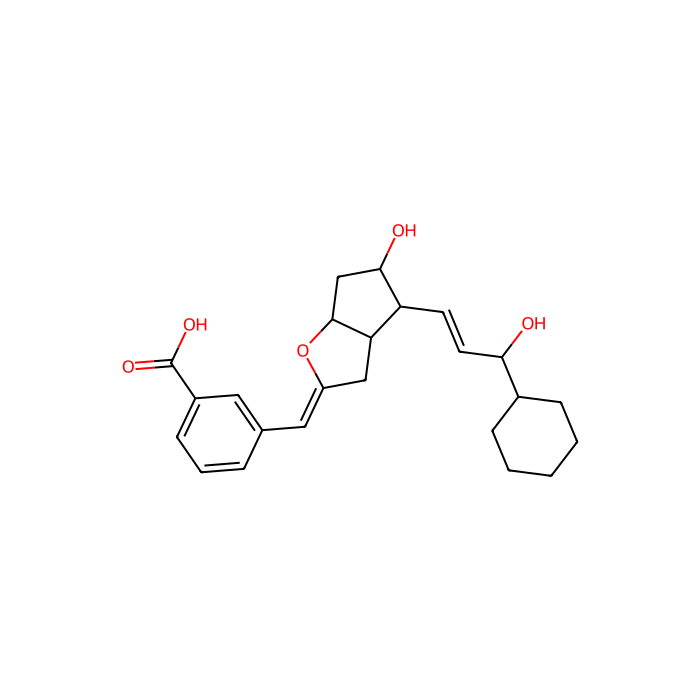
This compound belongs to the class of organic compounds known as benzoic acids. These are organic Compounds containing a benzene ring which bears at least one carboxyl group.
External Descriptors
Not available
1. Djoumbou Feunang Y, Eisner R, Knox C, Chepelev L, Hastings J, Owen G, Fahy E, Steinbeck C, Subramanian S, Bolton E, Greiner R, and Wishart DS. ClassyFire: Automated Chemical Classification With A Comprehensive, Computable Taxonomy. Journal of Cheminformatics, 2016, 8:61.
Determine the necessary mass, volume, or concentration for preparing a solution.
Dilution Calculator
Determine the dilution needed to prepare a stock solution.
Reconstitution Calculator
Reviews
Customer Reviews
Application Protocols
No tested applications, recommended dilutions, or protocol specifics are provided in the Product Data for this item.
General protocol framework for small-molecule ligands (non-specification)
Stock preparation: Dissolve in dry DMSO (or other suitable solvent) to 10–50 mM. Vortex and, if needed, sonicate briefly. Filter through 0.22 μm if particulate persists and the compound is not adsorptive.
Working solutions: Dilute into buffer or culture medium to the desired final concentration, maintaining a constant vehicle percentage across conditions.
Controls: Include vehicle-only control and, where possible, a positive control ligand for the pathway of interest.
Stability: Use freshly prepared dilutions. Minimize light exposure and keep on ice during setup if stability is uncertain.
Documentation: Record lot number, stock concentration, vehicle percent, and preparation date.
Always adapt to your specific assay and consult the SDS/CoA for restrictions.
Biological Roles
Item-specific biological targets or mechanisms are not provided in the Product Data. This product is supplied for research use only.
General background (literature-based, non-specification)
Synthetic analogs in the prostanoid family are commonly used as chemical biology tools to interrogate eicosanoid signaling pathways, second-messenger formation, gene expression programs, and receptor pharmacology in vitro.
Typical experimental readouts include modulation of intracellular cAMP/cGMP, changes in kinase activity, and transcriptional reporters. Outcomes are assay- and cell-type dependent.
Good practices for biological experiments
Establish a concentration–response curve with appropriate vehicle controls.
Confirm on-target pathway engagement using orthogonal assays (e.g., second-messenger quantification and downstream gene expression).
Include selectivity panels or counter-screens to evaluate off-target effects.
Record and report co-solvent percentage, exposure time, and temperature to facilitate reproducibility.
Note: No clinical or therapeutic claims are made for this product; it is intended solely for laboratory research.
Buffer Applications
This product is a small-molecule ligand and is not a buffering agent. Conventional buffer system guidance (e.g., phosphate, HEPES, Tris) is not directly applicable.
Practical handling notes
Prepare stocks in appropriate organic solvent (commonly DMSO or ethanol) and dilute into the chosen biological buffer or cell culture medium, ensuring the final co-solvent percentage is compatible with the assay.
If precipitation occurs upon dilution, increase the dilution steps, warm gently, or include a small percentage of co-solvent as permitted by the assay design.
As a research ligand listed in a compound library, Taprostene itself does not have a direct “green alternative.” However, greener choices can be made in solvent and handling.
Greener solvent choices (general guidance)
Prefer lower-toxicity, biodegradable, and renewable solvents when compatible with your assay, such as ethanol or 2-propanol for intermediate stocks, or water with cyclodextrin carriers for delivery—recognizing potential assay interference.
Reduce DMSO volumes where feasible; keep final assay DMSO ≤0.1–0.5% v/v to minimize biological effects.
Comparison (general, non-specification)
DMSO: High solvency; not renewable; moderate toxicity; excellent for freezer-stable stocks.
Ethanol: Renewable and biodegradable; flammable; lower solvency than DMSO.
2-MeTHF/CPME (for synthetic steps, if any): Bio-based/greener ether options vs. THF/Et2O; evaluate compatibility with functional groups present in the molecule.
Operational green practices
Prepare concentrated stocks to minimize solvent waste per assay.
Use amber vials and cold storage to extend solution life and reduce remake frequency.
Plan micro-scale assays to reduce consumables and chemical usage.
Pharmaceutical Uses
No pharmacopeial status, excipient role, or formulation designation is provided for this item. It is supplied strictly for research use only.
General formulation considerations for research materials (non-specification)
For in vitro work: Use solvent stocks (e.g., DMSO) and dilute into assay buffer or media. Validate that vehicle concentrations do not impact the biological system.
For ex vivo/tissue studies: Consider co-solvent systems (e.g., PEG400/saline, ethanol/cremophor/saline) only if permitted by your protocols and institution; pre-validate stability and compatibility.
For stability: Protect solutions from light and elevated temperature; aliquot to avoid freeze–thaw where possible.
No therapeutic claims are made for this product, and it is not intended for any clinical or diagnostic use.
Physical Properties
Appearance: Not specified for this item; refer to CoA/Spec Sheet.
Molecular weight: Not specified for this item; refer to CoA/Spec Sheet.
Molecular formula: Not specified for this item; refer to CoA/Spec Sheet.
Melting point: Not specified for this item; refer to CoA/Spec Sheet.
Boiling point: Not specified for this item; refer to CoA/Spec Sheet.
Density: Not specified for this item; refer to CoA/Spec Sheet.
Refractive index: Not specified for this item; refer to CoA/Spec Sheet.
Solubility: Not specified for this item; refer to CoA/Spec Sheet.
LogP/logD: Not specified for this item; refer to CoA/Spec Sheet.
Literature/general notes (non-specification)
Small-molecule prostacyclin analogs are commonly handled as lipophilic acids or salts that dissolve well in polar aprotic organic solvents (e.g., DMSO) and co-solvent mixtures for aqueous work. Actual solubility and partitioning are structure-dependent; consult the item CoA before preparing stock solutions.
For accurate method development (e.g., LC–MS), determine the compound’s UV spectrum and ionization behavior experimentally; do not rely on class-wide assumptions.
Quality & Grades
Grade/Purity: Moligand™ (as provided). This designation indicates inclusion in a curated small-molecule/compound library suitable for discovery screening and mechanistic studies.
What Moligand™ implies (general guidance)
Emphasis on identity confirmation (e.g., LC–MS and/or NMR) and suitability for biochemical and cell-based screening workflows.
Attention to handling and packaging that supports reproducible assay performance (e.g., controlled storage, minimized moisture/oxygen exposure, aliquoting options where applicable).
Item-specific details
Exact assay purity, residual solvents, water content, and stabilizers: Not specified for this item; refer to CoA/Spec Sheet.
Intended use: For research use only (from Product Data). Not for drug, diagnostic, or household use.
Recommendations to users
Request the current CoA/specification sheet for batch-specific purity and analytical data prior to regulated or quantitative studies.
If low-UV background or metal content are critical to your application, confirm those parameters explicitly on the batch CoA, as they are not specified here.
Reaction & Applications
Manufacturer-provided application notes are not specified for this item. The product is listed within a small-molecule/compound library category and is intended for research use only.
General research applications for small-molecule ligands (non-specification)
Chemical biology: probe studies to interrogate signaling pathways, receptor–ligand interactions, or transcriptional responses using dose–response and time-course designs.
Screening: primary/secondary screening in biochemical or cell-based assays; counter-screens to assess selectivity and off-targets.
Analytical reference: internal standards or method development controls in LC–MS workflows when appropriate.
If using in chemical synthesis
No item-specific reactivity data are provided. If derivatization is planned (e.g., for probe conjugation), determine functional group profile from NMR/LC–MS first and select coupling strategies accordingly (e.g., amide coupling if a carboxylate is present). Validate that transformations do not compromise the intended biological activity.
Always confirm application scope and limits from the CoA/SDS and perform pilot experiments to establish working concentrations and stability under your conditions.
Reaction Conditions
No item-specific reaction conditions or transformation guidance are provided for this product, which is listed as a small-molecule research ligand.
If performing chemical modifications (general, non-specification)
Solvents: Choose polar aprotic media (DMF, DMSO, NMP) to enhance solubility of lipophilic, multifunctional molecules.
Temperature: Begin at ambient temperature; escalate cautiously while monitoring by TLC/LC–MS for degradation.
Atmosphere: Use inert gas (N2/Ar) for moisture/oxygen-sensitive motifs.
Workup: Quench carefully and extract with suitable biphasic systems; consider solid-phase extraction to remove high-boiling solvents.
Purification: Reverse-phase preparative HPLC is often effective for complex, lipophilic small molecules; confirm purity by orthogonal methods (NMR, HRMS).
All conditions must be optimized empirically once the molecule’s functional groups are confirmed from the CoA and analytical data.
Safety & Handling
GHS classification: Not specified for this item; refer to SDS.
Signal word / H-statements / pictograms: Not specified for this item; refer to SDS.
Storage conditions (item-specific): Store at 2–8°C (from Product Data). Shipments are sent on wet ice.
General laboratory precautions (non-SDS guidance)
Handle in a chemical fume hood, avoiding inhalation and skin/eye contact. Wear appropriate PPE: lab coat, safety glasses, and chemical-resistant gloves.
Avoid exposure to strong oxidizers and bases/acids until compatibility is confirmed from SDS/CoA.
Prepare solutions freshly or aliquot and minimize freeze–thaw cycles to limit degradation of functionalized lipophilic ligands.
First-aid overview (consult SDS for authoritative guidance)
Skin/eye contact: Rinse with water for several minutes; remove contaminated clothing; seek medical attention if irritation persists.
Inhalation: Move to fresh air; seek medical attention if symptoms occur.
Ingestion: Rinse mouth; seek medical attention.
Waste and spill response
Absorb small spills with inert material; collect for disposal as organic chemical waste in accordance with institutional and local regulations.
Decontaminate surfaces with suitable organic solvent followed by detergent and water, as permitted by the SDS.
Solvent Selection
Item-specific solubility data are not provided for this product; consult the CoA/SDS before preparing solutions.
General solvent guidance for lipophilic small-molecule ligands (literature-based, non-specification)
Stock solutions: DMSO is commonly used for 10–50 mM stocks due to broad solvency and assay compatibility. Ethanol or isopropanol are alternatives when DMSO is undesirable.
Aqueous working solutions: Prepare by serial dilution into buffered media containing co-solvent (e.g., 0.1–1% DMSO or EtOH) and/or carrier proteins (e.g., BSA) as permitted by your assay. Verify compatibility with your biological system.
Non-aqueous chemistry uses: If employing in synthetic manipulations or derivatizations, polar aprotic solvents (DMF, DMAc, NMP, DMSO) improve solubility; choose based on reactivity and downstream workup.
Comparison notes (general)
DMSO: maximal solubility and stability for many lipophilic acids; may affect some biological readouts above ~0.5% v/v.
Ethanol: broadly compatible but lower solvency; flammable and more volatile.
PEG400 or aqueous cyclodextrin: useful vehicle for higher aqueous loading; assess assay interference.
Practical tips
Filter or centrifuge to remove particulates after dissolution.
Document final co-solvent percentages in assay records for reproducibility.
Storage & Reconstitution
Storage (item-specific): Store at 2–8°C. Shipped on wet ice (from Product Data).
Reconstitution: Not specified for this item; refer to CoA/Spec Sheet.
General reconstitution guidance (non-specification)
Allow container to equilibrate to room temperature in a desiccator before opening to prevent moisture condensation.
For solid materials: Weigh quickly and prepare a concentrated stock in dry DMSO or suitable solvent. For liquids/oils: Pre-dilute by volume using calibrated pipettes.
Aliquot stocks into amber, airtight vials to minimize freeze–thaw and light exposure. Store aliquots at 2–8°C or frozen if stability allows (verify on CoA/SDS).
Label with compound name, lot, solvent, concentration, and date. Monitor for precipitation or discoloration over time.
Stability testing
Establish an internal stability profile (e.g., periodic LC–MS or HPLC assay of stored stocks) to confirm suitability for long studies.
For authoritative instructions on reconstitution and long-term storage, consult the batch-specific CoA/SDS.
Structure & Identity
Product name: Taprostene (SKU: T340466)
CAS: 108945-35-3; PubChem CID: 5311243
InChIKey: 460149 (as provided in Product Data)
Molecular formula: Not specified for this item; refer to CoA/Spec Sheet.
Molecular weight: Not specified for this item; refer to CoA/Spec Sheet.
SMILES: Not specified for this item; refer to CoA/Spec Sheet.
Structural features
Item-specific structure annotations: Not specified for this item; refer to CoA/Spec Sheet.
Literature/general description (non-specification): Taprostene is described in the literature as a synthetic analog related to the prostacyclin (PGI2) chemotype used as a small-molecule ligand in receptor/pathway studies. Typical prostacyclin analogs feature a carboxylic acid (or prodrug thereof), multiple aliphatic stereocenters, and oxygenated functional groups; exact features for this item should be confirmed from the CoA/SDS.
Identity verification best practices
Cross-check CAS and CID against internal reference databases and the supplied CoA.
Use orthogonal identity tests where appropriate (e.g., high-resolution MS for exact mass; 1H/13C NMR for fingerprinting; LC–MS retention vs. reference standard).
Synthetic Utility
This product is offered as a research ligand rather than as a synthetic building block; item-specific functional group information and reactivity are not provided.
General guidance if derivatization is contemplated (non-specification)
Determine functional groups by NMR/LC–MS first. If a carboxylic acid is present, standard coupling chemistries (e.g., EDC/HOBt, HATU) may enable amide formation to link reporter tags or affinity handles.
Protect sensitive alcohols or conjugated motifs if multi-step chemistry is planned; assess stability to acids/bases and oxidants prior to scale-up.
Consider bioconjugation strategies (e.g., click chemistry) only after confirming the presence of compatible handles and evaluating the impact of modification on biological activity.
Note: Without item-specific specifications, all synthetic manipulations should be piloted on sub-milligram scale to assess stability and purity outcomes.
Target Specificity
Target, pathway, or receptor specificity is not provided in the Product Data for this item.
User guidance
If employing this compound as a probe, determine target engagement with orthogonal assays (binding, functional readouts) and include appropriate controls.
Document literature sources and internal data supporting any target assignments in your experimental records.
For any definitive claims of target specificity, rely on primary literature data and the batch CoA; no such claims are made here.
Need help choosing the grade?
Our grade selection guide covers purity, stabilizer status, and application suitability for all variants in our catalog.
We use cookies to ensure the website functions properly and, where permitted, to improve your experience. You can manage your preferences at any time in Settings. Learn more in our Cookie Policy.
Shall we send you a message when we have discounts available?
Remind me later
Thank you! Please check your email inbox to confirm.
Products are supplied to verified businesses, institutions, and qualified professionals for research and development use only. Not for use in humans, animals, diagnosis, or therapy.