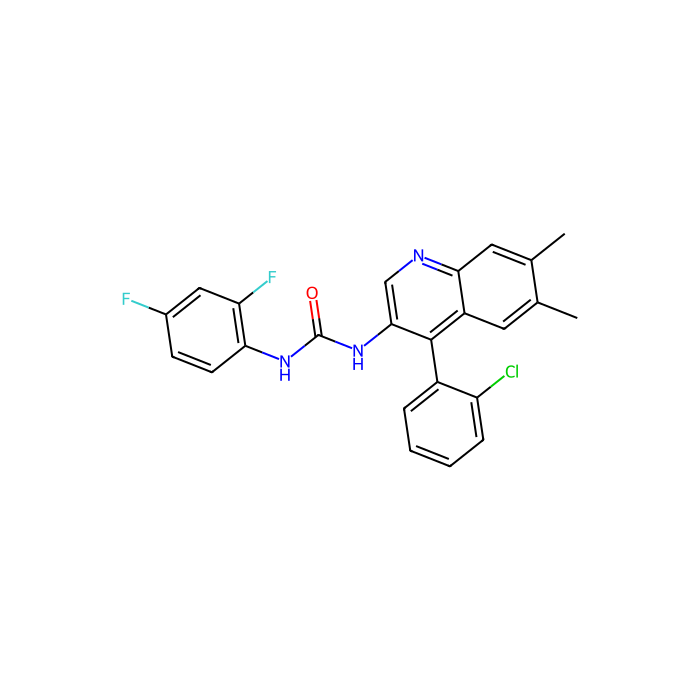
Potent, non-competitive ACAT inhibitor (IC 50 = 5-10 nM). Inhibits cholesterol esterification (IC 50 values are 150 and 330 nM for L S180 and HepG2 cells respectively). Lowers plasma cholesterol levels and cholesterol absorption in vivo. Orally active.
Storage
Store at -20°C,Desiccated
Shipped In
Ice chest + Ice pads
This product requires cold chain shipping. Ground and other economy services are not available.
Note
Wherever possible, you should prepare and use solutions on the same day. However, if you need to make up stock solutions in advance, we recommend that you store the solution as aliquots in tightly sealed vials at -20°C. Generally, these will be useable for up to one month. Before use, and prior to opening the vial we recommend that you allow your product to equilibrate to room temperature for at least 1 hour. Need more advice on solubility, usage and handling? Please visit our frequently asked questions (FAQ) page for more details.
This compound belongs to the class of organic compounds known as phenylquinolines. These are heterocyclic compounds containing a quinoline moiety substituted with a phenyl group.
External Descriptors
Not available
1. Djoumbou Feunang Y, Eisner R, Knox C, Chepelev L, Hastings J, Owen G, Fahy E, Steinbeck C, Subramanian S, Bolton E, Greiner R, and Wishart DS. ClassyFire: Automated Chemical Classification With A Comprehensive, Computable Taxonomy. Journal of Cheminformatics, 2016, 8:61.
Determine the necessary mass, volume, or concentration for preparing a solution.
Dilution Calculator
Determine the dilution needed to prepare a stock solution.
Reconstitution Calculator
Reviews
Customer Reviews
Application Protocols
No item-specific, validated protocols are supplied for TMP-153. The following generalized workflows may help design experiments; adapt to your system and validate locally.
Stock preparation (general):
Bring vial to room temperature in a desiccated environment. Weigh quickly. Dissolve in anhydrous DMSO to 10–50 mM. Vortex/sonicate until clear. Sterile-filter if required for cell assays.
Biochemical assay dosing:
Prepare serial dilutions in DMSO (e.g., 3-fold series), then transfer to assay buffer to achieve the final DMSO level (≤0.1–1%). Include vehicle controls and, if available, a positive control compound.
Incubation times and temperatures depend on the assay; verify time-dependent effects and stability by bracketing incubation conditions.
Cell-based assays:
Confirm cytotoxicity window separately (e.g., resazurin/ATP readouts). Dose cells with gentle mixing to avoid precipitation; monitor for solvent effects.
Analytical reference use:
Prepare calibration standards across 0.1–100 μM in a suitable matrix. Verify linearity, carryover, and recovery.
These are general templates only. For authoritative, item-specific instructions, consult the CoA/SDS or validated in-house SOPs.
Biological Roles
Item-specific biological target(s) or roles: Not specified for this item; no mechanistic or pathway information is provided in the listing.
General guidance for small-molecule library members (non-item-specific):
Such compounds may be used as chemical probes in phenotypic or target-based assays to interrogate cellular pathways, enzyme functions, or receptor signaling. However, without validated target data for this exact item/lot, any assumed role would be speculative.
If using in biology:
Establish dose–response curves and determine apparent potency metrics (e.g., IC50/EC50) under your assay conditions; results may vary with cell line, media, and time.
Evaluate selectivity and off-target liabilities with counter-screens, orthogonal assays, and control chemotypes to mitigate mechanism misassignment.
Assess compound liabilities (aggregation, redox cycling, fluorescence interference, PAINS substructures) using appropriate assay controls and cheminformatic filters once the structure is confirmed from the CoA.
No claims are made here regarding pharmacology, efficacy, or clinical relevance. Use strictly for research, and consult the SDS and CoA for any additional item-specific notes that could influence biological testing (e.g., salt form, purity, counterions).
Buffer Applications
This product is not a buffer reagent. However, small-molecule stocks are frequently introduced into biological buffers for assays. General, non-item-specific guidance:
Preparation:
Dissolve compound in anhydrous DMSO to make a concentrated stock (e.g., 10–50 mM). Vortex and, if needed, sonicate gently to ensure clarity.
Add stock to the target buffer (e.g., PBS, HEPES, or Tris) with vigorous mixing to reach the desired final concentration while keeping DMSO ≤0.1–1% v/v to preserve cell/enzymatic health.
Common buffers (illustrative):
PBS, pH 7.2–7.4; HEPES, pH 7.2–7.6; Tris-HCl, pH 7.4–8.0. Select based on biological system and compatibility.
Practical tips:
Filter final working solutions through 0.22 μm if particulate forms and filtration is compatible with the compound.
Confirm short-term stability in the chosen buffer by LC–MS/UV over the assay period; monitor for precipitation or peak splitting.
For photolabile chemotypes, protect from light (foil-wrapped tubes/plates).
All parameters above are general recommendations; item-specific solubility, pH stability ranges, and compatibility are not provided and should be validated empirically.
Green Alternatives
No item-specific solvent or process requirements are provided. The following general considerations can help improve sustainability when working with small-molecule library compounds:
Stock solutions:
Prefer DMSO over halogenated and highly volatile solvents; it offers lower vapor pressure and good worker/environmental profiles relative to DMF or chlorinated solvents.
Where feasible, consider propylene carbonate or PEG-400 as alternative co-solvents for aqueous delivery; note viscosity and assay compatibility tradeoffs.
Analytics and workup:
Optimize LC methods to use water–acetonitrile gradients over water–methanol if ACN recovery and recycling infrastructure is available; otherwise, methanol may be preferable from a renewables standpoint.
Minimize sample volumes with microplate-based assays and microscale analytics to reduce solvent consumption.
Energy and stability:
Follow the recommended −20°C, desiccated storage to extend shelf life and decrease waste from degradation.
Tradeoffs (general, not item-specific):
DMSO vs DMF: DMSO is generally greener and less noxious, but DMF can solubilize some challenging chemotypes better; evaluate case by case.
ACN vs MeOH in LC: ACN often provides sharper peaks and lower backpressure; MeOH is bio-based and less toxic. Select based on performance, availability, and waste handling capabilities.
Always complement green choices with robust aliquoting and just-in-time preparation to avoid discarding unused, aged solutions.
Pharmaceutical Uses
No pharmacopeial status, excipient role, or formulation use is specified for this item. This product is supplied strictly for research use and is not intended for human or veterinary applications.
General notes (non-item-specific):
Small-molecule library members are sometimes used in preformulation research to study solubility enhancement, salt screening, or stability profiling on a research-only basis.
If evaluating formulation-like conditions for in vitro studies:
Consider cosolvent systems (DMSO, ethanol, PEG-400) or surfactants (e.g., polysorbates) for exploratory solubilization, recognizing biological assay constraints.
Examine solid-state form (free base/acid vs. salt, solvate/hydrate) via PXRD/DSC/TGA when stability or dissolution rate is critical to your study.
No therapeutic, diagnostic, or clinical claims are made or implied. Consult your institutional guidelines and the SDS before any handling that resembles formulation work.
Physical Properties
Item-specific data:
Appearance: Not specified for this item; refer to CoA/Spec Sheet.
Melting point (MP): Not specified for this item; refer to CoA/Spec Sheet.
Boiling point (BP): Not specified for this item; refer to CoA/Spec Sheet.
Density / Refractive index: Not specified for this item; refer to CoA/Spec Sheet.
LogP / pKa: Not specified for this item; refer to CoA/Spec Sheet.
Solubility: Not specified for this item; refer to CoA/Spec Sheet.
General guidance (literature/practice-based, not item-specific):
Small-molecule screening compounds are commonly solids at ambient conditions and frequently dissolve well in anhydrous DMSO. Initial stock preparation at 10–50 mM in dry DMSO is typical; adjust based on observed solubility and assay needs.
If aqueous work is required, use cosolvent strategies: pre-dissolve in DMSO, then dilute into buffer while vortexing to a final DMSO content typically ≤0.1–1% v/v (assay-dependent) to mitigate precipitation.
Prior to scaling any experimental use, confirm solution stability over time at working temperature by LC–MS (look for degradation or adducts) and visual inspection (clarity, absence of precipitate).
Hygroscopic or air-/light-sensitive behavior cannot be assumed; however, shipment on cold packs and recommended storage at −20°C, desiccated, suggest routine precautions against hydrolysis/oxidation and moisture uptake.
Always defer to the lot-specific CoA/SDS for definitive physicochemical parameters.
Quality & Grades
Item-specific quality information:
Grade/Purity: Not specified for this item; refer to CoA/Spec Sheet.
Appearance: Not specified for this item; refer to CoA/Spec Sheet.
Context and expectations (general guidance for small-molecule library items):
Compound library members are typically supplied at screening grade, often supported by LC–MS and 1H NMR identity/purity checks. Purity levels in such contexts are frequently ≥90–95% by LC, but the definitive value for this item is only what appears on the lot-specific CoA.
If low UV background is required (e.g., analytical HPLC detection at low wavelengths), request UV cut-off or blank-trace data. Absent those data, perform a quick baseline assessment in your method.
If a stabilizer or form (free base vs. salt) is relevant, it will be listed on the CoA/spec; none is specified here. Where form is uncertain, determine via titration or HRMS to avoid concentration miscalculations in biological assays.
Recommended incoming QC (practical):
Verify purity by your in-house LC method and orthogonal detection (UV/ELSD/MS) if critical.
Record a short 1H NMR in DMSO-d6/CDCl3 to confirm identity and check for residual solvent or moisture sensitivity.
Document mass of contents and reconcile with theoretical fill. Aliquot immediately to minimize freeze–thaw cycles.
Reaction & Applications
Manufacturer-provided applications: Not specified for this item.
General research use context (non-item-specific):
TMP-153 is listed within a small-molecule/compound library category. Such compounds are commonly employed as:
Tool molecules for biochemical or cell-based screening to probe pathway responses.
Analytical standards for LC–MS method development, retention time indexing, or internal standardization (if chemically compatible).
Reference materials for SAR comparisons where literature identifies related chemotypes (user to verify against CoA).
Practical considerations:
Prepare concentrated DMSO stocks (e.g., 10–50 mM), confirm clarity, then perform serial dilutions into assay buffer, keeping final DMSO fraction low (typically ≤0.1–1% v/v depending on the system).
For stability: run time-course LC–MS of working solutions (e.g., 0, 2, 24 h at room temperature and 4°C) to check for hydrolysis/oxidation.
If employing in biochemical assays, pre-screen for compound aggregation (e.g., detergent sensitivity, light scattering, or control assays with 0.01% Tween-20) to avoid false positives.
For analytical applications, establish response factors and check linearity across the intended concentration range.
Because no structural information is provided here, reaction chemistry applications (e.g., as a reagent or intermediate) cannot be meaningfully specified for this item.
Reaction Conditions
No reaction conditions are specified for this product, and the structure is not provided. As such, detailed synthetic parameters cannot be prescribed for TMP-153.
General, non-item-specific guidance if exploratory chemistry is planned after confirming structure from the CoA:
Solvent choice: begin with DMSO, DMF, MeCN, toluene, or alcohols depending on functional groups; dry conditions for moisture-sensitive motifs.
Temperature: screen from ambient to 80–120°C (oil bath or sealed-vessel) as dictated by reactivity and safety; monitor by TLC/LC–MS.
Catalysts/bases/acids: select based on functional groups (e.g., Pd for cross-coupling if aryl halides/boronates are present; carbonate/amine bases for SNAr; mild acids for acetal deprotection). Avoid strong conditions until stability is known.
Atmosphere: use inert gas (N2/Ar) for air-sensitive substrates.
Workup: quench cautiously; extract with compatible solvents; dry and analyze crude by LC–MS/NMR to assess transformations.
These guidelines are generic. Do not rely on them without first identifying the compound’s functional groups and stability profile.
Safety & Handling
Item-specific safety information provided:
Signal Word / GHS classes / Pictograms / H-Statements: Not specified for this item; refer to SDS.
Research Use: For research use only.
Storage: Store at −20°C, desiccated. Shipped in an ice chest with ice pads.
General laboratory safety (non-item-specific; follow your institutional EHS policies):
Handle unknown small molecules under the precautionary principle: avoid inhalation, ingestion, and skin/eye contact. Work in a fume hood. Wear appropriate PPE (lab coat, safety glasses, nitrile gloves).
Prevent moisture ingress for desiccated items; open vials only after equilibrating to room temperature to avoid condensation. Reseal promptly with desiccant present.
If powdered: minimize dust formation; consider weighing on balance inside a ventilated enclosure. If in solution: verify solvent compatibility with your waste stream.
Incompatibilities are unknown; as a default, avoid strong oxidizers and strong acids/bases until compatibility is verified.
First aid (general):
Skin/eye contact: rinse with water for ≥15 minutes; remove contaminated clothing; seek medical advice.
Inhalation: move to fresh air; monitor breathing; seek medical attention if symptoms persist.
Ingestion: rinse mouth; do not induce vomiting unless directed by medical personnel.
Always consult the product SDS for authoritative hazard classification and response measures before use.
Solvent Selection
Item-specific solvent properties are not provided. The following is general, non-item-specific guidance for small-molecule library compounds like TMP-153:
Primary stock solvent:
DMSO (anhydrous) is the default for discovery screening stocks owing to broad solubilizing power and biological compatibility at low percentages.
Secondary solvents for method development and analytics:
DMF, acetonitrile, methanol, ethanol: useful for LC method prep and as co-solvents.
Aqueous buffers (PBS, HEPES, Tris): use only after pre-dissolution in an organic solvent; titrate in slowly with vortexing/sonication.
Choosing among options:
If analyte precipitates upon aqueous dilution, increase temperature slightly, reduce concentration, or increase the cosolvent fraction within assay limits.
For moisture-sensitive compounds, prefer rigorously dry solvents and single-use aliquots.
Small comparison (general):
DMSO: strongest solvency; higher viscosity; miscible with water; stable; may affect some enzymes at >1%.
MeOH/EtOH: protic, less solvating for hydrophobes than DMSO; lower viscosity; more volatile.
ACN: good for LC; mixes well with water; lower enzyme tolerance in cellular systems than DMSO at comparable %.
Validate solvent choice empirically for your assay or synthetic context and consult the CoA for any item-specific compatibility notes.
Storage & Reconstitution
Item-specific instructions (provided):
Storage Conditions: Store at −20°C, desiccated.
Shipping: Ice chest with ice pads.
Expanded practical guidance (general, not item-specific):
Upon receipt, inspect the vial for integrity. Allow to equilibrate to room temperature before opening to prevent moisture condensation.
If supplied as a solid: promptly aliquot into small vials under dry air or inert gas if feasible. Include a fresh desiccant pack in the container.
Reconstitution:
Dissolve in anhydrous DMSO to prepare a concentrated stock (e.g., 10–50 mM). Mix until clear; avoid prolonged heating unless stability is verified.
Optional: pass through a 0.22 μm PTFE filter to remove particulates for cell-based assays.
Storage of solutions:
Dispense into single-use aliquots, cap tightly, and store at −20°C (or lower if compatible with the solvent). Avoid repeated freeze–thaw; thaw quickly, use immediately, and discard leftovers if stability is uncertain.
Protect from moisture and light as a routine precaution for small molecules.
Stability monitoring:
Periodically check an aliquot by LC–MS or HPLC for degradation, especially after 3–6 months of storage.
For any missing item-specific details (appearance, exact solubility, stabilizers, salt form), refer to the lot-specific CoA and SDS.
Structure & Identity
Item-specific identifiers (as provided):
Product Name: TMP-153 (catalog name)
SKU: T275108
CAS: 128831-46-9
PubChem CID: 125289
InChIKey: 81385 (as provided)
SMILES: Not specified for this item; refer to CoA/Spec Sheet.
Molecular Formula: Not specified for this item; refer to CoA/Spec Sheet.
Molecular Weight: Not specified for this item; refer to CoA/Spec Sheet.
Structural description:
No structural formula or depiction is provided in this listing. Without a SMILES or MF, specific functional groups, ring systems, and stereochemical elements cannot be enumerated for this item.
If you possess a structure (e.g., from literature under the same CAS), verify identity against the lot-specific Certificate of Analysis (CoA) before use. Discrepancies in registry data can occur; the CoA and product label should be considered authoritative for structure and identity.
Practical identity guidance:
For compound library members such as TMP-153, identity is commonly confirmed by LC–MS and 1H NMR. If you require structural confirmation, request or consult: LC–MS chromatogram, HRMS, and NMR traces for the supplied lot.
Where applicable, record spectral fingerprints upon receipt to establish an internal reference for future stability checks (e.g., 1H NMR in DMSO-d6; LC–MS single-peak profile).
Synthetic Utility
Item-specific structural information is not supplied; therefore, concrete synthetic transformations or reactivity patterns for TMP-153 cannot be described.
General considerations (non-item-specific) if using a library compound as a synthetic building block:
Verify the functional group landscape via NMR/IR/MS after obtaining the structure from the CoA to determine feasible transformations (e.g., cross-coupling handles, nucleophiles/electrophiles, protecting group strategies).
Assess chemoselectivity risks by small-scale trials before committing valuable material; impurities from library compounds can influence reaction outcomes.
If scale-up is required, re-purify (flash chromatography or preparative HPLC) to a defined purity and document water/solvent residuals.
For stability-sensitive motifs (e.g., aldehydes, acid chlorides), prepare and consume solutions immediately; for base- or acid-labile groups, choose neutral conditions where possible.
If your intent is purely biological screening or analytics, this section may not apply; refer instead to Solvent Selection, Reaction & Applications, and Storage & Reconstitution.
Target Specificity
Not applicable; this listing does not provide a biological target, epitope, or selectivity profile for TMP-153. No antibody- or protein-based target information is associated with this SKU.
If you intend to use this compound as a chemical probe, perform your own target deconvolution and selectivity profiling (e.g., panel screening, CETSA, chemoproteomics) once the structure and purity are confirmed by the CoA.
Frequently Asked Questions
What is the purity of this product?
This product is supplied at ≥95% purity (chemical assay). Lot-specific values are stated on the Certificate of Analysis.
How should this product be stored?
Store at ?20 °C, desiccated. Keep the container tightly closed with desiccant — the material is moisture-sensitive.
How is this product shipped?
This product ships in an insulated container with ice pads. Unpack on arrival and transfer it to the storage condition stated above.
What documentation is provided?
Available product documentation, including Certificates of Analysis (COA), Safety Data Sheets (SDS), and specification sheets, is shown in the product document area. Document availability and access follow the current site policy.
We use cookies to ensure the website functions properly and, where permitted, to improve your experience. You can manage your preferences at any time in Settings. Learn more in our Cookie Policy.
Shall we send you a message when we have discounts available?
Remind me later
Thank you! Please check your email inbox to confirm.
Products are supplied to verified businesses, institutions, and qualified professionals for research and development use only. Not for use in humans, animals, diagnosis, or therapy.