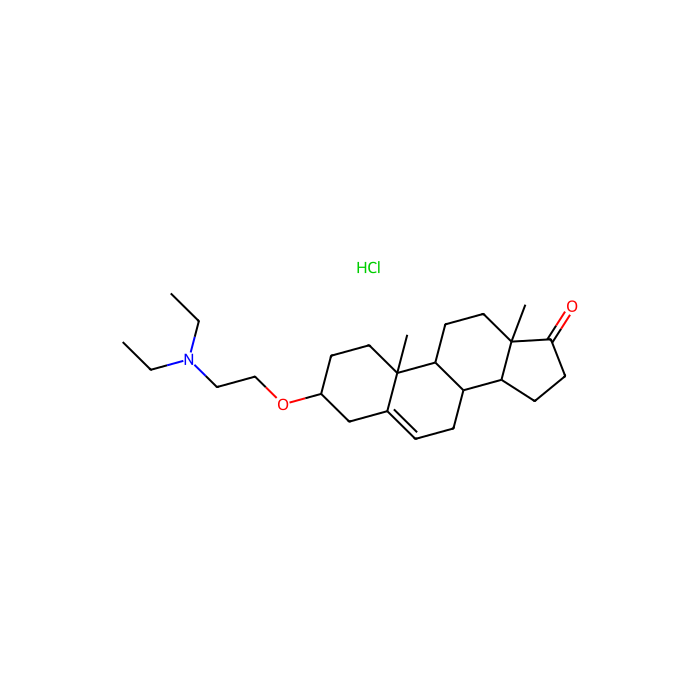
U-18666A - ≥98% , CAS No.3039-71-2

CAS: 3039-71-2 Cat. No.: U276070 Formula: C25H42ClNO2 Molecular Weight: 424.06 PubChem CID: 9954082
AVAILABLE TO ORDER
GRADE & PURITY ≥98%
Synonyms
hydrochloride
Storage
Store at -20°C,Argon charged,Desiccated
Shipped In
Ice chest + Ice pads
★
Size
USA
Germany (EU)*
Price
Qty
5mg
U276070-5mg
2 In stock
—
$192.90
10mg
U276070-10mg
2 In stock
—
$285.90
25mg
U276070-25mg
2 In stock
—
$605.90
50mg
U276070-50mg
2 In stock
—
$846.90
100mg
U276070-100mg
2 In stock
—
$1,343.90
Enter a quantity for the sizes you want to add.

Overview


Specifications

Synonyms
hydrochloride
Specifications & Purity
≥98%
Biochemical and Physiological Mechanisms
Inhibitor of cholesterol synthesis and cellular transport. Impairs intracellular transport of LDL-derived cholesterol in CHO cells. Blocks the ability of LDL-derived cholesterol to suppress HMG-CoA reductase and LDL receptor activity. Weak inhibitor of He
Storage
Store at -20°C,Argon charged,Desiccated
Shipped In
Ice chest + Ice pads
This product requires cold chain shipping. Ground and other economy services are not available.
Note
Refer to SDS for further information . Need more advice on solubility, usage and handling? Please visit our frequently asked questions (FAQ) page for more details.
Purity
≥98%
Names and Identifiers
Pubchem Sid
Pubchem Sid Url
https://pubchem.ncbi.nlm.nih.gov/substance/504765149
SMILES
CCN(CC)CCOC1CCC2(C3CCC4(C(C3CC=C2C1)CCC4=O)C)C.Cl
IUPAC Name
(3S,8R,9S,10R,13S,14S)-3-[2-(diethylamino)ethoxy]-10,13-dimethyl-1,2,3,4,7,8,9,11,12,14,15,16-dodecahydrocyclopenta[a]phenanthren-17-one;hydrochloride
InChIKey
GZFYZYBWLCYBMI-MYZJJQSMSA-N
InChI
1S/C25H41NO2.ClH/c1-5-26(6-2)15-16-28-19-11-13-24(3)18(17-19)7-8-20-21-9-10-23(27)25(21,4)14-12-22(20)24;/h7,19-22H,5-6,8-17H2,1-4H3;1H/t19-,20-,21-,22-,24-,25-;/m0./s1
Isomeric SMILES
CCN(CC)CCO[C@H]1CC[C@@]2([C@H]3CC[C@]4([C@H]([C@@H]3CC=C2C1)CCC4=O)C)C.Cl
WGK Germany
3
PubChem CID
9954082
Molecular Weight
424.06

Advanced Data

Taxonomic Classification

Taxonomy Tree

KingdomOrganic compounds
SuperclassLipids and lipid-like molecules
ClassSteroids and steroid derivatives
SubclassAndrostane steroids
Intermediate Tree Nodes Not available
Direct ParentAndrostane steroids
Alternative Parents 17-oxosteroids  Delta-5-steroids  Trialkylamines  Ketones  Dialkyl ethers  Organopnictogen compounds  Organic oxides  Hydrochlorides  Hydrocarbon derivatives  
Molecular FrameworkAliphatic homopolycyclic compounds
Substituents Androstane-skeleton - 17-oxosteroid - Oxosteroid - Delta-5-steroid - Ketone - Tertiary amine - Tertiary aliphatic amine - Dialkyl ether - Ether - Organic oxide - Organooxygen compound - Organonitrogen compound - Organopnictogen compound - Amine - Organic oxygen compound - Carbonyl group - Organic nitrogen compound - Hydrocarbon derivative - Hydrochloride - Aliphatic homopolycyclic compound
DescriptionThis compound belongs to the class of organic compounds known as androstane steroids. These are steroids with a structure based on the 19-carbon androstane skeleton.
External Descriptors Not available
3D Structure
Interactive Chemical Structure Model


Associated Targets(Human)
ABL1 Tclin Tyrosine-protein kinase ABL (18331 Activities)
Activity TypeRelationActivity valueUnitsAction TypeJournalPubMed IddoiAssay Aladdin ID
GSK3B Tclin Glycogen synthase kinase-3 beta (11785 Activities)
Activity TypeRelationActivity valueUnitsAction TypeJournalPubMed IddoiAssay Aladdin ID
CSNK1D Tchem Casein kinase I delta (4546 Activities)
Activity TypeRelationActivity valueUnitsAction TypeJournalPubMed IddoiAssay Aladdin ID
CDK2 Tchem Cyclin-dependent kinase 2 (9050 Activities)
Activity TypeRelationActivity valueUnitsAction TypeJournalPubMed IddoiAssay Aladdin ID
AURKA Tchem Serine/threonine-protein kinase Aurora-A (10240 Activities)
Activity TypeRelationActivity valueUnitsAction TypeJournalPubMed IddoiAssay Aladdin ID
HL-60 (67320 Activities)
Activity TypeRelationActivity valueUnitsAction TypeJournalPubMed IddoiAssay Aladdin ID
Huh-7 (12904 Activities)
Activity TypeRelationActivity valueUnitsAction TypeJournalPubMed IddoiAssay Aladdin ID
U2OS (164939 Activities)
Activity TypeRelationActivity valueUnitsAction TypeJournalPubMed IddoiAssay Aladdin ID
TDP1 Tchem Tyrosyl-DNA phosphodiesterase 1 (345557 Activities)
Activity TypeRelationActivity valueUnitsAction TypeJournalPubMed IddoiAssay Aladdin ID
BRD4 Tchem Bromodomain-containing protein 4 (13122 Activities)
Activity TypeRelationActivity valueUnitsAction TypeJournalPubMed IddoiAssay Aladdin ID
NPC1 Tchem Niemann-Pick C1 protein (18985 Activities)
Activity TypeRelationActivity valueUnitsAction TypeJournalPubMed IddoiAssay Aladdin ID
DHCR24 Tchem Delta(24)-sterol reductase (295 Activities)
Activity TypeRelationActivity valueUnitsAction TypeJournalPubMed IddoiAssay Aladdin ID
TRIM24 Tchem Transcription intermediary factor 1-alpha (2087 Activities)
Activity TypeRelationActivity valueUnitsAction TypeJournalPubMed IddoiAssay Aladdin ID
BRPF1 Tchem Peregrin (2217 Activities)
Activity TypeRelationActivity valueUnitsAction TypeJournalPubMed IddoiAssay Aladdin ID
Associated Targets(non-human)
Mapk1 MAP kinase ERK2 (650 Activities)
Activity TypeRelationActivity valueUnitsAction TypeJournalPubMed IddoiAssay Aladdin ID
Fgfr3 Fibroblast growth factor receptor 3 (21 Activities)
Activity TypeRelationActivity valueUnitsAction TypeJournalPubMed IddoiAssay Aladdin ID
dengue virus type 2 (2400 Activities)
Activity TypeRelationActivity valueUnitsAction TypeJournalPubMed IddoiAssay Aladdin ID
Mechanisms of Action
Certificates (CoA,COO,BSE/TSE and Analysis Chart)
C of A & Other Certificates(BSE/TSE, COO):
Analytical Chart:

Find and download the COA for your product by matching the lot number on the packaging.

7 results found

Lot NumberCertificate TypeDateItem
D2610039D2610039Certificate of AnalysisApr 18, 2026 U276070
J2516004J2516004Certificate of AnalysisOct 18, 2025 U276070
B2320522B2320522Certificate of AnalysisSep 20, 2024 U276070
B2320601B2320601Certificate of AnalysisSep 20, 2024 U276070
B2320637B2320637Certificate of AnalysisSep 20, 2024 U276070
B2320638B2320638Certificate of AnalysisSep 20, 2024 U276070
B2320647B2320647Certificate of AnalysisSep 20, 2024 U276070
Chemical and Physical Properties
SolubilitySoluble in DMSO to 50 mM and in water to 50 mM;Soluble in water at 10mg/ml
Molecular Weight424.100 g/mol
XLogP3
Hydrogen Bond Donor Count1
Hydrogen Bond Acceptor Count3
Rotatable Bond Count6
Exact Mass423.29 Da
Monoisotopic Mass423.29 Da
Topological Polar Surface Area29.500 Ų
Heavy Atom Count29
Formal Charge0
Complexity624.000
Isotope Atom Count0
Defined Atom Stereocenter Count6
Undefined Atom Stereocenter Count0
Defined Bond Stereocenter Count0
Undefined Bond Stereocenter Count0
The total count of all stereochemical bonds0
Covalently-Bonded Unit Count2
Solution Calculators
Reviews

Customer Reviews

Application Protocols

Item-specific, validated application protocols, recommended dilutions, and positive controls are not provided in the Product Data for this small-molecule product.

General guidance (literature-informed; not product specifications)

  • Stock preparation: Dissolve in anhydrous DMSO or ethanol; typical stock 10–50 mM. Vortex and, if needed, gently warm to fully solubilize. Filter sterilize if the downstream application requires sterility and the solvent system is compatible with PTFE membranes.
  • Dosing: Add to pre-warmed media with thorough mixing; maintain low final vehicle concentration. Include matched vehicle controls.
  • Readouts: Select appropriate endpoints (e.g., microscopy of cholesterol distribution, lipid quantification) and validate time course and concentration in your specific model.

For detailed, use-case–specific protocols

  • Consult peer-reviewed publications and internal SOPs. Adjust parameters for cell type, serum content, and assay format.
Biological Roles

Context from literature (for scientific background; not product specifications and not medical/clinical claims)

  • U-18666A is broadly employed as a research tool to perturb intracellular cholesterol trafficking, frequently associated with inhibition of lysosomal cholesterol export pathways. The compound’s cationic amphiphilic nature promotes lysosomal enrichment, impacting sterol distribution and downstream signaling.
  • Experimental systems: Used in mammalian cell culture, primary cells, and model organisms to induce cholesterol accumulation phenotypes. Readouts include filipin staining for unesterified cholesterol, immunofluorescence of endolysosomal markers, and lipidomics.
  • Secondary effects reported in literature include modulation of sphingolipid balance and impacts on membrane organization; these can be context-dependent. Appropriate controls are recommended to separate primary sterol-transport effects from broader cellular responses.
  • Reversibility and time-dependence: Many phenotypes are exposure- and time-dependent; washout and rescue conditions (e.g., with methyl-β-cyclodextrin or exogenous cholesterol) are often used to probe mechanism.

Important note

  • This product is supplied strictly for research use only. No medical, diagnostic, or therapeutic applications are implied. Users should consult primary literature and the SDS for comprehensive guidance on safe and effective laboratory use.
Buffer Applications

This compound is not a buffer component and is not used to control pH. Consequently, standard buffer formulation guidance (e.g., phosphate, HEPES, Tris) is not applicable here.

Practical note

  • When dosing into biological buffers or media, ensure the final solvent content (e.g., DMSO or ethanol) is compatible with the system. Pre-dilute stocks and add slowly with mixing to minimize precipitation and local supersaturation.
  • Verify that the chosen buffer does not absorb or sequester hydrophobic compounds nonspecifically; protein and lipid content can alter free concentration.
Green Alternatives

Because U-18666A is a specific bioactive probe rather than a commodity solvent or reagent, “green alternative” considerations primarily concern solvent and workflow choices rather than replacing the molecule itself.

Greener handling strategies (general)

  • Use minimal DMSO: Prepare concentrated stocks to keep final DMSO ≤0.1–0.2% v/v in assays, reducing solvent burden on cells and wastewater.
  • Prefer ethanol or aqueous cyclodextrin vehicles when compatible, to lower DMSO usage. Validate solubility and biological equivalence.
  • Scale-down and miniaturize assays to lower chemical consumption and waste generation.
  • Implement closed, inert storage (argon, desiccant, −20°C) to extend shelf life, minimizing disposal of degraded material.

Comparison of common vehicles (general)

  • DMSO: highest solvency, but environmental/biological load at higher v/v; widely accepted in screening.
  • Ethanol: renewable origin potential, but flammable and can impact cells above a few percent.
  • HP-β-cyclodextrin complexes: enable aqueous delivery for some hydrophobic steroids; adds complexity and cost; stability must be verified.

Waste considerations

  • Collect DMSO- or alcohol-containing waste separately and dispose via appropriate hazardous waste streams. Avoid drain disposal.

Net takeaway

  • There is no direct “green substitute” for U-18666A’s biological activity; optimize solvent systems and experimental design to improve sustainability.
Pharmaceutical Uses

Item-specific pharmacopeial/formulation status

  • Not specified for this item; refer to CoA/Spec Sheet.

General context (non-clinical; not product specifications)

  • U-18666A is primarily used as a research tool compound and reference material in analytical method development for lipid-transport studies. It is not used as an excipient.
  • In preclinical/analytical settings, it may serve as a positive control for target/pathway engagement assays or as a system suitability standard for chromatographic methods quantifying sterol-related probes.

Regulatory note

  • For research use only. Not intended for human or veterinary drug use, diagnostic procedures, or food applications. No pharmacopeial monograph is known for this compound.
Physical Properties

Item-specific physical data

  • Melting point, boiling point, density, refractive index, UV cutoff, water/peroxide/metal limits: Not specified for this item; refer to CoA/Spec Sheet.

Literature/general properties (for context; not item specifications)

  • Physical state: typically a hydrophobic, crystalline solid.
  • Acid–base: tertiary amine; expected to be protonated under acidic conditions (no pKa for the conjugate acid is provided here; consult primary literature for exact values).
  • Solubility: commonly dissolved for research use in DMSO or ethanol; sparingly soluble in water as the free base. Aqueous solubility increases upon acidification (formation of ammonium salt).
  • Partitioning: amphiphilic steroidal structure generally implies high lipophilicity (logP >> 1; literature values vary with protonation state).

Practical handling notes (general)

  • Prepare concentrated DMSO stock solutions (e.g., 10–50 mM) and dilute into buffered media just before use to minimize precipitation.
  • Filter sterilization (0.22 µm PTFE) may be used for working solutions in biological assays if compatible with solvent composition.
  • Avoid prolonged exposure to strong light and moisture to maintain integrity, particularly during long-term storage.
Quality & Grades

Item-specific quality information

  • Grade/Purity: Not specified for this item; refer to CoA/Spec Sheet.
  • Appearance: Not specified for this item; refer to CoA/Spec Sheet.

Guidance on grades and characterization (general)

  • When grade/purity is not declared, rely on certificate of analysis (CoA) for assay (%), residual solvents, and chromatographic purity (e.g., HPLC/UPLC). Review chromatograms for secondary peaks that may influence biological readouts.
  • For bioactive small molecules, low residual water and well-characterized polymorphic form can improve reproducibility in cell-based assays. Where available, verify identity by orthogonal methods (e.g., 1H/13C NMR, HRMS).
  • If a stabilizer or counterion is present (not indicated here), it should be listed on the CoA; note that salt forms alter molecular weight and solubility.

What to expect from Aladdin Scientific

  • Each lot is subject to internal quality controls; request CoA, NMR, and MS data when needed for regulated environments or critical experiments.
  • For sensitive compounds, inert-packaged, desiccated units minimize degradation and batch-to-batch variability.
Reaction & Applications

This product is supplied as a bioactive small molecule standard rather than as a general-purpose synthetic reagent. As such, it is not typically used as a solvent, catalyst, or stoichiometric reagent in classical organic transformations.

Research applications (general, literature-based; not product specifications)

  • U-18666A is widely used as a chemical probe in lipid/sterol trafficking research and in studies of endolysosomal cholesterol homeostasis. Its tertiary amine and steroidal core enable lysosomal accumulation in many systems.
  • Employed to model impaired cholesterol egress in cell lines for mechanistic studies and assay development (e.g., filipin staining workflows, lipidomics readouts).

Practical notes for assay use

  • Prepare fresh working solutions from frozen DMSO stocks to ensure consistent potency.
  • Validate exposure time and concentration in your specific model; adsorption to plastics and serum binding can reduce free concentration.
  • Include vehicle controls and, where appropriate, orthogonal chemical probes to strengthen mechanistic conclusions.

If a synthetic transformation is intended with this molecule (uncommon), the tertiary amine and 17‑ketone provide handles for derivatization; however, such use is specialized and beyond typical applications of U‑18666A.

Reaction Conditions

This section is not typically applicable because U-18666A is used as a bioactive probe rather than as a reagent or catalyst in synthetic reactions.

General laboratory preparation for assay use (literature-informed; not product specifications)

  • Stock solutions: Commonly prepared at 10–50 mM in anhydrous DMSO or ethanol. Aliquot and store at −20°C under inert gas to minimize freeze–thaw cycles.
  • Working concentrations: System-dependent; users should determine dose–response in their specific model. Include vehicle controls.
  • Dilution: Add stock slowly to pre-warmed media with vigorous mixing to minimize precipitation (keep final DMSO/EtOH as low as feasible, often ≤0.1–0.5% v/v).
  • Compatibility: Serum proteins can bind hydrophobic steroids; consider serum-free equilibration or measure free fraction if quantitative pharmacology is required.

Expected performance

  • Endpoint timing and potency are highly context-dependent; consult peer-reviewed studies in comparable models for benchmark conditions. Always validate with appropriate controls.
Safety & Handling

GHS and hazard classification

  • Signal word, hazard statements, pictograms, and detailed GHS classes: Not specified for this item; refer to SDS.

General laboratory safety (non-SDS guidance)

  • Personal protective equipment: lab coat, safety glasses, and appropriate chemical-resistant gloves (e.g., nitrile). Handle in a fume hood to avoid inhalation of dust or solvent vapors.
  • Avoid contact with skin, eyes, and clothing. Wash thoroughly after handling. Prevent generation and inhalation of dust.
  • Storage incompatibilities: segregate from strong oxidizers and strong acids/bases; avoid moisture ingress.
  • Thermal/light sensitivity: store cold and protected from light when possible to limit degradation.

First-aid overview (consult SDS for authoritative instructions)

  • Inhalation: move to fresh air; seek medical advice if symptoms occur.
  • Skin/eye contact: rinse with water for several minutes; remove contaminated clothing; seek medical attention if irritation persists.
  • Ingestion: rinse mouth; do not induce vomiting; obtain medical attention.

Special risks and best practices

  • Tertiary amines can be irritants; the hydrophobic steroid core may adhere to plasticware—use low-bind consumables to ensure accurate dosing.
  • Follow the provided storage guidance: Store at −20°C, under argon, desiccated. Shipments are supplied cold (ice chest + ice pads) to preserve material quality.
Solvent Selection

Solvent choice for preparation and use (general guidance)

  • Primary solvents: DMSO is commonly used to prepare concentrated stocks due to excellent solvating power for amphiphilic steroids. Ethanol (anhydrous) is a frequent alternative for biochemical applications.
  • Aqueous systems: As a free base, U-18666A is sparingly water-soluble; aqueous solubility can increase with mild acidification to form the ammonium salt. Cosolvent systems (e.g., DMSO ≤0.1–0.5% v/v in final media) are typical in cell assays.
  • Miscibility profile (literature/general):
    • DMSO: fully miscible with water and many organics; excellent for stock solutions.
    • Ethanol: miscible with water; may affect cell viability above a few percent v/v.
    • Isopropanol/Acetonitrile: potential alternatives depending on application; verify compatibility.

Selection tips

  • Choose DMSO when maximum solubility and serum-containing media compatibility are required; select ethanol when limiting DMSO content is critical.
  • Use glass vials or solvent-resistant plastics; hydrophobic steroids can adsorb to certain plastics at low concentrations.
  • Pre-warm media to 37°C and add compound slowly with mixing to minimize precipitation.

Small comparison (general)

  • DMSO vs Ethanol: DMSO often affords higher apparent solubility and lower precipitation upon dilution; ethanol may minimize solvent-related assay interference in some enzymatic systems.
Storage & Reconstitution

Item-specific instructions (from Product Data)

  • Storage: Store at −20°C, argon charged, desiccated.
  • Shipping: Shipped in an ice chest with ice pads.

General best practices

  • Keep container tightly closed under inert gas with a desiccant present to limit moisture and oxygen exposure. Return to −20°C promptly after use.
  • If repeated access is expected, aliquot the material on first opening into inert, moisture-free vials to minimize freeze–thaw and headspace oxygen.
  • Protect from light when possible; store in amber or foil-wrapped containers.

Reconstitution guidance (general; not product specifications)

  • Solvents: DMSO or ethanol are typical for initial dissolution. Start at a small volume to achieve a concentrated stock (e.g., 10–50 mM), then dilute as required.
  • Mixing: Vortex thoroughly; brief gentle warming (e.g., room temperature to 37°C) can aid dissolution. Avoid prolonged heating.
  • Working solutions: Prepare fresh on the day of use when possible. For aqueous dilutions, add slowly with mixing to reduce precipitation. Discard if turbidity or crystallization is observed.

Stability checks

  • Monitor by HPLC or LC–MS where critical. Any changes in appearance or performance should prompt reassessment and, if needed, preparation of fresh material or stocks.
Structure & Identity

Item-specific identifiers (from Product Data)

  • CAS: 3039-71-2
  • InChIKey: Not specified for this item; refer to CoA/Spec Sheet.
  • SMILES: Not specified for this item; refer to CoA/Spec Sheet.
  • Molecular formula: Not specified for this item; refer to CoA/Spec Sheet.
  • Molecular weight: Not specified for this item; refer to CoA/Spec Sheet.

Literature structural description (for context; not item specifications)

  • U-18666A is widely described as a sterol-transport modulator bearing a steroidal androst-5-ene core with a 17-one (ketone) and a 3β-ether substituent terminating in a tertiary diethylamino group (3β‑[2‑(diethylamino)ethoxy]androst‑5‑en‑17‑one).
  • Key functional groups: tertiary amine, ethoxy linker (ether), enone/ketone on the steroid framework, alkene at Δ5 of the steroid nucleus.

2D structure, described in words (literature)

  • Four fused rings of the androstane skeleton (three six-membered rings and one five-membered ring), a double bond between C5–C6, a carbonyl at C17, and an O‑CH2‑CH2‑N(Et)2 substituent at the 3β position. The tertiary amine is protonatable, imparting cationic amphiphilicity under acidic conditions.
Synthetic Utility

Not typically applicable. U-18666A is supplied as a defined bioactive small molecule rather than a building block or reagent for routine synthetic transformations.

General chemical reactivity context (literature; not product specifications)

  • Functional handles: tertiary amine (protonatable; can form salts), 17‑ketone (amenable to typical carbonyl chemistry under carefully chosen conditions), and the 3β‑ether linkage.
  • Potential derivatizations include quaternization of the amine to form ammonium salts, reductive aminations or oxime formation at the ketone, and linker modifications at the 3‑position (following deprotection/activation strategies). Such derivatizations are specialized and pursued mainly for SAR studies, not for routine lab synthesis.

If derivatization is planned

  • Protect the sensitive steroid framework from harsh conditions; avoid strong acids/bases and oxidants that may rearrange or cleave the ether.
  • Use anhydrous, oxygen-free conditions when necessary to preserve integrity, consistent with the product’s inert, desiccated storage recommendations.
Target Specificity

Item-specific target data (antigen/clone/isotype/species reactivity) are not applicable to this small-molecule product and are not provided in the Product Data.

General literature background (for context; not product specifications)

  • U-18666A is used as a chemical probe in cholesterol trafficking studies; specific molecular interactors and pathways have been investigated in the literature. Users should consult primary sources for mechanistic details relevant to their system.

Note

  • No antibody- or protein-specific attributes apply to this product.

Frequently Asked Questions

What is the purity of this product?
This product is supplied at ≥98% purity (chemical assay). Lot-specific values are stated on the Certificate of Analysis.
How should this product be stored?
Store at ?20 °C, desiccated, under argon. It is supplied under an argon blanket; reseal under inert gas after each use.
How is this product shipped?
This product ships in an insulated container with ice pads. Unpack on arrival and transfer it to the storage condition stated above.
What are the CAS number, molecular formula and molecular weight?
The CAS Number is 3039-71-2, the molecular formula is C25H42ClNO2, and the molecular weight is 424.06 g/mol. InChIKey GZFYZYBWLCYBMI-MYZJJQSMSA-N.
What documentation is provided?
Available product documentation, including Certificates of Analysis (COA), Safety Data Sheets (SDS), and specification sheets, is shown in the product document area. Document availability and access follow the current site policy.

Shall we send you a message when we have discounts available?

Remind me later

Thank you! Please check your email inbox to confirm.

Oops! Notifications are disabled.