GRADE & PURITYMoligand™?Moligand™ — Aladdin's line of ligands and bioactive small molecules. Use for receptor, pathway, and binding studies needing defined small-molecule tools.≥98%
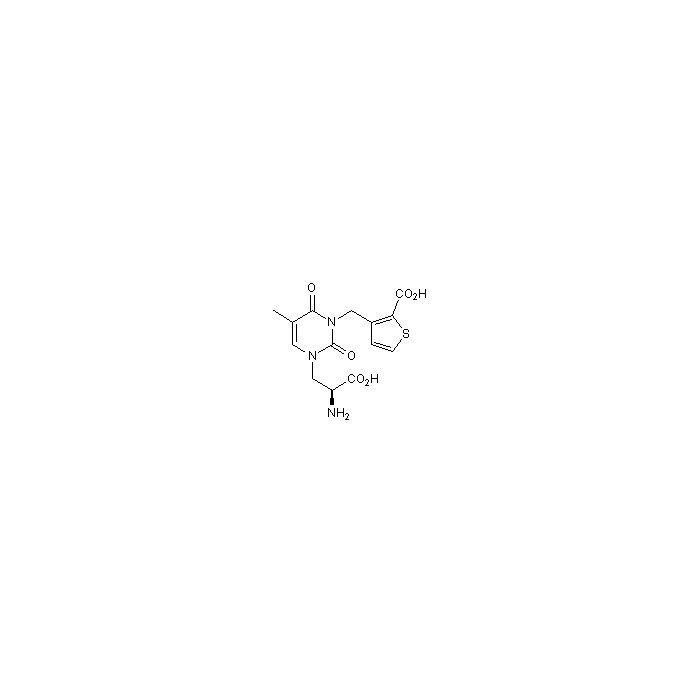
A potent antagonist highly selective for GluK1 (Kb = 10 nM), GluK3 (IC50 = 23 nM), and GluK1/K5 (Kb = 8 nM) subtype kainate receptors. Does not interact with GluK2 and GluK2/K5 receptors. Low affinity to AMPA receptors (Kd = 83 µM). Does not interact with mGluR1 or NMDA receptors at concentration less than 10 µM. Often used in studying neuronal excitability and synaptic plasticity.
GluK1 (formerly GLUK5) kainate receptor antagonist (IC50= 130 nM); also blocks recombinant homomeric GluK3 (forrmerly GLUK7) receptors. Displays 12,700-fold selectivity for GluK1 (formerly GLUK5) over GluK2 (formerly GLUK6). Exhibits no activity at mGlu group I or NMDA receptors at concentrations of up to 10μM. Apparent KDvalue is 18 ± 4 nM for depression of kainate responses on the dorsal root.Please refer toIUPHAR Guide to Pharmacologyfor the most recent naming conventions.
Storage
Store at 2-8°C
Shipped In
Wet ice
This product requires cold chain shipping. Ground and other economy services are not available.
This compound belongs to the class of organic compounds known as l-alpha-amino acids. These are alpha amino acids which have the L-configuration of the alpha-carbon atom.
External Descriptors
Not available
1. Djoumbou Feunang Y, Eisner R, Knox C, Chepelev L, Hastings J, Owen G, Fahy E, Steinbeck C, Subramanian S, Bolton E, Greiner R, and Wishart DS. ClassyFire: Automated Chemical Classification With A Comprehensive, Computable Taxonomy. Journal of Cheminformatics, 2016, 8:61.
Solvent:DMSO, Max Conc. mg/mL: 7.07, Max Conc. mM: 20
Molecular Weight
353.350 g/mol
XLogP3
-2.800
Hydrogen Bond Donor Count
3
Hydrogen Bond Acceptor Count
8
Rotatable Bond Count
6
Exact Mass
353.068 Da
Monoisotopic Mass
353.068 Da
Topological Polar Surface Area
169.000 Ų
Heavy Atom Count
24
Formal Charge
0
Complexity
607.000
Isotope Atom Count
0
Defined Atom Stereocenter Count
1
Undefined Atom Stereocenter Count
0
Defined Bond Stereocenter Count
0
Undefined Bond Stereocenter Count
0
The total count of all stereochemical bonds
0
Covalently-Bonded Unit Count
1
Solution Calculators
Molarity Calculator
Determine the necessary mass, volume, or concentration for preparing a solution.
Dilution Calculator
Determine the dilution needed to prepare a stock solution.
Reconstitution Calculator
Reviews
Customer Reviews
Application Protocols
No manufacturer-tested application protocols are provided for this item. The following are general, non-item-specific workflows suitable for small-molecule ligands.
Example 1: Preparing DMSO stock and assay dilution
Calculate required mass from desired stock concentration, accounting for salt form and purity (CoA). Weigh quickly to minimize moisture uptake.
Dissolve in dry DMSO to 10–50 mM. Vortex and, if needed, sonicate briefly. Inspect for clarity.
Aliquot into low-bind tubes; store protected from light. Use fresh tips to avoid cross-contamination.
For assays, dilute the stock into buffer to the working concentration, keeping final DMSO ≤0.5–1% v/v. Mix gently and use promptly.
Example 2: LC–MS system suitability/reference standard
Prepare a 0.1–1.0 mg/mL solution in MeOH or MeCN/water with volatile modifier (e.g., 0.1% formic acid) contingent on stability.
Establish a calibration curve if quantitation is needed. Monitor one or more characteristic ions (from your own MS characterization).
Always validate these procedures for your lot and assay system.
Biological Roles
Item-specific biological targets or mechanisms of action are not provided in the Product Data.
General guidance (literature-oriented, not item-specific claims):
Compounds designated as research ligands in small-molecule libraries are often investigated for interactions with enzymes, receptors, ion channels, or transporters. If UBP 310 is to be used in a biological context, consult peer-reviewed literature indexed by CAS (902464-46-4) or CID (6420160) to identify reported targets, potency, and selectivity.
Prior to use, confirm identity and purity (LC–MS, NMR) and perform a short stability study in your intended assay matrix (buffer composition, temperature, and time), as degradation or aggregation can confound biological readouts.
Assess nonspecific effects by including vehicle controls, orthogonal assays (binding vs function), and counterscreens against common off-targets where feasible.
Note: Aladdin provides this product strictly for research use only. No medical, diagnostic, or clinical claims are made or implied.
Buffer Applications
This product is a small-molecule research ligand and is not a buffering reagent. Therefore, classical buffer system guidance (pH ranges, capacity, recipes) is not directly applicable.
Practical notes for assay buffers (general):
Choose a buffer compatible with your biological target (e.g., HEPES, PBS, TRIS) and maintain DMSO carryover at ≤0.5–1% v/v to reduce solvent artifacts.
If solubility is limited, consider adding minimal co-solvent, adjusting ionic strength, or using low levels of nonionic surfactant compatible with the assay.
Verify compound stability across the assay pH range and temperature; prepare working solutions fresh and avoid prolonged exposure to light if the compound is photosensitive (check CoA/SDS).
For buffer-specific parameters and compatibility, rely on your verified structure and internal pre-formulation tests.
Green Alternatives
Green chemistry considerations here primarily concern solvent and workflow selection rather than substitution of the compound itself.
Solvent choices (general guidance):
Prefer lower-toxicity solvents for assay dilutions, such as ethanol or water-based buffers, when compatible with compound solubility and target biology. Keep DMSO ≤0.5–1% v/v in biological assays to limit solvent burden.
For analytical work, choose greener eluents (higher water content, methanol over acetonitrile where feasible) and volatile buffers (ammonium formate/acetate) to reduce waste impact.
Operational practices:
Use miniaturized assay formats (384/1536-well) to cut solvent consumption and waste.
Implement sealed plates to reduce VOC emissions and solvent evaporation.
Consolidate stability testing to avoid redundant preparations; store aliquots to minimize waste from degraded material.
Comparison snapshot (general):
DMSO vs ethanol: DMSO offers superior solvency but higher persistence; ethanol is more benign but may limit achievable stock concentrations.
MeCN vs MeOH (LC–MS): MeOH is often considered greener; evaluate chromatographic performance and ionization efficiency tradeoffs.
These are general recommendations; ensure compatibility with the verified properties of UBP 310 from its CoA/SDS.
Pharmaceutical Uses
No pharmacopeial status or excipient role is provided for this item in the Product Data. UBP 310 is offered for research use only.
General formulation-related context (not a therapeutic claim):
In drug discovery workflows, reference ligands are used to benchmark assay performance, qualify analytical methods (e.g., LC–MS calibration), and support structure–activity relationship studies.
If used as an internal standard or reference material, confirm purity, salt form, and water content from the CoA; adjust concentration calculations accordingly.
For preclinical formulation research (in vitro only), standard vehicles may include DMSO stocks diluted into buffered saline with optional co-solvents or cyclodextrins, subject to stability and compatibility testing.
No clinical, diagnostic, or therapeutic applications are implied for this product.
Physical Properties
Item-specific physical constants:
Melting point (MP): Not specified for this item; refer to CoA/Spec Sheet.
Boiling point (BP): Not specified for this item; refer to CoA/Spec Sheet.
Density: Not specified for this item; refer to CoA/Spec Sheet.
Refractive index: Not specified for this item; refer to CoA/Spec Sheet.
LogP/logD: Not specified for this item; refer to CoA/Spec Sheet.
pKa(s): Not specified for this item; refer to CoA/Spec Sheet.
UV/Vis λmax or cutoffs: Not specified for this item; refer to CoA/Spec Sheet.
Solubility (water/organic): Not specified for this item; refer to CoA/Spec Sheet.
General guidance (literature/practice; not item-specific specs):
Small-molecule screening ligands are commonly prepared as concentrated DMSO stocks (e.g., 10–50 mM), then diluted into assay buffers to ≤0.5–1% DMSO v/v final.
If the compound is ionizable, apparent solubility can depend on pH and buffer ionic strength. Consider pH 6.8–7.4 for most biochemical assays unless target biology dictates otherwise.
For analytical characterization, LC–MS-compatible solvents (water/MeCN or water/MeOH with 0.1% formic acid or ammonium modifiers) are typical; confirm compound stability under chosen conditions prior to quantitation.
Always treat literature values as guidance only and confirm experimentally for your lot.
Quality & Grades
Item-specific grade (Product Data):
Grade/Purity: Moligand™.
What Moligand™ implies (general description; not a guarantee of specific metrics for this lot):
Intended for research screening and ligand-discovery workflows where compound identity and assay performance are critical.
Typical expectations for such grade include identity confirmation (e.g., LC–MS and/or NMR) and chromatographic purity suitable for primary/secondary screening. Exact test methods and acceptance criteria vary by item and lot.
For this specific item:
Detailed purity, residual solvents, water content, metal limits, and stabilizers are Not specified for this item; refer to CoA/Spec Sheet.
Practical guidance:
If using in quantitative pharmacology or biophysics, verify lot-specific purity and counter-ions by independent QC (HPLC/UPLC, HRMS, 1H/13C NMR).
For bioassays, confirm absence of interfering stabilizers/excipients (none are listed; verify on CoA). If present, account for them in control wells.
Record lot number in ELN/LIMS to maintain traceability across screening campaigns.
Documentation:
Request and retain the CoA and SDS for your lot; these documents supersede general descriptions and provide authoritative specifications.
Reaction & Applications
Manufacturer Applications (verbatim): Not provided in the Product Data.
Contextual use (general; not item-specific claims):
UBP 310 is cataloged in small-molecule/compound libraries and is typically used as a research ligand or reference compound in biochemical or biophysical assays. Common applications include target engagement studies, binding assays (e.g., SPR, MST, ITC), and functional readouts (e.g., electrophysiology, reporter assays), subject to the compound’s actual target profile confirmed from CoA/literature.
Analytical applications may include use as a system suitability/reference standard in LC–MS method development, provided purity and stability are verified.
Practical tips:
Prepare concentrated DMSO stocks with mass-based accuracy; record exact concentration based on salt form and purity (from CoA).
Minimize freeze–thaw cycles by aliquoting; equilibrate to room temperature before opening to reduce moisture ingress and DMSO crystallization.
For plate-based screening, pre-dilute into intermediate plates to improve pipetting precision at low transfer volumes.
Note: No synthetic or named-reaction applications are asserted for this item. If you intend to use it as a building block or reagent, confirm reactivity and functional groups from the verified structure.
Reaction Conditions
No synthetic reaction conditions are applicable to this item based on the Product Data, which presents UBP 310 as a research ligand rather than a reagent.
Stock solutions: Prepare in dry DMSO under ambient conditions unless stability testing suggests otherwise. Typical stock ranges: 10–50 mM.
Working solutions: Dilute into assay buffer immediately before use to the desired concentration, ensuring final DMSO ≤0.5–1% v/v where biologically relevant.
Adsorption/adhesion: Reduce nonspecific binding by using low-bind plastics and including carrier protein (e.g., 0.1% BSA) if compatible with the assay.
Temperature/light: Conduct sensitive assays at controlled temperature (e.g., 20–25°C or 37°C as appropriate) and protect light-sensitive compounds from ambient light.
Expected assay outcomes, yields, or kinetics are compound- and target-dependent; consult literature linked to CAS 902464-46-4 or CID 6420160 for any reported parameters once identity and target class are verified.
Safety & Handling
Hazard information (Product Data):
Signal word: Not specified for this item; refer to SDS.
H-statements: Not specified for this item; refer to SDS.
GHS classification/pictograms: Not specified for this item; refer to SDS.
Storage and shipping (Product Data):
Storage: Store at 2–8°C.
Shipped: Wet ice.
General laboratory safety (not item-specific; follow institutional SOPs):
Use appropriate PPE: lab coat, safety glasses, and suitable gloves (e.g., nitrile). Handle powders/solutions in a fume hood to avoid inhalation or aerosol exposure.
Avoid contact with skin, eyes, and clothing. Wash thoroughly after handling.
Prevent cross-contamination of screening libraries by using clean tips/tubes and changing gloves frequently.
Incompatibilities are compound-dependent; as a precaution, avoid strong oxidizers/reducers and extreme pH unless stability has been verified.
First aid (overview; defer to SDS): Eye/skin contact—rinse with water for ≥15 min; inhalation—move to fresh air; ingestion—rinse mouth and seek medical attention. Provide SDS to responders.
Waste disposal:
Dispose according to local regulations. Organic solutions are typically collected as hazardous waste; segregate halogenated vs non-halogenated streams where applicable.
Always consult the SDS for authoritative hazard and response information.
Solvent Selection
Item-specific solubility data are not provided. Select solvents based on small-molecule screening best practices and preliminary solubility checks.
General guidance (literature/practice):
Primary stock solvent: Anhydrous DMSO is commonly used for library compounds due to broad solvating power and assay compatibility at ≤0.5–1% v/v.
Alternatives: DMF for difficult cases; ethanol or isopropanol for assays sensitive to DMSO. Verify target and cell tolerance to co-solvent.
Aqueous media: Prepare final dilutions into assay buffer (e.g., PBS, HEPES, or HBSS) immediately before use to limit precipitation; include surfactant (e.g., 0.01–0.05% Tween-20) only if compatible with the assay and target.
pH effects: If the compound is ionizable (check CoA/structure), solubility often improves when the dominant species is ionized. Avoid extreme pH unless stability is validated.
Filtration: If visible particulates occur, pass through a low-binding 0.22 µm membrane; confirm no adsorption losses by UV/LC.
Comparison (general):
DMSO: maximal solvency; potential target/cell effects at higher %.
DMF: strong solvent; less favored in biological systems; evaluate toxicity.
Ethanol: greener and volatile; lower solvency for highly lipophilic species.
Empirically verify solvent choice for your lot before committing to large assays.
Storage & Reconstitution
Item-specific conditions (Product Data):
Storage: Store at 2–8°C.
Shipping: Wet ice.
Reconstitution (general guidance; not item-specific specifications):
Solvent: Dry DMSO is commonly used for small-molecule ligands. If another solvent is preferred (DMF, ethanol), verify solubility and stability first.
Concentration: Prepare concentrated stocks (e.g., 10–50 mM) based on your assay needs and the compound’s verified purity/salt form from the CoA.
Aliquoting: Dispense into single-use, low-bind vials to minimize freeze–thaw and adsorption losses.
Short- and long-term handling (general):
Working solutions in aqueous buffers are typically prepared fresh immediately before use. Avoid prolonged exposure to room temperature if stability is unknown.
For longer-term storage of DMSO stocks, many laboratories keep aliquots at −20°C to −80°C, protected from light and moisture; equilibrate to room temperature before opening to prevent condensation. Confirm stability empirically for your lot.
Labeling and documentation:
Record lot number, concentration, solvent, and preparation date on each aliquot. Retain CoA and SDS for traceability.
Note: Where a conflict exists, follow the CoA/SDS instructions for your specific lot.
Structure & Identity
Item-specific identifiers (Product Data):
CAS: 902464-46-4
CID: 6420160
InChIKey: 465758 (as provided)
SMILES: Not specified for this item; refer to CoA/Spec Sheet.
Molecular Formula: Not specified for this item; refer to CoA/Spec Sheet.
Molecular Weight: Not specified for this item; refer to CoA/Spec Sheet.
Structural features:
Item-specific structural diagram and functional groups are not provided in the Product Data. Please consult the Certificate of Analysis (CoA), Spec Sheet, or SDS for definitive structure confirmation.
General/literature note:
UBP 310 is cited in the research literature as a small-molecule ligand used in neuropharmacology and receptor-ligand studies. Because multiple naming conventions may exist, verify identity using the provided CAS (902464-46-4) and CID (6420160) prior to experimental use.
2D structure description:
Not provided in the Product Data. If needed, retrieve authoritative structural depictions from a primary database (using the CAS/CID) and confirm by spectral data (1H/13C NMR, HRMS) prior to screening or quantitation.
Synthetic Utility
As listed, UBP 310 is provided as a research ligand within a small-molecule/compound library rather than as a synthetic reagent or building block.
Applicability:
Not typically used as a coupling partner or precursor in routine organic synthesis because the functional groups and reactivity are unknown from the provided data.
If synthetic use is intended (general guidance):
Obtain and confirm the precise structure (from CoA/literature) to evaluate functional group compatibility, protecting group strategies, and stability toward acids/bases/oxidants.
Verify chemical stability during workup and purification (e.g., sensitivity to silica, heat, or light), and select chromatographic methods accordingly (normal-phase vs reversed-phase prep HPLC).
For impurity profiling, use orthogonal methods (LC–MS, 1H/13C NMR, and, if crystalline, XRPD) to ensure integrity after any derivatization.
Without item-specific structural information, no further synthetic transformations are recommended.
Target Specificity
Item-specific target information (e.g., primary target, selectivity profile, potency) is not provided in the Product Data.
Guidance:
If using UBP 310 as a tool compound, identify and verify targets and reported affinities/selectivity from peer-reviewed literature using the CAS (902464-46-4) or CID (6420160). Confirm against your lot via orthogonal assays when feasible.
Reported target specificity from literature should be treated as context only until reproduced under your assay conditions.
No antigen/epitope/clone/isotype information is applicable; this product is not an antibody or biologic.
Frequently Asked Questions
What is the purity of this product?
This product is supplied at ≥98% purity (chemical assay). Lot-specific values are stated on the Certificate of Analysis.
What is Moligand??
Moligand? is one of Aladdin Scientific's premium product lines, formulated for high-purity applications across multiple workflows. Compared to standard grades in the same workflow, Moligand? products typically offer tighter specifications, more rigorous QC, and stronger lot-to-lot consistency.
How should this product be stored?
Store at 2–8 °C. Refrigerated storage is required to maintain the specified shelf life.
How is this product shipped?
This product ships chilled on wet ice. Unpack on arrival and transfer it to the storage condition stated above.
What are the CAS number, molecular formula and molecular weight?
The CAS Number is 902464-46-4, the molecular formula is C??H??N?O?S, and the molecular weight is 353.35 g/mol. InChIKey ZTAZUCRXCRXNSU-VIFPVBQESA-N.
What documentation is provided?
Available product documentation, including Certificates of Analysis (COA), Safety Data Sheets (SDS), and specification sheets, is shown in the product document area. Document availability and access follow the current site policy.
Need help choosing the grade?
Our grade selection guide covers purity, stabilizer status, and application suitability for all variants in our catalog.
We use cookies to ensure the website functions properly and, where permitted, to improve your experience. You can manage your preferences at any time in Settings. Learn more in our Cookie Policy.
Shall we send you a message when we have discounts available?
Remind me later
Thank you! Please check your email inbox to confirm.
Products are supplied to verified businesses, institutions, and qualified professionals for research and development use only. Not for use in humans, animals, diagnosis, or therapy.