GRADE & PURITYMoligand™?Moligand™ — Aladdin's line of ligands and bioactive small molecules. Use for receptor, pathway, and binding studies needing defined small-molecule tools.10mM in DMSO
Moligand™, 10mM in DMSO Moligand™ for sensitive chromatographic and analytical workflows requiring minimal baseline interference.
🌡
Storage & shipping
Store at -80°C Ships Dry ice packs + Cold packs Check lot-specific COA for exact specifications.
📋
Quality documents
SDS, COA, datasheet, and spec sheet available for download. Lot-specific COA accessible via lot number lookup.
📚
Literature proof
Cited in 1 peer-reviewed publications across chromatography, organic synthesis, and cross-coupling reactions.
Overview
Information
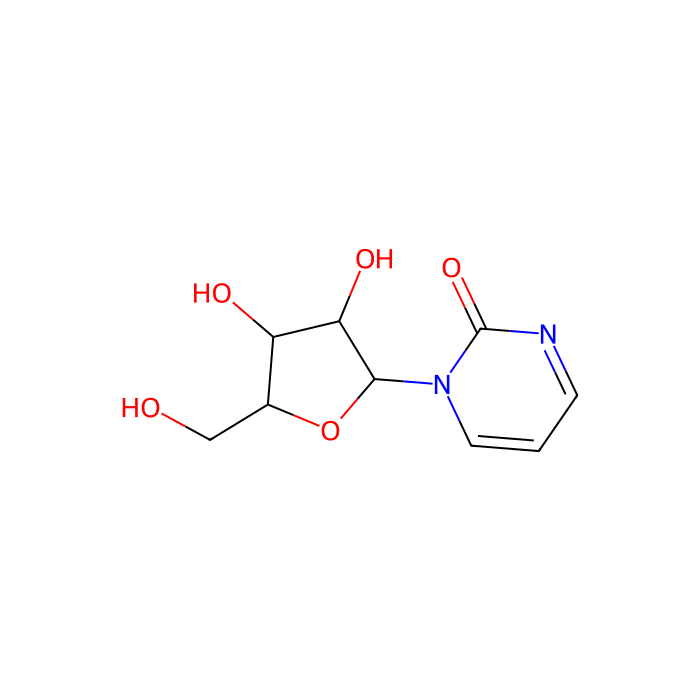
Zebularine (NSC 309132) Zebularine (NSC 309132, 4-Deoxyuridine) is a DNA methylation inhibitor that forms a covalent complex with DNA methyltransferases , also inhibits cytidinedeaminase with K i of 2 μM in a cell-free assay. In vitro
Zebularine is a cytidine analogue containing a 2-(1H)-pyrimidinone ring, originally synthesized as a cytidine deaminase inhibitor. Zebularine is shown to form a tight, covalent complex with bacterial methyltransferases. In N. crassa, zebularine inhibits DNA methylation and reactivates a gene previously silenced by methylation. Zebularine is a global inhibitor of DNA methylation, similar to 5-Aza-CR, rather than a selective inhibitor. Zebularine induces the myogenic phenotype in 10T1/2 cells, which is a phenomenon unique to DNA methylation inhibitors. Zebularine reactivates a silenced p16 gene and demethylates its promoter region in T24 bladder carcinoma cells. Zebularine is only slightly cytotoxic to T24 cells. Zebularine is preferentially incorporated into DNA and exhibits greater cell growth inhibition and gene expression in cancer cell lines compared to normal fibroblasts. In addition, zebularine preferentially depletes DNA methyltransferase 1 (DNMT1) and induces expression of cancer-related antigen genes in cancer cells relative to normal fibroblasts.
In vivo
Zebularine is only slightly cytotoxic to tumor-bearing mice (average maximal weight change in mice treated with 1000 mg/kg zebularine = 11% [95% CI = 4% to 19%]). Compared with those in control mice, tumor volumes are statistically significantly reduced in mice treated with high-dose zebularine administered by intraperitoneal injection or by oral gavage. Cell Data
Zebularine (NSC 309132, 4-Deoxyuridine) is a DNA methylation inhibitor that forms a covalent complex with DNA methyltransferases, also inhibits cytidinedeaminase with Ki of 2 μM in a cell-free assay.
Storage
Store at -80°C
Shipped In
Dry ice packs + Cold packs
This product requires cold chain shipping. Ground and other economy services are not available.
1.Liu Xin, Li Jiale, Liu Shuyu, Long Yan, Kang Ching, Zhao Chen, Wei Ling, Huang Shaoqi, Luo Yi, Dai Bo, Zhu Xiangjia. (2024) Fabrication of a 3D bioprinting model for posterior capsule opacification using GelMA and PLMA hydrogel-coated resin. Regenerative Biomaterials, [PMID:38529352][10.1093/rb/rbae020]
Solution Calculators
Molarity Calculator
Determine the necessary mass, volume, or concentration for preparing a solution.
Dilution Calculator
Determine the dilution needed to prepare a stock solution.
Reconstitution Calculator
Reviews
Customer Reviews
Need help choosing the grade?
Our grade selection guide covers purity, stabilizer status, and application suitability for all variants in our catalog.
We use cookies to ensure the website functions properly and, where permitted, to improve your experience. You can manage your preferences at any time in Settings. Learn more in our Cookie Policy.
Shall we send you a message when we have discounts available?
Remind me later
Thank you! Please check your email inbox to confirm.
Products are supplied to verified businesses, institutions, and qualified professionals for research and development use only. Not for use in humans, animals, diagnosis, or therapy.