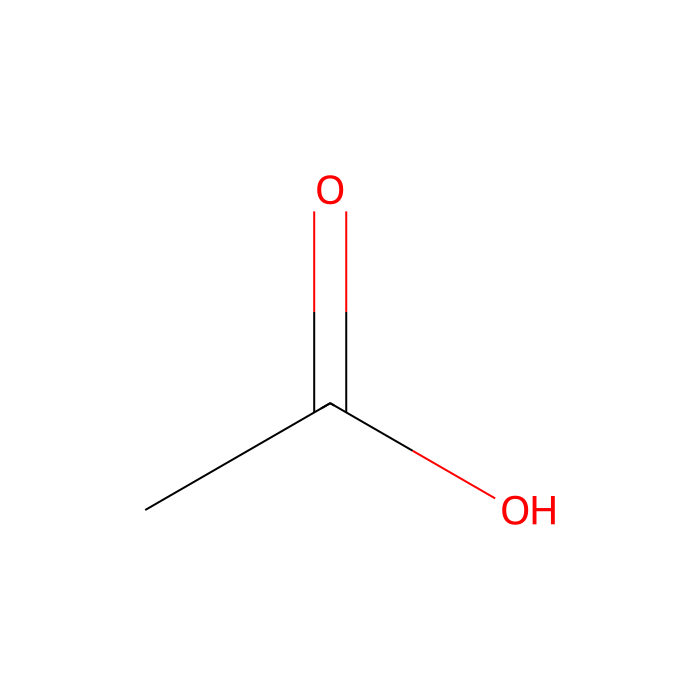
Acetate - UltraPureChrom™, for LC-MS , CAS No.64-19-7

CAS: 64-19-7 Cat. No.: A116168 Fórmula: CH3CO2H Peso molecular: 60.05 Beilstein Registry Number: 506007 Número EC: 200-580-7
Disponible para pedir
GRADE & PURITY UltraPureChrom™ ? UltraPureChrom™ — Aladdin's ultra-pure line for chromatography and spectroscopy. Use as a premium solvent/reagent where the lowest impurity background is required. for LC-MS ? LC-MS grade — very low metal/ion and non-volatile residues to protect mass-spec signal. Use for LC-MS where ion suppression and background must be minimal.
Synonyms
Acetasol | Ethanoat | FEMA Number 2006 | HSDB 40 | Octowy kwas | Orthoacetic acid | Acetasol (TN) | Methanecarboxylic acid | 10.Methanecarboxylic acid | Acetic acid, ACS reagent, >=99.7% | Acido acetico [Italian] | HOOCCH3 | Acetic | Acido acetico | AI3-0
Storage
Room temperature,Argon charged
Shipped In
FedEx DG Service
★
Size
USA
Alemania (EU)*
Price
Qty
25ml
A116168-25ml
Disponible ≥10
6 Disponible

21,90US$

25,90US$
Guardar 4,00 US$ (15.44%)
100ml
A116168-100ml
Disponible ≥10
—

60,90US$

71,90US$
Guardar 11,00 US$ (15.30%)
500ml
A116168-500ml
Disponible ≥10
7 Disponible

148,90US$

174,90US$
Guardar 26,00 US$ (14.87%)
Enter a quantity for the sizes you want to add.
🧪
Why this grade

UltraPureChrom™, for LC-MS for LC-MS,UltraPureChrom™ for sensitive chromatographic and analytical workflows requiring minimal baseline interference.

🌡

Storage & shipping

Room temperature,Argon charged Ships FedEx DG Service Check lot-specific COA for exact specifications.

📋

Quality documents

SDS, COA, datasheet, and spec sheet available for download. Lot-specific COA accessible via lot number lookup.

📚

Literature proof

Cited in 5202 peer-reviewed publications across chromatography, organic synthesis, and cross-coupling reactions.

Specifications

Sinónimos
Acetasol | Ethanoat | FEMA Number 2006 | HSDB 40 | Octowy kwas | Orthoacetic acid | Acetasol (TN) | Methanecarboxylic acid | 10.Methanecarboxylic acid | Acetic acid, ACS reagent, >=99.7% | Acido acetico [Italian] | HOOCCH3 | Acetic | Acido acetico | AI3-0
Especificaciones y pureza
UltraPureChrom™, for LC-MS
Condiciones de almacenamiento de almacenamiento
Room temperature,Argon charged
Enviado en
FedEx DG Service
Grado
for LC-MS, UltraPureChrom™
Nombres e identificadores
Pubchem Sid
Pubchem Sid Url
https://pubchem.ncbi.nlm.nih.gov/substance/488179495
Sonrisas canónicas
CC(=O)O
IUPAC Name
acetic acid
InChIKey
QTBSBXVTEAMEQO-UHFFFAOYSA-N
INCHI
1S/C2H4O2/c1-2(3)4/h1H3,(H,3,4)
Isómeros SMILES
CC(=O)O
WGK Alemania
1
RTECS
AF1225000
Número ONU
2789
Grupo de embalaje
II
Peso molecular
60.05
Beilstein
506007
Reaxy-Rn
506007
Reaxys-RN_link_address
https://www.reaxys.com/reaxys/secured/hopinto.do?context=S&query=IDE.XRN=506007&ln=

Documentation

📋 Safety Data Sheet (SDS)

Comprehensive hazard, handling, storage, and regulatory compliance document.

Download SDS →

✅ Certificate of Analysis (COA)

Lot-specific quality data. Enter your lot number to retrieve the exact COA.

Look up COA →

📊 Datasheet

Quick-reference summary of product specifications and applications.

View datasheet →

🔬 Specification Sheet

Full quality attributes and acceptance criteria for this grade.

View spec sheet →

Advanced Data

Taxonomic Classification

Taxonomy Tree

KingdomOrganic compounds
SuperclassOrganic acids and derivatives
ClaseCarboxylic acids and derivatives
SubclassCarboxylic acids
Intermediate Tree Nodes Not available
Direct ParentCarboxylic acids
Alternative Parents Monocarboxylic acids and derivatives  Organic oxides  Hydrocarbon derivatives  Carbonyl compounds  
Molecular FrameworkAliphatic acyclic compounds
Substituents Monocarboxylic acid or derivatives - Carboxylic acid - Organic oxygen compound - Organic oxide - Hydrocarbon derivative - Organooxygen compound - Carbonyl group - Aliphatic acyclic compound
DescripciónThis compound belongs to the class of organic compounds known as carboxylic acids. These are compounds containing a carboxylic acid group with the formula -C(=O)OH.
External Descriptors Straight chain fatty acids
Estructura 3D
Modelo de Estructura Química Interactiva


Objetivos asociados (humanos)
FFAR2 Tchem Free fatty acid receptor 2 (0 Activities)
Activity TypeActivity Value -log(M)Mechanism of ActionActivity ReferencePublications (PubMed IDs)
FFAR3 Tchem Free fatty acid receptor 3 (0 Activities)
Activity TypeActivity Value -log(M)Mechanism of ActionActivity ReferencePublications (PubMed IDs)
LCK Tclin Tyrosine-protein kinase LCK (9212 Activities)
Activity TypeRelationActivity valueUnitsAction TypeJournalPubMed IddoiAssay Aladdin ID
FYN Tclin Tyrosine-protein kinase FYN (5308 Activities)
Activity TypeRelationActivity valueUnitsAction TypeJournalPubMed IddoiAssay Aladdin ID
HCT-116 (91556 Activities)
Activity TypeRelationActivity valueUnitsAction TypeJournalPubMed IddoiAssay Aladdin ID
SLC16A1 Tchem Monocarboxylate transporter 1 (146 Activities)
Activity TypeRelationActivity valueUnitsAction TypeJournalPubMed IddoiAssay Aladdin ID
FFAR3 Tchem Free fatty acid receptor 3 (304 Activities)
Activity TypeRelationActivity valueUnitsAction TypeJournalPubMed IddoiAssay Aladdin ID
FFAR2 Tchem Free fatty acid receptor 2 (545 Activities)
Activity TypeRelationActivity valueUnitsAction TypeJournalPubMed IddoiAssay Aladdin ID
POLK Tbio DNA polymerase kappa (8653 Activities)
Activity TypeRelationActivity valueUnitsAction TypeJournalPubMed IddoiAssay Aladdin ID
POLL Tbio DNA polymerase lambda (184 Activities)
Activity TypeRelationActivity valueUnitsAction TypeJournalPubMed IddoiAssay Aladdin ID
SLCO2B1 Tchem Solute carrier organic anion transporter family member 2B1 (580 Activities)
Activity TypeRelationActivity valueUnitsAction TypeJournalPubMed IddoiAssay Aladdin ID
Objetivos asociados (no humanos)
Caenorhabditis elegans (1055 Activities)
Activity TypeRelationActivity valueUnitsAction TypeJournalPubMed IddoiAssay Aladdin ID
Meloidogyne incognita (862 Activities)
Activity TypeRelationActivity valueUnitsAction TypeJournalPubMed IddoiAssay Aladdin ID
Mus musculus (284745 Activities)
Activity TypeRelationActivity valueUnitsAction TypeJournalPubMed IddoiAssay Aladdin ID
RAW264.7 (28094 Activities)
Activity TypeRelationActivity valueUnitsAction TypeJournalPubMed IddoiAssay Aladdin ID
Radish (446 Activities)
Activity TypeRelationActivity valueUnitsAction TypeJournalPubMed IddoiAssay Aladdin ID
Lolium rigidum (323 Activities)
Activity TypeRelationActivity valueUnitsAction TypeJournalPubMed IddoiAssay Aladdin ID
Mecanismos de acción
Certificados (CoA, COO, BSE/TSE y tabla de análisis)
C of A & Other Certificates(BSE/TSE, COO):
Analytical Chart:

Find and download the COA for your product by matching the lot number on the packaging.

76 results found

Lot NumberCertificate TypeFechaArticulo
I2621274Certificate of AnalysisOct 19, 2026 A116168
I2621277Certificate of AnalysisOct 19, 2026 A116168
J2616212Certificate of AnalysisSep 23, 2026 A116168
J2616157Certificate of AnalysisSep 23, 2026 A116168
J2612110Certificate of AnalysisSep 23, 2026 A116168
L2516534Certificate of AnalysisSep 21, 2026 A116168
G2308468Certificate of AnalysisSep 01, 2026 A116168
K2507288Certificate of AnalysisAug 03, 2026 A116168
F2623366Certificate of AnalysisJun 15, 2026 A116168
F2623365Certificate of AnalysisJun 15, 2026 A116168
F2623364Certificate of AnalysisJun 15, 2026 A116168
C2606078Certificate of AnalysisMar 26, 2026 A116168
C2625309Certificate of AnalysisMar 13, 2026 A116168
C2625311Certificate of AnalysisMar 13, 2026 A116168
E2608173Certificate of AnalysisMar 13, 2026 A116168
E2608172Certificate of AnalysisMar 13, 2026 A116168
F2502082Certificate of AnalysisMar 13, 2026 A116168
L2516533Certificate of AnalysisDec 11, 2025 A116168
L2516535Certificate of AnalysisDec 11, 2025 A116168
K2507299Certificate of AnalysisNov 03, 2025 A116168
K2507300Certificate of AnalysisNov 03, 2025 A116168
K2507301Certificate of AnalysisNov 03, 2025 A116168
F2526140Certificate of AnalysisJun 23, 2025 A116168
F2526138Certificate of AnalysisJun 23, 2025 A116168
G2508241Certificate of AnalysisJun 23, 2025 A116168
F2506267Certificate of AnalysisJun 03, 2025 A116168
F2506266Certificate of AnalysisJun 03, 2025 A116168
F2506265Certificate of AnalysisJun 03, 2025 A116168
F2506264Certificate of AnalysisJun 03, 2025 A116168
B2506288Certificate of AnalysisJan 20, 2025 A116168
B2506290Certificate of AnalysisJan 20, 2025 A116168
B2506289Certificate of AnalysisJan 20, 2025 A116168
B2506277Certificate of AnalysisJan 20, 2025 A116168
L2412290Certificate of AnalysisDec 03, 2024 A116168
L2412291Certificate of AnalysisDec 03, 2024 A116168
L2412295Certificate of AnalysisDec 03, 2024 A116168
K2407177Certificate of AnalysisOct 31, 2024 A116168
K2407178Certificate of AnalysisOct 31, 2024 A116168
K2404177Certificate of AnalysisOct 31, 2024 A116168
I2404089Certificate of AnalysisAug 29, 2024 A116168
F2413288Certificate of AnalysisJun 04, 2024 A116168
D2408106Certificate of AnalysisApr 01, 2024 A116168
D2408110Certificate of AnalysisApr 01, 2024 A116168
D2408101Certificate of AnalysisApr 01, 2024 A116168
B2401189Certificate of AnalysisJan 24, 2024 A116168
B2401190Certificate of AnalysisJan 24, 2024 A116168
L2313402Certificate of AnalysisDec 02, 2023 A116168
L2313401Certificate of AnalysisDec 02, 2023 A116168
G2308474Certificate of AnalysisJul 03, 2023 A116168
G2308473Certificate of AnalysisJul 03, 2023 A116168
D2315015Certificate of AnalysisApr 04, 2023 A116168
B2324037Certificate of AnalysisFeb 15, 2023 A116168
B2324036Certificate of AnalysisFeb 15, 2023 A116168
B2324056Certificate of AnalysisFeb 15, 2023 A116168
B2324043Certificate of AnalysisFeb 15, 2023 A116168
B2324042Certificate of AnalysisFeb 15, 2023 A116168
K2203037Certificate of AnalysisOct 24, 2022 A116168
K2203043Certificate of AnalysisOct 24, 2022 A116168
K2203068Certificate of AnalysisOct 24, 2022 A116168
L2109402Certificate of AnalysisSep 13, 2022 A116168
I2221102Certificate of AnalysisSep 13, 2022 A116168
H2212286Certificate of AnalysisAug 02, 2022 A116168
H2212295Certificate of AnalysisAug 02, 2022 A116168
H2212285Certificate of AnalysisAug 02, 2022 A116168
I2122046Certificate of AnalysisJul 14, 2022 A116168
G2218016Certificate of AnalysisJun 13, 2022 A116168
F2218072Certificate of AnalysisJun 13, 2022 A116168
F2218070Certificate of AnalysisJun 13, 2022 A116168
F2218066Certificate of AnalysisJun 13, 2022 A116168
E2124080Certificate of AnalysisMar 10, 2022 A116168
E2124079Certificate of AnalysisMar 10, 2022 A116168
F2215116Certificate of AnalysisFeb 16, 2022 A116168
B2223297Certificate of AnalysisFeb 16, 2022 A116168
B2223255Certificate of AnalysisFeb 16, 2022 A116168
D2113038Certificate of AnalysisFeb 15, 2022 A116168
D2113039Certificate of AnalysisFeb 15, 2022 A116168
Propiedades químicas y físicas
SensibilidadHygroscopic
Índice de refracción1.37-1.373
Punto de inflamación (°C)40℃
Punto de ebullición (°C)117-118°C
Punto de fusión (°C)16-16.5°C
Peso molecular60.050 g/mol
XLogP3-0.200
Hydrogen Bond Donor Count1
Hydrogen Bond Acceptor Count2
Rotatable Bond Count0
Exact Mass60.0211 Da
Monoisotopic Mass60.0211 Da
Topological Polar Surface Area37.300 Ų
Heavy Atom Count4
Formal Charge0
Complexity31.000
Isotope Atom Count0
Defined Atom Stereocenter Count0
Undefined Atom Stereocenter Count0
Defined Bond Stereocenter Count0
Undefined Bond Stereocenter Count0
The total count of all stereochemical bonds0
Covalently-Bonded Unit Count1
Preguntas frecuentes y artículos
Aladdin@Guidelines for the formulation of commonly used buffers for biological experiments
UltraPureChrom™: The Pinnacle of Purity for Chromatography
LC-MS Grade Solvents and Reagents
Common Questions and Answers for SDS-PAGE Experiments
Peptide Mapping for Protein Structure Identification
A New Esterification Method — Rapid Esterification Mediated by the Coupling Reagent NDTP
Why Is EDTA So Widely Used?
Protein Tris-Acetate Electrophoresis System Standard Operating Procedure
Protein Tris-Tricine Electrophoresis System Standard Operating Procedure
Stripping, Cleaning, and Metal Recharging Workflow for Ni²⁺–Agarose Resins
Common Protein Gel Staining Methods
TRAP Staining: Principle and Procedure
GST-Tagged Protein Purification
Hematoxylin–Eosin (H&E) Staining Standard Operating Procedure (SOP)
Fatty Acids from Basics to Lab Practice: Structural Classification, Research Uses, and Selection Tips (with an Aladdin Representative Product Quick-Reference Table)
TEMPO-Catalyzed Oxidation Quick Reference (Alcohol Oxidation Focus): Three Regeneration Routes (NaOCl / Cu–O₂ / PIDA) + Selection & Troubleshooting
PAS Staining (Periodic Acid–Schiff, PAS) Standard Operating Procedure (SOP)
Masson’s Trichrome Stain (Masson’s Trichrome) Standard Operating Procedure (SOP)
Physicochemical Properties, Staining Mechanisms, and Practical Application Specifications of Hematoxylin
Installing a Redox Switch on Biomolecules: Principles, Conjugation Essentials, and an Application Guide for ATTO MB2 NHS ester
Small-Molecule Inhibitors: A Practical Guide for Research Selection — A Minimal Evidence Chain and Scenario-Based Validation Framework (Including a Selection Matrix, Case Cards, and Product Tables 1–4)
Practical Guide to Sodium Carboxymethyl Cellulose (CMC-Na): Thickening/Stabilizing Mechanisms, Key Controls for Solution Preparation, and Selection Navigation (including Table 1 and Tables A–C)
Secondary Effects Behind Chromatographic Peak Tailing and Unstable Peak Shapes: How Residual Silanols (Si–OH) Affect Basic Compounds, and the Shortest Troubleshooting/Remediation Path (with Product Navigation and Tables 1–3)
2-Methylpyridine–Borane (2-Picoline·BH₃) Reductive Amination Guide: Process Drivers for Replacing NaBH₃CN, the Practical Operating Window, and Scale-Up/Quench Close-Out Essentials (Including Product Tables 1–3)
Inulin: Structural Features, Physicochemical Properties, Application Development, and Research Progress in Experimental Settings
Methodological essentials for mineralization visualization: Alizarin Red S staining vs. Von Kossa silver staining
Recent Advances in Methods for Measuring Plant Fiber-Related Indices and Application-Oriented Selection
Functions and Significance of Common Physiological and Biochemical Indices in Animals and Plants
Recent Advances in Methods for Measuring Starch-Related Indices in Plants and Their Application-Oriented Selection
How Organic Acids “Stabilize a System”: Selection Logic via the pH Window, Salt Forms, and Metal-Ion Management (with a navigation guide to Tables A–E)
Acid Phosphatase: Dephosphorylation Reactions in Acidic Microenvironments and Their Research, Assay, and Detection Applications
Amino Acid Oxidases: Oxygen-Dependent Oxidative Deamination Systems and Their Analytical and Applied Uses
Agarose Precast Gels: Composition, Advantages, and Application Workflows for Standardized Nucleic Acid Electrophoresis Matrices
Chymosin: A Review of Molecular Features, Coagulation Kinetics, and Activity Evaluation
Hemicellulases: A Review of Substrate Specificity, Catalytic Systems, and Research and Industrial Applications
Phytase: Enzymological Properties, Mechanism of Action, and Applications in Feed and Food
Chlorophyll: Structural Features, Physicochemical Properties, and Key Points for Research and Industrial Applications
Chitinases: Substrate-Specific Degradation Mechanisms, Enzymatic Properties, and Application Directions
Ferulic Acid: Structural Features, Preparation Routes, and Key Points for Research Applications
Flavones: Structural Features, Physicochemical Properties, and Key Points for Research and Applications
β-Acyloxy Alkenyl Amides (AAAs): A New Approach to Amide Bond and Peptide Bond Construction Worth Attention
Silane Precursors in Sol-Gel Film Formation: Precursor Selection and Its Influence on Film-Formation Outcomes
Revisiting Titanium Tetrachloride: New Advances in the Direct Amidation and Esterification of Carboxylic Acids
DAST-Mediated Amidation at Room Temperature: Method Features, Practical Value, and Scope of Applicability
Understanding ATD-DMAP: From Reagent Design to Esterification, Amidation, and Stereochemical Integrity
Understanding Cbz (Benzyloxycarbonyl): Selection Logic and Practical Value of a Classical Amino Protecting Group
The Core Value of the Trityl Family of Protecting Groups: Acid-Deprotection Hierarchies and Selective Route Design
Reassessing Trimethylaluminum: Method Design and Experimental Value of One-Pot Peptide Elongation from Unprotected Amino Acids
Phthaloyl: Its Role in Primary Amine Protection and Practical Considerations for Experimental Selection
Acetyl-Group Metabolic Enzyme Network and In Vitro Enzymology Analysis
Research Value of Polyelectrolyte Multilayers: Layer-by-Layer Design of Interfacial Composition, Mass Transport, and Function
Selection Logic, Operating Parameters, and Application Boundaries of Common Cell Culture Coating Solutions
Triphenylphosphine Dibromide (PPh₃Br₂) Is More Than Just a Brominating Reagent: Experimental Selection Logic from Alcohol-to-Alkyl Bromide Conversion to Carboxylic Acid Activation and One-Pot Esterification, Vinyl Bromide Formation, and Nitrile Constructi
Reaction Roles of DBU in Different Systems: Experimental Judgment from a Strong Organic Base to Nucleophilic Catalysis and Participation in the Reaction Pathway
Liquid Polyisoprene: Material Characteristics, Application Directions, and Selection Considerations
DMAP Is More Than Just an Organic Base: Experimental Judgment from Nucleophilic Acyl Transfer to Esterification and Macrolactonization
Experimental Evaluation of Triphosgene in Organic Synthesis: Understanding Its Selection Logic Through Reaction Tasks
Triphenylphosphine-Involved Carboxylic Acid Activation and Amide Bond Formation: Activation Pathways, Anhydride Competition, and Applicability Scenarios
Preparation Methods and Precautions for Silane Coupling Agent Primer Solutions
Experimental Research on Candidate Probiotics: From Strain Identification and Mechanistic Evaluation to Product Selection
Functional Distinction among Orange G-6, EA36, and EA50 in the Papanicolaou Staining System
Applications and Differences of Neisser Staining, Albert Staining, and Gram Staining in the Differentiation of Corynebacteria
Microbial Morphological Identification: Observation Systems, Staining Methods, and Result Interpretation
How to Troubleshoot Abnormal Impurities in Peptide Synthesis? Locating Process Issues Through Amino-Related Side Reactions
Selection and Formulation Design Guidelines for Phenolic Resins in Coatings: Applicable Scenarios, Application Limitations, and Performance Verification
Porous Graphitic Carbon (PGC) Chromatography Columns: Creating New Selectivity for Challenging Separations through Molecular Shape and the π-Electron Cloud on the Graphitic Surface
What Is Silica Sol: Mechanism of Action, Application Scenarios, and Selection Criteria for Nanosilica Dispersions
Principles, Method Selection, and Result Interpretation for Malondialdehyde Content Detection
Application of Shellac, a Natural Film-Forming Resin, in Coatings: Alcohol-Soluble Fast-Drying Film Formation, Sealing and Repair, and Performance Boundaries
Mechanisms and Control of Coating Yellowing: From Chromophoric Structure Formation to Source Diagnosis and Formulation Optimization
Differences, Functions, and Selection Guidelines for Sodium Hydroxide Flakes, Granules, Liquid Caustic Soda, and Caustic Soda in Household and Personal Care Product Manufacturing: The Functional and Application Logic of Sodium Hydroxide
Sodium Metasilicate in Cleaning Applications: Hydration-Form Differences, Mechanisms of Action, and Selection Logic
What Is an Etchant? Etching Mechanisms for Revealing Metallographic Microstructures, Selection Methods, and Applications of Related Wet-Etching Reagents
Performance Sources and Formulation Applications of Enzyme-Based Ingredients in Daily Chemical Products: Fermentation Transformation, Enzymatic Reactions, and Application Principles
Formation and Control of Carboxyl- and Hydroxyl-Related Impurities in Peptide Synthesis — Using Asp/Glu and Ser/Thr Residue Side Reactions as Examples
Why Do Rust Spots Appear on Neutral Wall Putty? Iron Sources, Moisture Migration, Oxidative Color Development, and Prevention Measures
Establishment and Evaluation of Animal Models of Gastric Ulcer: Chemical Induction, Stress Injury, Infection Models, and Healing Studies
Plant Tissue and Cell Wall Staining Methods: Selection of Light Green, Safranin, Fast Green, and Composite Staining Systems
Catalytic Mechanisms, Functional Division, and Research Applications of Key Enzymes in Microbial Acetate Metabolism
Probiotics, Prebiotics, and Postbiotics in Skin Care: Conceptual Distinctions, Mechanisms of Action, and Their Applications in the Care of Dry, Itchy, and Rough Skin
Multilevel Moisturizing Mechanisms of Sodium Hyaluronate and Its Derivatives: Molecular Weight Modulation, Crosslinking, Acetylation, and Major Sites of Action
Sources, Host-Regulatory Mechanisms, and Tumor-Immune Effects of Gut Microbiota-Derived Metabolites
What Determines Collagen Function: From Triple-Helix Formation to Hierarchical Assembly, Crosslink Maturation, and Dynamic Remodeling
Differences Between Animal-Derived Collagen and Recombinant Collagen in Skincare: Sequence and Structure, Safety, Skin Effects, and Evidence Evaluation
3,3-Spiro-α-Proline Building Blocks: Structural Features, Complementary Synthetic Routes, and Multigram-Scale Preparation
Stereoretentive Decarboxylative Amidation with Dioxazolones: A Two-Electron Rearrangement Mechanism for Stereochemical Transfer from Chiral Carboxylic Acids
Desaturative Amination for the Synthesis of Amino Heteroarenes: Carbonyl-Site Predefinition of the C–N Bond-Forming Position and Subsequent Desaturative Aromatization
From Temporary Covalent Assembly to Intramolecular Smiles Aryl Migration: DCPDC-Mediated Phenol–Primary Amine C–N Cross-Coupling
Citations of This Product
Calculadoras de soluciones
Reseñas

Reseñas de cliente

Preguntas frecuentes

What is UltraPureChrom??
UltraPureChrom? is one of Aladdin Scientific's premium product lines, formulated for high-purity applications across multiple workflows. Compared to standard grades in the same workflow, UltraPureChrom? products typically offer tighter specifications, more rigorous QC, and stronger lot-to-lot consistency.
What does for LC-MS mean?
for LC-MS indicates that the chemical has been purified and tested specifically for use in liquid chromatography–mass spectrometry. Key specifications typically include controlled UV absorbance at common detection wavelengths, low non-volatile residue, controlled moisture content, and verified lot-to-lot consistency. for LC-MS is used for mobile phases, sample preparation and analytical standards in this workflow.
How should this product be stored?
Store at room temperature under argon. It is supplied under an argon blanket; reseal under inert gas after each use.
How is this product shipped?
This product is classified as dangerous goods and ships via FedEx DG Service. Ground and other economy services are not available, and delivery to some destinations or address types may be restricted.
What are the CAS number, molecular formula and molecular weight?
The CAS Number is 64-19-7, the molecular formula is C2H4O2, and the molecular weight is 60.05 g/mol. InChIKey QTBSBXVTEAMEQO-UHFFFAOYSA-N.
What documentation is provided?
Available product documentation, including Certificates of Analysis (COA), Safety Data Sheets (SDS), and specification sheets, is shown in the product document area. Document availability and access follow the current site policy.

Need help choosing the grade?

Our grade selection guide covers purity, stabilizer status, and application suitability for all variants in our catalog.

View UltraPureChrom™ grade guide → View for LC-MS grade guide →

Shall we send you a message when we have discounts available?

Remind me later

Thank you! Please check your email inbox to confirm.

Oops! Notifications are disabled.