≥95% for sensitive chromatographic and analytical workflows requiring minimal baseline interference.
🌡
Storage & shipping
Store at 2-8°C,Argon charged Ships Wet ice Check lot-specific COA for exact specifications.
📋
Quality documents
SDS, COA, datasheet, and spec sheet available for download. Lot-specific COA accessible via lot number lookup.
📚
Literature proof
Cited in 0 peer-reviewed publications across chromatography, organic synthesis, and cross-coupling reactions.
Overview
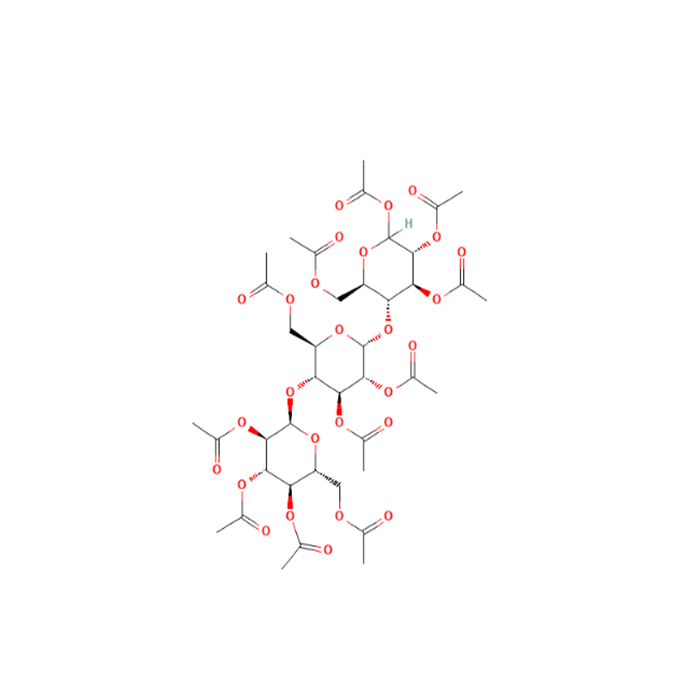
D-Maltotriose Peracetate, a derivative of maltotriose, has garnered attention in scientific research for its utility in various applications, particularly in carbohydrate chemistry and enzymology. As a peracetate derivative, it serves as a versatile substrate for enzymatic studies and kinetic analyses of enzymes involved in carbohydrate metabolism. One notable research application involves its use as a substrate for glycoside hydrolases, glycosyltransferases, and other carbohydrate-active enzymes. By enzymatically hydrolyzing D-Maltotriose Peracetate, researchers can explain the catalytic mechanisms, substrate specificity, and kinetics of these enzymes, contributing to a deeper understanding of carbohydrate processing pathways in biological systems. Furthermore, D-Maltotriose Peracetate and its derivatives have been employed in the synthesis of complex carbohydrate structures and glycotechnology research. These compounds serve as valuable tools for the preparation of glycoconjugates, glycomimetics, and carbohydrate-based materials, facilitating investigations into carbohydrate-protein interactions, cell surface recognition, and carbohydrate-mediated biological processes. Overall, D-Maltotriose Peracetate plays a crucial role in advancing research endeavors aimed at unraveling the intricacies of carbohydrate biochemistry and exploring their diverse applications in various scientific fields.
This compound belongs to the class of organic compounds known as oligosaccharides. These are carbohydrates made up of 3 to 10 monosaccharide units linked to each other through glycosidic bonds.
External Descriptors
Not available
1. Djoumbou Feunang Y, Eisner R, Knox C, Chepelev L, Hastings J, Owen G, Fahy E, Steinbeck C, Subramanian S, Bolton E, Greiner R, and Wishart DS. ClassyFire: Automated Chemical Classification With A Comprehensive, Computable Taxonomy. Journal of Cheminformatics, 2016, 8:61.
We use cookies to ensure the website functions properly and, where permitted, to improve your experience. You can manage your preferences at any time in Settings. Learn more in our Cookie Policy.
Shall we send you a message when we have discounts available?
Remind me later
Thank you! Please check your email inbox to confirm.
Products are supplied to verified businesses, institutions, and qualified professionals for research and development use only. Not for use in humans, animals, diagnosis, or therapy.

 D2501234