
Determine the necessary mass, volume, or concentration for preparing a solution.
DJ001 - ≥99% , CAS No.2161305-12-8
AVAILABLE TO ORDER
GRADE & PURITY ≥99%
Storage
Store at -20°C
Shipped In
Ice chest + Ice pads
≥99% for sensitive chromatographic and analytical workflows requiring minimal baseline interference.
Store at -20°C Ships Ice chest + Ice pads Check lot-specific COA for exact specifications.
SDS, COA, datasheet, and spec sheet available for download. Lot-specific COA accessible via lot number lookup.
Cited in 0 peer-reviewed publications across chromatography, organic synthesis, and cross-coupling reactions.
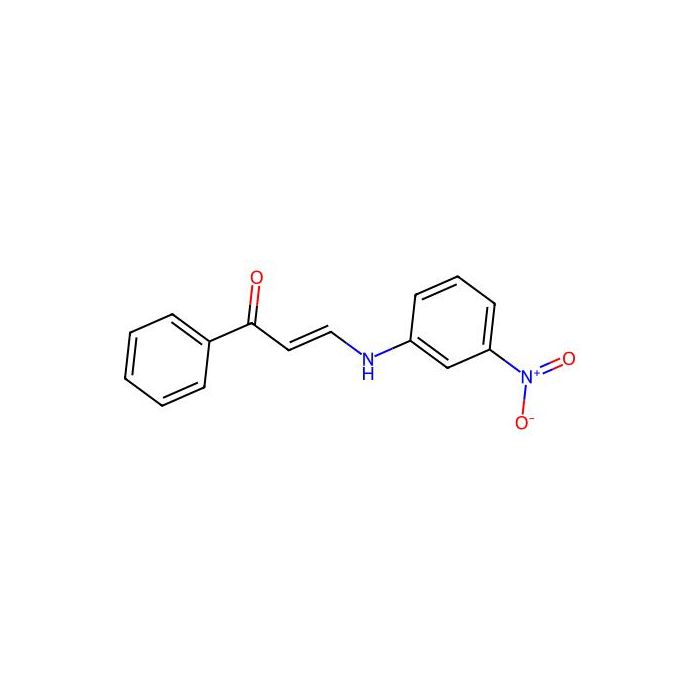
DJ001 is a highly specific, selective and non-competitive protein tyrosine phosphatase-σ (PTPσ) inhibitor with an IC 50 of 1.43 μM. DJ001 displays no inhibitory activity against other phosphatases, with only modest inhibitory activity against Protein Phosphatase 5. DJ001 promotes promote hematopoietic stem cell regeneration
In Vitro
DJ001 (5-1000 ng/mL; 3-7 days; BM KSL cells) treatment increases the percentages and numbers of BM KSL cells in culture compared with control cultures. DJ001 treatment also significantly increases the numbers of colony forming cells (CFCs) in 3 day culture of BM KSL cells. The BM KSL cells are irradiated with 300 cGy and placed in media (containing 20 ng/mL Thrombopoietin, 100 ng/mL stem cell factor (SCF), 50 ng/mL Flt3 ligand, TSF) with and without 1 μg/mL DJ001 for 3 days. DJ001 treatment increases recovery of BM CFCs and multipotent colony-forming unit–granulocyte erythroid monocyte megakaryocyte (CFU-GEMM) colonies compared with control cultures. MCE has not independently confirmed the accuracy of these methods. They are for reference only. Cell Viability AssayCell Line: BM KSL cells Concentration: 5 ng/mL, 10 ng/mL, 100 ng/mL, 1000 ng/mL Incubation Time: 3 days or 7 days Result: Increased the percentages and numbers of BM KSL cells. Also significantly increased the numbers of colony forming cells (CFCs) in 3 day culture of BM KSL cells.
In Vivo
DJ001 (5 mg/kg; subcutaneous injection; for 24 hours; female C57BL/6 mice) significantly decreases the percentage of apoptotic BM KSL cells in C57BL/6 mice at 24 h following 500 cGy TBI. DJ001 suppresses radiation-induced HSC apoptosis via activation of the RhoGTPase, RAC1, and induction of BCL-X L . MCE has not independently confirmed the accuracy of these methods. They are for reference only. Animal Model: Female C57BL/6 mice (8-10-week-old) irradiated with total body irradiation (TBI) Dosage: 5 mg/kg Administration: Subcutaneous injection; for 24 hours Result: Significantly decreased the percentage of apoptotic BM KSL cells in C57BL/6 mice at 24 h following 500 cGy TBI.
Form:Solid
IC50& Target:IC50: 1.43 μM (Protein tyrosine phosphatase-σ)
| Canonical Smiles | C1=CC=C(C=C1)C(=O)C=CNC2=CC(=CC=C2)[N+](=O)[O-] |
|---|---|
| IUPAC Name | (Z)-3-(3-nitroanilino)-1-phenylprop-2-en-1-one |
| InChIKey | OVTJWWUGQKIRCL-KTKRTIGZSA-N |
| INCHI | 1S/C15H12N2O3/c18-15(12-5-2-1-3-6-12)9-10-16-13-7-4-8-14(11-13)17(19)20/h1-11,16H/b10-9- |
| Isomeric SMILES | C1=CC=C(C=C1)C(=O)/C=C\NC2=CC(=CC=C2)[N+](=O)[O-] |
| PubChem CID | 44161060 |
| Molecular Weight | 268.27 |
Comprehensive hazard, handling, storage, and regulatory compliance document.
Download SDS →Lot-specific quality data. Enter your lot number to retrieve the exact COA.
Look up COA →Full quality attributes and acceptance criteria for this grade.
View spec sheet →Taxonomy Tree
| Kingdom | Organic compounds |
|---|---|
| Superclass | Benzenoids |
| Class | Benzene and substituted derivatives |
| Subclass | Nitrobenzenes |
| Intermediate Tree Nodes | Not available |
| Direct Parent | Nitrobenzenes |
| Alternative Parents | Nitroaromatic compounds Benzoyl derivatives Aryl ketones Secondary alkylarylamines Vinylogous amides Enones Acryloyl compounds Propargyl-type 1,3-dipolar organic compounds Organopnictogen compounds Organic zwitterions Organic oxoanionic compounds Organic oxides Hydrocarbon derivatives |
| Molecular Framework | Aromatic homomonocyclic compounds |
| Substituents | Nitrobenzene - Nitroaromatic compound - Aryl ketone - Benzoyl - Secondary aliphatic/aromatic amine - Vinylogous amide - Alpha,beta-unsaturated ketone - Enone - Acryloyl-group - Organic nitro compound - C-nitro compound - Ketone - Organic 1,3-dipolar compound - Propargyl-type 1,3-dipolar organic compound - Allyl-type 1,3-dipolar organic compound - Secondary amine - Organic nitrogen compound - Organic oxygen compound - Organopnictogen compound - Organic oxide - Hydrocarbon derivative - Organic zwitterion - Organooxygen compound - Organonitrogen compound - Organic hyponitrite - Amine - Aromatic homomonocyclic compound |
| Description | This compound belongs to the class of organic compounds known as nitrobenzenes. These are compounds containing a nitrobenzene moiety, which consists of a benzene ring with a carbon bearing a nitro group. |
| External Descriptors | Not available |
| Solubility | DMSO : 250 mg/mL (931.90 mM; Need ultrasonic) |
|---|