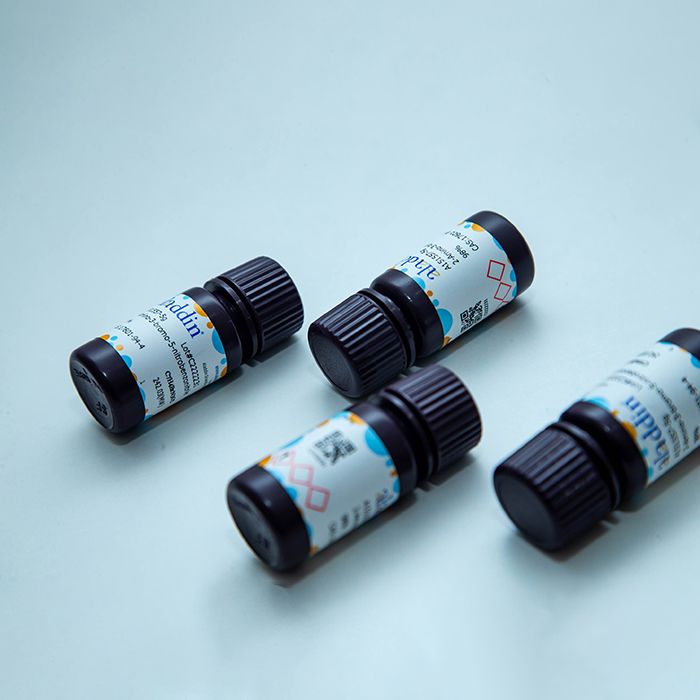
Our Exonuclease I is recombinantly expressed from Escherichia coli. It is a 3'→5' exonuclease that specifically degrades single‑stranded linear DNA in the 3' to 5' direction. Exonuclease I exhibits high substrate specificity: it exclusively digests single‑stranded linear DNA with a free 3'-OH terminus in the 3'→5' direction, releasing individual dNMP residues progressively until only two deoxynucleotides remain at the 5' end. It cannot digest single‑stranded DNA with chemically blocked or modified 3' termini, nor does it hydrolyze double‑stranded DNA or RNA. Exonuclease I is commonly used to remove excess unincorporated single‑stranded DNA primers from PCR mixtures prior to downstream Sanger sequencing or SNP analysis. It is not suitable for blunting the 3' overhangs of double‑stranded DNA. Its primary function is the stepwise removal of individual nucleotides from single‑stranded DNA in the 3'→5' direction.
| Source | Recombinant expression in Escherichia coli
| | Appearance | Sterile liquid
| | Storage Buffer | 10mM Tris-HCl, 100mM NaCl, 5mM DTT, 0.5mM EDTA, 100µg/ml BSA, 50% Glycerol, pH7.5 @ 25ºC.
| | Enzyme Concentration | 20 U/μL | | Purity | Free of contaminating DNA/RNA endonucleases, other exonucleases, and phosphatases.
| | Activity Definition | One unit is defined as the amount of enzyme that will catalyze the release of 10nmol of acid-soluble nucleotide in a total reaction volume of 50μl in 30 minutes at 37 º C in 1X Exonuclease I Reaction Buffer with 0.17mg/ml single-stranded [3H]-DNA. |
|
Components List
| E666128 | Components | Appearance | 2KU | 5×2KU | 25×2KU | Storage | | E666128A | Exonuclease I (20 U/µl) | Liquid | 100ul | 5×100µl | 25×100µl | -20℃. Avoid freeze/thaw cycle. | | E666128B | 10× Reaction Buffer | Liquid | 400µl | 5×400µl | 25×400µl | -20℃. Avoid freeze/thaw cycle. |
|
Applications
Removal of single‑stranded primers from PCR products;
Elimination of residual single‑stranded DNA primers prior to Sanger sequencing and SNP genotyping;
Removal of linear single‑stranded DNA while preserving double‑stranded DNA;
Analysis of single‑stranded DNA with free 3'-hydroxyl termini.
Advantages
Exonuclease I efficiently removes excess single‑stranded DNA primers from PCR products before sequencing or further molecular analysis.
Protocol
1. Reaction system setup.
For the removal of single-stranded DNA from DNA samples, prepare the reaction system on ice according to the table below (take the 20 μL system as an example):
Reagent
| Volume
| Final Concentration
|
|---|
Ultrapure Water
| (17.5-X) µL | - | 10× Reaction Buffer
| 2 µL | 1X | | DNA Sample | X µL (100 nmol bases) | 5 nmol/µL | Exonuclease I (20 U/µl)
| 0.5 µL | 0.5 U/µL | Total Volume
| 20 µL | - |
|
When removing single‑stranded DNA from PCR products, prepare the reaction system on ice referring to the table below (taking a 5 μL system as an example).
Reagent
| Volume
| Final Concentration
|
|---|
| PCR Product | 4.5 µL | - | Exonuclease I (20 U/µl)
| 0.5 µL | 2 U/µL | Total Volume
| 5 µL | - |
|
Notes:
- The recommended DNA input in the table is relatively high; the sample volume can be significantly reduced when starting material is limited.
- Follow standard DNA handling protocols strictly. Use only DNase‑free reagents and consumables to avoid contamination.
- For optimal digestion efficiency, adjust substrate and enzyme dosage according to the unit definition to establish the optimal reaction condition.
- For multiple parallel reactions, premix all components except the DNA substrate, aliquot into tubes, then add substrate individually.
- Exonuclease I retains activity in most common PCR buffers and can be added directly to finished PCR products for primer removal.
- If digestion efficiency is poor in a custom buffer, use the supplied 10× Reaction Buffer for optimal performance.
2. Mixing and Centrifugation
Gently mix the assembled reaction system and centrifuge briefly to collect liquid at the bottom of the tube.
3. Incubation Condition
Incubate at 37 °C for 30 min; incubation time may be adjusted according to experimental requirements.
4. Reaction Termination
Heat inactivation at 80 °C for 20 min completely terminates Exonuclease I activity.
5. Downstream Processing
The treated product can be analyzed directly by polyacrylamide gel electrophoresis as required.Since the enzyme is fully heat‑inactivated, the reaction product is generally suitable for direct downstream experiments without further purification. For applications requiring high purity, purify by column purification, magnetic bead purification, phenol‑chloroform extraction, or ethanol precipitation.
6. Other Applications
Refer to relevant literature for other experimental purposes.
Frequently Asked Questions
- Can Exonuclease I remove residual single‑stranded primers from PCR products?Yes. Exonuclease I is widely used to digest excess single‑stranded primers in PCR products and double‑stranded DNA samples.
- Does Exonuclease I digest double‑stranded DNA or RNA?No. It is strictly specific for single‑stranded linear DNA with free 3'-OH termini; it has no activity toward other DNA forms or RNA.
- What is the optimal reaction temperature?The optimal reaction temperature of Exonuclease I is 37 °C.
- Can the enzyme be heat‑inactivated? What is the termination condition?Yes. Incubation at 80 °C for 20 min fully inactivates the enzyme.
- Is Exonuclease I active in common molecular biology buffers?Yes. It exhibits broad compatibility with various reaction buffers and can be used for single‑stranded DNA removal in most molecular biology workflows.
- Can it blunt 3' overhangs of double‑stranded DNA?No. Exonuclease I only acts on single‑stranded DNA and cannot trim short single‑stranded overhangs of duplex DNA.
- Can Exonuclease I be used with alkaline phosphatase to remove primers and degrade dNTPs/NTPs before sequencing?Yes. Combined use of Exonuclease I and alkaline phosphatase simultaneously removes single‑stranded primers and dephosphorylates residual dNTPs/NTPs.
- Can it be combined with other exonucleases for plasmid purification?Exonuclease I can be used together with Lambda Exonuclease for plasmid purification.
- What is the difference between Exonuclease I and RecJf Exonuclease?Both degrade single‑stranded DNA but in opposite directions: Exonuclease I digests in the 3'→5' direction, while RecJf Exonuclease acts in the 5'→3' direction.
- Can Exonuclease I degrade single‑stranded RNA in the 5'→3' direction?No. It is specific for single‑stranded DNA only and does not recognize or digest RNA.
Storage & Transportation
Store at −20 °C; valid for 2 years. Transport at ≤0 °C.
Precautions
- All reagents are prepared with DNase/RNase‑free water and can be directly used for 3'→5' digestion of single‑stranded linear DNA.
- Strict substrate specificity: only digests single‑stranded DNA with free 3'-OH ends; no activity toward modified 3' termini, double‑stranded DNA, or RNA. Select appropriate substrates carefully.
- Not applicable for double‑stranded DNA digestion; structured single‑stranded DNA requires denaturation prior to digestion.
- Optimal activity at 37 °C; complete inactivation by incubation at 80 °C for 20 min.
- Retains activity in standard PCR buffers, suitable for direct primer removal from PCR products.
- Keep the enzyme on ice during use and return promptly to −20 °C after use.
- For research use only. Not for clinical diagnosis, therapeutic use, food or pharmaceutical applications, or household storage.
- Wear laboratory coat and disposable gloves for personal safety during operation.