
Determine the necessary mass, volume, or concentration for preparing a solution.
| Activity Type | Activity Value -log(M) | Mechanism of Action | Activity Reference | Publications (PubMed IDs) |
|---|
10mM in DMSO for sensitive chromatographic and analytical workflows requiring minimal baseline interference.
Store at -80°C Ships Dry ice packs + Cold packs Check lot-specific COA for exact specifications.
SDS, COA, datasheet, and spec sheet available for download. Lot-specific COA accessible via lot number lookup.
Cited in 1 peer-reviewed publications across chromatography, organic synthesis, and cross-coupling reactions.
Information
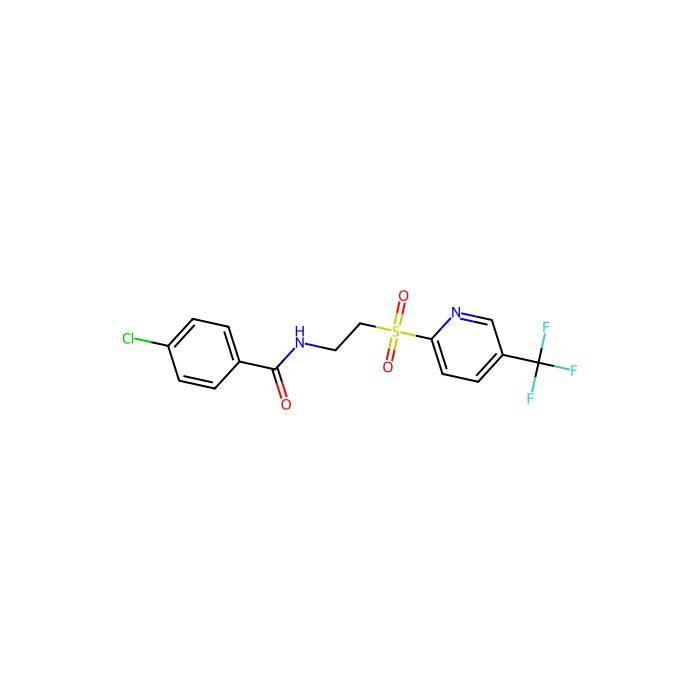
GSK3787 GSK3787 is as a selective and irreversible antagonist of PPARδ with pIC50 of 6.6, with no measurable affinity for hPPARα or hPPARγ.
In vitro
GSK3787 irreversibly antagonizes human and mouse PPARδ that covalently modifies Cys249 within the ligand binding pocket. GSK 3787 completely antagonizes the activity of agonist GW501516 with a pIC50 of 6.9 and 94% maximal inhibition. GSK3787 (1 μM) effectively antagonizes the agonist GW0742 stimulated transcription of CPT1a and PDK4 in human skeletal muscle cells, and effectively antagonize the basal gene expression of CPT1a. GSK 3787 shows no effective antiproliferative activity against colorectal cancer cells. GSK3787 (1 μM) completely antagonizes 50 nM GW0742-induced PPARβ/δ-dependent Angptl4 gene expression in wild-type fibroblasts and in keratinocytes. GSK3787 (1 μM) largely antagonizes 50 nM GW0742-induced Angptl4 and Adrp mRNAs expression in skin cancer cell A341. GSK3787 (1 μM) largely antagonizes GW0742-induced Angptl4 mRNAs expression in cancer cell lines MCF7 (breast), Huh7 (liver), and HepG2 (liver) cells but not in H1838 or A549 cells (lung). GSK3787 (1 μM) largely antagonizes GW0742-induced increase of Adrp mRNA in Huh7 and HepG2 cells but not in H1838 cells. GSK3787 does not antagonize basal expression of either of these two PPARβ/δtarget genes in these cells. Neither GW0742 nor GSK3787 has any effect on cell proliferation of these cells at concentrations ranging from 0.1 to 10 μM. GSK3787 is able to modulate the association of both PPARβ/δ and PPARγ coregulator peptides in response to ligand activation. Efficacy of GSK3787 to modulate PPARγ activity is markedly lower than the efficacy of GSK3787 to act as a PPARβ/δ antagonist.
In vivo
GSK3787 antagonizes ligand-induced PPARβ/δ-dependent gene expression in vivo. Oral administration of GSK3787 has no effect on the expression of Angptl4 and Adrp mRNA in mouse colon epithelium. Coadministration of GSK3787 (10 mg/kg) effectively prevents the GW0742-induced expression of both Angptl4 and Adrp mRNA in wild-type mouse colon epithelium, which is correlated with reduced promoter occupancy of PPARβ/δ on the Angptl4 and Adrp genes. Administration of GSK3787 had no effect on glucose tolerance.
Cell Data
cell lines:BXPC-3, MIA-PaCa2, PANC1, ASPC1, and CFPAC cells
Concentrations:
Incubation Time:
Powder Purity:≥99%
| Isomeric SMILES | C1=CC(=CC=C1C(=O)NCCS(=O)(=O)C2=NC=C(C=C2)C(F)(F)F)Cl |
|---|---|
| WGK Germany | 3 |
| Molecular Weight | 392.78 |
| Reaxy-Rn | 20523895 |
| Reaxys-RN_link_address | https://www.reaxys.com/reaxys/secured/hopinto.do?context=S&query=IDE.XRN=20523895&ln= |
Comprehensive hazard, handling, storage, and regulatory compliance document.
Download SDS →Lot-specific quality data. Enter your lot number to retrieve the exact COA.
Look up COA →Full quality attributes and acceptance criteria for this grade.
View spec sheet →| Activity Type | Activity Value -log(M) | Mechanism of Action | Activity Reference | Publications (PubMed IDs) |
|---|
| Refractive Index | 1.54 |
|---|---|
| Boil Point(°C) | 585.10 °C at 760 mmHg |
| Melt Point(°C) | 217.94°C |
| 1. Hongyi Xian, Ruobing Bai, Yu Feng, Shiyue Tang, Zhiming Li, Chudan Gao, Kaiwei Li, Boxuan Liang, Yizhou Zhong, Yuji Huang, Hao Li, Yanhong Deng, Xiaohong Yang, Xiyun Huang, Xiaoqing Chen, Xingfen Yang, Zhenlie Huang. (2025) Aged polylactic acid microplastics exacerbate lipid metabolism disorders and cardiac dysfunction via PPARγ activation in zebrafish: A comparative study with polymers and oligomers. ECOTOXICOLOGY AND ENVIRONMENTAL SAFETY, [PMID:41187537] [10.1016/j.ecoenv.2025.119337] |