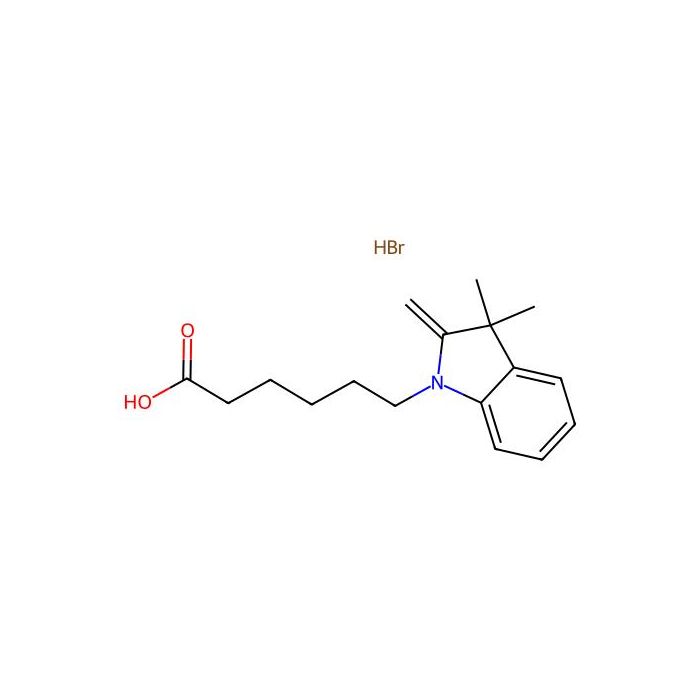
Hyaluronidase from bovine testes, CAS No.37326-33-3

CAS: 37326-33-3 Cat. No.: H128644 EC Number: 253-464-3
AVAILABLE TO ORDER
GRADE & PURITY Bioactive ? Bioactive grade — verified to retain biological activity in functional assays. Use when the molecule must be functionally active, not just pure. ActiBioPure™ ? ActiBioPure™ — Aladdin's premier line for bioactive and recombinant products. Use when both high purity and preserved biological activity are required. Native ? Native grade — protein/biomolecule in its natural (non-recombinant, non-denatured) form. Use when native structure and activity are required. High Performance ? High-performance grade with optimized purity and performance characteristics. Use for sensitive analyses where ordinary grades fall short. EnzymoPure™ ? EnzymoPure™ — Aladdin's line of high-quality enzymatic solutions. Use when enzyme purity and defined activity drive assay or process performance. ≥300 USP/NF units/mg dry weight
Accession #
Q5E985,Q8SQG8
Bioactivity
≥300 USP/NF units/mg dry weight
 ·  off list, applied to all prices below.
Size
Status
Price
Qty
10KU
H128644-10KU
8-12 wks(?) Production requires sourcing of materials. We appreciate your patience and understanding.
$62.90
50KU
H128644-50KU
1
$239.90
300KU
H128644-300KU
8-12 wks(?) Production requires sourcing of materials. We appreciate your patience and understanding.
$999.90
Enter a quantity for the sizes you want to add.
🧪

Why this grade

Bioactive, ActiBioPure™, Native, High Performance, EnzymoPure™, ≥300 USP/NF units/mg dry weight ActiBioPure™,Bioactive,High Performance,Native,EnzymoPure™ for sensitive chromatographic and analytical workflows requiring minimal baseline interference.

🌡

Storage & shipping

Store at -20°C Ships Ice chest + Ice pads Check lot-specific COA for exact specifications.

📋

Quality documents

SDS, COA, datasheet, and spec sheet available for download. Lot-specific COA accessible via lot number lookup.

📚

Literature proof

Cited in 20 peer-reviewed publications across chromatography, organic synthesis, and cross-coupling reactions.

Overview

Testicular hyaluronidase is a glycoprotein containing 5% mannose and 2.7% glucosamine. Optimum pH range is 4.5-6.0. The enzyme catalyzes the hydrolysis of endo-N-acetylhexosaminic bonds of hyaluronic acid and chondroitin sulfate A and C (but not B), primarily to tetrasaccharide residues.
Hyaluronidase catalyzes the random hydrolysis of 1,4-linkages between 2-acetamido-2-deoxy-b-D-glucose and D-glucose residues in hyaluronate.
Characteristics of Hyaluronidase from Bovine Testes:
Specificity
Testicular hyaluronidase hydrolyzes the endo-N-acetylhexosaminic bonds of hyaluronic acid and chondroitin sulfuric acids A and C (but not B), primarily to tetrasaccharide residues. Monosaccharides are not liberated.
Composition
The enzyme is a glycoprotein containing 5% mannose and 2.17% glucosamine. The amino acid composition has been determined.
Characteristics of Hyaluronidase
Molecular Weight: Four subunits of 14,000 each and a total molecular weight of 55,000.
Optimal pH: 4.5 - 6.
Extinction Coefficient: extinction coefficient= approximately 8.
Inhibitors: Fe2+ and Fe3+ are inhibitory as are Mn2+ and Cu2+.
Stability: Hyaluronidase is stable for 1 - 2 years and the purified preparation for 6 - 12 months when stored at -20°C.
Stabilizers: Sodium chloride
Hyaluronidase Assay
Method
Hyaluronic acid is measured by its ability to form turbidity with an acid albumin solution. Turbidity is a function of hyaluronic acid concentration and can hence be related to enzyme activity. One unit is based on the change in absorbency (turbidity) at 540nm of an internal standard assayed concurrently with each lot.  Internal standard replaces USP/NF reference no longer available.
Reagents
1. 0.1 M Sodium phosphate buffer, pH 5.3 with 0.15 M sodium chloride (HSE buffer)
2. 0.5 M Sodium acetate buffer, pH 4.2
3. Albumin reagent: Prepare by dissolving 2.5 grams of bovine serum albumin, Fraction V in 250 ml of 0.5 M sodium acetate buffer, pH 4.2. Adjust pH to 3.0 with 2 N HCl and heat at 93°C for 30 minutes. Cool and adjust final volume to 1000 ml with 0.5 ml sodium acetate buffer, pH 4.2.
4. Standard: Prepare stock solutions of 1.0 and 0.5 mg/ml.
5. Hyaluronic acid (HA): Dissolve 10 mg Worthington hyaluronic acid in 25 ml 0.1 M sodium phosphate buffer: pH 5.3 with 0.15 M sodium chloride. Note: This solution can be prepared by allowing VHHA to dissolve overnight. Heating in a boiling water bath for 10 - 15 minutes is the preferred method if the material is not immediately soluble.
Enzyme
Prepare stock solution of enzyme at one mg/ml in 0.1 M sodium phosphate buffer pH 5.3 with 0.15 M sodium chloride. Immediately prior to use dilute further in the same buffer. For crude grade material concentrations of 0.01 - 0.05 mg/ml are recommended. For purified grade concentration of 0.001 - 0.01 mg/ml are recommended.
Procedure:
I. Standard Curve
Into a series of numbered tubes, pipette as follows:
Place all tubes in a boiling water bath for 5 minutes. Cool to room temperature. Add 9.0 ml of albumin reagent and allow to stand for 10 minutes. Read absorbance at 540 nm. Plot absorbance at 540 nm versus mg HA to form standard curve.
Hyaluronic acid should be soluble under the defined conditions and should produce a standard curve with a slope of 1.5 or greater.
II. Test Procedure
Pipette 0.5 ml of a 0.4 mg/ml hyaluronic acid solution into a series of test tubes. Incubate at 37°C for 4 - 5 minutes to achieve temperature equilibrium. Incubate one blank tube with one ml of 0.1 M sodium phosphate buffer, pH 5.3 with 0.15 M sodium chloride. At timed intervals add 0.5 ml of appropriately diluted enzyme or standard to respective tubes. Incubate each tube exactly 10 minutes and cool in an ice bath to room temperature. Add 9.0 ml of albumin reagent to each tube and incubate at room temperature for 10 minutes. Read A540 of each tube versus the blank.
Calculation
Determine the amount of hyaluronic acid remaining after digestion from the standard curve.
Calculate the amount of hyaluronic acid digested as follows:
mg HA digested = 0.2 mg - mg HA remaining

Specifications

Product Name
Hyaluronidase from bovine testes, CAS No.37326-33-3
Synonyms
Hyaluronidase from Bovine Testes, | s4424 | Hyaluronoglucosaminidase | Hyaluronidase | 6-(3, 3-dimethyl-2-methylideneindol-1-yl)hexanoic acid;hydrobromide | AKOS025293742 | chondroitinase | chondroitinase I | chondroitinase I | hyaluronoglucosidase | Hyalu
Grade
ActiBioPure™, Bioactive, High Performance, Native, EnzymoPure™
Specifications & Purity
Bioactive, ActiBioPure™, Native, High Performance, EnzymoPure™, ≥300 USP/NF units/mg dry weight
Biochemical and Physiological Mechanisms
Hyaluronidase degrades hyaluronan and has been found to be inappropriately regulated during cancer progression. These enzymes randomly cleave β-N-acetylhexosamine-[1→4] glycosidic bonds in hyaluronic acid, chondroitin, and chondroitin sulfates.
Bioactivity
≥300 USP/NF units/mg dry weight
Sequence
Belongs to the glycosyl hydrolase 56 family.
Accession #
Predicted molecular weight
~55 kDa
Action Type
ACTIVATOR
CAS
37326-33-3
Enzyme Commission Number
3.2.1.35
Molecule Type
Enzyme
Storage and Shipping
Concentration
≥300 USP/NF units/mg dry weight
Reconstitution
Reconstitute in 0.1M sodium phosphate buffer, pH 5.3 with 0.15M sodium chloride.
Storage
Store at -20°C
Shipped In
Ice chest + Ice pads
Unit definition
One unit is based on the change in absorbency (turbidity) at 540nm of an internal standard assayed concurrently with each lot. Internal standard replaces USP/NF reference no longer available.

Documentation

📋 Safety Data Sheet (SDS)

Comprehensive hazard, handling, storage, and regulatory compliance document.

Download SDS →

✅ Certificate of Analysis (COA)

Lot-specific quality data. Enter your lot number to retrieve the exact COA.

Look up COA →

📊 Datasheet

Quick-reference summary of product specifications and applications.

View datasheet →

🔬 Specification Sheet

Full quality attributes and acceptance criteria for this grade.

View spec sheet →

Advanced Data

Taxonomic Classification

Taxonomy Tree

KingdomOrganic compounds
SuperclassOrganoheterocyclic compounds
ClassIndoles and derivatives
SubclassIndolyl carboxylic acids and derivatives
Intermediate Tree Nodes Not available
Direct ParentIndolyl carboxylic acids and derivatives
Alternative Parents Indoles  Tertiary alkylarylamines  Medium-chain fatty acids  Heterocyclic fatty acids  Amino fatty acids  Benzenoids  Amino acids  Monocarboxylic acids and derivatives  Enamines  Carboxylic acids  Azacyclic compounds  Organic oxides  Hydrocarbon derivatives  Hydrobromides  Carbonyl compounds  
Molecular FrameworkAromatic heteropolycyclic compounds
Substituents Indolyl carboxylic acid derivative - Indole - Medium-chain fatty acid - Tertiary aliphatic/aromatic amine - Amino fatty acid - Heterocyclic fatty acid - Fatty acyl - Benzenoid - Amino acid or derivatives - Amino acid - Tertiary amine - Carboxylic acid derivative - Carboxylic acid - Azacycle - Enamine - Monocarboxylic acid or derivatives - Amine - Organonitrogen compound - Organooxygen compound - Hydrobromide - Hydrocarbon derivative - Organic oxide - Carbonyl group - Organic oxygen compound - Organic nitrogen compound - Aromatic heteropolycyclic compound
DescriptionThis compound belongs to the class of organic compounds known as indolyl carboxylic acids and derivatives. These are compounds containing a carboxylic acid chain (of at least 2 carbon atoms) linked to an indole ring.
External Descriptors Not available
3D Structure
Interactive Chemical Structure Model


Certificates(CoA,COO,BSE/TSE and Analysis Chart)
C of A & Other Certificates(BSE/TSE, COO):
Analytical Chart:

Find and download the COA for your product by matching the lot number on the packaging.

6 results found

Lot NumberCertificate TypeDateItem
L2501379Certificate of AnalysisNov 18, 2025 H128644
L2515641Certificate of AnalysisNov 18, 2025 H128644
L2410429Certificate of AnalysisNov 20, 2024 H128644
D2402023Certificate of AnalysisDec 01, 2022 H128644
L2215645Certificate of AnalysisDec 01, 2022 H128644
L2215647Certificate of AnalysisDec 01, 2022 H128644
Documents & Articles
Citations of This Product
References
1. Yidan Chen, Tiantian Feng, Xiaohong Zhu, Yuting Tang, Yao Xiao, Xiuhua Zhang, Sheng-Fu Wang, Dong Wang, Wei Wen, Jichao Liang, Huayu Xiong.  (2024)  Ambient Synthesis of Porphyrin-Based Fe-Covalent Organic Frameworks for Efficient Infected Skin Wound Healing.  BIOMACROMOLECULES,      [PMID:38720431] [10.1021/acs.biomac.4c00261]
2. Mengyao Qi, Yi Ke, Yifei Li, Peng Li, Huakuo Zhou, Xia Zhang, Jieshi Chen, Jun Meng.  (2024)  Au@Pt nanozyme-based smart hydrogel for visual detection of hyaluronic acid.  SENSORS AND ACTUATORS B-CHEMICAL,      [PMID:] [10.1016/j.snb.2024.137144]
3. Tao Meng, Zhengyu Zhao, Mengqiang Song, Rui Wang, Xu Xu, Min Yang, Weihua Li, Shiyong Song.  (2025)  Carboxybetaine modified chitosan as viscosupplementation for osteoarthritis therapy.  INTERNATIONAL JOURNAL OF BIOLOGICAL MACROMOLECULES,      [PMID:40090277] [10.1016/j.ijbiomac.2025.142155]
4. Yu Pang, Jie Lv, Chengcai He, Chengda Ju, Yulong Lin, Cong Zhang, Meng Li.  (2024)  Covalent organic frameworks-derived carbon nanospheres based nanoplatform for tumor specific synergistic therapy via oxidative stress amplification and calcium overload.  JOURNAL OF COLLOID AND INTERFACE SCIENCE,      [PMID:38330663] [10.1016/j.jcis.2024.01.217]
5. Siying Huang, Simeng Xiao, Xuehao Li, Ranran Tao, Zhangwei Yang, Ziwei Gao, Junjie Hu, Yan Meng, Guohua Zheng, Xinyan Chen.  (2024)  Development of Dual-Targeted Mixed Micelles Loaded with Celastrol and Evaluation on Triple-Negative Breast Cancer Therapy.  Pharmaceutics,  16  (9): (1174).  [PMID:39339211] [10.3390/pharmaceutics16091174]
6. Shiyi Yao, Hui Yuan, Luqi Yang, Yin Zhang, Hanyu Wang, Renxuan Li, Tingjun Ye, Wenguo Cui, Lei Wang.  (2025)  Downregulation of the PI3K/AKT/mTOR/MMP-13 pathway for promoting interface healing via lubricating microspheres.  Acta Biomaterialia,      [PMID:39761787] [10.1016/j.actbio.2025.01.001]
7. Jing Zhang, Yunfeng Zeng, Yongyuan Heng, Yu Shen, Ximeng Sun, Yijia Wang, Haiping Zheng, Ming Zeng, Ziyi Yu.  (2024)  Enzyme-Assisted Activation Technique for Producing Versatile Hydrogel Microparticle Scaffolds with High Surface Chemical Reactivity.  ADVANCED FUNCTIONAL MATERIALS,      [PMID:] [10.1002/adfm.202400858]
8. Jingnan Li, Chengyan Luo, Tingyu Sun, Yinglin Zhou, Xinchang Huang, Dezhou Wu, Xirui Luo, Chao Zeng, Huanan Li.  (2024)  Hypoxia-Specific Metal–Organic Frameworks Augment Cancer Immunotherapy of High-Intensity Focused Ultrasound.  ACS Nano,      [PMID:38949962] [10.1021/acsnano.4c02921]
9. Huiping Yang, Yinning Lin, Qian Mo, Zhaoquan Li, Fan Yang, Xinchun Li.  (2024)  Monitoring Enzymatic Reaction Kinetics and Activity Assays in Confined Nanospace.  ANALYTICAL CHEMISTRY,      [PMID:39024010] [10.1021/acs.analchem.4c01901]
10. Shuo Yu, Lu Zhang, Yanshen Yang, Meijuan Wang, Tingting Liu, Wenwen Ji, Yang Liu, Hao Lv, Yang Zhao, Xi Chen, Tinghua Hu.  (2024)  Polydopamine-Based Resveratrol-Hyaluronidase Nanomedicine Inhibited Pancreatic Cancer Cell Invasive Phenotype in Hyaluronic Acid Enrichment Tumor Sphere Model.  ACS Pharmacology & Translational Science,      [PMID:38633596] [10.1021/acsptsci.3c00304]
11. Xin Jin, Chengxiong Wei, Kai Li, Peinan Yin, Chengwei Wu, Wei Zhang.  (2024)  Polyphenol-mediated hyaluronic acid/tannic acid hydrogel with short gelation time and high adhesion strength for accelerating wound healing.  CARBOHYDRATE POLYMERS,      [PMID:39048222] [10.1016/j.carbpol.2024.122372]
12. Dandan Wei, Guanhua Jiao, Yinghua Tao, Liuxin Yang, Tao Liu, Fengya Jing, Tianzhu Zhang.  (2025)  Polypropylene Mesh Coated with Dual Cross-Linked Hyaluronic Acid/Polyvinyl Alcohol Composite Hydrogel with Antiadhesion and Angiogenesis Properties for Abdominal Wall Repair.  Advanced Materials Technologies,      [PMID:] [10.1002/admt.202401786]
13. Dandan Wei, Yulin Huang, Min Liang, Liuxin Yang, Guanhua Jiao, Yinghua Tao, Li Xu, Tianzhu Zhang, Zhenling Ji.  (2024)  Polypropylene mesh coated with hyaluronic acid/polyvinyl alcohol composite hydrogel for preventing bowel adhesion.  INTERNATIONAL JOURNAL OF BIOLOGICAL MACROMOLECULES,      [PMID:38705326] [10.1016/j.ijbiomac.2024.132061]
14. Chao-fan He, Tian-hong Qiao, Xu-chao Ren, Mingjun Xie, Qing Gao, Chao-qi Xie, Peng Wang, Yuan Sun, Huayong Yang, Yong He.  (2025)  Printability in Multi-material Projection-Based 3-Dimensional Bioprinting.  Research,      [PMID:40041038] [10.34133/research.0613]
15. Zhu Dan, Zhong Hanyan, Shi Jingzhan, Liu Qiang, Wang Yiping.  (2025)  Ratiometric surface-enhanced Raman scattering quantification of extracellular matrix metalloproteinase-2 activity for tumor diagnosis.  ANALYTICAL AND BIOANALYTICAL CHEMISTRY,      [PMID:39966175] [10.1007/s00216-025-05792-5]
16. Yingying Chen, Dan Zhu, Hanyan Zhong, Zhixing Gan, Shenfei Zong, Zhuyuan Wang, Yiping Cui, Yiping Wang.  (2024)  Ultrasensitive Detection of Matrix Metalloproteinase 2 Activity Using a Ratiometric Surface-Enhanced Raman Scattering Nanosensor with a Core–Satellite Structure.  ACS Applied Materials & Interfaces,      [PMID:38204415] [10.1021/acsami.3c15344]
17. Shangting Du, Lingyu Li, Junhao Kou, Tianyi Zhu, Zhenyi Song, Yonghua Zhan, Daocheng Wu, Wenhua Zhan.  (2025)  Blackberry-Like Doxorubicin Loaded Hyaluronic Acid/Zinc Phthalocyanine Loaded Mesoporous Silica Nanocomposites for Long-Term Tumor Photodynamic and Chemotherapy Synergistic Therapy.  International Journal of Nanomedicine,      [PMID:40692537] [10.2147/IJN.S530041]
18. Jiancong Ni, Xiaochun Xu, Bifang Yang, Liyang Liu, Weiqiang Yang, Xiaoping Chen, Guiping Chen, Qingxiang Wang, Zhenyu Lin.  (2025)  Indicator-Free Detection of Hyaluronidase Based on a Conductivity-Regulated Bipolar Electrochemiluminescence Platform.  ANALYTICAL CHEMISTRY,      [PMID:40827572] [10.1021/acs.analchem.5c03409]
19. Haojie Qiu, Jingyan Zhu, Kaikai Zhang, Xinnan Wang, Yaoting Chu, Feng Zhang, Xuefeng Yang.  (2025)  Dual Drug-Loaded Hyaluronate-Based Self-Adaptable Hydrogel for Diabetic Infected Wound Healing.  BIOMACROMOLECULES,      [PMID:40845349] [10.1021/acs.biomac.5c00712]
20. Wenjun Xue, Xiaoyu Kuang, Xuanzhen Meng, Boyu Sun, Zijun Zhao, Guizhao Liang.  (2025)  Identification and inhibition mechanism of novel collagen-derived hyaluronidase inhibitory peptides.  Food Bioscience,      [PMID:] [10.1016/j.fbio.2025.106263]
Solution Calculators
Reviews

Customer Reviews

Shall we send you a message when we have discounts available?

Remind me later

Thank you! Please check your email inbox to confirm.

Oops! Notifications are disabled.