≥99% for sensitive chromatographic and analytical workflows requiring minimal baseline interference.
🌡
Storage & shipping
Store at -20°C Ships Ice chest + Ice pads Check lot-specific COA for exact specifications.
📋
Quality documents
SDS, COA, datasheet, and spec sheet available for download. Lot-specific COA accessible via lot number lookup.
📚
Literature proof
Cited in 0 peer-reviewed publications across chromatography, organic synthesis, and cross-coupling reactions.
개요
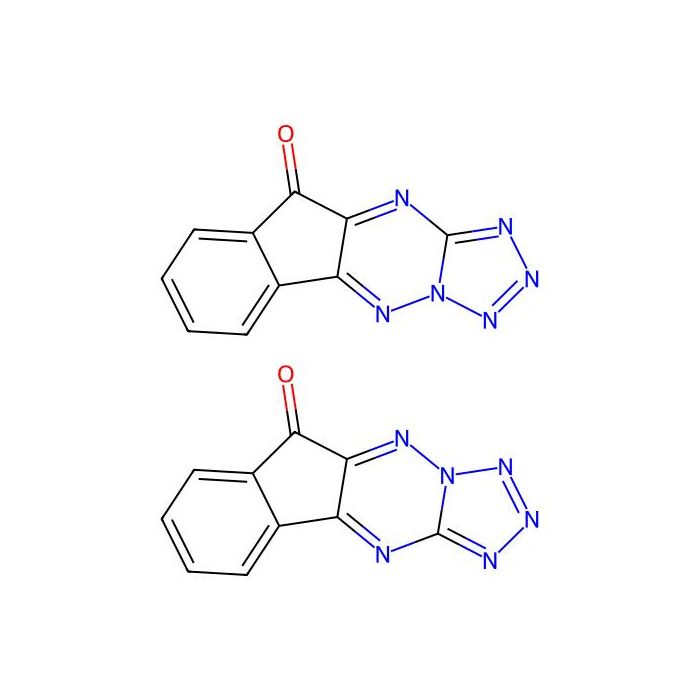
KP372-1 is an Akt inhibitor that inhibits proliferation and induces apoptosis and anoikis. KP372-1 is also an NQO1 redox cycling agent that causes DNA damage (including DNA breakage) by generating ROS. KP372-1 can be used in cancer research (such as head and neck squamous cell carcinoma (HNSCC) and pancreatic cancer) .
In Vitro
KP372-1 (0.0625, 0.125, 0.25, 0.5, 1.0 µM; 48 h) inhibits growth of JMARc42 and Tu167c2 cells with IC 50 s of 200 and 100 nM, respectively. KP372-1 (125 nM; 24 h) induces Tu167c2 cells apoptosis and induces anoikis in the JMARc42 cells. KP372-1 (125 nM; 30 min) blocks Akt, thereby decreasing the phosphorylation of the S6 ribosomal protein in both Tu167 and JMAR cells. KP372-1 (0.250, 0.5, 1.0 µM; 30 min) inhibits Akt kinase activity with an IC 50 of 250 nM in JMAR cells. MCE has not independently confirmed the accuracy of these methods. They are for reference only. Cell Proliferation AssayCell Line: JMARc42 and Tu167c2 cells Concentration: 0.0625, 0.125, 0.25, 0.5, 1.0 µM Incubation Time: 48 h Result: Showed antiproliferative activity. Apoptosis AnalysisCell Line: Tu167c2 and JMARc42 cells Concentration: 125 nM Incubation Time: 24 h Result: Induced approximately 90% of cells apoptosis. Western Blot AnalysisCell Line: Tu167 and JMAR cells Concentration: 125 nM Incubation Time: 30 min Result: Induced a small but consistent decrease in Akt phosphorylation with a concomitant marked decrease in S6 phosphorylation. Inhibited the EGF induced phosphorylation of Aktser473 in Tu167 and AktThr308 in JMAR. Western Blot AnalysisCell Line: JMAR cells Concentration: 0.250, 0.5, 1.0 µM Incubation Time: 30 min Result: Significantly blocked Akt kinase activity in a dose-dependent fashion, with an IC 50 of 250 nM.
In Vivo
KP372-1(10, 20 mg/kg; i.v.; single daily for 33 days) induces NADH oxidation and impairs tumor growth in vivo without apparent toxicity. MCE has not independently confirmed the accuracy of these methods. They are for reference only. Animal Model: Nude mice (H1299 xenografts model). Dosage: 10, 20 mg/kg Administration: Tailvein injection; single daily for 33 days Result: Affected tumor metabolism and suppressed tumor growth.
KP372-1 is an Akt inhibitor that inhibits proliferation and induces apoptosis and anoikis. KP372-1 is also an NQO1 redox cycling agent that causes DNA damage (including DNA breakage) by generating ROS. KP372-1 can be used in cancer research (such as head
This compound belongs to the class of organic compounds known as aryl ketones. These are organic aromatic compounds that contain a ketone group substituted at one C-atom with an aryl group. They have the generic structure RC(=O)R', where R = aryl group and R'=organyl group.
External Descriptors
Not available
1. Djoumbou Feunang Y, Eisner R, Knox C, Chepelev L, Hastings J, Owen G, Fahy E, Steinbeck C, Subramanian S, Bolton E, Greiner R, and Wishart DS. ClassyFire: Automated Chemical Classification With A Comprehensive, Computable Taxonomy. Journal of Cheminformatics, 2016, 8:61.
We use cookies to ensure the website functions properly and, where permitted, to improve your experience. You can manage your preferences at any time in Settings. Learn more in our Cookie Policy.
Shall we send you a message when we have discounts available?
Remind me later
Thank you! Please check your email inbox to confirm.
Products are supplied to verified businesses, institutions, and qualified professionals for research and development use only. Not for use in humans, animals, diagnosis, or therapy.