

Determine the necessary mass, volume, or concentration for preparing a solution.
Liquid Polyisoprene Rubber (L-IR) , CAS No.L684788
AVAILABLE TO ORDER
Only %1 left
Storage
Room temperature
Shipped In
Normal
LIQUID RUBBER products function as “reactive plasticizers”, but have much higher molecular weight than normal plasticizers. This means that in the time-consuming and labor-intensive rubber mixing process, they help reduce mooney viscosity and facilitate the mixing process. Better flowability of the compound increases the efficiency of the mixing process significantly. The physical properties of the rubber compounds are retained. Another advantage of the improved viscosity is also a longer service life of the mixing equipment, as the mixer can “stir” the compound better.
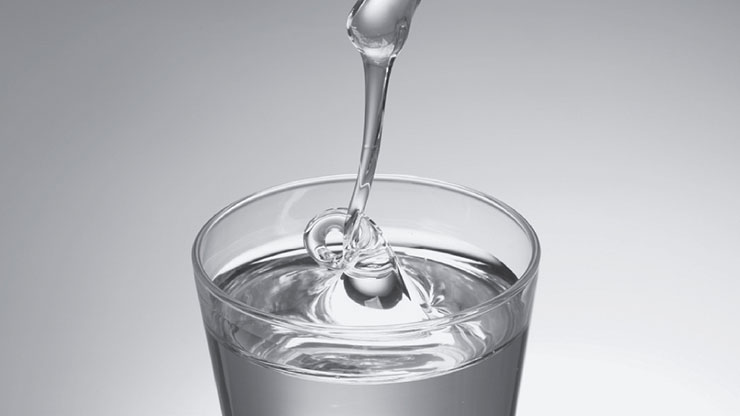
LIQUID RUBBER as a reactive plasticizer
LIQUID RUBBER includes Liquid Butadiene Rubber (L-BR), Liquid Isoprene Rubber (L-IR) and Liquid Polystyrene-Butadiene Rubber (L-SBR). The high-viscosity synthetic rubbers are colorless, transparent, almost completely odorless and have low VOC values. The polymers of butadiene, isoprene and styrene have a low molecular weight, which is designed between solid rubber and plasticizer.
LIQUID RUBBER grades are co-vulcanizable with the base rubber to prevent migration. The significantly reduced migration massively improves the shelf life and durability of the products. Depending on the molecular weight of the grades, they can either replace part of the rubber in the formulation (high molecular weight) or replace all or part of the oil in the formulation (low molecular weight).
Features and benefits
Reduces mixing time and energy consumption
Applications
LIQUID RUBBER products are used for a wide range of applications. An important area of application is tires, where LIQUID RUBBER grades can be used for various tire compounds, including tread, carcass, sidewall and bead filler compounds.
LIQUID RUBBER is the product of choice in the manufacture of winter tires, all-season tires and high-performance tires. It reduces Mooney viscosity, which minimizes migration while improving the workability of the rubber compound. LIQUID RUBBER significantly improves tire performance by simultaneously managing the balance between grip, fuel efficiency and wear resistance. LIQUID RUBBER is also popular for belts, hoses and other rubber goods.
Other applications of LIQUID RUBBER include high-performance coatings, sealants and adhesives. In adhesives, Liquid Isoprene Rubber is used as a tackifier and plasticizer. But LIQUID RUBBER is also used for printing plates, mortars and rubber compounding (e.g. for conveyor belts).
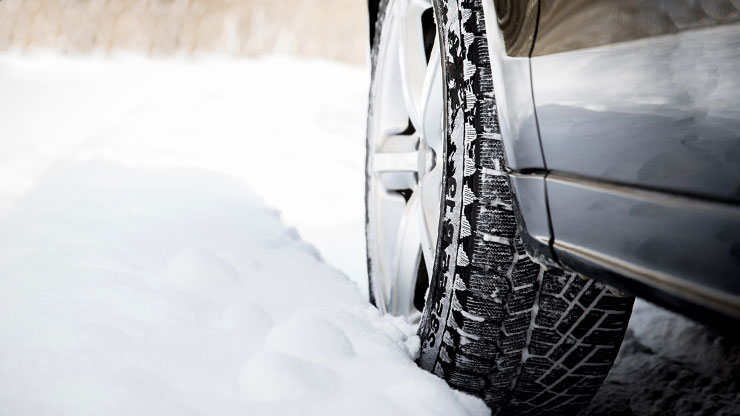
LIQUID RUBBER is used in various tire applications with exceptional properties.
Aladdin has developed several high-vinyl grades for peroxide curing and Liquid Isoprene Rubber grades for EPDM applications. At the same time, the volatile organic compound (VOC) content of the products is reduced. Possible applications include sanitary components, as LIQUID RUBBER/EPDM compounds can meet local drinking water regulations.
There are three types of LIQUID RUBBER based on the following:
The types are available from low to high molecular weight variations and some feature functionalized groups.
Liquid Polyisoprene Rubber (L-IR)
Homopolymer L-IR
Homopolymer L-IR exhibits good miscibility with natural rubber and is best suited as a reactive plasticizer for NR, IR, SBR, BR, IIR, etc. These liquid rubbers are used for a wide range of applications including tire products, conveyor belts, rubber goods, pressure sensitive adhesives, hot melts, automotive sealants, coatings and adhesives. Furthermore, they are used as binders for brake pads, grinding wheels, etc.
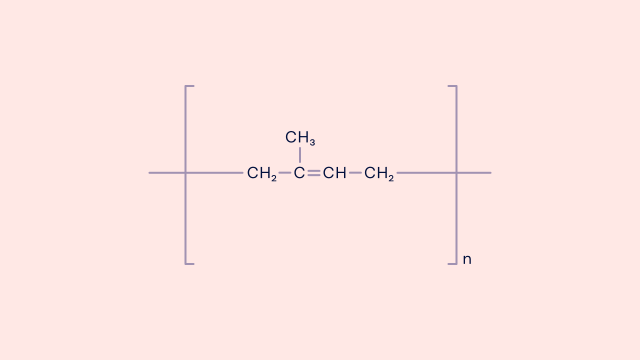
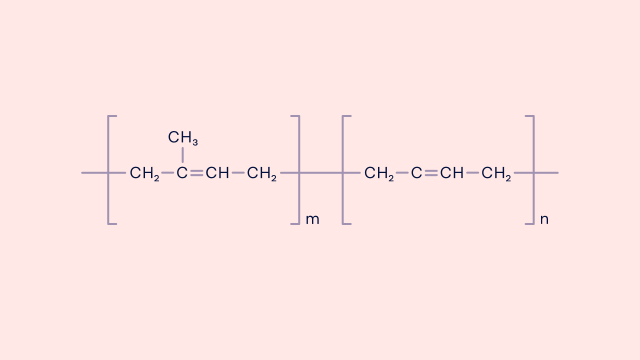
Copolymer L-IR
Our L-IR-390 expands the use of our LIQUID RUBBER portfolio for a wide range of automotive sealants applications. L-IR-390 is a copolymer of butadiene and isoprene and well known for its unique properties, such as:
Applications for Aladdin’s copolymer L-IR include hot melt adhesives, PSA (SIS, SBS and EVA based), automotive sealants, coatings and adhesives.
|
Comprehensive hazard, handling, storage, and regulatory compliance document.
Download SDS →Lot-specific quality data. Enter your lot number to retrieve the exact COA.
Look up COA →Full quality attributes and acceptance criteria for this grade.
View spec sheet →Find and download the COA for your product by matching the lot number on the packaging.
| Lot Number | Certificate Type | Date | Item |
|---|---|---|---|
 F2617177 F2617177 | Certificate of Analysis | Jun 10, 2026 | L684788 |
| F2617178 | Certificate of Analysis | Jun 10, 2026 | L684788 |
| F2617179 | Certificate of Analysis | Jun 10, 2026 | L684788 |
| D2613355 | Certificate of Analysis | Apr 02, 2026 | L684788 |
| D2613379 | Certificate of Analysis | Apr 02, 2026 | L684788 |