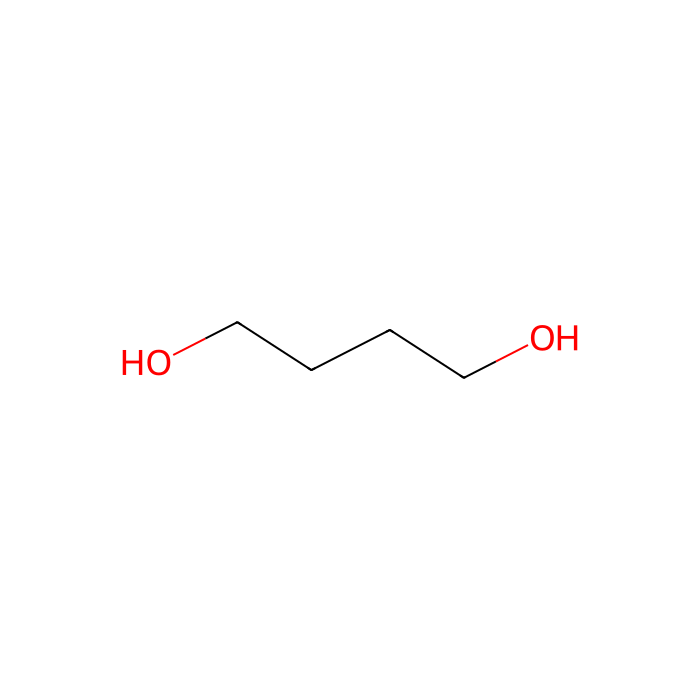
1,4-Butanediol (BDO) - Standard for GC, ≥99.5%(GC) , CAS No.110-63-4

CAS: 110-63-4 Cat. No.: B110395 Formula: C4H10O2 Molecular Weight: 90.12 Beilstein Registry Number: 1633445 EC Number: 203-786-5
AVAILABLE TO ORDER
GRADE & PURITY Standard for GC ? GC reference standard — characterized compound for calibrating GC methods. Use to build calibration curves and verify GC quantitation. ≥99.5%(GC)
Synonyms
1,4-butane diol|DIOL 14B|1.4-butanediol|1,4 butylene glycol|1.4 - butanediol|Sucol B|BU1|1,4-Butylene glycol|butane diol-1,4|butane 1,4-diol|1,4butanediol|1,4-BUTANEDIOL|1,4-butane-diol|Butan-1.4-diol|1,4-BD|Agrisynth B1D|Tetramethylene glycol|1,4-BUTANEDIOL [INCI]|1,4-BUTANEDIOL [MI]|1,4-butandiol|BDO|butane-1-4-diol|1,4- butandiol|Dabco DBO|1,4-Tetramethylene glycol|4-hydroxybutanol|Dihydroxybutane|1,4-Dihydroxybutane|Butane-1,4-diol
Storage
Room temperature,Argon charged
Shipped In
Normal
★
Size
USA
Germany (EU)*
Price
Qty
5ml
B110395-5ml
In stock ≥10
—

$17.90

$21.90
Save $4.00 (18.26%)
Enter a quantity for the sizes you want to add.

Overview

1,4-Butanediol can be used as a reactant to prepare:
Homoallyl alcohol (3-buten-1-ol) and tetrahydrofuran via vapor-phase dehydration using ZrO2 as a catalyst.
Poly(1,4-butanediol succinate) polymer by reacting with succinic anhydride.
Biodegradable homopolyesters [poly(butylene succinate) and poly(butylene adipate)] and copolyesters [poly(butylene succinate-co-butylene adipate)] by treating with succinic acid and adipic acid via esterification and deglycolization reaction.
Poly(1,4-butyl sebacate) by polyesterification reaction with sebacic acid or its derivatives.

Specifications

Synonyms
1,4-butane diol | DIOL 14B | 1.4-butanediol | 1,4 butylene glycol | 1.4 - butanediol | Sucol B | BU1 | 1,4-Butylene glycol | butane diol-1,4 | butane 1,4-diol | 1,4butanediol | 1,4-BUTANEDIOL | 1,4-butane-diol | Butan-1.4-diol | 1,4-BD | Agrisynth B1D | Tetramethylene glycol | 1,4-BUTANEDIOL [INCI] | 1,4-BUTANEDIOL [MI] | 1,4-butandiol | Show more
Specifications & Purity
Standard for GC, ≥99.5%(GC)
Storage
Room temperature,Argon charged
Shipped In
Normal
Grade
Standard for GC
Purity
≥99.5%(GC)
Names and Identifiers
Pubchem Sid
Pubchem Sid Url
https://pubchem.ncbi.nlm.nih.gov/substance/504751562
Canonical Smiles
C(CCO)CO
IUPAC Name
butane-1,4-diol
InChIKey
WERYXYBDKMZEQL-UHFFFAOYSA-N
INCHI
1S/C4H10O2/c5-3-1-2-4-6/h5-6H,1-4H2
Isomeric SMILES
C(CCO)CO
WGK Germany
1
RTECS
EK0525000
Molecular Weight
90.12
Beilstein
1633445
Reaxy-Rn
1633445
Reaxys-RN_link_address
https://www.reaxys.com/reaxys/secured/hopinto.do?context=S&query=IDE.XRN=1633445&ln=

Advanced Data

Taxonomic Classification

Taxonomy Tree

KingdomOrganic compounds
SuperclassOrganic oxygen compounds
ClassOrganooxygen compounds
SubclassAlcohols and polyols
Intermediate Tree Nodes Not available
Direct ParentPrimary alcohols
Alternative Parents Hydrocarbon derivatives  
Molecular FrameworkAliphatic acyclic compounds
Substituents Hydrocarbon derivative - Primary alcohol - Aliphatic acyclic compound
DescriptionThis compound belongs to the class of organic compounds known as primary alcohols. These are compounds comprising the primary alcohol functional group, with the general structure RCOH (R=alkyl, aryl).
External Descriptors a glycol
3D Structure
Interactive Chemical Structure Model


Associated Targets(Human)
USP1 Tchem Ubiquitin carboxyl-terminal hydrolase 1 (22556 Activities)
Activity TypeRelationActivity valueUnitsAction TypeJournalPubMed IddoiAssay Aladdin ID
Associated Targets(non-human)
Hdac6 Histone deacetylase 6 (222 Activities)
Activity TypeRelationActivity valueUnitsAction TypeJournalPubMed IddoiAssay Aladdin ID
Gamma-hydroxybutyrate receptor (68 Activities)
Activity TypeRelationActivity valueUnitsAction TypeJournalPubMed IddoiAssay Aladdin ID
Plasmodium falciparum (966862 Activities)
Activity TypeRelationActivity valueUnitsAction TypeJournalPubMed IddoiAssay Aladdin ID
rep Replicase polyprotein 1ab (378 Activities)
Activity TypeRelationActivity valueUnitsAction TypeJournalPubMed IddoiAssay Aladdin ID
Mechanisms of Action
Certificates (CoA,COO,BSE/TSE and Analysis Chart)
C of A & Other Certificates(BSE/TSE, COO):
Analytical Chart:

Find and download the COA for your product by matching the lot number on the packaging.

10 results found

Lot NumberCertificate TypeDateItem
H2626150H2626150Certificate of AnalysisSep 03, 2026 B110395
G2529083G2529083Certificate of AnalysisAug 02, 2025 B110395
E2519115E2519115Certificate of AnalysisMar 14, 2025 B110395
J2425418J2425418Certificate of AnalysisSep 14, 2024 B110395
K2302191K2302191Certificate of AnalysisOct 23, 2023 B110395
K2302190K2302190Certificate of AnalysisOct 23, 2023 B110395
G2311193G2311193Certificate of AnalysisJul 04, 2023 B110395
B2321168B2321168Certificate of AnalysisFeb 10, 2023 B110395
J2228286J2228286Certificate of AnalysisOct 17, 2022 B110395
F2215055F2215055Certificate of AnalysisJun 10, 2022 B110395
Chemical and Physical Properties
SolubilitySlightly soluble in ether, miscible with water, soluble in ethanol, etc.
SensitivityMoisture sensitive.
Freezing Point(°C)20 °C
Refractive Index1.442-1.448
Flash Point(°F)273.2 °F
Flash Point(°C)134℃
Boil Point(°C)230°C
Melt Point(°C)16°C
Molecular Weight90.120 g/mol
XLogP3-0.800
Hydrogen Bond Donor Count2
Hydrogen Bond Acceptor Count2
Rotatable Bond Count3
Exact Mass90.0681 Da
Monoisotopic Mass90.0681 Da
Topological Polar Surface Area40.500 Ų
Heavy Atom Count6
Formal Charge0
Complexity17.500
Isotope Atom Count0
Defined Atom Stereocenter Count0
Undefined Atom Stereocenter Count0
Defined Bond Stereocenter Count0
Undefined Bond Stereocenter Count0
The total count of all stereochemical bonds0
Covalently-Bonded Unit Count1
Documents & Articles
Standard for GC: A Practical Guide
Bio-based Chemicals: From Platform Molecules to Application Scenarios — Trend Insights and Aladdin’s Product Portfolio
4-[(tert-Butyldimethylsilyl)oxy]butan-1-ol: Experimental Selection Logic as a Monoprotected 1,4-Butanediol Building Block and a Protected C4 Linker
Adding a Temperature-Triggered Switch to NCO: How Blocked Isocyanates Affect the Storage, Curing, and Film Performance of 1K Baking Coatings
How Do Isocyanates and Polyols Affect the Performance of Polyurethane Coating Films: Structure, Raw Material Selection, and Performance Design Essentials
Comprehensive Performance Analysis of Polyurethane Coating Films: Soft/Hard Segment Structure, Microphase Separation, Crosslinking and Curing, and Selection of Representative Chemicals
When Should You Choose Silicone Resin? Selection Comparison with Epoxy, Acrylic, Polyurethane, Fluororesin, and Other Coating Resins
Understanding Polyester Resins for Coatings: Structure Design, Key Indicators, and Coating Film Performance
Polyurethane Coating Resins: Not a Single Resin, but a Designable High-Performance System
Cashew Nut Shell Liquid (CNSL): From Cashew Processing By-Product to Reactive Bio-Based Raw Material for Coating Resins
Waterborne Resin Technology Explained: Waterborne Forms, Performance Balance, and a Technology Map
Guide to Common Waterborne Resin Types and Application-Based Selection: How to Choose Acrylics, PUD, Waterborne Epoxy, Waterborne Alkyd, VAE, and Related Chemicals
Mechanisms and Control of Coating Yellowing: From Chromophoric Structure Formation to Source Diagnosis and Formulation Optimization
Bis-Oxazolidine Latent Curing Agents: Turning Moisture from a Foaming Risk into a Trigger for Moisture Curing
Structure, Degradation Behavior, and Applications of Poly(trimethylene carbonate) (PTMC) in Flexible Absorbable Materials
Differences Between Cast CPU and Thermoplastic TPU in Structure, Processing, Performance, and Applications
Rotary-Evaporation-Assisted Reversible Dehydration Reactions: Reduced-Pressure Evaporation, Removal of Volatile Components, and Equilibrium Response
Citations of This Product
Solution Calculators
Reviews

Customer Reviews

Shall we send you a message when we have discounts available?

Remind me later

Thank you! Please check your email inbox to confirm.

Oops! Notifications are disabled.