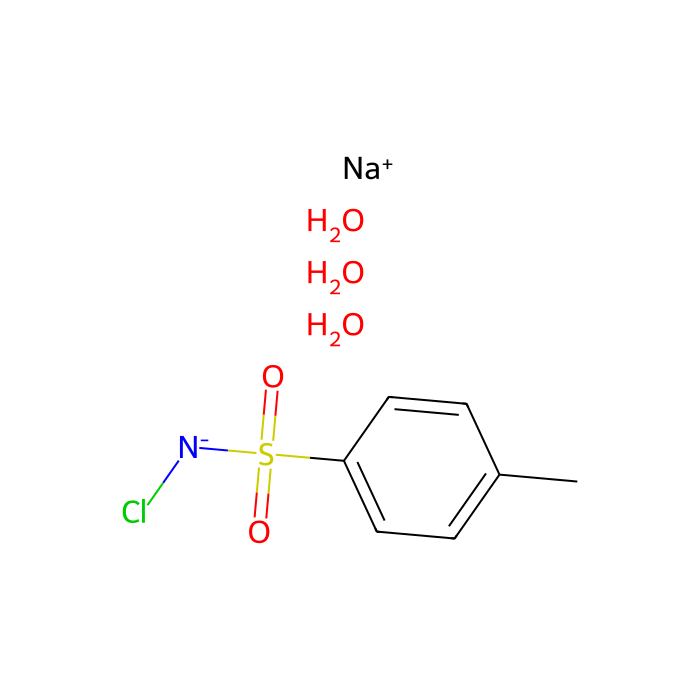
Chloramine T trihydrate - AR, ≥98%(T) , CAS No.7080-50-4

CAS: 7080-50-4 Cat. No.: C104061 Formula: C7H7CINNaO2S·3H2O Molecular Weight: 281.69 Beilstein Registry Number: 3924168 EC Number: 615-172-8
AVAILABLE TO ORDER
GRADE & PURITY AR ? Analytical Reagent grade — high-purity chemicals meeting strict assay limits for lab analysis. Use when accuracy matters and trace impurities could skew results. ≥98%(T)
Synonyms
Chloraseptin | Euclorina | Benzenesulfonamide, N-chloro-4-methyl-, sodium salt, trihydrate | Disifin | HALAMID AQUA | p-Toluenesulfonchloramide Sodium Salt | HY-U00087 | Sodium derivative of N-chloro-p-toluenesulfonamide trihydrate | CHLORAMINE-T TRIHYDRA
Storage
Protected from light,Argon charged,Room temperature
Shipped In
Normal
★
Size
USA
Germany (EU)*
Price
Qty
100g
C104061-100g
2 In stock
—

$12.90

$14.90
Save $2.00 (13.42%)
250g
C104061-250g
1 In stock
—

$28.90

$29.90
Save $1.00 (3.34%)
Enter a quantity for the sizes you want to add.
🧪
Why this grade

AR, ≥98%(T) AR for sensitive chromatographic and analytical workflows requiring minimal baseline interference.

🌡

Storage & shipping

Protected from light,Argon charged,Room temperature Ships Normal Check lot-specific COA for exact specifications.

📋

Quality documents

SDS, COA, datasheet, and spec sheet available for download. Lot-specific COA accessible via lot number lookup.

📚

Literature proof

Cited in 3 peer-reviewed publications across chromatography, organic synthesis, and cross-coupling reactions.

Overview

for the detection of halogens and bromate

Specifications

Synonyms
Chloraseptin | Euclorina | Benzenesulfonamide, N-chloro-4-methyl-, sodium salt, trihydrate | Disifin | HALAMID AQUA | p-Toluenesulfonchloramide Sodium Salt | HY-U00087 | Sodium derivative of N-chloro-p-toluenesulfonamide trihydrate | CHLORAMINE-T TRIHYDRA
Specifications & Purity
AR, ≥98%(T)
Storage
Protected from light,Argon charged,Room temperature
Shipped In
Normal
Grade
AR
Purity
≥98%(T)
Names and Identifiers
Pubchem Sid
Pubchem Sid Url
https://pubchem.ncbi.nlm.nih.gov/substance/504759000
Canonical Smiles
CC1=CC=C(C=C1)S(=O)(=O)[N-]Cl.O.O.O.[Na+]
IUPAC Name
sodium;chloro-(4-methylphenyl)sulfonylazanide;trihydrate
InChIKey
NZYOAGBNMCVQIV-UHFFFAOYSA-N
INCHI
1S/C7H7ClNO2S.Na.3H2O/c1-6-2-4-7(5-3-6)12(10,11)9-8;;;;/h2-5H,1H3;;3*1H2/q-1;+1;;;
Isomeric SMILES
CC1=CC=C(C=C1)S(=O)(=O)[N-]Cl.O.O.O.[Na+]
WGK Germany
2
Alternate CAS
127-65-1
UN Number
3263
Molecular Weight
281.69
Beilstein
3924168

Documentation

📋 Safety Data Sheet (SDS)

Comprehensive hazard, handling, storage, and regulatory compliance document.

<<<<<<< HEAD Download SDS → ======= Download SDS → >>>>>>> release248-p3

✅ Certificate of Analysis (COA)

Lot-specific quality data. Enter your lot number to retrieve the exact COA.

Look up COA →

📊 Datasheet

Quick-reference summary of product specifications and applications.

View datasheet →

🔬 Specification Sheet

Full quality attributes and acceptance criteria for this grade.

View spec sheet →

Advanced Data

Taxonomic Classification

Taxonomy Tree

KingdomOrganic compounds
SuperclassBenzenoids
ClassBenzene and substituted derivatives
SubclassBenzenesulfonamides
Intermediate Tree Nodes Not available
Direct ParentBenzenesulfonamides
Alternative Parents Tosyl compounds  Benzenesulfonyl compounds  Sulfonyls  Organosulfonic acids and derivatives  Organic metal halides  Organic sodium salts  Organic oxides  Organic nitrogen compounds  Hydrocarbon derivatives  
Molecular FrameworkAromatic homomonocyclic compounds
Substituents Benzenesulfonamide - Tosyl compound - Benzenesulfonyl group - Toluene - Organic sulfonic acid or derivatives - Organosulfonic acid or derivatives - Sulfonyl - Organic metal halide - Organic alkali metal salt - Organic sodium salt - Organic salt - Organic oxygen compound - Organosulfur compound - Organic nitrogen compound - Hydrocarbon derivative - Organic oxide - Aromatic homomonocyclic compound
DescriptionThis compound belongs to the class of organic compounds known as benzenesulfonamides. These are organic compounds containing a sulfonamide group that is S-linked to a benzene ring.
External Descriptors Not available
3D Structure
Interactive Chemical Structure Model


Associated Targets(Human)
EHMT2 Tchem Histone-lysine N-methyltransferase, H3 lysine-9 specific 3 (93046 Activities)
Activity TypeRelationActivity valueUnitsAction TypeJournalPubMed IddoiAssay Aladdin ID
Associated Targets(non-human)
GCN5 Histone acetyltransferase GCN5 (89 Activities)
Activity TypeRelationActivity valueUnitsAction TypeJournalPubMed IddoiAssay Aladdin ID
ffp 4'-phosphopantetheinyl transferase ffp (24982 Activities)
Activity TypeRelationActivity valueUnitsAction TypeJournalPubMed IddoiAssay Aladdin ID
Mechanisms of Action
Certificates (CoA,COO,BSE/TSE and Analysis Chart)
C of A & Other Certificates(BSE/TSE, COO):
Analytical Chart:

Find and download the COA for your product by matching the lot number on the packaging.

21 results found

Lot NumberCertificate TypeDateItem
J2621055J2621055Certificate of AnalysisOct 24, 2026 C104061
K2217467K2217467Certificate of AnalysisSep 04, 2026 C104061
A2606222A2606222Certificate of AnalysisJan 14, 2026 C104061
A2606223A2606223Certificate of AnalysisJan 14, 2026 C104061
A2606221A2606221Certificate of AnalysisJan 14, 2026 C104061
L2505031L2505031Certificate of AnalysisDec 09, 2025 C104061
L2423169L2423169Certificate of AnalysisDec 25, 2024 C104061
L2423170L2423170Certificate of AnalysisDec 25, 2024 C104061
H2408068H2408068Certificate of AnalysisAug 22, 2024 C104061
F2503143F2503143Certificate of AnalysisJul 04, 2024 C104061
J2510062J2510062Certificate of AnalysisNov 25, 2022 C104061
K2217458K2217458Certificate of AnalysisNov 25, 2022 C104061
K2217457K2217457Certificate of AnalysisNov 25, 2022 C104061
J2211744J2211744Certificate of AnalysisOct 15, 2022 C104061
J2211748J2211748Certificate of AnalysisOct 15, 2022 C104061
I2213177I2213177Certificate of AnalysisSep 27, 2022 C104061
I2213178I2213178Certificate of AnalysisSep 27, 2022 C104061
I2213180I2213180Certificate of AnalysisSep 27, 2022 C104061
I2213185I2213185Certificate of AnalysisSep 27, 2022 C104061
C2414038C2414038Certificate of AnalysisSep 27, 2022 C104061
C2204045C2204045Certificate of AnalysisMar 21, 2022 C104061
Chemical and Physical Properties
SolubilitySoluble in water and ethyl alcohol. Insoluble in benzene and ethers.
Sensitivitylight & Moisture & air sensitive
Flash Point(°F)377.6 °F
Flash Point(°C)192 °C
Melt Point(°C)167-170°C
Molecular Weight281.690 g/mol
XLogP3
Hydrogen Bond Donor Count3
Hydrogen Bond Acceptor Count6
Rotatable Bond Count1
Exact Mass281.01 Da
Monoisotopic Mass281.01 Da
Topological Polar Surface Area46.500 Ų
Heavy Atom Count16
Formal Charge0
Complexity231.000
Isotope Atom Count0
Defined Atom Stereocenter Count0
Undefined Atom Stereocenter Count0
Defined Bond Stereocenter Count0
Undefined Bond Stereocenter Count0
The total count of all stereochemical bonds0
Covalently-Bonded Unit Count5
Documents & Articles
Citations of This Product
Solution Calculators
Reviews

Customer Reviews

Application Protocols

No validated application protocols are provided for this specific item. The following are literature-style example workflows for research use; adjust to your system.

A. Rapid radioiodination of a peptide (literature example):

  • Reagents: peptide (10–50 µg), Na125I (1–5 mCi), 0.1 M phosphate buffer pH 7.4, Chloramine T freshly prepared at 1 mg/mL, sodium metabisulfite (or thiosulfate) 2 mg/mL.
  • Procedure: In a low-adsorption vial, combine peptide and Na125I in buffer (final volume 100–200 µL). Add Chloramine T to 50–100 µg/mL final; mix gently for 60 s at RT protected from light. Quench with equal volume of metabisulfite solution. Purify by size-exclusion (e.g., Sephadex G-25). Determine radiochemical purity by radio-HPLC.

B. Sulfide to sulfoxide oxidation (small molecule):

  • Reagents: sulfide (1.0 equiv), Chloramine T trihydrate (1.1 equiv), MeOH/H2O 1:1, optional NaHCO3 buffer.
  • Procedure: Dissolve substrate, add Chloramine T at RT, stir 30–60 min. Monitor by LC-MS. Quench with aq. thiosulfate, extract with EtOAc, wash brine, dry, and concentrate.

C. N‑Chlorination of secondary amines:

  • Reagents: amine (1.0 equiv), Chloramine T (1.05–1.2 equiv), solvent H2O/MeOH.
  • Procedure: Add Chloramine T portionwise at 0–5 °C, maintain pH ~7–8 with buffer. After completion, neutralize and extract. Handle N‑chloroamines with care (thermal sensitivity).

Note: These protocols are illustrative and for research use only.

Biological Roles

This compound is a synthetic laboratory reagent and does not have an intrinsic biological role in living systems.

Research-related biochemistry context (literature):

  • Protein/peptide labeling: Chloramine T is commonly used to generate electrophilic iodine species in situ for radioiodination or non-radioactive iodination of tyrosine residues. The reaction proceeds via oxidation of iodide to an I+ equivalent, enabling aromatic electrophilic substitution under mild aqueous conditions. The reagent does not act as a biological ligand; it is a chemical mediator of halogenation.
  • Oxidative modification studies: Controlled exposure can introduce specific oxidative changes (e.g., sulfoxidation of methionine in proteins) for analytical purposes or to probe oxidative sensitivity. Such applications are strictly in vitro and require immediate quenching and desalting to prevent over-oxidation.
  • Compatibility with buffers and biomatrices: Effective in phosphate, acetate, or citrate buffers near neutral pH; presence of competing reductants (e.g., DTT, excess Tris) quenches activity. Metal chelators (EDTA) can improve reproducibility by sequestering trace metals that catalyze decomposition.

Caveats:

  • Avoid claims of biological efficacy or therapeutic action; Chloramine T is for laboratory research use only.
  • Protein structural integrity can be compromised by overexposure; optimize reaction time (often seconds) and quench promptly with thiosulfate or metabisulfite to preserve function for downstream assays.
Buffer Applications

Typical use in buffers (literature guidance; not item specification):

  • Radioiodination/iodination: Chloramine T is often used in phosphate-buffered saline (PBS) or 0.05–0.2 M phosphate buffer at pH 7.0–7.5. Reaction times are intentionally short (30–120 s) at room temperature to limit over-iodination and oxidative side reactions.
  • Alternative buffers: Acetate (pH 5.5–6.5) or citrate (pH 5–6) can be used to modulate rate/selectivity for sensitive biomolecules. Avoid buffers containing primary amines (e.g., Tris) that can be N‑chlorinated and quench the reaction.
  • Concentration guidelines: Stock Chloramine T solutions are commonly prepared at 1–10 mg/mL in water or buffer immediately before use. Working additions are in the low micromole range for typical protein labeling scales (e.g., 10–100 µg reagent in 100–500 µL reaction). Always calibrate to the trihydrate formula weight when calculating molarity.
  • Quenching: Add an equimolar or slight excess of a reducing quench (sodium thiosulfate or sodium metabisulfite) after the desired reaction time to stop further iodination and to reduce reactive iodine species. Follow with desalting (e.g., gel filtration) for biomolecules.

Notes:

  • Light sensitivity and solution instability necessitate fresh preparation and protection from light during handling.
  • Maintain trace-metal control with EDTA if reproducibility is critical.
  • For non-biological oxidations, water–alcohol mixtures can replace buffered systems; adjust pH only if needed for reaction rate control.
Green Alternatives

Context: Chloramine T is an effective, easy-to-handle solid oxidant/N‑chlorinating agent, but it introduces chlorinated species and inorganic salt waste. Selection of greener alternatives depends on the transformation and substrate class.

Greener or alternative options (literature comparison):

  • Sodium hypochlorite (NaOCl, aqueous bleach): readily available, lower embodied energy as a bulk commodity; variable concentration and basicity can complicate precision reactions. Generates similar chloride waste; typically greener for large-scale oxidations in water.
  • Oxone (2KHSO5·KHSO4·K2SO4): strong oxygen-transfer oxidant; metal-free and effective for sulfide-to-sulfoxide, alcohol oxidations (with catalysts), and halogenation when combined with halide sources. Produces sulfate salts; often better EHS profile than chloramine-based reagents.
  • N‑Chlorosuccinimide (NCS): less aqueous-friendly, but in organic media can be used under solvent-minimized conditions; generates benign succinimide byproduct, though still a chlorinating agent with associated hazards.
  • Electrochemical oxidation: reagentless generation of electrophilic halogen or oxygen species under constant current; minimizes stoichiometric oxidant waste if equipment is available.

Tradeoffs:

  • Selectivity and kinetics differ; Chloramine T often affords rapid, clean iodination under mild aqueous conditions—a performance difficult to match with NaOCl without added control.
  • Waste profile: all halogenating reagents create halide waste; choosing water as solvent and minimizing stoichiometric excess improves green metrics.

Practical guidance:

  • For protein/peptide iodination, micro-scale use and short reaction times already minimize environmental load; focus on buffer reuse and appropriate neutralization (e.g., thiosulfate quench) before disposal per institutional guidelines.
Pharmaceutical Uses

Scope: No therapeutic or clinical claims are made. The information below pertains solely to research and manufacturing-support contexts.

Literature/manufacturing context:

  • Radiochemistry support reagent: Chloramine T is widely employed as an oxidizing mediator to introduce iodine isotopes (e.g., 125I, 131I) into tyrosine-containing biomolecules for in vitro assays, tracer development, and process research. Its solid form and predictable active chlorine content make it useful for small-scale radiosynthesis method development.
  • Quality considerations: For work related to regulated environments, users typically verify identity, hydration state, and active chlorine content, and may perform bioburden/endotoxin checks on in-house prepared solutions if interfacing with cleanroom operations. This product listing does not claim compliance with pharmacopeial monographs.
  • Formulation/excipient role: Chloramine T is not used as an excipient; it is consumed during reaction and removed by quenching and purification. Residuals are typically controlled by validated purification steps (e.g., size-exclusion chromatography for proteins) and analytical testing (e.g., chloride, p‑toluenesulfonamide).

Practical recommendations:

  • Document stoichiometry relative to iodide and reaction time rigorously for reproducibility.
  • Implement validated quench and clearance steps appropriate to the process scale.
  • For any application beyond basic research, consult local regulations and internal QA for suitability and specification setting.
Physical Properties

Item-specific properties: Not specified for this item; refer to CoA/Spec Sheet.

Literature/general properties (for reference; not product specifications):

  • Physical form: white to off-white crystalline solid (hydrate).
  • Melting point/decomposition: decomposes on heating, often reported to discolor and decompose around ~160–175 °C (literature, dec.).
  • Density: not well defined for hydrates; treat as a crystalline solid with bulk density dependent on particle size (literature: variable).
  • Solubility: highly soluble in water (commonly made as 1–10 mg/mL or higher in aqueous buffer); moderately soluble in methanol and ethanol; practically insoluble in nonpolar solvents such as ether and chloroform (literature).
  • pH of aqueous solutions: typically mildly basic to neutral depending on concentration and buffer (literature: around pH 7–10 in unbuffered water due to hydrolysis equilibria).
  • LogP: not applicable for this ionic, highly hydrated salt (literature: effectively very low).
  • Refractive index/UV cutoff: Not specified; typically not applicable for solids; consult method-specific data if using in spectrophotometric assays.

Notes for practitioners:

  • The N–Cl functionality is moisture-stable in the crystalline trihydrate but undergoes slow hydrolysis in solution; prepare fresh solutions for reproducibility in oxidation/iodination protocols.
  • Thermal behavior is governed by dehydration followed by N–Cl cleavage; avoid unnecessary heating.
  • Solution stability is reduced by exposure to light, transition metals, and reducing agents.
Quality & Grades

Item-specific grade: AR (Analytical Reagent).

What AR grade typically implies (general guidance; not a certificate of analysis):

  • AR denotes high chemical purity suitable for analytical applications and general laboratory use. It typically implies low levels of common inorganic contaminants and consistent assay of the active reagent. However, exact impurity limits (e.g., metals, halides, water content beyond hydration state) are method- and supplier-specific.
  • For oxidants like Chloramine T, AR grade focuses on consistent available active chlorine content and low interfering ions that could quench or catalyze unwanted side reactions.

Stabilization and handling considerations:

  • This listing does not indicate added stabilizers. If stabilizers or inhibitors are present, they would be stated on the CoA/Spec Sheet. For this item: Not specified for this item; refer to CoA/Spec Sheet.
  • Hydration state is trihydrate; assay calculations should be adjusted to the trihydrate formula weight when preparing solutions.

Recommendations for analytical users:

  • Verify active chlorine content or perform a standardization (e.g., iodometric titration) if high-precision stoichiometry is required, especially for kinetic or radiolabeling work.
  • For trace analysis or catalytic studies sensitive to metals, consult the CoA for metal content or perform a pre-test; AR grade is generally reliable, but critical applications may demand additional purification or freshly recrystallized material.

Documentation:

  • For exact specifications, limits, and test methods for this batch, consult the CoA and SDS associated with SKU C104061.
Reaction & Applications

Key research applications (literature; expand-on-use):

  • Electrophilic iodination/radioiodination mediator: In the presence of iodide/iodate or carrier-free radioiodide (e.g., 125I, 131I), Chloramine T generates electrophilic iodine species (I+, ICl-like) that selectively iodinate activated aromatic rings (e.g., tyrosine residues). Widely used in labeling peptides, proteins, and small molecules in buffered aqueous media at room temperature with short reaction times (typically 30–120 s for biomolecules).
  • N‑Chlorination and oxidative transformations: Transfers “Cl+” to amines and amides to form N‑chloro derivatives; promotes oxidative conversion of sulfides to sulfoxides, alkenes to chlorohydrins (in water/alcohol), and various halo-oxidations under mild conditions.
  • Aziridination/amination chemistry: Serves as a nitrene equivalent source (via TsNCl) in the presence of appropriate catalysts (e.g., metal porphyrins, Rh, Cu), enabling intramolecular and intermolecular C–N bond formation in organic synthesis.
  • Alcohol and polyol functionalization: Under certain conditions, can assist in oxidative functionalization (often in tandem with catalysts or co-oxidants like TEMPO), though Oxone or bleach may be preferred for green metrics.

Practical tips:

  • Prepare fresh solutions immediately before use; active chlorine diminishes upon standing, particularly under light.
  • For iodinations, perform reactions in phosphate buffer (pH ~7.4) and quench rapidly (e.g., with sodium metabisulfite or sodium thiosulfate) to minimize over-iodination and oxidative damage.
  • Control stoichiometry: typical use is sub-stoichiometric relative to iodide to generate electrophilic iodine in situ; in oxidations, stoichiometric quantities relative to substrate are common.
  • Remove inorganic byproducts (NaCl, p‑toluenesulfonamide) by aqueous workup or filtration; ion-exchange or size-exclusion is common for biomolecule labeling workflows.
Reaction Conditions

General conditions (literature guidance; adjust per substrate):

  • Solvents: water, phosphate buffer (pH 6.5–7.5), aqueous methanol/ethanol (10–80% v/v). Avoid strongly basic/acidic media unless mechanistically justified.
  • Temperature: typically ambient (20–25 °C). Low temperatures (0–10 °C) help curb over-oxidation in sensitive systems; mild warming can accelerate sluggish small-molecule reactions.
  • Stoichiometry: for iodination, Chloramine T is often used at 0.2–1.0 equivalents relative to iodide; for direct oxidations (e.g., sulfide → sulfoxide), 1.0–1.2 equivalents relative to substrate are common.
  • Time: biomolecule iodination proceeds in 0.5–2 minutes; small-molecule oxidations may require 10–120 minutes.
  • Catalysts/additives: none required for iodination; metal catalysts (e.g., Cu, Fe, Rh) can enable nitrene-transfer variants. EDTA may be added (0.1–1 mM) to suppress metal-catalyzed decomposition in aqueous media.

Example procedures (literature, indicative only):

  • Protein radioiodination: In 0.1 M phosphate buffer pH 7.4, mix substrate (10–100 µg) with Na125I and add Chloramine T (10–100 µg). React 60 s at RT, then quench with sodium metabisulfite or thiosulfate (molar excess vs. Chloramine T). Purify by gel filtration.
  • Sulfide oxidation: Dissolve substrate in 50:50 MeOH/H2O, add 1.1 equiv Chloramine T at RT. Stir 30–60 min; monitor by TLC/LC-MS. Quench with thiosulfate, extract with EtOAc, wash, dry, and concentrate to obtain sulfoxide.

Analytical monitoring:

  • Iodination: radio-TLC/HPLC for radiochemical yield; UV-HPLC for non-radioactive variants.
  • Oxidations: LC-MS or GC-MS; monitor for over-oxidation to sulfone and chlorinated byproducts.
Safety & Handling

Item-specific GHS details: Not specified for this item; refer to SDS for authoritative hazard classification, pictograms, signal word, and H-statements.

General safety guidance (literature; not specific certification):

  • Hazard profile: Chloramine T is an oxidizing, N‑chloro sulfonamide salt. It can cause irritation to skin, eyes, and respiratory tract. Strong oxidizing properties can initiate reactions with reducing agents, sulfides, iodide, and organic materials. Avoid dust formation and inhalation.
  • Incompatibilities: reducing agents (e.g., sulfites, bisulfite), strong acids (may release chlorinated species), ammonium salts, iodide (unless intentional in iodination protocols), heavy metal salts, combustible materials. Avoid contact with strong bases that can accelerate disproportionation.
  • PPE: wear lab coat, safety glasses or face shield, and appropriate chemically resistant gloves (e.g., nitrile). Use in a fume hood to avoid inhalation of dust or reactive vapors.
  • Handling: minimize exposure to light; avoid metal contamination; add reagent to solvent/buffer (not vice versa) to control exotherm; prepare fresh aqueous solutions and use promptly. Label solutions with preparation time due to declining active chlorine content.
  • First aid (overview; consult SDS):
    • Skin/eye contact: rinse with water for several minutes; remove contaminated clothing; seek medical attention if irritation persists.
    • Inhalation: move to fresh air; seek medical advice if symptoms occur.
    • Ingestion: rinse mouth; do not induce vomiting; seek medical attention.
  • Fire: non-flammable itself but can enhance combustion of other materials. Use water spray to cool containers; avoid dry chemicals that are incompatible. Firefighters should wear SCBA.

Always consult the product’s SDS for definitive instructions.

Solvent Selection

Applicability: Chloramine T trihydrate is a polar, ionic solid primarily used in aqueous or mixed aqueous-organic media.

General solvent behavior (literature):

  • Polarity class: highly polar/ionic; functions best in water or protic media.
  • Miscibility/solubility: highly soluble in water; soluble to moderately soluble in methanol and ethanol; limited solubility in acetonitrile; practically insoluble in ether, dichloromethane, and other nonpolar solvents.
  • Dielectric considerations: aqueous buffers (phosphate, acetate, citrate) are commonly used to modulate reaction rates and selectivity for iodination and mild oxidations.

When to choose which medium:

  • Aqueous buffer (pH 6.5–8): radioiodination/electrophilic iodination of phenolic residues (tyrosine) in peptides/proteins; controlled, short reaction times.
  • Water–methanol or water–ethanol: increases solubility of hydrophobic substrates for selective oxidations (e.g., sulfide to sulfoxide) while maintaining reagent activity.
  • Neat alcohols (MeOH/EtOH): for small-molecule oxidations when water-sensitive substrates are absent; monitor for transhalogenation side reactions.
  • Avoid strongly basic or strongly acidic media that accelerate N–Cl decomposition unless intentionally used for rapid reactions.

Small comparison (literature):

  • Chloramine T vs. N‑chlorosuccinimide (NCS): Chloramine T is more water-compatible and often milder in buffered aqueous systems; NCS is more suited to nonpolar organic solvents.
  • Chloramine T vs. NaOCl (bleach): Chloramine T provides more controlled N‑chlorination and is easier to handle in measured solid form; NaOCl solutions can vary in strength and contain excess base.
Storage & Reconstitution

Item-specific storage and shipping (from Product Data):

  • Storage conditions: Protected from light; Room temperature; Argon charged.
  • Shipped in: Normal conditions.

General guidance (literature; support for best practice):

  • Solid stability: The crystalline trihydrate is reasonably stable at ambient temperature when protected from light and moisture fluctuations. The argon charge helps minimize oxidative degradation and moisture exchange; reseal promptly and, if possible, blanket with inert gas after use.
  • Container: Store in a tightly closed, chemical-resistant container (amber if possible) to limit light exposure. Keep away from heat sources and segregate from reducing agents and organics.
  • Reconstitution/solution preparation: Dissolve in water or appropriate buffer immediately before use. Typical stock concentrations are 1–10 mg/mL. Filter sterilization (0.22 µm) may be used for sensitive biochemical applications; avoid metallic filter housings that could catalyze decomposition.
  • Solution stability: Aqueous solutions gradually lose active chlorine, especially under light and in the presence of trace metals; prepare fresh each session. If short-term storage is unavoidable, keep solutions on ice, protected from light, and use within a few hours; verify activity if critical.
  • Disposal: Quench unused solutions with sodium thiosulfate or sodium metabisulfite to reduce oxidizing species before disposal in accordance with institutional and local regulations.

Always consult the product’s SDS and CoA for definitive handling and stability information.

Structure & Identity

Brief overview: Chloramine T trihydrate is the hydrated sodium salt of p‑toluenesulfonchloramide, widely used as an electrophilic chlorinating/oxidizing reagent and as a mild oxidant for iodination chemistry in research settings.

Item-specific (from Product Data):

  • SKU: C104061
  • Product name: Chloramine T trihydrate
  • CAS: 7080-50-4
  • InChIKey: 252384 (as provided)
  • SMILES: Not specified for this item; refer to CoA/Spec Sheet.
  • Molecular formula: Not specified for this item; refer to CoA/Spec Sheet.
  • Molecular weight: Not specified for this item; refer to CoA/Spec Sheet.

Literature/structural description (general):

  • Common name: Chloramine-T (trihydrate); sodium p‑toluenesulfonchloramide trihydrate.
  • Representative structure: a p‑tolyl ring para-substituted by a sulfonamide (–SO2–NCl–) group; the sulfonamide N bears chlorine (N–Cl), and the sulfonyl group is bonded to a deprotonated nitrogen that is charge-balanced by Na+; three waters of crystallization are present.
  • Key functional groups: aryl sulfonamide, N‑chloroamide (N–Cl), sodium counterion, hydrate waters.
  • Ring systems: monosubstituted p‑methylbenzene (p‑tolyl).
  • Stereochemistry: none (achiral).

Typical identifiers (literature, for reference only; not item specs):

  • Synonyms: Chloramine-T; Chloramine-T hydrate; sodium p‑toluenesulfonchloramide trihydrate.
  • Typical empirical formula (trihydrate, literature): C7H7ClNNaO2S·3H2O.
  • Typical formula weight (trihydrate, literature): ~281.7 g/mol.

2D structure in words: a para-methylphenyl ring connected to –SO2–N(Cl)–, with the sulfonamide nitrogen deprotonated and paired with Na+; three lattice water molecules are associated.

Synthetic Utility

Functional profile (literature):

  • N‑Chlorinating agent: Delivers electrophilic chlorine to amines and amides, forming N‑chloro derivatives under mild conditions.
  • Oxidant: Facilitates transformations such as sulfide → sulfoxide, oxidative halogenation of alkenes (chlorohydrin formation in aqueous media), benzylic/allylic chlorination under certain conditions, and oxidative cyclizations.
  • Halogenation mediator: In conjunction with iodide, generates I+ species for clean aromatic iodination of activated substrates.
  • Nitrene precursor: The TsNCl motif can be leveraged (often with metal catalysts) to transfer nitrene equivalents to alkenes and C–H bonds, enabling aziridination and C–N bond construction.

Strategic advantages:

  • Aqueous compatibility allows late-stage functionalization of polar substrates and biomolecules.
  • Solid, weighable oxidant with consistent reactivity simplifies stoichiometric control compared to variable hypochlorite solutions.

Limitations and selectivity:

  • Over-oxidation may occur; careful control of stoichiometry, temperature, and reaction time is crucial.
  • Sensitive functionalities (thiols, thioethers, some enolizable centers) may undergo side reactions; protecting group strategies or alternative oxidants (Oxone, TEMPO/bleach) may be preferable for select cases.

Workup and downstream handling:

  • Inorganic byproducts (NaCl) and p‑toluenesulfonamide are typically benign and removable via aqueous washes or crystallization; for complex matrices, use ion exchange or chromatography.
  • Quenching with thiosulfate/metabisulfite is standard to eliminate residual oxidants and any electrophilic halogen species before isolation.
Target Specificity

Not applicable. This product is a small-molecule chemical reagent, not a biological targeting agent or antibody.

Guidance:

  • If using Chloramine T in protein/peptide iodination, any “specificity” arises from the chemistry of electrophilic aromatic substitution (e.g., preference for activated rings such as tyrosine side chains), not from molecular recognition. Reaction selectivity should be controlled by reaction time, pH, and reagent stoichiometry.

Item-specific data: None provided in Product Data for antigens, epitopes, clone, isotype, or species reactivity.

Frequently Asked Questions

What does AR mean?
AR is a defined analytical purity tier suitable for general analytical and reagent applications. It specifies a minimum assay percentage, controlled limits on common impurities (water, heavy metals, residue on ignition), and lot-to-lot consistency. AR is one of several purity tiers — choose based on the sensitivity and regulatory requirements of your method.
How should this product be stored?
Store at room temperature, protected from light, under argon. It is supplied under an argon blanket; reseal under inert gas after each use.
How is this product shipped?
This product ships under standard ambient conditions. No temperature-controlled packaging is required.
What are the CAS number, molecular formula and molecular weight?
The CAS Number is 7080-50-4, the molecular formula is C7H7ClNNaO2S·3H2O, and the molecular weight is 281.69 g/mol. InChIKey NZYOAGBNMCVQIV-UHFFFAOYSA-N.
What documentation is provided?
Available product documentation, including Certificates of Analysis (COA), Safety Data Sheets (SDS), and specification sheets, is shown in the product document area. Document availability and access follow the current site policy.

Shall we send you a message when we have discounts available?

Remind me later

Thank you! Please check your email inbox to confirm.

Oops! Notifications are disabled.