As an immunochemical reagent, this monoclonal antibody is intended for detection and capture of GNMT in research workflows rather than chemical synthesis.
Common research applications (general; not item-specific claims)
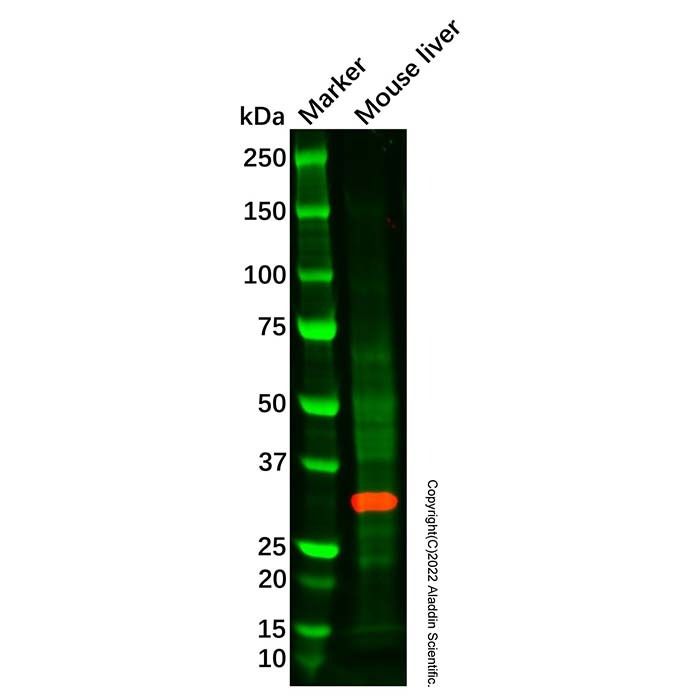
- Immunoblotting (WB): detection of denatured GNMT in cell/tissue lysates following SDS-PAGE and transfer.
- Immunoprecipitation (IP)/Co-IP: enrichment of GNMT and potential interaction partners from lysates for downstream MS or WB.
- Immunofluorescence (IF)/Immunocytochemistry (ICC): localization of GNMT in fixed cells via fluorescence microscopy.
- Immunohistochemistry (IHC): tissue-level detection of GNMT on fixed sections.
- ELISA/antigen quantification: plate-based assays using capture or detection formats.
GNMT context (literature)
- GNMT catalyzes methyl transfer from S-adenosyl-L-methionine (SAM) to glycine, producing sarcosine; it regulates SAM/SAH homeostasis. Studying GNMT with a specific mAb supports investigations of one-carbon metabolism and methylation balance.
Notes for successful use (general practice)
- Validate species cross-reactivity and epitope compatibility for your sample type. For mouse mAbs on mouse tissue, consider anti-mouse background mitigation.
- Optimize antibody dilution, antigen retrieval (IHC), and blocking conditions empirically.
Item-specific tested applications and recommended dilutions: Not specified for this item; refer to CoA/Spec Sheet.

 ZJ24F1215289