QUALITÄT & REINHEITMoligand™?Moligand™ — Aladdin's line of ligands and bioactive small molecules. Use for receptor, pathway, and binding studies needing defined small-molecule tools.≥99%
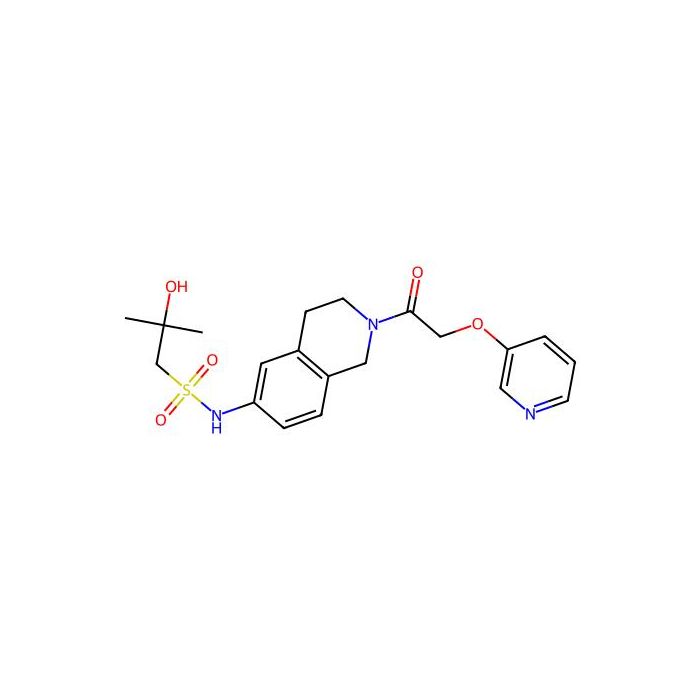
This compound belongs to the class of organic compounds known as tetrahydroisoquinolines. These are tetrahydrogenated isoquinoline derivatives.
External Descriptors
Not available
1. Djoumbou Feunang Y, Eisner R, Knox C, Chepelev L, Hastings J, Owen G, Fahy E, Steinbeck C, Subramanian S, Bolton E, Greiner R, and Wishart DS. ClassyFire: Automated Chemical Classification With A Comprehensive, Computable Taxonomy. Journal of Cheminformatics, 2016, 8:61.
Determine the necessary mass, volume, or concentration for preparing a solution.
Dilution Calculator
Determine the dilution needed to prepare a stock solution.
Reconstitution Calculator
Bewertungen
Kundenbewertungen
Application Protocols
Only item-specific, tested applications can be listed. The Product Data for this SKU does not include validated applications, assay formats, or recommended working concentrations.
Tested applications and recommended dilutions: Not specified for this item; refer to CoA/Spec Sheet.
Please design and validate protocols according to your assay requirements and consult the SDS/CoA for any handling specifics.
Biological Roles
Context (general, literature-based; not item-specific claims):
NAMPT (nicotinamide phosphoribosyltransferase) is the rate-limiting enzyme in the NAD+ salvage pathway that converts nicotinamide (NAM) to nicotinamide mononucleotide (NMN), subsequently converted to NAD+. Modulation of NAMPT activity alters cellular NAD+ pools, influencing redox balance and the activity of NAD+-dependent enzymes (e.g., sirtuins, PARPs).
Small-molecule NAMPT inhibitors are used as chemical probes to explore metabolic control, stress responses, DNA repair signaling (via PARP substrate availability), and epigenetic regulation (via sirtuin activity), in biochemical systems and cell models.
Relevance to Nampt-IN-1 (inference from name only; no item-specific potency/ selectivity data provided):
Nampt-IN-1 is positioned as a ligand intended for research on NAMPT biology. No data are provided here regarding Ki/IC50, off-target profile, or cellular activity; users should determine these experimentally or consult primary literature for the specific CAS/CID where available.
Experimental considerations (general):
Monitor NAD+/NADH and NAM/NMN levels to confirm pathway engagement.
Use time-course and dose-response studies; include rescue experiments (e.g., nicotinamide riboside or NMN supplementation) to evaluate on-pathway effects.
Assess cytotoxicity separately from on-target pathway modulation to avoid confounding interpretations.
Important: All uses are for research only. No clinical, diagnostic, or therapeutic uses are supported or implied.
Buffer Applications
This item is a small-molecule ligand and is not a buffering reagent. There are no item-specific buffer system recommendations in the Product Data.
Practical note (general): Prepare concentrated stock solutions in a suitable organic solvent (commonly DMSO), then dilute into your chosen assay buffer (e.g., HEPES, PBS, Tris) maintaining a consistent final organic solvent percentage across controls and treatments.
For precise buffer recipes, pH ranges, and ionic strengths, refer to your assay’s biochemical requirements; these are not properties of Nampt-IN-1 itself.
Green Alternatives
Because Nampt-IN-1 is a target-directed small molecule used primarily in discovery assays rather than in bulk synthesis, “green alternatives” considerations mainly relate to solvent choices for stock solutions and assay dilutions.
Greener solvent options for solution handling (general):
Prefer water-buffer systems with minimal DMSO (e.g., 0.1–0.5% v/v) when compatible with solubility and assay sensitivity.
Where possible, use ethanol over DMF/NMP as an intermediate solvent due to lower chronic toxicity, while verifying assay compatibility.
Avoid chlorinated solvents (DCM, chloroform) for routine stock preparation; they offer little benefit for bioassay dosing and increase environmental burden.
Comparison (general considerations):
DMSO: Widely accepted in assays; moderate EHS profile; readily recyclable; aim to minimize final assay percentage.
DMF/NMP: Powerful solvents but with higher reproductive and chronic toxicity profiles; restrict to situations where essential for dissolution.
EtOH/MeOH: More benign but may affect cellular membranes or enzyme activity at higher percentages; verify tolerance.
Operational green practices:
Scale solutions to immediate need to reduce waste.
Use amber vials to extend solution life and reduce repeat preparations.
Implement microplate-based serial dilutions to conserve solvent volumes.
Note: No item-specific solvent data are provided; validate solubility and stability experimentally using the least hazardous solvent system compatible with your assay.
Pharmaceutical Uses
No pharmacopeial status, excipient role, or manufacturing application is provided for this item. Nampt-IN-1 is offered strictly for research use (per Product Data: For research use only).
Research context (general): Small-molecule enzyme ligands are commonly employed for target validation, mechanistic studies, and screening in discovery settings. They are not manufactured or controlled to GMP standards unless explicitly stated; no such claims are made here.
Formulation guidance: Not applicable. Any solution preparation guidance provided elsewhere is intended for laboratory assays, not for therapeutic administration.
Physical Properties
Item-specific physicochemical specifications are not provided in the Product Data and should be confirmed on the CoA/Spec Sheet for your lot.
Appearance: Not specified for this item; refer to CoA/Spec Sheet.
Molecular Formula: Not specified for this item; refer to CoA/Spec Sheet.
Molecular Weight: Not specified for this item; refer to CoA/Spec Sheet.
Melting point: Not specified for this item; refer to CoA/Spec Sheet.
Boiling point: Not applicable/Not specified (most small-molecule inhibitors are non-volatile solids); confirm on CoA/Spec Sheet.
Solubility: Not specified for this item; refer to CoA/Spec Sheet.
LogP, pKa, refractive index, density: Not specified for this item; refer to CoA/Spec Sheet.
General guidance (literature/practice, not item-specific):
Bioactive small molecules in this class are commonly prepared as concentrated DMSO stock solutions (e.g., 10–50 mM), then diluted into aqueous assay buffers. Actual solubility and stability are strongly structure-dependent; verify experimentally.
Light and oxygen sensitivity can vary. This item is supplied with argon charging and −20°C storage guidance, consistent with protecting oxygen-/moisture-/light-labile functionalities; follow the Storage tab.
Important: Do not treat any of the above generalizations as specifications. For quantitative properties, consult the CoA/Spec Sheet and perform small-scale pretests to confirm solubility and stability under your assay conditions.
Quality and Grades
Item-specific grade: Moligand™ (per Product Data)
Description (general): Moligand™ denotes small-molecule ligands intended for research screening, target engagement studies, and chemical biology. This grade emphasizes identity and purity appropriate for discovery workflows (e.g., biochemical/biophysical assays, cell-based probes) rather than for GMP manufacturing.
What Moligand™ typically implies (general explanation; not a specification):
Sufficient purity for in vitro research use and SAR studies; actual purity assay (HPLC/UPLC area%, NMR) should be verified on the CoA for each lot.
Trace impurity limits, water/peroxide content, UV cutoff, residual metals are not specified in the Product Data; consult CoA/Spec Sheet. Do not assume LC/MS or NMR specs without documentation.
Stabilization and packaging (item-specific):
Storage at −20°C under argon and shipment on ice pads (per Product Data) indicate attention to oxidative/moisture sensitivity. Maintain inert atmosphere after opening when possible (e.g., recap under argon or nitrogen).
Fit-for-purpose guidance (practical):
For biochemical assays, record lot number and verify identity/purity by orthogonal methods as needed (e.g., LC-MS, 1H NMR). For cell assays, assess endotoxin only if your workflow demands it; not part of this item’s specification unless stated on the CoA.
If using for quantitative potency determination, confirm concentration by UV-Vis (if chromophore known) or qNMR to reduce dosing error.
Note: Where specific numeric specifications are needed for regulatory or validated methods, request the CoA/Spec Sheet for this SKU/lot.
Reaction and Applications
This product is positioned as a research ligand (Moligand™) rather than as a synthetic reagent. No manufacturer application text is provided beyond research-use context for small-molecule/compound libraries.
Applicability (item-specific):
Designed for use in biochemical or cell-based studies where modulation of a target such as NAMPT is investigated. No specific protocols, potencies, or assay formats are supplied in the Product Data.
If used as a chemical probe (general guidance, non-specific):
Confirm identity/purity (e.g., LC-MS, 1H NMR) prior to biological testing.
Prepare fresh DMSO stocks and minimize freeze–thaw cycles.
Validate functional readouts with orthogonal assays (biochemical enzymology vs. cellular NAD+ measurements) to deconvolute on-target effects.
Include appropriate negative and vehicle controls; assess compound aggregation (e.g., detergent sensitivity) where relevant.
Not typically used for synthetic reactions:
As a tailored bioactive scaffold, it is not generally employed as a reagent, catalyst, or building block in preparative organic chemistry. For synthetic methodology, refer to the “Synthetic Utility” and “Reaction Conditions” tabs, which are not typically applicable here.
Reaction Conditions
Not applicable. Nampt-IN-1 is offered as a research ligand rather than as a reagent for chemical synthesis or catalysis. No item-specific reaction conditions, catalytic uses, or named-reaction roles are provided in the Product Data.
If you require reaction-condition guidance, please consult methodology references pertinent to your target transformation and use appropriate reagents designed for that purpose.
Safety and Handling
Authoritative safety information must be taken from the item’s SDS. The Product Data for this SKU does not include GHS classifications or hazard statements.
GHS/CLP (item-specific):
Signal Word: Not specified for this item; refer to SDS.
Hazard Statements (H-phrases): Not specified for this item; refer to SDS.
Pictograms and Precautionary Statements: Not specified for this item; refer to SDS.
General laboratory precautions (good practice; not item-specific):
Handle in a chemical fume hood; avoid inhalation, ingestion, and skin/eye contact.
Avoid aerosol formation when opening lyophilized solids. If dusting is possible, consider a dust mask/respirator per institutional policy.
Use dedicated tools for weighing to prevent cross-contamination with other screening compounds.
Incompatibilities and stability considerations (general):
Store under inert atmosphere (argon, per Product Data) and at −20°C. Minimize exposure to air, moisture, and light during handling.
Avoid strong oxidizers and strong acids/bases unless specifically required by your protocol.
First-aid (summary; defer to SDS):
Skin/eye contact: Rinse with copious water for at least 15 minutes; remove contaminated clothing; seek medical attention.
Inhalation: Move to fresh air; keep at rest; seek medical attention if symptoms occur.
Ingestion: Rinse mouth; do not induce vomiting; seek medical advice.
Waste disposal: Collect solutions and solids as hazardous chemical waste according to local regulations and your EHS guidance.
Solvent Selection
Item-specific solubility data are not provided; the guidance below reflects common practices for small-molecule research ligands and should be validated experimentally for this compound.
Likely solvent choices for stock preparation (general practice):
DMSO: Primary choice for many heteroaromatic/amide-rich inhibitors; enables high-concentration stocks (e.g., 10–50 mM). Filter-sterilize if needed.
DMF or NMP: Alternatives when DMSO solubility is limited; consider cytotoxicity in cellular assays and perform serial dilutions into aqueous buffer quickly to minimize exposure.
Aqueous buffers: Direct dissolution may be poor for hydrophobic scaffolds; consider cosolvent strategies (DMSO to final 0.1–1% v/v in assay) and/or cyclodextrin carriers if compatible with your biology.
Volatile solvents (MeOH, EtOH, ACN): Useful for intermediate dissolution prior to aqueous dilution; verify assay tolerance.
Polarity/miscibility context (general):
DMSO, DMF, NMP are polar aprotic and fully miscible with water in typical assay ranges, supporting precise dosing via serial dilution.
Practical tips (general):
Warm gently (25–40°C) and vortex/sonicate to assist dissolution, avoiding prolonged heating.
Determine intrinsic solubility by incremental solvent addition to a known mass; record mg/mL achieved. Avoid precipitation upon dilution by prediluting the DMSO stock into buffer with vigorous mixing.
For biophysical assays (SPR, ITC), control the final DMSO match between sample and reference channels.
Important: Because no item-specific solubility/compatibility data are provided, run a small pilot solubility and stability test under your exact assay conditions.
Storage and Reconstitution
Item-specific storage and shipping conditions (from Product Data):
Storage: Store at −20°C, argon charged.
Shipping: Ice chest + ice pads.
Practical guidance (compatible with the above; not a specification):
Upon receipt, keep the container tightly closed under inert gas. Allow to warm to room temperature in a desiccated environment before opening to minimize moisture ingress and condensation.
For solid material, partition into single-use aliquots under inert atmosphere to reduce cumulative air/moisture exposure and freeze–thaw cycles.
Reconstitution: Not specified for this item; refer to CoA/Spec Sheet. As a general research practice for small-molecule ligands, prepare a concentrated stock in dry, anhydrous solvent (commonly DMSO), record the exact concentration, and store small aliquots at −20°C or −80°C, protected from light. Validate stability of solutions under your specific conditions.
Avoid repeated freeze–thaw. Thaw on ice, mix gently to homogenize, and promptly return unused portions to cold storage.
Shelf life: Not specified for this item; refer to CoA/Spec Sheet. Always inspect for precipitation, discoloration, or visible degradation before use.
Structure and Identity
Brief description: Nampt-IN-1 is a catalogued small-molecule research ligand in Aladdin’s Moligand series, named to indicate activity against the enzyme NAMPT (nicotinamide phosphoribosyltransferase). Item-specific structural identifiers provided for this SKU are limited.
Item identifiers (Product Data):
SKU: N648149
Product Name: Nampt-IN-1
CAS: 1698878-14-6
PubChem CID: 92044379
InChIKey: 296937 (as provided)
SMILES: Not specified for this item; refer to CoA/Spec Sheet.
Molecular Formula: Not specified for this item; refer to CoA/Spec Sheet.
Molecular Weight: Not specified for this item; refer to CoA/Spec Sheet.
Structural features (general chemistry knowledge, not item-specific):
“Nampt-IN-1” nomenclature suggests a small-molecule inhibitor targeted to the enzyme NAMPT. Compounds in this chemical biology class are typically aromatic heterocycles or amide/urea-containing scaffolds designed to occupy the NAMPT active site. Exact functional groups and stereochemistry for this specific item are not provided in the Product Data.
2D structure (descriptive, general):
Without an item-specific SMILES or structural diagram, a precise 2D description cannot be given. For structural confirmation and cheminformatics work (similarity searches, docking, QSAR), please consult the item’s CoA/Spec Sheet or the referenced PubChem CID entry to retrieve the definitive structure.
Notes:
All structure-defining parameters not explicitly listed above should be confirmed against the certificate of analysis (CoA) supplied with the lot you receive.
Synthetic Utility
This product is not positioned as a synthetic building block or reagent; it is a finished small-molecule ligand intended for biological research assays.
As such, typical synthetic utility topics (e.g., protecting-group strategies, cross-coupling handles, functional group interconversions) are not applicable without a disclosed structure. No SMILES or functional group information is supplied in the Product Data for this item.
If you intend to derivatize the scaffold for SAR or tagging (general advice): consult the definitive structure (via CoA or referenced CID) to identify potential vectors for modification and to evaluate liabilities (e.g., metabolically soft motifs, hydrolytically labile linkages). Nonetheless, this is outside the intended use for the catalog item as supplied.
Target Specificity
Only item-specific information may be listed here.
Declared target, affinity, and selectivity: Not specified for this item; refer to CoA/Spec Sheet or primary literature associated with CAS 1698878-14-6 and CID 92044379.
Note: While the product name suggests relevance to NAMPT, no quantitative target-binding data or selectivity panel results are provided in the Product Data.
Häufig gestellte Fragen
What is the purity of this product?
This product is supplied at ≥99% purity (chemical assay). Lot-specific values are stated on the Certificate of Analysis.
What is Moligand??
Moligand? is one of Aladdin Scientific's premium product lines, formulated for high-purity applications across multiple workflows. Compared to standard grades in the same workflow, Moligand? products typically offer tighter specifications, more rigorous QC, and stronger lot-to-lot consistency.
How should this product be stored?
Store at ?20 °C under argon. It is supplied under an argon blanket; reseal under inert gas after each use.
How is this product shipped?
This product ships in an insulated container with ice pads. Unpack on arrival and transfer it to the storage condition stated above.
What are the CAS number, molecular formula and molecular weight?
The CAS Number is 1698878-14-6, the molecular formula is C20H25N3O5S, and the molecular weight is 419.49 g/mol. InChIKey QHHSCLARESIWBH-UHFFFAOYSA-N.
What documentation is provided?
Available product documentation, including Certificates of Analysis (COA), Safety Data Sheets (SDS), and specification sheets, is shown in the product document area. Document availability and access follow the current site policy.
Benötigen Sie Hilfe bei der Auswahl der Qualität?
Unser Leitfaden zur Qualitätsauswahl behandelt Reinheit, Stabilisatorstatus und Anwendungseignung für alle Varianten in unserem Katalog.
Wir verwenden Cookies, um die ordnungsgemäße Funktion der Website sicherzustellen und, soweit zulässig, Ihr Nutzererlebnis zu verbessern. Sie können Ihre Einstellungen jederzeit unter „Einstellungen“ verwalten. Weitere Informationen finden Sie in unserer Cookie-Richtlinie.
Dürfen wir Sie über Rabattaktionen informieren?
Später erinnern
Vielen Dank! Bitte überprüfen Sie Ihren E-Mail-Posteingang, um zu bestätigen.
Products are supplied to verified businesses, institutions, and qualified professionals for research and development use only. Not for use in humans, animals, diagnosis, or therapy.

 I2610488