Determine the necessary mass, volume, or concentration for preparing a solution.
| Activity Type | Relation | Activity value | Units | Action Type | Journal | PubMed Id | doi | Assay Aladdin ID |
|---|

AR, ≥99.8% AR for sensitive chromatographic and analytical workflows requiring minimal baseline interference.
Room temperature Ships Normal Check lot-specific COA for exact specifications.
SDS, COA, datasheet, and spec sheet available for download. Lot-specific COA accessible via lot number lookup.
Cited in 1635 peer-reviewed publications across chromatography, organic synthesis, and cross-coupling reactions.
Comprehensive hazard, handling, storage, and regulatory compliance document.
Download SDS →Lot-specific quality data. Enter your lot number to retrieve the exact COA.
Look up COA →Full quality attributes and acceptance criteria for this grade.
View spec sheet →Taxonomy Tree
| Kingdom | Organic compounds |
|---|---|
| Superclass | Organic acids and derivatives |
| Klasse | Organic carbonic acids and derivatives |
| Subclass | Organic carbonic acids |
| Intermediate Tree Nodes | Not available |
| Direct Parent | Organic carbonic acids |
| Alternative Parents | Carbonate salts Organic sodium salts Organic oxides Hydrocarbon derivatives Carbonyl compounds |
| Molecular Framework | Aliphatic acyclic compounds |
| Substituents | Carbonate salt - Carbonic acid - Organic alkali metal salt - Organic oxygen compound - Organic oxide - Hydrocarbon derivative - Organic sodium salt - Organic salt - Organooxygen compound - Carbonyl group - Aliphatic acyclic compound |
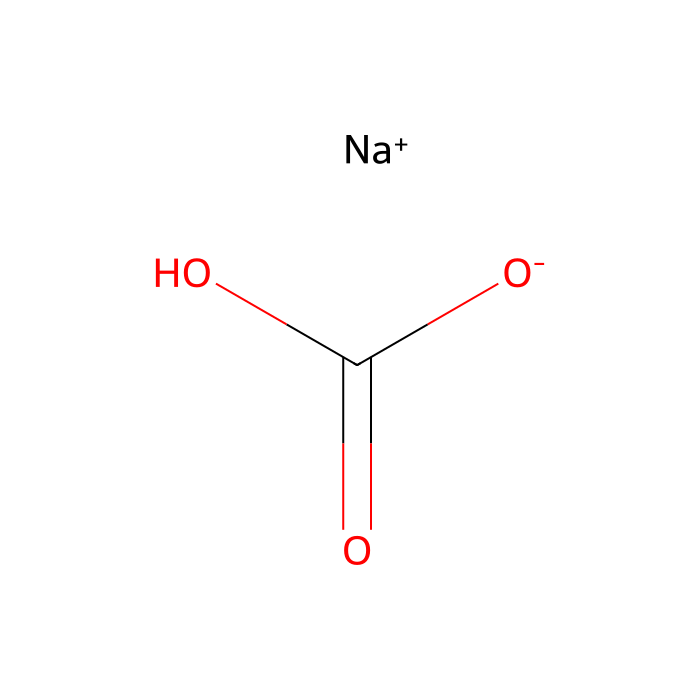
| Beschreibung | This compound belongs to the class of organic compounds known as organic carbonic acids. These are compounds comprising the carbonic acid functional group. |
| External Descriptors | one-carbon compound - organic sodium salt |
| Activity Type | Relation | Activity value | Units | Action Type | Journal | PubMed Id | doi | Assay Aladdin ID |
|---|
| Activity Type | Relation | Activity value | Units | Action Type | Journal | PubMed Id | doi | Assay Aladdin ID |
|---|
| Activity Type | Relation | Activity value | Units | Action Type | Journal | PubMed Id | doi | Assay Aladdin ID |
|---|
| Activity Type | Relation | Activity value | Units | Action Type | Journal | PubMed Id | doi | Assay Aladdin ID |
|---|
| Activity Type | Relation | Activity value | Units | Action Type | Journal | PubMed Id | doi | Assay Aladdin ID |
|---|
| Activity Type | Relation | Activity value | Units | Action Type | Journal | PubMed Id | doi | Assay Aladdin ID |
|---|
| Activity Type | Relation | Activity value | Units | Action Type | Journal | PubMed Id | doi | Assay Aladdin ID |
|---|
| Activity Type | Relation | Activity value | Units | Action Type | Journal | PubMed Id | doi | Assay Aladdin ID |
|---|
| Activity Type | Relation | Activity value | Units | Action Type | Journal | PubMed Id | doi | Assay Aladdin ID |
|---|
| Activity Type | Relation | Activity value | Units | Action Type | Journal | PubMed Id | doi | Assay Aladdin ID |
|---|
| Activity Type | Relation | Activity value | Units | Action Type | Journal | PubMed Id | doi | Assay Aladdin ID |
|---|
| Activity Type | Relation | Activity value | Units | Action Type | Journal | PubMed Id | doi | Assay Aladdin ID |
|---|
| Activity Type | Relation | Activity value | Units | Action Type | Journal | PubMed Id | doi | Assay Aladdin ID |
|---|
| Activity Type | Relation | Activity value | Units | Action Type | Journal | PubMed Id | doi | Assay Aladdin ID |
|---|
| Activity Type | Relation | Activity value | Units | Action Type | Journal | PubMed Id | doi | Assay Aladdin ID |
|---|
| Activity Type | Relation | Activity value | Units | Action Type | Journal | PubMed Id | doi | Assay Aladdin ID |
|---|
| Activity Type | Relation | Activity value | Units | Action Type | Journal | PubMed Id | doi | Assay Aladdin ID |
|---|
Find and download the COA for your product by matching the lot number on the packaging.
| Lot Number | Certificate Type | Datum | Artikel |
|---|---|---|---|
 K2514647 | Certificate of Analysis | Sep 01, 2026 | S112331 |
| J2614610 | Certificate of Analysis | May 11, 2026 | S112331 |
| J2614609 | Certificate of Analysis | May 11, 2026 | S112331 |
| J2614582 | Certificate of Analysis | May 11, 2026 | S112331 |
| E2621571 | Certificate of Analysis | May 11, 2026 | S112331 |
| E2621603 | Certificate of Analysis | May 11, 2026 | S112331 |
| E2621593 | Certificate of Analysis | May 11, 2026 | S112331 |
| C2627470 | Certificate of Analysis | Mar 09, 2026 | S112331 |
| C2627466 | Certificate of Analysis | Mar 09, 2026 | S112331 |
| C2627457 | Certificate of Analysis | Mar 09, 2026 | S112331 |
| K2514775 | Certificate of Analysis | Oct 30, 2025 | S112331 |
| K2514697 | Certificate of Analysis | Oct 30, 2025 | S112331 |
| A2612474 | Certificate of Analysis | Oct 30, 2025 | S112331 |
| A2612561 | Certificate of Analysis | Oct 30, 2025 | S112331 |
| C2609096 | Certificate of Analysis | Oct 30, 2025 | S112331 |
| H2514397 | Certificate of Analysis | Jul 08, 2025 | S112331 |
| H2514426 | Certificate of Analysis | Jul 08, 2025 | S112331 |
| H2514447 | Certificate of Analysis | Jul 08, 2025 | S112331 |
| K2503060 | Certificate of Analysis | Jul 08, 2025 | S112331 |
| D2522493 | Certificate of Analysis | Apr 10, 2025 | S112331 |
| D2522478 | Certificate of Analysis | Apr 10, 2025 | S112331 |
| D2522471 | Certificate of Analysis | Apr 10, 2025 | S112331 |
| L2417696 | Certificate of Analysis | Nov 30, 2024 | S112331 |
| D2501636 | Certificate of Analysis | Nov 30, 2024 | S112331 |
| D2501531 | Certificate of Analysis | Nov 30, 2024 | S112331 |
| L2417675 | Certificate of Analysis | Nov 30, 2024 | S112331 |
| B2517307 | Certificate of Analysis | Nov 30, 2024 | S112331 |
| B2517306 | Certificate of Analysis | Nov 30, 2024 | S112331 |
| B2517280 | Certificate of Analysis | Nov 30, 2024 | S112331 |
| K2404685 | Certificate of Analysis | Nov 11, 2024 | S112331 |
| E2520030 | Certificate of Analysis | Nov 11, 2024 | S112331 |
| K2404543 | Certificate of Analysis | Nov 11, 2024 | S112331 |
| J2417777 | Certificate of Analysis | Oct 25, 2024 | S112331 |
| J2417779 | Certificate of Analysis | Oct 25, 2024 | S112331 |
| J2412713 | Certificate of Analysis | Oct 19, 2024 | S112331 |
| J2412712 | Certificate of Analysis | Oct 18, 2024 | S112331 |
| H2405524 | Certificate of Analysis | Aug 16, 2024 | S112331 |
| H2405533 | Certificate of Analysis | Aug 16, 2024 | S112331 |
| H2405532 | Certificate of Analysis | Aug 16, 2024 | S112331 |
| E2410470 | Certificate of Analysis | May 23, 2024 | S112331 |
| E2410441 | Certificate of Analysis | May 20, 2024 | S112331 |
| E2410440 | Certificate of Analysis | May 20, 2024 | S112331 |
| D2428506 | Certificate of Analysis | May 07, 2024 | S112331 |
| D2428505 | Certificate of Analysis | May 07, 2024 | S112331 |
| C2316278 | Certificate of Analysis | Apr 12, 2024 | S112331 |
| C2316287 | Certificate of Analysis | Apr 12, 2024 | S112331 |
| B2429513 | Certificate of Analysis | Mar 12, 2024 | S112331 |
| C2421056 | Certificate of Analysis | Jan 05, 2024 | S112331 |
| A2402346 | Certificate of Analysis | Jan 05, 2024 | S112331 |
| A2402341 | Certificate of Analysis | Jan 05, 2024 | S112331 |
| A2402345 | Certificate of Analysis | Jan 05, 2024 | S112331 |
| A2402344 | Certificate of Analysis | Jan 05, 2024 | S112331 |
| L2301429 | Certificate of Analysis | Dec 13, 2023 | S112331 |
| L2301396 | Certificate of Analysis | Dec 11, 2023 | S112331 |
| K2316289 | Certificate of Analysis | Nov 23, 2023 | S112331 |
| K2316287 | Certificate of Analysis | Nov 23, 2023 | S112331 |
| K2316288 | Certificate of Analysis | Nov 23, 2023 | S112331 |
| H2318724 | Certificate of Analysis | Sep 06, 2023 | S112331 |
| H2318723 | Certificate of Analysis | Sep 01, 2023 | S112331 |
| G23181165 | Certificate of Analysis | Jul 27, 2023 | S112331 |
| F23271394 | Certificate of Analysis | Jul 03, 2023 | S112331 |
| H2318722 | Certificate of Analysis | Jul 01, 2023 | S112331 |
| F23271411 | Certificate of Analysis | Jul 01, 2023 | S112331 |
| E23081369 | Certificate of Analysis | May 13, 2023 | S112331 |
| E23081081 | Certificate of Analysis | May 13, 2023 | S112331 |
| E23081082 | Certificate of Analysis | May 11, 2023 | S112331 |
| E23081139 | Certificate of Analysis | May 11, 2023 | S112331 |
| C2316277 | Certificate of Analysis | Mar 18, 2023 | S112331 |
| A2303536 | Certificate of Analysis | Jan 07, 2023 | S112331 |
| A2303488 | Certificate of Analysis | Jan 05, 2023 | S112331 |
| J2209235 | Certificate of Analysis | Oct 26, 2022 | S112331 |
| J2209234 | Certificate of Analysis | Oct 18, 2022 | S112331 |
| J2209231 | Certificate of Analysis | Oct 18, 2022 | S112331 |
| G2222825 | Certificate of Analysis | Jul 28, 2022 | S112331 |
| G2222816 | Certificate of Analysis | Jul 28, 2022 | S112331 |
| G2222812 | Certificate of Analysis | Jul 28, 2022 | S112331 |
| B2226045 | Certificate of Analysis | Mar 05, 2022 | S112331 |
| B2207504 | Certificate of Analysis | Feb 14, 2022 | S112331 |
| C2203316 | Certificate of Analysis | Feb 14, 2022 | S112331 |
| C2203125 | Certificate of Analysis | Feb 14, 2022 | S112331 |
| B2207502 | Certificate of Analysis | Feb 10, 2022 | S112331 |
| B2207503 | Certificate of Analysis | Feb 10, 2022 | S112331 |
| F2201270 | Certificate of Analysis | Jun 24, 2021 | S112331 |
| F2121329 | Certificate of Analysis | Jun 24, 2021 | S112331 |
| Empfindlichkeit | Moisture sensitive. |
|---|---|
| Brechungsindex | 1.500 |
| Schmelzpunkt (°C) | 270°C |
| Molekulargewicht | 84.007 g/mol |
| XLogP3 | |
| Hydrogen Bond Donor Count | 1 |
| Hydrogen Bond Acceptor Count | 3 |
| Rotatable Bond Count | 0 |
| Exact Mass | 83.9823 Da |
| Monoisotopic Mass | 83.9823 Da |
| Topological Polar Surface Area | 60.400 Ų |
| Heavy Atom Count | 5 |
| Formal Charge | 0 |
| Complexity | 33.900 |
| Isotope Atom Count | 0 |
| Defined Atom Stereocenter Count | 0 |
| Undefined Atom Stereocenter Count | 0 |
| Defined Bond Stereocenter Count | 0 |
| Undefined Bond Stereocenter Count | 0 |
| The total count of all stereochemical bonds | 0 |
| Covalently-Bonded Unit Count | 2 |
Our grade selection guide covers purity, stabilizer status, and application suitability for all variants in our catalog.
View AR grade guide →