
Rapamycin: A Life-Balance Regulator Born from Easter Island Soil
Rapamycin: A Life-Balance Regulator Born from Easter Island Soil
Rapamycin, also known as sirolimus, is a macrocyclic lactone compound with distinctive biological activities. Since its discovery in the 1970s, its research value has been progressively uncovered: from an initial candidate antifungal agent, to a clinically widely used immunosuppressant, and more recently to a compound with potential applications in anti-ageing and anticancer therapies. Throughout this process, rapamycin has remained at the forefront of biomedical research.
I. Basic Characteristics of Rapamycin
1.1 Discovery and Origin
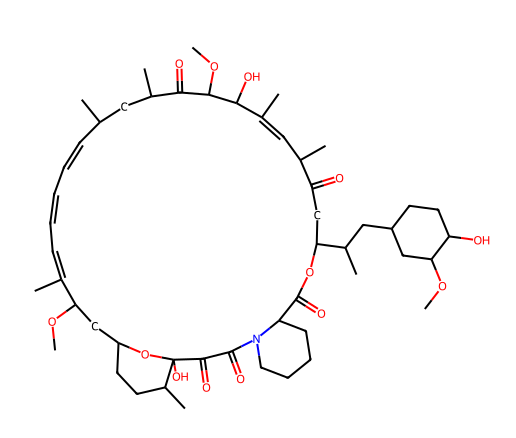
Figure 1 Chemical structure of rapamycin
Rapamycin was first identified in 1975 as a fermentation product of a Streptomyces hygroscopicus strain isolated from soil samples collected on Rapa Nui (Easter Island), Chile, by scientists at Ayerst Laboratories in Canada. Because of its geographic origin, the compound was named “rapamycin.” Early studies revealed that it possessed antifungal activity, but its development stalled for a time because more effective antifungal agents were already available. It was not until the 1980s, when researchers discovered its potent immunosuppressive effects, that rapamycin once again drew significant scientific attention.
1.2 Chemical Properties
Rapamycin has the molecular formula C51H79NO13 and a molecular weight of 914.17. It belongs to the class of macrocyclic lactone compounds and features a 31-membered macrolide ring bearing multiple distinct functional groups, which underlie its unique biological activities. At room temperature, rapamycin is a white crystalline powder that is insoluble in water but readily soluble in organic solvents such as methanol, ethanol, and chloroform.
II. Mechanism of Action of Rapamycin
Rapamycin exerts its effects primarily by inhibiting the mammalian target of rapamycin (mTOR) signaling pathway. mTOR is a serine/threonine protein kinase belonging to the phosphatidylinositol 3-kinase–related kinase (PIKK) family and plays a central regulatory role in a variety of biological processes, including cell growth, proliferation, differentiation, metabolism, and autophagy.
2.1 Composition and Function of the mTOR Signaling Pathway
mTOR exists in two structurally and functionally distinct complexes: mTOR complex 1 (mTORC1) and mTOR complex 2 (mTORC2). mTORC1 is composed of mTOR, Raptor (regulatory-associated protein of mTOR), mLST8 (mammalian lethal with SEC13 protein 8), and other components. It primarily responds to growth factors, nutrients (such as amino acids and glucose), and energy status, thereby regulating processes such as protein synthesis and ribosome biogenesis. mTORC2, which consists of mTOR, Rictor (rapamycin-insensitive companion of mTOR), mLST8, and other subunits, is involved in the regulation of cytoskeletal reorganization, cell survival, and metabolic processes.
2.2 Inhibitory Effects of Rapamycin on the mTOR Signaling Pathway
After entering the cell, rapamycin first binds to FK506-binding protein 12 (FKBP12) to form a complex. This complex specifically recognizes and binds to the FKBP12–rapamycin-binding (FRB) domain of mTOR within mTORC1, thereby inhibiting the kinase activity of mTORC1. Once mTORC1 activity is suppressed, phosphorylation of its downstream substrates, ribosomal protein S6 kinase 1 (S6K1) and eukaryotic translation initiation factor 4E-binding protein 1 (4E-BP1), is reduced. Inhibition of S6K1 phosphorylation impairs ribosome biogenesis and protein synthesis, while reduced phosphorylation of 4E-BP1 promotes its binding to eukaryotic translation initiation factor 4E (eIF4E), preventing eIF4E from participating in the assembly of the translation initiation complex and further suppressing protein synthesis. In addition, rapamycin can promote the induction of autophagy by inhibiting mTORC1, and autophagy plays an important role in the removal of damaged organelles and the maintenance of intracellular homeostasis. It should be noted that rapamycin exerts only weak inhibitory effects on mTORC2, which generally become evident only at relatively high concentrations or after prolonged treatment.
III. Major Application Areas of Rapamycin
3.1 Immunosuppressive effects: A key drug in organ transplantation
In the immune system, mTORC1 signaling is crucial for T-cell activation, proliferation, and effector differentiation. By inhibiting T-cell responses to antigen and cytokine signals, rapamycin restricts clonal expansion and functional maturation, exerting immunosuppressive effects.
1)Organ transplantation
After solid-organ transplantation such as kidney or liver transplantation, the recipient’s immune system recognizes the graft as “non-self,” triggering T-cell–mediated rejection. Rapamycin reduces acute rejection risk by suppressing excessive T-cell activation and proliferation. It is often used in combination with calcineurin inhibitors (such as cyclosporine or tacrolimus) and glucocorticoids, forming an important component of maintenance immunosuppression regimens.
2)Advantages and features
Unlike some traditional immunosuppressants, rapamycin acts more at the level of cell growth and metabolic decision-making rather than merely blocking early receptor signals. Thus, while inhibiting T-cell proliferation, its impact on certain memory immune functions is relatively controllable. In addition, its inhibitory effects on smooth muscle cells and vascular wall proliferation have been applied in drug-eluting stents and other interventional products to reduce restenosis risk.
3.2 Antitumor potential: Cutting off abnormal proliferation signals
The mTOR signaling pathway is persistently hyperactivated in many tumors, often due to abnormalities in upstream PI3K/AKT, Ras, or growth-factor receptors. Many tumor cells rely heavily on mTORC1-driven protein synthesis, metabolic reprogramming of glucose and lipids, and cell-cycle progression to maintain a “high-proliferation, high-metabolism” state.
Rapamycin and its derivatives (such as Everolimus, Temsirolimus, etc.) inhibit mTORC1 to:
1)Suppress tumor-cell protein synthesis and growth-signal transduction,
2)Reduce expression of angiogenesis-related factors,
3)In some models, restore or enhance tumor-cell sensitivity to apoptotic signals.
At present, rapamycin-class drugs have been applied or entered clinical research in certain kidney cancers, breast cancers, neuroendocrine tumors, and hereditary diseases involving mTOR pathway abnormalities. Especially for tumor subtypes strongly driven by mTOR signaling, selecting suitable populations via biomarkers can substantially improve efficacy and the benefit–risk ratio.
3.3 Anti-aging research: A potential modulator of lifespan and healthspan
In multiple model organisms (including yeast, nematodes, fruit flies, and mice), inhibiting mTOR signaling has been shown to extend lifespan or healthspan. By reducing mTORC1 activity, enhancing autophagy, and improving proteostasis and mitochondrial function, rapamycin has demonstrated in animal studies:
1)Delaying age-related declines in organ function;
2)Improving models of age-related diseases such as metabolic syndrome and neurodegenerative disorders;
3)Extending overall lifespan or healthspan in some models.
It should be emphasized that anti-aging applications in humans remain in the research stage. Key issues such as dosage, safety window, timing, and population selection are not yet fully defined. Current studies focus more on intervening in age-related diseases, immunosenescence, and metabolic syndrome, rather than a simplistic concept of “lifespan extension drugs.”
IV. From a single inhibitor to a precise “pathway modulation tool”
With deeper understanding of mTOR pathway structure and function, rapamycin’s role is shifting from a simple inhibitor to a “tool molecule” for precise regulation of signaling networks. This transition is mainly reflected in:
1)Combination therapy strategies
Combining rapamycin with chemotherapy, other targeted therapies, or immunotherapies to leverage its regulation of cell growth, metabolism, and the immune microenvironment, thereby enhancing overall antitumor effects or improving resistance and toxicity profiles.
2)Biomarker-based population stratification
By assessing mTOR-pathway mutations, phosphorylation status, and downstream effector expression, researchers can identify patient subgroups more sensitive to mTOR inhibition, enabling rapamycin-class drugs to be used more precisely in diseases that truly depend on mTOR signaling.
3)Development of next-generation specific inhibitors
Building on rapamycin, researchers are developing more selective mTORC1/mTORC2 inhibitors, dual- or multi-target inhibitors, and molecules with higher tissue- or cell-type selectivity, aiming for a better balance among efficacy, toxicity, and long-term safety.
V. Related Products from Aladdin
Product Name | Catalog No. | Grade and Purity |
Rapamycin | Moligand™, ≥95% (HPLC) | |
Rapamycin | Moligand™, ≥98% (HPLC) | |
Rapamycin | Ready-to-use solution, 2.5 mg/mL in DMSO (2.74 mM), from Streptomyces hygroscopicus | |
Rapamycin | Moligand™, 10 mM in DMSO | |
Rapamycin | GMP | |
Rapamycin; Sirolimus-C,d | -- | |
Ridaforolimus (Deforolimus, MK-8669), rapamycin analog | Moligand™, ≥95% | |
Seco-rapamycin | -- | |
Rapamycin-D3 | ≥98% deuterated forms (d1–d3), 1 mg/mL in ethanol | |
Seco-rapamycin sodium salt | Moligand™, 10 mM in DMSO | |
Everolimus (RAD001) | Moligand™, 10mM in DMSO | |
Everolimus | Moligand™, ≥98% | |
Temsirolimus | Moligand™, ≥98% | |
Temsirolimus | Moligand™, 10mM in DMSO |
VI. Experimental Applications and Key Operational Considerations
6.1 Common experimental concentrations and treatment regimens (for research reference only)
(1) Cell experiments: Common treatment concentrations are in the range of approximately 1–100 nM, with 10–20 nM often used as a starting concentration, and lower doses being sufficient for sensitive cell lines. The duration of treatment can range from several hours (for detecting acute changes in signaling) to 24–72 h (for assessing endpoints such as proliferation, apoptosis, or autophagy), and should be optimized according to the specific experiment.
(2) Animal experiments: Common routes of administration include intraperitoneal injection and oral dosing (gavage or incorporation into feed or drinking water). The dosage and treatment schedule must strictly follow the published literature or the requirements of ethical approval, and should not be directly copied from cell-culture dosing regimens.The above dosing schemes need to be adjusted according to the experimental model, animal species, and research objectives, and are intended only as starting points for method design.
6.2 Dissolution and storage
(1) Preparation of stock solution: Rapamycin is usually dissolved in anhydrous DMSO to prepare a concentrated stock solution (e.g., 1–10 mM), which is then aliquoted, protected from light, and stored below −20 °C. When used, the stock is added to culture medium or buffer at the required volume ratio, ensuring that the final DMSO content generally does not exceed 0.1–0.2% (v/v).
(2) Stability considerations: Repeated freeze–thaw cycles should be avoided, and small aliquots can be prepared in advance. Working solutions should be used on the day of preparation, and prolonged storage at room temperature and exposure to strong light should be minimized.
6.3 Control design and readout indices
(1) Solvent control: An equal amount of DMSO should be included as a negative (vehicle) control to exclude the effects of the solvent itself on cells or tissues.
(2) Positive/mechanistic controls: In autophagy studies, nutrient deprivation (such as EBSS treatment) can be used as a positive control for autophagy induction. In signaling pathway studies, other mTOR inhibitors or upstream activators may be used in combination to verify pathway specificity.
(3) Readout indices: Common detection indices include Western blot markers such as p-S6K, p-4E-BP1, LC3-II, and p-Akt; assays for cell proliferation and viability such as CCK-8, EdU incorporation, and ATP measurement; and evaluation of autophagic flux using LC3 protein levels, mCherry–GFP–LC3 reporter systems, p62 degradation, and related indicators.
Discovered in Easter Island soil, rapamycin has become one of the core molecules linking immunoregulation, cancer therapy, and aging research. By forming a complex with FKBP12 and specifically inhibiting mTORC1, it reshapes cellular growth and metabolic “decision-making,” underpinning its multiple application prospects from organ transplantation to antitumor treatment and anti-aging studies. In the future, as precision medicine and pathway-stratified research advance, rapamycin and its derivatives may be used in more refined and safer ways as “life-switch regulators” for precise interventions in specific diseases and populations.
Aladdin: https://www.aladdinsci.com/