
Methyl palmitoleate is a fatty acid methyl ester produced by the esterification of palmitoleic acid with methanol and belongs to the class of C16 monounsaturated fatty acid esters. It features moderate viscosity, good lubricity, low volatility, and excellent film-forming properties as well as biodegradability. Consequently, it has wide-ranging applications in metalworking lubricants, cleaning solvents, plasticizer intermediates, surfactant synthesis, leather and textile auxiliaries, and agricultural formulations. Owing to its derivation from renewable lipid resources and its favorable environmental compatibility, methyl palmitoleate is regarded as a promising functional platform raw material in green chemical processes and formulation chemistry.
I. Basic Information on Methyl Palmitoleate
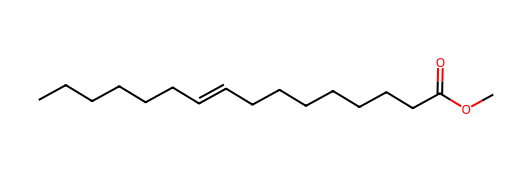
Figure 1 Chemical structure of methyl palmitoleate
Methyl palmitoleate, with the chemical name methyl (Z)-hexadec-9-enoate, has the molecular formula C₁₇H₃₂O₂ and CAS No. 1120-25-8. It is an unsaturated fatty acid methyl ester belonging to the class of monounsaturated fatty acid esters. Its molecular structure contains one carbon–carbon double bond, a feature that imparts distinctive chemical properties and application potential.
Typical physicochemical characteristics include:
- A colorless to pale-yellow oily liquid at room temperature with a relatively faint odor;
- A moderate molecular weight, low melting and pour points, and good low-temperature fluidity;
- Pronounced hydrophobicity, with excellent wetting and spreading behavior on metals and other nonpolar materials;
- Origin from natural fatty acids, with good biodegradability and a low risk of environmental accumulation.
In industrial production, vegetable oils or lipid feedstocks rich in palmitoleic acid are commonly used as raw materials. These are first hydrolyzed to obtain the corresponding fatty acids, followed by acid- or base-catalyzed esterification with methanol to yield methyl palmitoleate. Subsequent distillation and purification steps are used to control acid value, water content, and levels of impurities.
II. Preparation Methods of Methyl Palmitoleate
2.1 Chemical Catalysis
Chemical catalysis is currently one of the most commonly used industrial methods for producing methyl palmitoleate, mainly involving acid- and base-catalyzed transesterification. In this approach, natural oils and fats containing palmitoleic acid (such as fish oil, animal fats, and certain vegetable oils) are used as feedstocks and react with methanol in the presence of a catalyst.
In acid-catalyzed systems, typical catalysts include sulfuric acid and hydrochloric acid. The reaction is usually carried out at relatively high temperatures (60–80 °C) for a prolonged period (4–8 h), with methanol in excess to improve the conversion rate. The advantages of acid catalysis are its good tolerance toward free fatty acids in the feedstock, making it suitable for high–acid value materials. However, it is associated with strong equipment corrosion and a relatively complicated post-treatment process.
Base-catalyzed transesterification uses sodium hydroxide, potassium hydroxide, or their methanolic solutions as catalysts. The reaction conditions are relatively mild, with temperatures generally in the range of 40–60 °C and shorter reaction times (1–3 h), and the conversion is typically high. Nevertheless, basic catalysts are sensitive to free fatty acids and moisture in the raw materials, which can easily lead to saponification. Therefore, the feedstock must be pretreated to reduce its acid value and water content.
2.2 Enzymatic Catalysis
Enzymatic catalysis is a green and environmentally friendly technique that uses lipases as catalysts for the transesterification reaction. Common choices include Novozyme 435 and Lipase TL IM. Enzymatic reactions are usually conducted under mild conditions, with temperatures of about 30–50 °C and a near-neutral pH.
Compared with chemical catalysis, enzymatic catalysis offers several advantages: mild reaction conditions, reduced equipment corrosion, easier product separation and purification, and the absence of saponification reactions, all in line with the principles of green chemistry. At present, however, the relatively high cost and limited operational lifetime of lipase catalysts, as well as the longer reaction times, still restrict their large-scale industrial application to some extent. Nonetheless, with the ongoing progress in enzyme engineering, the catalytic efficiency and stability of lipases are steadily improving, and the industrial prospects for producing methyl palmitoleate via enzymatic catalysis are very promising.
III. Performance Characteristics of Methyl Palmitoleate
3.1 Physical properties
The main physical properties of methyl palmitoleate are as follows: its boiling point is approximately 318–320 °C, its open-cup flash point is about 160 °C, its density at 20 °C is 0.865–0.875 g/cm³, and its refractive index at 20 °C is 1.458–1.462. It is insoluble in water but readily soluble in organic solvents such as ethanol, ether, and petroleum ether. These physical characteristics determine the specific conditions under which methyl palmitoleate is used and handled in different application scenarios.
3.2 Chemical properties
Because its molecular structure contains a carbon–carbon double bond, methyl palmitoleate is unsaturated and readily undergoes oxidation and addition reactions. During long-term storage in air, it should be kept in the dark and tightly sealed to prevent oxidative deterioration. It can also be subjected to hydrogenation to saturate the double bond and obtain saturated fatty acid methyl esters, thereby modifying its properties. In addition, methyl palmitoleate shows the common behavior of ester compounds and can be hydrolyzed under acidic or basic conditions to yield palmitoleic acid and methanol.
3.3 Biodegradability
Methyl palmitoleate exhibits good biodegradability and can be broken down by microorganisms in the natural environment into harmless carbon dioxide and water, making it environmentally friendly. This feature means that its use as a lubricant, fuel additive, and in other applications does not cause long-term environmental pollution, in line with the current trend toward increasingly stringent environmental protection requirements.
IV. Application Fields of Methyl Palmitoleate
4.1 Cold-rolling oil for steel: rust prevention, lubrication, and cooling
In steel cold-rolling processes, methyl palmitoleate can serve as a base oil or formulation component for cold-rolling oils, providing lubrication, cooling, rust prevention, and certain antibacterial effects. Its long-chain fatty acid methyl ester structure can form an adsorbed film on metal surfaces, reducing direct metal–metal contact, thereby lowering friction and temperature and suppressing wear. At the same time, it offers some hydrophobic protection to metal surfaces, helping slow oxidative corrosion, and can inhibit the growth of certain microorganisms, thus improving processing stability and surface quality during cold rolling.
4.2 Basic uses in crude oil and refined oil
Palm fatty acids and their methyl esters connect upstream to traditional oil-and-fat uses in the industrial chain: crude fractions can be used as raw materials for soap making and in hot-dip tin-plating processes; refined oil products, when meeting relevant standards, may be used as edible oils or food-industry ingredients. Methyl palmitoleate itself is more often used as a chemical feedstock or functional additive, working together with upstream palm-oil systems to form a complete application chain from base oils to functional chemicals.
4.3 As a lubricant and oiliness agent
1)Lubricants for metal processing
Methyl palmitoleate has good oiliness and extreme-pressure lubricating properties, and can be used as an oiliness agent in volatile stamping oils, forming oils, cutting fluids, and minimum-quantity lubrication systems. The long hydrocarbon chain in its molecule easily forms an oriented adsorption layer on metal surfaces, effectively reducing friction coefficients and wear rates, improving surface finish and dimensional accuracy, decreasing tool wear, and enhancing processing efficiency.
2)Lubrication and protection in cleaning systems
Adding an appropriate amount of methyl palmitoleate to solvent-based cleaners and some metalworking fluids can combine degreasing with lubrication and rust protection during cleaning–reprocessing, preventing instantaneous wear and corrosion caused by fully exposed metal surfaces after cleaning.
4.4 As a low-viscosity organic solvent
Methyl palmitoleate is a low-viscosity, low-odor organic solvent that can dissolve many kinds of organic substances, and may be used as:
1)A solvent for pesticides and herbicides
In certain herbicide and pesticide formulations, methyl palmitoleate can act as a solvent or co-solvent to help dissolve and disperse active ingredients, improving formulation stability and applicability.
2)A component in inks and coatings
It can be used as an ink solvent or a paint-removal solvent component. With good solvency and relatively mild volatility, it improves fluidity, film formation, and cleaning performance in these systems.
3)A component of solvent-based cleaners
In metal surface pretreatment and equipment cleaning, methyl palmitoleate can be part of solvent cleaners, providing effective dissolution and desorption of oils, waxes, and organic residues, while maintaining good material compatibility.
4.5 Plasticizer intermediate
1)Feedstock for plasticizer synthesis
Methyl palmitoleate can serve as an intermediate for plasticizer synthesis, being converted via transesterification or condensation into polyol ester plasticizers. These plasticizers are highly hydrophobic and compatible, and are widely used in plastics such as polyvinyl chloride (PVC).
2)Improving plastic processing and performance
Adding plasticizers derived from methyl palmitoleate to plastics can enhance flexibility, ductility, and plasticity; lower processing temperature and shear stress; make plastics easier to process and mold; and help improve low-temperature impact resistance and long-term fatigue performance.
4.6 Surfactants and fine-chemical feedstocks
1)Surfactant feedstock
Methyl palmitoleate can be used to prepare various surfactants, including soaps, amides, amidoamines, and certain chlorinated lubricating-oil products. By introducing hydrophilic groups onto the fatty acid methyl ester backbone, surfactants with emulsifying, dispersing, wetting, foaming, or defoaming functions can be obtained.
2)Application fields
These surfactants are widely used in detergents, cosmetics, food emulsions, pesticide formulations, textile auxiliaries, and metalworking fluids, where they function as emulsifiers/solubilizers, dispersion stabilizers, surface-tension regulators, and tactile improvers in formulations.
4.7 Leather additives and textile auxiliaries
1)Applications in leather processing
In the leather industry, methyl palmitoleate and its derivatives can be used as softeners, waterproofing agents, and lubricant components. By improving inter-fiber slip and hydrophobicity, they increase leather softness, water resistance, and abrasion resistance, and improve the feel and gloss of finished products.
2)Applications in textile auxiliaries
In textile processing and finishing, methyl palmitoleate can be a component of softeners, leveling agents, or antistatic agents, enhancing softness, luster, and antistatic performance, while also improving processability and wearing comfort of fabrics.
4.8 Application potential in agriculture
In agriculture, methyl palmitoleate can serve as a component or carrier solvent in plant disease-control formulations. Studies suggest that formulations based on methyl palmitoleate show certain antibacterial and protective effects against some plant pathogens (such as root rot and leaf spot in Panax notoginseng). Meanwhile, by improving wetting, spreading, and adhesion of agents on plant surfaces, it can increase utilization of active ingredients and potentially promote crop dry or fresh weight, thus benefiting yield and quality.
V. Aladdin-related products
Product Name | Catalog No. | Grade |
Methyl palmitoleate | ≥98% | |
Methyl palmitoleate | ≥99% (GC), liquid | |
Methyl palmitoleate | Analytical standard | |
Methyl palmitoleate | Moligand™, 10 mM in DMSO | |
cis-9-Hexadecenoic Acid | Moligand™, ≥98% | |
cis-9-Hexadecenoic Acid | Moligand™, analytical standard | |
cis-9-Hexadecenoic Acid | Moligand™, 10mM in DMSO |
Overall, methyl palmitoleate leverages the excellent lubricity, suitable solvency, biocompatibility, and derivatizability conferred by its fatty acid methyl ester structure. It functions across steel cold rolling and metal machining, solvent and cleaning systems, plasticizer intermediates, surfactant feedstocks, leather and textile auxiliaries, and agricultural formulations. With rising demand for renewable resources and environmentally friendly chemicals, palm-oil-based fatty acid methyl esters are expected to further expand in green lubricants, eco-solvents, and bio-based materials.
Aladdin: https://www.aladdinsci.com/