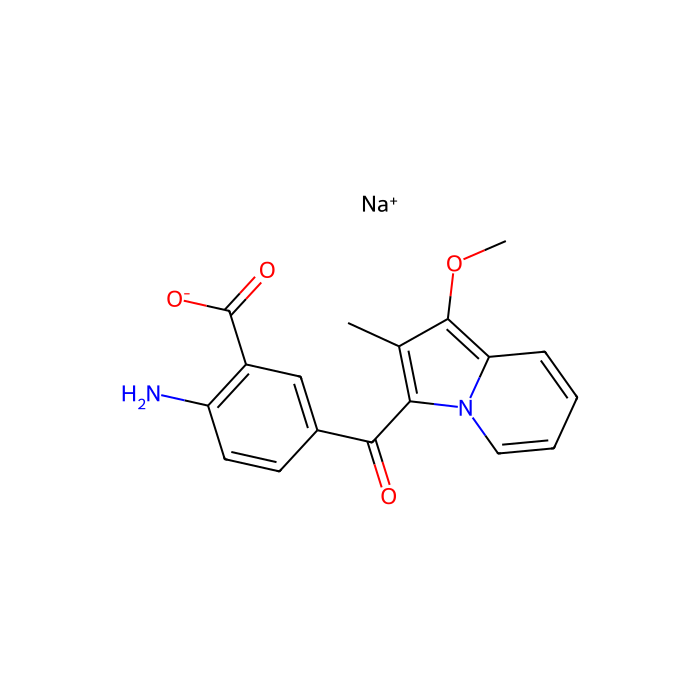
Selective allosteric FGFR inhibitor (IC 50 = 1.9 μM, FGFR1). Potent antiproliferative agent. Potently inhibits FGF2-induced epithelial cell proliferation and migration (IC 50 values are 31 and 15 nM respectively).
Storage
Store at -20°C,Argon charged,Desiccated
Shipped In
Ice chest + Ice pads
This product requires cold chain shipping. Ground and other economy services are not available.
Note
Wherever possible, you should prepare and use solutions on the same day. However, if you need to make up stock solutions in advance, we recommend that you store the solution as aliquots in tightly sealed vials at -20°C. Generally, these will be useable for up to one month. Before use, and prior to opening the vial we recommend that you allow your product to equilibrate to room temperature for at least 1 hour. Need more advice on solubility, usage and handling? Please visit our frequently asked questions (FAQ) page for more details.
This compound belongs to the class of organic compounds known as aryl-phenylketones. These are aromatic compounds containing a ketone substituted by one aryl group, and a phenyl group.
External Descriptors
organic sodium salt
1. Djoumbou Feunang Y, Eisner R, Knox C, Chepelev L, Hastings J, Owen G, Fahy E, Steinbeck C, Subramanian S, Bolton E, Greiner R, and Wishart DS. ClassyFire: Automated Chemical Classification With A Comprehensive, Computable Taxonomy. Journal of Cheminformatics, 2016, 8:61.
Determine the necessary mass, volume, or concentration for preparing a solution.
Dilution Calculator
Determine the dilution needed to prepare a stock solution.
Reconstitution Calculator
Reviews
Customer Reviews
Application Protocols
Protocol-level, item-specific guidance has not been provided for this product.
Tested applications and recommended working concentrations: Not specified for this item; refer to CoA/Spec Sheet.
Positive controls/assay references: Not specified for this item; refer to CoA/Spec Sheet.
General recommendation
Establish dose–response curves and vehicle-matched controls in your own system. Validate solubility and target engagement with orthogonal readouts before large-scale studies.
Biological Roles
Context from the literature (for scientific background; not product-specific specifications)
SSR128129E is reported as a selective modulator of fibroblast growth factor receptor (FGFR) signaling, frequently described as acting through a non-ATP-competitive mechanism in several studies. FGFRs (FGFR1–4) are receptor tyrosine kinases that regulate development, angiogenesis, and cellular proliferation/survival via MAPK/ERK, PI3K/AKT, PLCγ, and STAT pathways.
Use in research: Compounds that attenuate FGFR signaling are widely utilized to dissect FGF-driven biology, to benchmark assay performance in biochemical kinase formats, and to probe pathway dependencies in cell models.
Selectivity considerations: Literature reports for SSR128129E highlight selectivity within the FGFR family relative to broader kinome panels; however, selectivity can be assay- and context-dependent. Researchers should confirm target engagement in their specific system using orthogonal methods (e.g., phosphorylation readouts, CETSA/thermal shift, or binding assays).
ADME/cell entry: Small-molecule FGFR modulators commonly exhibit sufficient permeability for cell-based use when delivered from DMSO stocks; serum binding and efflux transporters can modulate effective intracellular exposure and should be considered during experimental design.
Important note
No therapeutic or clinical claims are made. This product is supplied strictly for research use. For definitive, lot-specific identity and purity information, consult the CoA/Spec Sheet.
Buffer Applications
This item is a bioactive small molecule, not a buffering agent. It is not typically used to prepare buffer systems or control pH.
Practical note
When using in biological buffers, ensure the final organic solvent (e.g., DMSO) is minimized and consistent across controls. Pre-warm and mix thoroughly to avoid precipitation. If adsorption losses are suspected, incorporate low levels of carrier protein or surfactant compatible with the assay.
Green Alternatives
For bioactive screening compounds, “green alternatives” primarily concern solvent and process choices rather than replacement of the active entity. Consider greener solvent systems and handling practices during preparation, analysis, and disposal.
Greener solvent strategies (general)
Prefer water/biological buffers with minimal DMSO where feasible; maintain DMSO ≤0.1–0.5% v/v in assays.
When organic mobile phases are required (analytical): choose acetonitrile over methanol for better efficiency (less solvent per separation) or consider ethanol where chromatographic performance allows.
Avoid NMP/DMF when possible due to unfavorable environmental, health, and safety profiles.
Ethanol: Renewable origin possible; higher volatility; compatible with some bioassays.
2-Propanol: Greener than many aprotics; useful as a minor co-solvent in analytics.
DMF/NMP: Strong solvency but poorer EHS metrics; avoid for live-cell work.
Process considerations
Minimize waste by preparing small aliquots at concentrations aligned with near-term use.
Use micro-scale analytics (UPLC) to reduce solvent consumption.
Ensure proper waste segregation; DMSO-organic mixtures typically go to halogen-free organic waste streams per institutional guidelines.
Pharmaceutical Uses
No pharmacopeial/excipient status or formulation grade is specified for this catalog item. It is provided for research use only.
General research-use contexts (non-clinical, non-therapeutic)
Analytical reference: May be used as a reference standard for method development and validation in preclinical bioanalysis (e.g., LC–MS in vitro matrices), subject to internal qualification.
Preformulation screening: Solubility, stability, and compatibility studies in common vehicles (DMSO, aqueous buffers, simple cosolvent systems) to support in vitro dosing solution preparation.
In vitro ADME: Suitable for metabolic stability, microsomal incubation, or plasma protein binding experiments after internal method qualification.
Important
Not for human or veterinary use. No medical, diagnostic, or clinical application is claimed or implied. For any regulated use, establish full suitability and traceability using the lot-specific CoA/Spec Sheet and your institution’s quality system.
Physical Properties
Item-specific physico-chemical specifications have not been provided for this catalog entry.
Appearance: Not specified for this item; refer to CoA/Spec Sheet.
Melting point: Not specified for this item; refer to CoA/Spec Sheet.
Boiling point: Not applicable/typically not reported for complex bioactive solids; not specified for this item.
Density: Not specified for this item; refer to CoA/Spec Sheet.
Solubility: Not specified for this item; refer to CoA/Spec Sheet.
LogP/logD, pKa, refractive index: Not specified for this item; refer to CoA/Spec Sheet.
General guidance (literature/practice)
Many kinase-pathway modulators exhibit good solubility in anhydrous DMSO and variable solubility in aqueous media; co-solvent approaches (DMSO→buffer dilution) are commonly used for assay preparation.
When preparing solutions for screening, confirm concentration by UV-Vis or LC/LC–MS if a chromophore is present; extinction coefficients are compound-specific and should be determined experimentally.
If hygroscopic or air-sensitive behavior is suspected (argon-charged storage is indicated for this item), handle quickly under dry inert gas and use anhydrous solvents.
Quality & Grades
Grade/Purity: Not specified for this item; refer to CoA/Spec Sheet.
What this typically implies for screening compounds (general information)
Research-use small molecules are commonly provided at high purity suitable for biochemical/cellular screening and analytical studies. Actual assay suitability depends on the specific impurity profile and residual solvents—verify via the provided CoA.
Identity confirmation is typically supported by NMR and/or LC–MS; chromatographic purity is often determined by HPLC/UPLC with UV or MS detection. For this specific item, consult its CoA/Spec Sheet for the analytical methods used and acceptance criteria.
Stabilization: No stabilizer is listed for this item. If stability is a concern, maintain under the recommended inert, desiccated conditions and minimize freeze–thaw cycles.
Recommendations
Before use in sensitive biological assays (e.g., kinase panels, cell-based phenotypic screens), document purity/identity from the lot-specific CoA.
For analytical method development (e.g., LC–MS quantitation), assess peak homogeneity across orthogonal methods to rule out coeluting impurities.
Reaction & Applications
This product is offered as a bioactive small molecule for research use rather than as a synthetic reagent. Accordingly, classical synthetic “reaction applications” (e.g., as a catalyst, base, or electrophile) do not typically apply.
Research applications (general, literature/practice)
Chemical biology: Use as a pathway-modulating reference compound for FGFR-related signaling studies (literature), enabling target validation and phenotypic profiling.
Assay development: Serves as a positive control/benchmark in biochemical or biophysical binding assays (e.g., kinase panels, thermal shift, SPR/biolayer interferometry where applicable to the target).
Omics integration: Supports chemoproteomic or phosphoproteomic workflows to quantify pathway response signatures upon compound treatment.
Analytical standard: Can be used to develop and validate LC–MS quantitation in matrices relevant to in vitro ADME (microsomes, plasma) when permissible.
Notes
Always verify target modulation in your system with orthogonal readouts (biochemistry and cell biology) to mitigate off-target or context-specific effects.
Establish dose–response relationships and exposure windows compatible with your model; pre-screen for solubility/precipitation and compound stability under assay conditions.
Reaction Conditions
Not typically applicable. SSR128129E is supplied as a research-use bioactive compound rather than as a reagent for chemical synthesis, so standard reaction parameters (solvent, catalysts, temperatures, yields) are not relevant.
For assay usage instead of chemical reactions (general guidance)
Stock solutions: Commonly prepared in anhydrous DMSO; verify concentration analytically if needed.
Assay media: Dilute into compatible buffers/cell culture media with attention to final DMSO percentage and compound solubility.
Stability checks: Assess solution stability over the assay duration (e.g., by LC–MS or UV) to ensure consistent exposure.
Safety & Handling
Hazard classification details have not been provided for this item.
GHS classification: Not specified for this item; refer to SDS.
Signal word / Pictograms / H-statements: Not specified for this item; refer to SDS.
General laboratory safety (always defer to SDS)
Handle in a chemical fume hood; avoid inhalation, ingestion, and skin/eye contact.
Wear appropriate PPE: lab coat, safety glasses, and chemically resistant gloves (e.g., nitrile). Change gloves regularly when handling DMSO solutions, which can enhance dermal absorption.
Storage incompatibilities: Keep separated from strong oxidizers and acids/bases unless compatibility is established. Argon-charged storage suggests sensitivity to air/moisture—minimize exposure and recap promptly.
First aid (overview; consult SDS): In case of skin/eye contact, rinse with water for at least 15 minutes; remove contaminated clothing. If inhaled, move to fresh air. If ingested, rinse mouth; do not induce vomiting; seek medical attention.
Spill response: Absorb small spills with inert material; avoid generating dust/aerosols; dispose of waste according to institutional and local regulations.
Thermal hazards: Avoid heating unknown bioactives; thermal decomposition products may be hazardous.
Solvent Selection
Without an item-specific solubility profile, solvent choice should be guided by common practices for heteroaromatic bioactive small molecules and verified empirically.
Preferred primary solvent (general practice)
DMSO (anhydrous): Often achieves millimolar stock solutions; low volatility; compatible with most biochemical and cell-based assays at ≤0.1–0.5% v/v final DMSO.
Secondary/auxiliary solvents
DMF or NMP: High solvating power but less favored for biological systems; consider only for intermediate stock solutions followed by serial dilution into DMSO or buffer.
Ethanol or methanol: Useful for analytical standards; assess assay tolerance.
Aqueous buffers: Direct dissolution may be limited; use cosolvent strategies or cyclodextrin inclusion if needed.
Practical guidance
Prepare concentrated stocks in dry DMSO (e.g., 10–50 mM), then dilute into assay medium with vigorous mixing to avoid precipitation. Validate clarity and stability over assay timescales.
For in vitro kinase/biochemical assays, keep final organic solvent ≤1% v/v unless validated otherwise.
For LC/LC–MS, use acetonitrile/water with 0.1% formic acid or appropriate modifiers; confirm ionization behavior (ESI±) empirically.
Quick comparison (general)
DMSO: Highest solvency, biologically compatible at low %; hygroscopic.
DMF/NMP: Strong solvency; more challenging toxicological profile; avoid in live-cell contexts when possible.
Storage & Reconstitution
Item-specific storage and shipping (from Product Data)
Storage conditions: Store at -20°C, Argon charged, Desiccated.
Shipped in: Ice chest + Ice pads.
Not otherwise specified for this item; refer to CoA/Spec Sheet for any additional storage notes (e.g., light sensitivity, retest date) and for reconstitution instructions if provided.
General handling guidance (literature/practice; not item-specific specifications)
Allow container to equilibrate to room temperature in a desiccator before opening to avoid moisture condensation. Open under dry inert gas if possible.
Prepare concentrated stocks in anhydrous DMSO, filter if needed (PTFE, 0.22 µm), and aliquot into moisture-tight vials to minimize freeze–thaw.
Store aliquots at -20°C or below, protected from light and moisture. Thaw quickly at room temperature before use; avoid repeated freeze–thaw cycles.
Document solution stability empirically (e.g., LC–MS at time zero and after intended storage) for your specific use case.
Structure & Identity
SSR128129E is listed in our small-molecule/compound library offering. The precise structural identifiers provided for this catalog item are limited; consult the CoA/Spec Sheet for definitive structure-specific data.
SKU: S275943
Product name: SSR128129E
CAS: 848318-25-2
PubChem CID: 68853159
InChIKey (as provided): 158706
SMILES: Not specified for this item; refer to CoA/Spec Sheet.
Molecular formula: Not specified for this item; refer to CoA/Spec Sheet.
Molecular weight: Not specified for this item; refer to CoA/Spec Sheet.
Structural features
Item-specific structural features (ring systems, functional groups, stereochemistry): Not specified for this item; refer to CoA/Spec Sheet.
Literature context (general)
SSR128129E is reported in the literature as a small-molecule modulator of fibroblast growth factor receptor (FGFR) signaling; structural depictions in publications indicate a heteroaromatic, polyfunctional scaffold. Exact atom-level descriptors should be taken from primary literature or the product CoA/Spec Sheet for this specific lot.
Synthetic Utility
This product is a finished small-molecule research compound and is not generally employed as a reagent, catalyst, or building block in synthetic chemistry.
As such, named reactions, functional-group interconversions, or protecting-group strategies are not typically relevant to its use.
If derivatization is desired for probe development (e.g., affinity tags, photo-crosslinkers), users should consult primary literature for structure–activity relationships and compatible vector points; this is outside the scope of the product’s standard use and requires bespoke synthetic planning.
Target Specificity
Only product-data-derived specifics are permitted in this section.
Target/antigen, isoforms, species selectivity, clone/isotype (if applicable): Not specified for this item; refer to CoA/Spec Sheet.
Note: For broader scientific background on FGFR pathway modulation reported in the literature for SSR128129E, see the Biological Roles section. Such literature context is not a substitute for item-specific specifications.
We use cookies to ensure the website functions properly and, where permitted, to improve your experience. You can manage your preferences at any time in Settings. Learn more in our Cookie Policy.
Shall we send you a message when we have discounts available?
Remind me later
Thank you! Please check your email inbox to confirm.
Products are supplied to verified businesses, institutions, and qualified professionals for research and development use only. Not for use in humans, animals, diagnosis, or therapy.

 B2215026