
Determine the necessary mass, volume, or concentration for preparing a solution.
| Activity Type | Activity Value -log(M) | Mechanism of Action | Activity Reference | Publications (PubMed IDs) |
|---|
Moligand™, 10mM in DMSO Moligand™ for sensitive chromatographic and analytical workflows requiring minimal baseline interference.
Store at -80°C Ships Dry ice packs + Cold packs Check lot-specific COA for exact specifications.
SDS, COA, datasheet, and spec sheet available for download. Lot-specific COA accessible via lot number lookup.
Cited in 16 peer-reviewed publications across chromatography, organic synthesis, and cross-coupling reactions.
Information
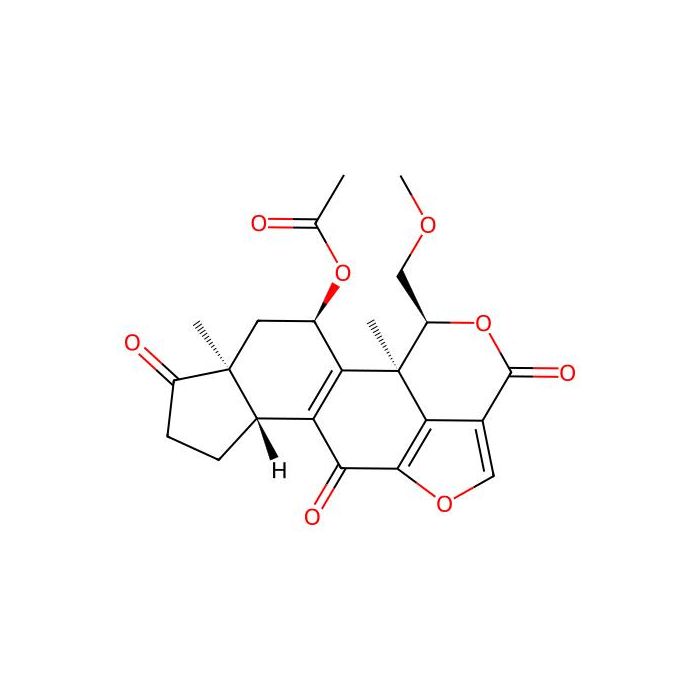
Wortmannin (KY 12420, SL-2052, BRN 0067676, NSC 627609) is the first describedPI3Kinhibitor withIC50of 3 nM in a cell-free assay, with little selectivity within the PI3K family. Wortmannin blocksautophagosomeformation and potently inhibitsDNA-PK/ATMwithIC
In vitro
The inhibition of MLCK by Wortmannin is not affected by calmodulin or peptide substrat, while reduced by high concentration of ATP. Wortmannin directly interacts with the catalytic domain of MLCK and leads to an irreversible loss of the enzyme activity. Wortmannin has no inhibitory to cAMP-dependent protein kinase, cGMP-dependent protein kinase, and calmodulin-dependent protein kinase II, and has little effect on protein kinase C activity. Wortmannin inhibits N-formylmethionyl-leucylphenylalanine (fMLP)-stimulated PtdInsP3 (phosphatidylinositol 3,4,5-trisphosphate) formation with IC50 of 5 nM and this inhibition is completely abolished when pretreated with 100 nM Wortmannin in human neutrophils, with increased PtdInsP2 levels and no effects on cellular PtdInsP and PtdIns contents. Wortmannin could develop oscillatory changes in F-actin content and does not inhibit fMLP-stimulated actin polymerization in neutrophils. Wortmannin irreversibly inhibits phosphatidylinositol 3-kinase (PI3-kinase) activity with binding to the 110-kDa protein (IC50 of 3 nM) and has no effect PI4-kinase in RBL-2H3 cells. Wortmannin also inhibits both Fc epsilon RI-mediated histamine secretion and leukotriene release, with no effect on the activation of the tyrosine kinase Lyn. Wortmannin completely abolishes the insulin-induced hexose uptake in isolated rat adipocytes at 0.1 μM, without impairing isoproterenol-stimulated lipolytic activity. Wortmannin suppresses insulin-induced production of nitric oxide by 50% at 500 nM in human umbilical vein endothelial cells, which is in response to IGF-1. Wortmannin suppresses DNA double strand break (DSB) repair and has no effect on DSB levels or the kinetics of single strand break (SSB) repair in Chinese hamster ovary cells at 50 μM. Wortmannin could potentiate ionizing radiation (IR)-induced cytotoxicity with no toxicity by itself. Wortmannin inhibits polo-like kinase (PLK1) activity IC50 of 24 nM in intact G2/M-arrested cells. Wortmannin increases Toll-like receptor (TLR)-mediated accumulation of IL-6 in human macrophages with EC50 of 50 nM. Meanwhile Wortmannin significantly enhances TLR-mediated inducible nitric-oxide synthase (iNOS) expression and nitrite accumulation in mouse macrphages. Wortmannin activates the nuclear factor-κB and up-regulates the cytokine mRNA production. Wortmannin also inhibits Polo-like kinase (PlK) 1 and PlK3, which play important roles in mitosis. Wortmannin treatment could lead to a reduction in phosphorylation of p53 on serine 20 induced by DNA damage. Wortmannin suppresses hyaluronan-induced Akt phosphorylation and cell motility/migration in SW1990 cells.
In vivo
Wortmannin inhibits peritoneal metastasis of SW1990 in mice at 1 mg/kg, without any weight loss. Wortmannin inhibits phosphatidylinositide 3-kinase-protein kinase B (PKB)/Akt phosphorylation in both normal tissues (lung, heart and brain homogenates) and tumor tissue in mice, without mortality or acute toxicity at 0.7 mg/kg. Combination with LY188011, Wortmannin significantly increases apoptosis and inhibit tumor growth in orthotopic tumor, while both monotherapy could not.
Cell Data
cell lines:HeLa BRCA1-silenced cells
Concentrations:
Incubation Time:
Powder Purity:≥99%
| Isomeric SMILES | CC(=O)O[C@@H]1C[C@]2([C@@H](CCC2=O)C3=C1[C@]4([C@H](OC(=O)C5=COC(=C54)C3=O)COC)C)C |
|---|---|
| WGK Germany | 3 |
| RTECS | CB9641000 |
| PubChem CID | 312145 |
| UN Number | 3462 |
| Molecular Weight | 428.43 |
| Beilstein | 67676 |
Comprehensive hazard, handling, storage, and regulatory compliance document.
Download SDS →Lot-specific quality data. Enter your lot number to retrieve the exact COA.
Look up COA →Full quality attributes and acceptance criteria for this grade.
View spec sheet →| Activity Type | Activity Value -log(M) | Mechanism of Action | Activity Reference | Publications (PubMed IDs) |
|---|
| Activity Type | Activity Value -log(M) | Mechanism of Action | Activity Reference | Publications (PubMed IDs) |
|---|
| Activity Type | Activity Value -log(M) | Mechanism of Action | Activity Reference | Publications (PubMed IDs) |
|---|
| Activity Type | Activity Value -log(M) | Mechanism of Action | Activity Reference | Publications (PubMed IDs) |
|---|
| Activity Type | Activity Value -log(M) | Mechanism of Action | Activity Reference | Publications (PubMed IDs) |
|---|
| Activity Type | Activity Value -log(M) | Mechanism of Action | Activity Reference | Publications (PubMed IDs) |
|---|
| Activity Type | Activity Value -log(M) | Mechanism of Action | Activity Reference | Publications (PubMed IDs) |
|---|
| Activity Type | Activity Value -log(M) | Mechanism of Action | Activity Reference | Publications (PubMed IDs) |
|---|
| Solubility | Solubility (25°C) In vitro |
|---|---|
| Melt Point(°C) | 237 °C |
| 1. Xueyi Xue, Lu Wang, Aobo Huang, Zehao Liu, Xiaoyu Guo, Yuying Sang, Jian-Kang Zhu, Huiling Xue, Juan Dong. (2024) Membrane-associated NRPM proteins are novel suppressors of stomatal production in Arabidopsis. CURRENT BIOLOGY, [PMID:38350447] [10.1016/j.cub.2024.01.052] |
| 2. Yuxin Huang, Wenya Zhu, Jiaxin Zhang, Yichen Zhang, Yuxin Liu, Guowei Wang, Wuli Yang. (2025) Mitochondrial-Targeting Zwitterionic Nanomedicine Based on Tertiary Amine N-oxide Polymers for Triple-Negative Breast Cancer Therapy. BIOMACROMOLECULES, [PMID:40920025] [10.1021/acs.biomac.5c01461] |
| 3. Chuanxue Yang, Tianxiao Mei, Qingge Fu, Yifan Zhang, Yang Liu, Ran Cui, Gang Li, Yibin Wang, Jianguo Huang, Junqiang Jia, Bo Chen, Yihui Hu. (2022) Silk Fibroin-Induced Gadolinium-Functionalized Gold Nanoparticles for MR/CT Dual-Modal Imaging-Guided Photothermal Therapy. Journal of Functional Biomaterials, 13 (3): (87). [PMID:35893455] [10.3390/jfb13030087] |
| 4. Dongdong Li, Jing Zhao, Jun Ma, Huiquan Yang, Xiaodong Zhang, Yuyu Cao, Peidang Liu. (2022) GMT8 aptamer conjugated PEGylated Ag@Au core-shell nanoparticles as a novel radiosensitizer for targeted radiotherapy of glioma. COLLOIDS AND SURFACES B-BIOINTERFACES, [PMID:35032851] [10.1016/j.colsurfb.2022.112330] |
| 5. Feng Guo, Junfeng Ke, Zhengdong Fu, Wenzhao Han, Liping Wang. (2021) Cell Penetrating Peptide-Based Self-Assembly for PD-L1 Targeted Tumor Regression. INTERNATIONAL JOURNAL OF MOLECULAR SCIENCES, 22 (24): (13314). [PMID:34948105] [10.3390/ijms222413314] |
| 6. Zitong Qi, Cuiping Jiang, Hai Gao, Yanyan Wang, Qiqi Zhang, Wenli Zhang, Jianping Liu. (2020) Endocytic recycling as cellular trafficking fate of simvastatin-loaded discoidal reconstituted high-density lipoprotein to coordinate cholesterol efflux and drug influx. Nanomedicine-Nanotechnology Biology and Medicine, [PMID:33186693] [10.1016/j.nano.2020.102323] |
| 7. Shuqi Hao, Mengyu Ye, Na Li, Zeyu Lu, Wei Quan, Huaide Xu, Mei Li. (2024) Comparison of intestinal absorption of soybean protein isolate-, glutenin- and peanut protein isolate-bound Nε-(carboxymethyl) lysine after in vitro gastrointestinal digestion. FOOD RESEARCH INTERNATIONAL, [PMID:39147508] [10.1016/j.foodres.2024.114811] |
| 8. Shuangqian Yan, Panpan Xue, Ying Sun, Tingjie Bai, Sijie Shao, Xuemei Zeng. (2024) Cupric Doping Hollow Prussian Blue Nanoplatform for Enhanced Cholesterol Depletion: a Promising Strategy for Breast Cancer Therapy and Metastasis Inhibition. Advanced Science, [PMID:39606805] [10.1002/advs.202409967] |
| 9. Xiao-Lin Hou, Bin Zhang, Kai Cheng, Fang Zhang, Xiao-Ting Xie, Wei Chen, Lin-Fang Tan, Jin-Xuan Fan, Bo Liu, Qiu-Ran Xu. (2024) Engineering Phage Nanocarriers Integrated with Bio-Intelligent Plasmids for Personalized and Tunable Enzyme Delivery to Enhance Chemodynamic Therapy. Advanced Science, [PMID:38582522] [10.1002/advs.202308349] |
| 10. Pengfei Yuan, Xiaodie Yan, Xiaoqing Zong, Xiaodi Li, Caiqi Yang, Xinjie Chen, Yuchao Li, Yaoqi Wen, Tianci Zhu, Wei Xue, Jian Dai. (2024) Modulating Elasticity of Liposome for Enhanced Cancer Immunotherapy. ACS Nano, [PMID:39140567] [10.1021/acsnano.4c09094] |
| 11. Xiao-Lin Hou, Lin-Fang Tan, Xiao-Ting Xie, Bin Zhang, Qiong Wang, Kai Cheng, Jin-Xuan Fan, Tian-Cai Liu, Bo Liu. (2024) Peroxisome-inspired T4 phage hybrid enzyme nanoreactors for photodynamic therapy of breast cancer. CHEMICAL ENGINEERING JOURNAL, [PMID:] [10.1016/j.cej.2024.159138] |
| 12. Kun Hu, Shaojun Wu, Jiaxin Xu, Yongzhen Zhang, Yanan Zhang, Xinyuan Wu, Jie Miao, Yongxu Yao, Susu Zhu, Guangtong Chen, Jie Ren. (2024) Pongamol Alleviates Neuroinflammation and Promotes Autophagy in Alzheimer’s Disease by Regulating the Akt/mTOR Signaling Pathway. JOURNAL OF AGRICULTURAL AND FOOD CHEMISTRY, [PMID:38841893] [10.1021/acs.jafc.4c00836] |
| 13. Jing Zhao, Li Li, Ling Peng. (2015) MAPK1 up-regulates the expression of MALAT1 to promote the proliferation of cardiomyocytes through PI3K/AKT signaling pathway. International Journal of Clinical and Experimental Pathology, [PMID:26884868] [PMID:26884868] |
| 14. Qiurong Deng, Xudong Li, Lipeng Zhu, Hua He, Donglai Chen, Yongbing Chen, Lichen Yin. (2017) Serum-resistant, reactive oxygen species (ROS)-potentiated gene delivery in cancer cells mediated by fluorinated, diselenide-crosslinked polyplexes. Biomaterials Science, 5 (6): (1174-1182). [PMID:28513659] [10.1039/C7BM00334J] |
| 15. Pu Yamin, Xu Fuyan, He Anqi, Li Ru, Wang Xiangxiu, Zhou Liang, Sun Hongbao, Zhang Yiwen, Xia Yong. (2025) Repurposing chlorpromazine for the treatment of triple-negative breast cancer growth and metastasis based on modulation of mitochondria-mediated apoptosis and autophagy/mitophagy. BRITISH JOURNAL OF CANCER, [PMID:40217096] [10.1038/s41416-025-02992-9] |
| 16. Xinyuan Wu, Dan Su, Jiaxin Xu, Ge Ge, Yongzhen Zhang, Bingjian Wu, Kun Hu, Jie Ren, Hao Yang. (2025) Tricetin, a Dietary Flavonoid, Alleviates Neuroinflammation and Promotes Autophagy in Alzheimer’s Disease by Regulating the PI3K/Akt/mTOR Signaling Pathway. JOURNAL OF AGRICULTURAL AND FOOD CHEMISTRY, [PMID:40223750] [10.1021/acs.jafc.5c01158] |
Our grade selection guide covers purity, stabilizer status, and application suitability for all variants in our catalog.
View Moligand™ grade guide →