Morphological testing experiments of the ear
Morphological testing experiments of the ear
In addition to conventional HE staining, osmium staining is a commonly used staining method for analyzing the number of hair cells and spiral ganglion morphology. Currently, there are two main methods used for morphological testing of the ear: HE staining and osmium staining.
Operation method
osmium acid staining
Materials and Instruments
Equipments: horizontal shaker, heated slicer, glass blade, fume cupboard Move The basic procedure of the osmiotic acid staining method can be divided into the following steps: For more product details, please visit Aladdin Scientific website.
Reagents:
① Epon-Araldite mix (Mix 20 g of dibutyl methacrylate (DBMA) per ml of Epon mix and leave under vacuum for 2 hours or until foam disappears. See Table 8-12-1 for formulations.)
② Gradient acetone
③ PBS
③ PBS ④ Decalcification solution (PBS containing 0.35 mol/L EDTA)
⑤ Dalton's buffer (containing 0.25% osmium tetroxide)
A. The cochlear samples were washed three times with PBS and shaken horizontally for 10-20 minutes each time.
B. 1-3 ml of decalcification solution (PBS containing 0.35 mol/L EDTA) was added to each sample tube and decalcified for 3-5 days at 4 ℃ on a horizontal shaker.
C. Samples were placed in a rotator and washed three times with PBS for 10-20 minutes each time. C. Samples were washed three times on the spinner with PBS for 10-20 minutes each time. Prepare Epon-Araldite mixture at the same time.
D. Place the horizontal shaker in a fume hood.
E. Add 1 ml of Dalton's buffer containing 0.25% osmium tetroxide (OsO2) to each sample tube and place on the horizontal shaker for 15 minutes.
F. Pour the osmium tetroxide (OsO2) into the toxic waste canister.
G. Wash the sample three times on the horizontal shaker with PBS for 10-20 minutes. 10-20 minutes each time. PBS from the first wash should be poured into the toxic waste tank.
H. Wash Samples (on rotator, outside fume hood)
50% acetone for 15 minutes;
80% acetone for 15 minutes;
95% acetone for 15 minutes;
100% acetone for 15 minutes;
100% acetone for 15 minutes;
acetone: epoxy mixed 2:1 for 1 hour;
acetone: epoxy mixed 1:1 for 1 hour; acetone: epoxy mixed 1:1 for 1 hour. 1 hour;
acetone: epoxy mixed 1:2 for 2 hours (can also be left at room temperature overnight).
I Add 2 to 3 ml of epoxy mix per sample and leave under vacuum for 1 hour or until foam disappears. 4 °C rotator overnight.
J. On day 2, transfer the rotator containing the samples to room temperature for 1 hour. Meanwhile, prepare a new Epon-Araldite Mix.
K. Add new Epon-Araldite Mix to each sample and spin for 2 hours.
L. Refill with new Epon-Araldite Mix and spin for 2 hours.
M. Print labels.
N. Place the samples and their corresponding labels into the molds in the correct position.
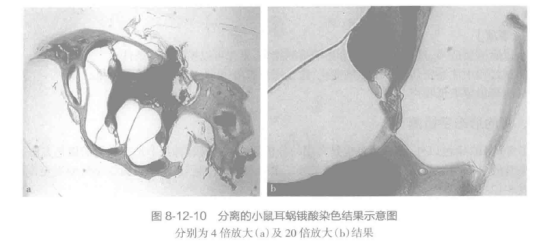
O. Place in a thermostatic chamber at 65°C for 48 to 72 hours. O. Place in a thermostat at 65°C for 48 to 72 hours. 72 hours. When finished, the samples can be sliced with a hot blade heated to approximately 80 °C. The results are shown in Figures 8-12-10.