Soil nitrate reductase (S‑NR) catalyzes the reduction of nitrate to nitrite in soil. It is a key enzyme in soil nitrate‑nitrogen reduction, and its activity reflects both the nitrate‑reducing capacity of the soil and the metabolic activity of microorganisms. Based on the conversion status of nitrate in soil, the nitrogen supply capacity of the soil and the nitrogen uptake capacity of plants can be predicted. This has important implications for rational fertilization and reducing nitrogen loss.
Detection Principle
Soil nitrate reductase (S‑NR) catalyzes the reduction of nitrate to nitrite: NO₃⁻ + NADH + H⁺ → NO₂⁻ + NAD⁺ + H₂O. The nitrite produced can quantitatively react with sulfanilic acid and α‑naphthylamine under acidic conditions to form a red azo compound. This red azo compound has a maximum absorption peak at 540 nm and can be determined by spectrophotometry.
Applicable Sample: Soil
Note: Before formal testing, it is recommended to perform a preliminary experiment with 2-3 samples expected to show significant differences.
Reagents, consumables and Equipments not provided
Microplate reader or visible spectrophotometer (capable of measuring absorbance at 540 nm)
96-well plate or micro-volume glass cuvette, Adjustable pipettes and tips
Shaker, Tabletop centrifuge, Water bath
Deionized water, PBS
Procedure
1. Reagent Preparation
Reagent Name
| Preparation
| Notes
|
Reagent Ⅰ
| Ready-to-use. Keep on ice throughout use.
| Unused reagent can be aliquoted and stored at -20°C for one month. Avoid repeated freeze-thaw cycles.
|
Reagent Ⅱ
| Prepare immediately before use. For 48T, add 10 mL PBS; for 96T, add 20 mL PBS. Dissolve completely and keep on ice throughout use.
| Unused reagent can be aliquoted and stored at -20°C for one month. Avoid repeated freeze-thaw cycles.
|
Reagent Ⅲ
| Ready-to-use. Equilibrate to room temperature before use.
| Store at 4°C. If crystallization occurs, dissolve in a 60-90°C water bath before use.
|
Reagent Ⅳ
| Ready-to-use. Equilibrate to room temperature before use.
| Store at 4°C protected from light.
|
Standard
| Prepare immediately before use. Take 0.1 mL and dilute to 10 mL with distilled water to obtain a 0.1 µmol/mL standard solution. Prepare fresh and keep on ice throughout use.
| Unused Standard can be aliquoted and stored at -20°C for one month. Avoid repeated freeze-thaw cycles. |
2. Sample Preparation
Air-dry fresh soil samples naturally or in a 37°C oven, then sieve through a 30-50 mesh screen.
3. Experimental Steps
3.1 Preheat the microplate reader or visible spectrophotometer for 30 minutes and set the wavelength to 540 nm. Zero the visible spectrophotometer with deionized water.
3.2 Operation Table (perform in 1.5 mL centrifuge tubes):
Reagent
| Test Tube (µL)
| Control Tube (µL)
| Standard Tube (µL)
| Blank Tube (µL)
|
Air-dried soil (mg)
| 60
| 60
| 0
| 0
|
Standard
| 0
| 0
| 60
| 0
|
Deionized Water
| 0
| 225
| 0
| 285
|
Reagent Ⅰ
| 225
| 0
| 225
| 0
|
Reagent Ⅱ
| 75
| 75
| 75
| 75
|
Mix well, shake at 37°C for 24 hours, then centrifuge at 8,000 g, 25°C for 10 minutes. Collect the supernatant for detection.
Supernatant
| 130
| 130
| 130
| 130
|
Reagent Ⅲ
| 85
| 85
| 85
| 85
|
Reagent Ⅳ
| 85
| 85
| 85
| 85
|
3.3 Mix well, develop color at room temperature for 20 minutes, centrifuge at 4,000 g, 25°C for 10 minutes. Transfer 200 µL of supernatant to a micro-volume glass cuvette or 96-well plate. Measure the absorbance at 540 nm, recorded as ABlank, AStandard, ATest, AControl. Calculate ΔATest = ATest - AControl and ΔAStandard = AStandard - ABlank. Note: The blank and standard tubes only need to be measured once. Each test tube should have a corresponding control tube. It is recommended to perform a preliminary experiment with 2-3 samples showing expected large differences before formal testing. If ΔATest is less than 0.02, appropriately increase the sample amount. If ΔATest is greater than 1.2, appropriately reduce the amount of sample used for extraction.
4. Calculation of Results
Note: We provide two formula sets: the derived calculation formulas and the simplified formulas. They are completely equivalent. The simplified formulas are recommended as the final calculation formulas.
Unit Definition: One unit of S‑NR activity is defined as the amount of enzyme that produces 1 µmol of NO₂⁻ per day per gram of soil.
S‑NR (U/g soil) = CStandard × ΔATest ÷ ΔAStandard × VTotal ÷ W ÷ T = 0.5 × ΔATest ÷ ΔAStandard
Parameter Description:
CStandard: Standard tube concentration, 0.1 µmol/mL;
VTotal: Total reaction volume, 0.3 mL;
T: Reaction time, 1 day;
W: Sample weight, 0.06 g.
5. Example Results
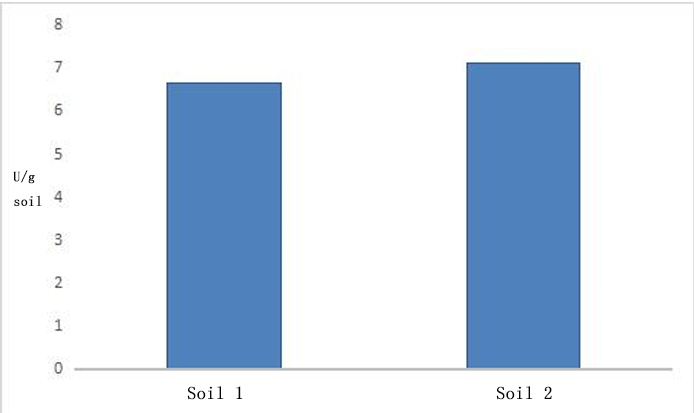
Figure 1. Soil nitrate reductase activity determined by the kit
Notes
This product is for scientific research use only and is not intended for clinical diagnosis. For your safety and health, please wear a lab coat and disposable gloves during operation.


 F2610355