Determine the necessary mass, volume, or concentration for preparing a solution.
viscosity 10,000 cSt (25 °C) for sensitive chromatographic and analytical workflows requiring minimal baseline interference.
Room temperature Ships Check lot-specific COA for exact specifications.
SDS, COA, datasheet, and spec sheet available for download. Lot-specific COA accessible via lot number lookup.
Cited in 419 peer-reviewed publications across chromatography, organic synthesis, and cross-coupling reactions.
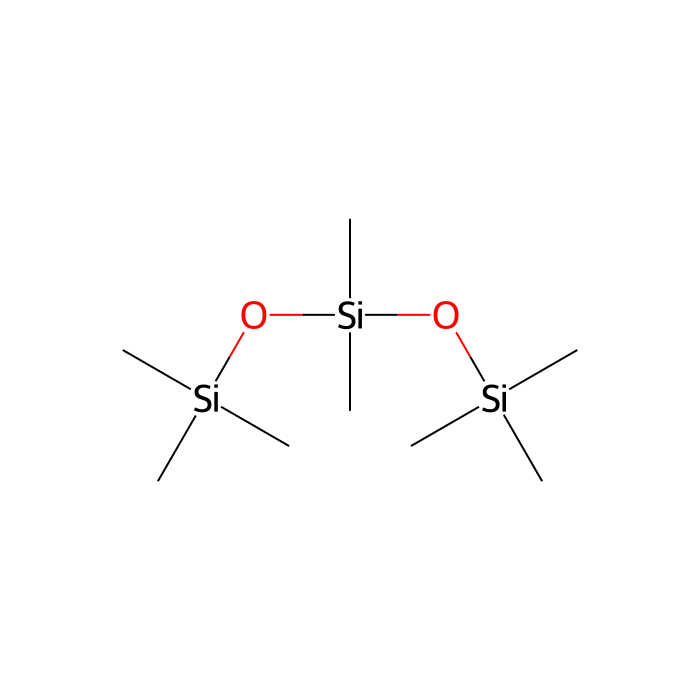
Silicone oil is a liquid based siloxane that is part of the methyl silicone fluid system. It has a viscosity of 10000 cSt with a refractive index of ~ 1.404 and a dielectric strength of ~ 15 kV/mm. It′s surface tension tends to increase with an increase in the viscosity.
Application
Silicone oil can be used for applications such as: protective coatings for building materials, a cosmetic additive, a dielectric coolant, a lubricant and antiflatulent agent.
Comprehensive hazard, handling, storage, and regulatory compliance document.
<<<<<<< HEAD Download SDS → ======= Download SDS → >>>>>>> release248-p3Lot-specific quality data. Enter your lot number to retrieve the exact COA.
Look up COA →Full quality attributes and acceptance criteria for this grade.
View spec sheet →Taxonomy Tree
| Kingdom | Organic compounds |
|---|---|
| Superclass | Organometallic compounds |
| Class | Organometalloid compounds |
| Subclass | Organosilicon compounds |
| Intermediate Tree Nodes | Not available |
| Direct Parent | Siloxanes |
| Alternative Parents | Trialkylheterosilanes Organic metalloid salts Organic oxygen compounds Hydrocarbon derivatives |
| Molecular Framework | Aliphatic acyclic compounds |
| Substituents | Siloxane - Trialkylheterosilane - Organoheterosilane - Organic metalloid salt - Organic oxygen compound - Hydrocarbon derivative - Organic salt - Aliphatic acyclic compound |
| Description | This compound belongs to the class of organic compounds known as siloxanes. These are saturated silicon-oxygen hydrides with unbranched or branched chains of alternating silicon and oxygen atoms (each silicon atom is separated from its nearest silicon neighbours by single oxygen atoms). The general structure of unbranched siloxanes is H3Si[OSiH2]nOSiH3. H3Si[OSiH2]nOSiH[OSiH2OSiH3]2 is an example of a branched siloxane. By extension hydrocarbyl derivatives are commonly included. |
| External Descriptors | organosilicon compound |
Find and download the COA for your product by matching the lot number on the packaging.
| Lot Number | Certificate Type | Date | Item |
|---|---|---|---|
| Certificate of Analysis | Mar 12, 2026 | S433162 | |
| Certificate of Analysis | Jan 19, 2026 | S433162 | |
| Certificate of Analysis | Jan 19, 2026 | S433162 | |
| Certificate of Analysis | Jan 19, 2026 | S433162 |
| Refractive Index | 1.403 |
|---|---|
| Flash Point(°F) | 214.0 °F |
| Flash Point(°C) | 101.1℃ |
| Boil Point(°C) | >140 °C/0.002 mmHg |
| Molecular Weight | 236.530 g/mol |
| XLogP3 | |
| Hydrogen Bond Donor Count | 0 |
| Hydrogen Bond Acceptor Count | 2 |
| Rotatable Bond Count | 4 |
| Exact Mass | 236.108 Da |
| Monoisotopic Mass | 236.108 Da |
| Topological Polar Surface Area | 18.500 Ų |
| Heavy Atom Count | 13 |
| Formal Charge | 0 |
| Complexity | 149.000 |
| Isotope Atom Count | 0 |
| Defined Atom Stereocenter Count | 0 |
| Undefined Atom Stereocenter Count | 0 |
| Defined Bond Stereocenter Count | 0 |
| Undefined Bond Stereocenter Count | 0 |
| The total count of all stereochemical bonds | 0 |
| Covalently-Bonded Unit Count | 1 |