Determine the necessary mass, volume, or concentration for preparing a solution.
Dilution Calculator
Determine the dilution needed to prepare a stock solution.
Reconstitution Calculator
Reviews
Customer Reviews
Application Protocols
The following are example workflows for research use with 13C-labeled lactate; they represent general literature practices and are not product-specific specifications.
Cell culture 13C tracing (outline)
Prepare fresh medium containing 5–10 mM sodium L-lactate-3-13C; adjust osmolarity/pH to match control medium.
Replace culture medium; incubate 15–120 min for acute labeling, up to 24 h for steady-state patterns.
Quench cells on plate with −80 °C 80% methanol; scrape, transfer, and clarify by centrifugation.
Dry extracts; reconstitute in LC–MS mobile phase A (e.g., water with 10 mM ammonium acetate) for HILIC or reverse-phase methods.
Acquire MS data; correct isotopologues for natural abundance; report fractional enrichments.
13C-NMR sample prep (outline)
Mix labeled lactate solution with D2O to 5–50 mM final 13C concentration.
Add internal standard and adjust pD ~7.0 unless acidic/basic conditions are required.
Acquire 13C{1H} spectra; assign peaks using reference spectra or spiking.
GC–MS derivatization of lactate (outline)
Acidify aliquot to liberate lactic acid; dry.
Derivatize (e.g., TBDMS or MTBSTFA) under standard conditions.
Analyze isotopologue distributions of lactate/pyruvate fragments.
Always include unlabeled controls, time-zero samples, and QA/QC mixtures for retention time and mass calibration.
Biological Roles
Content below is general biochemistry knowledge to contextualize use of 13C-labeled lactate; it is not a clinical claim.
Central metabolism
L-Lactate is the stereospecific product of LDH-catalyzed reduction of pyruvate from glycolysis. It is readily interconverted with pyruvate, feeding gluconeogenesis or oxidative metabolism (via PDH → acetyl-CoA; via PC → oxaloacetate).
L-lactate shuttling between cells/tissues is facilitated by monocarboxylate transporters (MCT family), enabling metabolic coupling (literature/general).
Upon LDH oxidation to pyruvate, the lactate C3 (methyl) maps to pyruvate C3; subsequent decarboxylation by PDH discards C1 (CO2), transferring the C2–C3 fragment to acetyl-CoA where the labeled carbon occupies a specific acetyl position. Through the TCA cycle, characteristic labeling patterns appear in citrate, glutamate/aspartate carbons, etc.
Via PC, carbon mapping differs (anaplerosis to oxaloacetate), allowing discrimination between PDH vs PC contributions.
Stereochemistry
L-lactate (S at C2) is the predominant enantiomer in mammalian systems and the preferred substrate for LDH isoforms; D-lactate is metabolized via distinct pathways (literature/general).
These features make 13C-labeled L-lactate a versatile probe for fluxomics, NMR spectroscopy, and mass spectrometry-based pathway interrogation in research settings.
Buffer Applications
Sodium lactate participates in the lactate/lactic acid buffer system but is not among the most commonly used analytical buffers.
General buffer properties (literature)
Conjugate pair: lactic acid (pKa ~3.86 at 25 °C) and lactate (base). Effective buffering range: approximately pH 2.9–4.9.
For metabolomics or enzymology where lactate is both analyte and medium constituent, buffering with lactate can complicate quantitation; alternative buffers (e.g., MES, acetate, HEPES) are often preferred.
If a lactate buffer is desired (e.g., microbiology or specific enzyme assays), prepare by titrating lactic acid with NaOH to target pH, or mixing sodium lactate with lactic acid to achieve desired ratio. Verify final pH and sterilize by filtration if used in cell-based assays.
This product context
Because this item is isotopically labeled, using it as a primary buffer is typically not economical. Reserve it for tracer additions atop a separate buffer system to avoid diluting isotopic enrichment.
For routine buffering needs, consider unlabeled lactate/acetate buffers; maintain the labeled lactate for spike-in/tracing only.
Green Alternatives
Sodium L-lactate is an aqueous, nonvolatile, and generally low-hazard salt, aligning well with green chemistry principles for tracer studies.
Environmental/health profile (general)
Water as the matrix (typical) minimizes VOC emissions and flammability hazards.
Low acute toxicity profile relative to many organic solvents/reagents (consult SDS for this item).
Alternatives and trade-offs (literature/general)
Free lactic acid (unlabeled) vs sodium lactate: the sodium salt offers defined ionic form and stability at neutral pH, reducing corrosivity relative to the free acid. However, high ionic strength can burden downstream MS; volatile ammonium salts may be preferable for MS-intensive workflows.
Other labeled substrates (e.g., [U-13C]glucose, [1-13C]pyruvate) can sometimes replace 13C-lactate depending on the flux question. Choice affects pathway resolution and sensitivity; lactate directly probes LDH/PDH/PC interfacing.
Waste minimization
Aqueous waste with low hazard typically requires minimal solvent handling; avoid adding chlorinated or high-toxicity solvents unless necessary.
Use concentrated stock solutions and precise dosing to reduce overall volume.
Overall, this product already reflects many green chemistry attributes for isotopic tracing; selection among labeled substrates should be guided by the mechanistic question rather than environmental burden alone.
Pharmaceutical Uses
Information below concerns general formulation roles of sodium lactate and does not imply suitability of this labeled research product for human or veterinary use.
General formulation roles (literature/general)
Sodium lactate is used industrially as a pH adjuster, osmolyte, and electrolyte in various aqueous formulations; it can serve as a buffering component near acidic pH and as a humectant in topical systems.
In parenteral technology, unlabeled sodium lactate appears in compendial electrolyte solutions; specifications (sterility, endotoxin, particulate matter) are tightly controlled by pharmacopeias.
Relevance to this product
This 13C-labeled solution is designated For research use only (per Product Data) and is not manufactured to GMP or pharmacopeial standards for administration.
It is appropriate for in vitro method development, analytical spike/recovery experiments, and device/process development studies in a laboratory setting.
Practical considerations for research formulation
Verify compatibility with analytical detection (13C-NMR/LC–MS) and avoid excipients that introduce isobaric interferences.
If used to simulate excipient behavior, match pH and ionic strength with the intended final matrix using unlabeled components; reserve the labeled fraction for tracing/analytics.
Physical Properties
This item is supplied as a solution; concentration, solvent composition, and exact physicochemical specifications are not provided in the Product Data.
Item-specific values
Appearance: Not specified for this item; refer to CoA/Spec Sheet.
Concentration: Not specified for this item; refer to CoA/Spec Sheet.
Density, refractive index, pH, UV cutoff: Not specified for this item; refer to CoA/Spec Sheet.
General/literature properties (parent compounds; for context only)
Parent sodium L-lactate is highly water-soluble and typically supplied as aqueous solutions over a wide concentration range; bulk properties (density, viscosity) depend strongly on concentration (literature).
Lactic acid pKa (25 °C, literature): ~3.86 (thus lactate is fully/mostly deprotonated above pH ~5).
Partitioning: lactate as a sodium salt is ionic and not meaningfully characterized by logP; it partitions into aqueous phase (literature).
Hygroscopicity/osmolarity: concentrated sodium lactate solutions are hypertonic; osmolarity scales with concentration (literature).
Solubility (qualitative, literature)
Miscible with water at all practical concentrations.
Practically insoluble in nonpolar organic solvents; can be transferred to polar organics (e.g., MeOH) as the free acid or ester after neutralization/derivatization.
Note: Do not interpret literature properties above as specifications of this catalog item. For exact solution composition and any certificate values, consult the CoA/Spec Sheet.
Quality & Grades
Item-specific grade/purity
Grade/Purity: Not specified for this item; refer to CoA/Spec Sheet.
Isotopic and chiral quality considerations (general guidance)
Isotopic enrichment: For 13C-labeled materials, the enrichment level at the labeled position (e.g., ≥98 atom % 13C at C3) critically determines quantitative NMR/MS performance in tracer studies. Actual enrichment for this item is Not specified for this item; refer to CoA/Spec Sheet.
Enantiomeric purity: As an L-lactate product, the enantiomeric excess (ee) matters for biological work because transporters and enzymes are stereoselective. Enantiopurity is Not specified for this item; refer to CoA/Spec Sheet.
Matrix and sterility: Aqueous solutions may be sterile-filtered and adjusted to a defined pH/ionic strength. For this listing, sterility, pH, and excipients are Not specified for this item; refer to CoA/Spec Sheet.
What “research-grade 13C tracers” typically imply (literature/general)
Low levels of unlabeled isotopologues and minimal inorganic/organic impurities to avoid background in MS and 13C-NMR.
Documentation: CoA should state isotopic distribution, residual solvent, water content (if applicable), and specific activity (for radioisotopes; not applicable here). For stable isotopes, only atom % labeling is relevant.
For method validation and quantitative flux analysis, verify isotopic enrichment, enantiopurity, and matrix composition from the lot-specific CoA/Spec Sheet before use.
Reaction & Applications
Sodium L-lactate-3-13C solution is primarily used as a stable-isotope tracer rather than as a stoichiometric reagent. It enables carbon-tracing through lactate-utilizing pathways with detection by 13C NMR and LC–MS.
Stable isotope-resolved metabolomics (SIRM)
Map lactate uptake and conversion to pyruvate via LDH, followed by entry into gluconeogenesis or the TCA cycle via pyruvate dehydrogenase (PDH) or pyruvate carboxylase (PC). 13C at C3 of lactate informs labeling at specific positions of downstream metabolites (literature).
Measure exchange fluxes and pool sizes in cultured cells, tissues, or microbial systems with time-resolved labeling.
NMR applications
13C-NMR detects the enriched carbon with enhanced sensitivity. J-coupling patterns can help assign carbon positions in derived metabolites.
MS-based workflows
LC–MS or GC–MS with derivative chemistry (e.g., silylation for GC–MS) enables isotopologue distribution analysis. Correct for natural abundance during data processing.
Enzymology/mechanistic studies
Probe LDH stereospecificity (L-lactate oxidation), monocarboxylate transport preferences, and isotopic scrambling in downstream pathways (literature/general).
Practical tips (general)
Control pH near physiological levels for biological systems; excessive Na+ or osmolarity can alter cell behavior.
Include unlabeled controls and time-zero samples; perform natural abundance correction.
Validate isotopic enrichment and purity from the CoA for quantitative interpretation.
Reaction Conditions
Guidance below reflects typical literature conditions for experiments using 13C-labeled lactate; adjust to your system and consult primary sources.
Stable isotope tracing in cells (general)
Working concentration range: ~1–20 mM lactate in culture media is common in literature; select based on physiological relevance and transporter/LDH expression. Start with 5–10 mM for pilot studies, include unlabeled controls.
Incubation: 0.5–24 h depending on turnover and pool sizes. Short pulses (5–60 min) resolve rapid exchange; longer chases probe downstream TCA labeling.
Temperature/CO2: Standard culture conditions (e.g., 37 °C, 5% CO2) for mammalian cells.
Sample preparation for LC–MS metabolomics (general)
Quench/extract with cold 80% methanol or acetonitrile:water (−20 to −80 °C), maintain consistent extraction ratios, include internal standards.
Dry under gentle nitrogen or vacuum; reconstitute in water/aqueous buffer compatible with chromatography (volatile salts preferred).
13C-NMR conditions (general)
Solvent: D2O or H2O/D2O with a lock signal; adjust pD/pH and add reference (e.g., DSS/TSP for 1H; dioxane for 13C as appropriate).
Acquisition: proton-decoupled 13C for sensitivity; concentrations ≥10–50 mM of the labeled position improve S/N for small-molecule samples.
Enzymatic assays (LDH)
Typical buffers: phosphate, HEPES, or Tris (pH 7–8). Monitor NADH/NAD+ spectrophotometrically or by MS/NMR labeling outcomes.
All values above are literature/general guidance and are not specifications of this item.
Safety & Handling
GHS/SDS status (item-specific)
Signal Word: Not specified for this item; refer to SDS.
Hazard Statements, Pictograms, Classification: Not specified for this item; refer to SDS.
General laboratory precautions (for aqueous sodium lactate solutions; literature/good practice)
Expected to be of low acute toxicity, but may cause eye/skin irritation. Avoid inhalation of aerosols and contact with eyes/skin.
Personal protective equipment: lab coat, safety glasses, and appropriate gloves (e.g., nitrile). Use in a clean environment to avoid microbial contamination of stocks.
Storage conditions: Store at −20 °C (per Product Data). Keep container tightly closed. Consider sterile, single-use aliquots to minimize freeze–thaw cycles and contamination.
Incompatibilities: Strong acids (protonation to lactic acid), strong oxidizers. Mixtures with bases raise pH; verify compatibility with biological systems before use.
Special risks: Organic, aqueous solutions can support microbial growth; handle aseptically. If used in cell culture, filter-sterilize into sterile vials when appropriate.
First-aid (general)
Skin/eyes: Rinse with water for several minutes; remove contact lenses if present and easy. Seek medical attention if irritation persists.
Inhalation: Move to fresh air; seek attention if symptoms occur.
Ingestion: Rinse mouth; do not induce vomiting; seek medical advice if unwell.
Always consult the product-specific SDS for authoritative hazard, exposure limits, and first-aid guidance.
Solvent Selection
This product is supplied as an aqueous solution (exact composition not provided). Solvent choice is typically dictated by the application (e.g., direct dosing to aqueous media or NMR sample prep).
Polarity/miscibility (general)
Sodium lactate is ionic and highly hydrophilic; it is fully miscible with water and aqueous buffers across practical ranges.
Limited compatibility with nonpolar solvents; to work in organic media, convert to lactic acid (pH < pKa) or to esters/ion-pairing systems.
Typical use scenarios
Cell culture/metabolomics: Dilute directly into aqueous cell culture media or buffer systems (HEPES, PBS) after confirming pH/osmolarity.
NMR spectroscopy: For 13C or 1H NMR, prepare samples in D2O or H2O/D2O (e.g., 9:1), adjust pH/pD, and include internal standards as needed. Avoid high salt if probing weak cation-exchange columns downstream in LC-MS workflows.
Choosing alternatives
For less ionic conditions, use lactic acid (free acid) or methyl lactate in organic matrices, then neutralize in situ as needed.
For higher solubility of hydrophobes in mixed systems, consider adding miscible organics (MeOH, acetonitrile) post-derivatization; native sodium lactate has poor solubility in such solvents.
Practical notes
Verify buffer compatibility with downstream MS (volatile buffers like ammonium formate/acetate are preferred for LC–MS).
Check that the final ionic strength does not perturb biological assays beyond intended levels.
Storage & Reconstitution
Item-specific handling
Storage Conditions: Store at −20 °C (per Product Data).
Concentration, excipients, and pH: Not specified for this item; refer to CoA/Spec Sheet.
Thawing and aliquoting (general best practices)
Thaw on ice or at 2–8 °C. Mix gently to ensure homogeneity; avoid vigorous vortexing that could introduce bubbles or aerosols.
Immediately subdivide into sterile, single-use aliquots in low-bind tubes to minimize freeze–thaw cycles and contamination.
If sterility is required, filter-sterilize through a 0.22 μm PES membrane into sterile vials in a biosafety cabinet.
Short-term stability (general)
At 2–8 °C, aqueous lactate solutions are typically stable for days to a few weeks; however, microbial growth can occur without preservatives. For this item, specific shelf-life data are Not specified; refer to CoA/Spec Sheet.
Compatibility
Mix into aqueous media/buffers immediately before use. Confirm final pH and osmolarity. For NMR, exchange into D2O if required.
Disposal
Dispose of aqueous laboratory chemicals according to institutional and local regulations; avoid drain disposal unless permitted for low-hazard aqueous salts.
Always consult the lot-specific CoA and SDS for definitive storage limits, composition, and stability guidance.
Structure & Identity
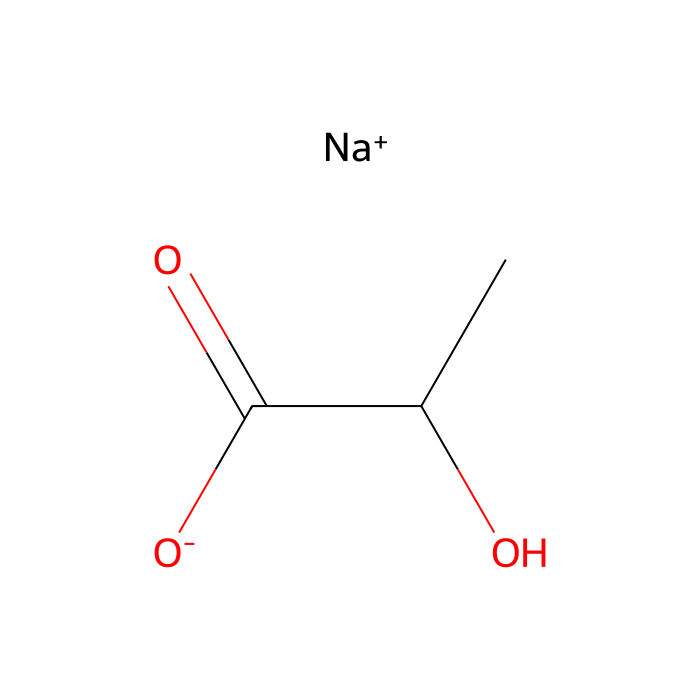
Sodium L-lactate-3-13C solution is an isotopically enriched aqueous salt of L-lactic acid in which the carbonyl-bearing carbon (C3) is 13C-labeled. The product is supplied as a solution (concentration not specified).
Item-specific identifiers (from Product Data)
SKU: S466611
Product Name: Sodium L-lactate-3-¹³C solution
CAS: 201595-70-2
PubChem CID: 23696283
InChIKey: 238104 (as provided)
SMILES: Not specified for this item; refer to CoA/Spec Sheet.
Molecular formula and weight
Molecular Formula: Not specified for this item; refer to CoA/Spec Sheet.
Molecular Weight: Not specified for this item; refer to CoA/Spec Sheet.
Structural features (general/literature description)
Core structure: lactate anion (2-hydroxypropionate), the conjugate base of L-lactic acid.
Functional groups: secondary alcohol at C2 (bearing the L stereocenter), carboxylate at C1, and a methyl substituent at C3.
Isotopic labeling: the carboxylate carbon (C1) originates from pyruvate C1; for “3-13C lactate,” the methyl carbon (C3) is 13C-enriched (literature convention). Please verify exact labeling site in the CoA/SDS supplied with the lot.
Stereochemistry: L-configuration at C2 (S absolute configuration by CIP rules for lactic acid derivatives).
2D description in words (general)
A three-carbon backbone with a terminal methyl (13CH3– at C3), a chiral center at C2 bearing –OH and –H, and a terminal carboxylate (–COO–) at C1; overall paired with Na+ in aqueous medium.
Synthetic Utility
Although supplied as an aqueous solution for tracer applications, L-lactate is a versatile synthon in chiral chemistry when handled as the free acid or protected derivatives. The 13C label can assist mechanistic studies and mass balance in synthetic sequences.
Functional group reactivity (general)
Carboxylate/carboxylic acid interconversion enables esterification (Fischer, Steglich) or amide formation (carbodiimide, uronium reagents) after protonation to lactic acid.
Secondary alcohol at C2 supports selective protection (silyl, acyl) and oxidation to 2-keto propionates; chirality transfer can be leveraged in auxiliary-type transformations.
Isotopic labeling utility
13C at the methyl carbon enables position-specific tracking by 13C NMR and MS through protection–deprotection or rearrangement steps, helping elucidate mechanisms and carbon migration.
Derivatization notes
Convert sodium lactate to lactic acid (ion exchange or acidification) before coupling in nonaqueous media; alternatively, prepare its esters (e.g., methyl/benzyl lactate) as more tractable intermediates.
Maintain stereochemical integrity: avoid strongly basic or high-temperature conditions that could promote epimerization at C2.
Because this catalog item is an aqueous solution of the sodium salt with unspecified concentration, direct use in anhydrous organic synthesis is uncommon; instead, first isolate/prepare an appropriate derivative from unlabeled lactate, then incorporate the 13C-labeled counterpart in analytical control or mechanistic probe experiments.
Target Specificity
Not applicable. This product is a small-molecule isotopically labeled metabolite, not a biological binding reagent (e.g., antibody, enzyme, or ligand with defined target affinity). Use the Reaction & Applications and Biological Roles sections for relevant guidance.
Frequently Asked Questions
What is the purity of this product?
This product is isotopically enriched to ≥99 atom% carbon-13. Isotopic enrichment is a separate specification from chemical purity — a labelled compound has both. This product is supplied at ≥98% purity (chemical assay). Lot-specific values are stated on the Certificate of Analysis.
How should this product be stored?
Store at ?20 °C. Freezer storage is required to maintain the specified shelf life.
How is this product shipped?
This product ships in an insulated container with ice pads. Unpack on arrival and transfer it to the storage condition stated above.
What are the CAS number, molecular formula and molecular weight?
The CAS Number is 201595-70-2, the molecular formula is C3H5NaO3, and the molecular weight is 113.05 g/mol. InChIKey NGSFWBMYFKHRBD-UEORGECYSA-M.
What documentation is provided?
Available product documentation, including Certificates of Analysis (COA), Safety Data Sheets (SDS), and specification sheets, is shown in the product document area. Document availability and access follow the current site policy.
We use cookies to ensure the website functions properly and, where permitted, to improve your experience. You can manage your preferences at any time in Settings. Learn more in our Cookie Policy.
Shall we send you a message when we have discounts available?
Remind me later
Thank you! Please check your email inbox to confirm.
Products are supplied to verified businesses, institutions, and qualified professionals for research and development use only. Not for use in humans, animals, diagnosis, or therapy.