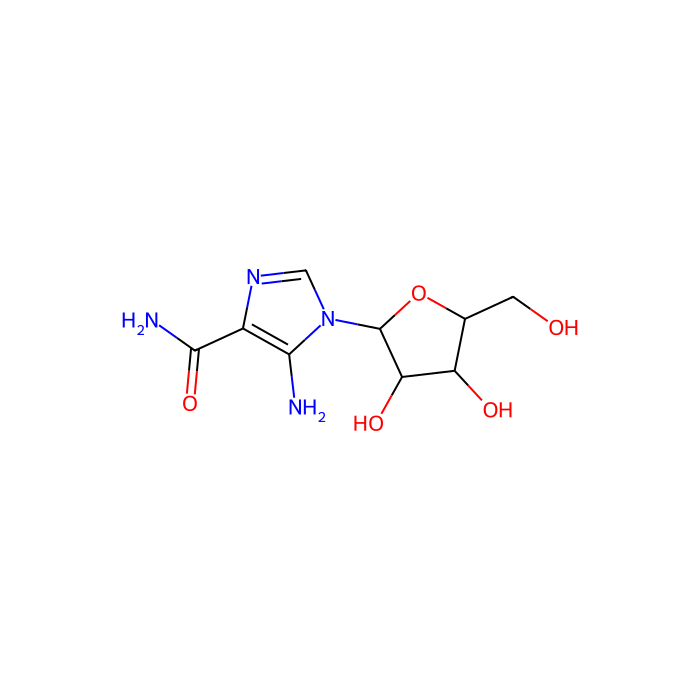
AICAR (Acadesine) - Moligand™, 10mM in DMSO , AMP-activated protein kinase, AMPK activator, CAS No.2627-69-2, AMP-activated protein kinase, AMPK activator

CAS: 2627-69-2 Cat. No.: A408470 Formula: C9H14N4O5 Molecular Weight: 258.23 EC Number: 220-097-5
AVAILABLE TO ORDER
GRADE & PURITY Moligand™ ? Moligand™ — Aladdin's line of ligands and bioactive small molecules. Use for receptor, pathway, and binding studies needing defined small-molecule tools. 10mM in DMSO
Synonyms
NSC105823, AICA Riboside | 5-amino-1-((2R,3R,4S,5R)-3,4-dihydroxy-5-(hydroxymethyl)-tetrahydrofuran-2-yl)-1H-imidazole-4-carboxamide
Storage
Store at -80°C
Shipped In
Dry ice packs + Cold packs
Size
USA
Germany (EU)*
Price
Qty
1ml
A408470-1ml
2 In stock

$108.90

$126.90
Save $18.00 (14.18%)
Enter a quantity for the sizes you want to add.
🧪

Why this grade

Moligand™, 10mM in DMSO Moligand™ for sensitive chromatographic and analytical workflows requiring minimal baseline interference.

🌡

Storage & shipping

Store at -80°C Ships Dry ice packs + Cold packs Check lot-specific COA for exact specifications.

📋

Quality documents

SDS, COA, datasheet, and spec sheet available for download. Lot-specific COA accessible via lot number lookup.

📚

Literature proof

Cited in 2 peer-reviewed publications across chromatography, organic synthesis, and cross-coupling reactions.

Overview

Information

AICAR (Acadesine) AICAR (Acadesine, NSC105823, AICA Riboside), an AMPK activator, results in accumulation of ZMP, which mimics the stimulating effect of AMP on AMPK and AMPK kinase. AICAR (Acadesine) induces mitophagy . Phase 3.
In vitro

Acadesine (500 μM) increases the ZMP content in extracts of isolated hepatocytes after up to 30-40 min treatment, then remains fairly constant at approximately 4 nmol/g. Acadesine (500 μM) causes a transient 12-fold activation of AMPK at 15 min in rat hepatocytes and 2-3 fold activation of AMPK in adipocytes, without affecting levels of ATP, ADP or AMP. Acadesine (500 μM) causes a dramatic inhibition of both fatty acid and sterol synthesis in rat hepatocytes. Acadesine (500 μM) also causes a dramatic inactivation of HMG-CoA reductase. Acadesine induces apoptosis of B-CLL cells in a dose-dependent manner with EC50 of 380\u2009μM. Acadesine (0.5 mM) decreases cell viability of B-CLL cells from 20 representative patients from 68% to 26%. Acadesine (0.5 mM) induces caspase activation and cytochrome crelease from mitochondria. Uptake and phosphorylation of Acadesine (0.5 mM) are required to induce apoptosis and activate AMPK in B-CLL cells. Acadesine (2-4 mM) only slightly affects the viability of T cells from B-CLL patients, Acadesine (0.5 mM) remarkedly reduces viability of B cells but not T cells. [2] Acadesine triggers loss of cell metabolism in K562, LAMA-84 and JURL-MK1 and is also effective in killing imatinib-resistant K562 cells and Ba/F3 cells carrying the T315I-BCR-ABL mutation. The effect of Acadesine is abrogated by GF109203X and Ro-32-0432, both inhibitor of classical and new PKCs and accordingly, Acadesine triggers relocation and activation of several PKC isoforms in K562 cells. Acadesine dose-dependently inhibits K562 colony formation at day 10, the growth inhibitory effect of acadesine is already detected at 0.25 mM and is maximal at 2.5 mM. Acadesine causes a concentration-related reduction in CD18 expression on LPS-stimulated neutrophils in vitro. Acadesine significantly (1 mM) inhibits N-formyl-methionyl-leucyl-phenylalanine-induced granulocyte CD11b up-regulation by a mean of 61% in blood.

In vivo

Acadesine (50 mg/kg) significantly reduces tumor formation in a mouse xenograft model of K562 cells. Acadesine (10 mg/kg) results in higher fluid required to stabilize hemodynamics in pigs. Acadesine (10 mg/kg) inhibits LPS-induced protein permeability of pulmonary capillaries, peak inspiratory pressures on constant tidal volume and dead space ventilation in pigs.
Cell Data

cell lines:K-Balb, KNRK, v-raf-3Y1, SRA/3Y1, EGFR/3T3, and K562

Concentrations:2.5 mM

Incubation Time:10 days

Powder Purity:≥99%

Specifications

Synonyms
NSC105823, AICA Riboside | 5-amino-1-((2R,3R,4S,5R)-3,4-dihydroxy-5-(hydroxymethyl)-tetrahydrofuran-2-yl)-1H-imidazole-4-carboxamide
Specifications & Purity
Moligand™, 10mM in DMSO
Biochemical and Physiological Mechanisms
AICAR (Acadesine, NSC105823, AICA Riboside), an AMPK activator, results in accumulation of ZMP, which mimics the stimulating effect of AMP on AMPK and AMPK kinase. AICAR (Acadesine) induces mitophagy. Phase 3.
Storage
Store at -80°C
Shipped In
Dry ice packs + Cold packs
This product requires cold chain shipping. Ground and other economy services are not available.
Grade
Moligand™
Action Type
ACTIVATOR
Mechanism of action
AMP-activated protein kinase, AMPK activator
Product Properties
ALogP-2.2
Names and Identifiers
Isomeric SMILES C1=NC(=C(N1[C@H]2[C@@H]([C@@H]([C@H](O2)CO)O)O)N)C(=O)N
WGK Germany 3
Molecular Weight 258.23
Reaxy-Rn 623893
Reaxys-RN_link_address https://www.reaxys.com/reaxys/secured/hopinto.do?context=S&query=IDE.XRN=623893&ln=

Documentation

📋 Safety Data Sheet (SDS)

Comprehensive hazard, handling, storage, and regulatory compliance document.

Download SDS →

✅ Certificate of Analysis (COA)

Lot-specific quality data. Enter your lot number to retrieve the exact COA.

Look up COA →

📊 Datasheet

Quick-reference summary of product specifications and applications.

View datasheet →

🔬 Specification Sheet

Full quality attributes and acceptance criteria for this grade.

View spec sheet →

Advanced Data

Certificates(CoA,COO,BSE/TSE and Analysis Chart)
C of A & Other Certificates(BSE/TSE, COO):
Analytical Chart:
Documents & Articles
A Panoramic Guide to Purines and Research Reagent Selection: Structural Hierarchy, Classification Map, Three Metabolic Pathways, and Typical Applications
Functional System Overview of Cellular Metabolic Enzymes in Energy Metabolism, Redox, and Signal Transduction
Central–Peripheral Signaling Networks Regulated by Neuropeptides and the Integration of Energy Metabolism
Autophagy Signaling Pathways and Selective Autophagy Research
Potential Mechanisms of Tea Polyphenols in Oily, Acne-Prone Skin: Effects of EGCG on Sebum Production, Lipid Peroxidation, and Inflammatory Responses
From Metabolic Flux to Protein Degradation: How Metabolic Enzymes and Protein Degradation Systems Jointly Regulate Cell Fate
Regulatory Mechanisms of Aging-Related Nutrient Sensing, Inflammation, and Homeostatic Signaling Pathways
Molecular Composition, Signal Transduction Mechanisms, and Targeted Regulatory Strategies of the Hippo Signaling Pathway
Molecular Mechanisms by Which Natural Products Regulate Adipose Browning
Citations of This Product
References
1. Yisen Cheng, Gaojian Chen, Li Wang, Jiamin Kong, Ji Pan, Yue Xi, Feihai Shen, Zhiying Huang.  (2018)  Triptolide-induced mitochondrial damage dysregulates fatty acid metabolism in mouse sertoli cells.  TOXICOLOGY LETTERS,      [PMID:29723566] [10.1016/j.toxlet.2018.04.035]
2. Chao Pan, Fajuan Wang, Yanzi Chu, Yahui Xue, Yan Ye, Kunlong Yang, Jinfeng Hua, Ling Shen, Jun Tian.  (2025)  Targeting the Snf1 kinase by cinnamaldehyde induces glucose starvation and oxidative stress in Fusarium solani for the control of sweet potato postharvest decay.  POSTHARVEST BIOLOGY AND TECHNOLOGY,      [PMID:] [10.1016/j.postharvbio.2025.114116]
Solution Calculators
Reviews

Customer Reviews

📚 Citations by Application

View all 2 citations →

Need help choosing the grade?

Our grade selection guide covers purity, stabilizer status, and application suitability for all variants in our catalog.

View Moligand™ grade guide →

Shall we send you a message when we have discounts available?

Remind me later

Thank you! Please check your email inbox to confirm.

Oops! Notifications are disabled.