GRADE & PURITYMoligand™?Moligand™ — Aladdin's line of ligands and bioactive small molecules. Use for receptor, pathway, and binding studies needing defined small-molecule tools.≥98%(HPLC)
Selective TRPA1 activator (EC50values are ~0.5μM in human, mouse and rat). Displays little or no affinity at more than 60 other related receptors, channels and enzymes. Stimulates 5-HT release from QGP-1 cells. Exhibits an abdominal analgesic effectin viv
Storage
Store at -20°C
Shipped In
Ice chest + Ice pads
This product requires cold chain shipping. Ground and other economy services are not available.
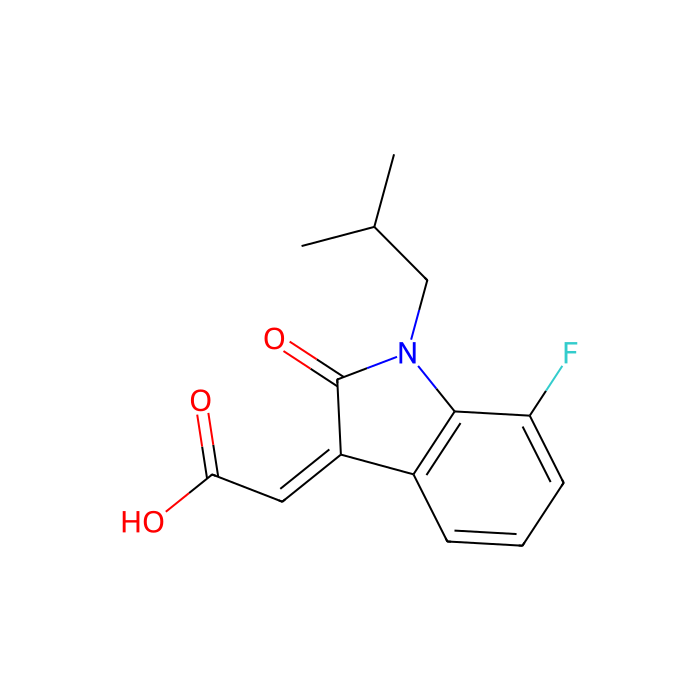
This compound belongs to the class of organic compounds known as indoles and derivatives. These are organic compounds containing an indole, which is a bicyclic ring system made up of a six-membered benzene ring fused to a five-membered nitrogen-containing pyrrole ring.
External Descriptors
Not available
1. Djoumbou Feunang Y, Eisner R, Knox C, Chepelev L, Hastings J, Owen G, Fahy E, Steinbeck C, Subramanian S, Bolton E, Greiner R, and Wishart DS. ClassyFire: Automated Chemical Classification With A Comprehensive, Computable Taxonomy. Journal of Cheminformatics, 2016, 8:61.
Solvent:DMSO, Max Conc. mg/mL: 26.33, Max Conc. mM: 100; Solvent:ethanol, Max Conc. mg/mL: 26.33, Max Conc. mM: 100
Molecular Weight
263.260 g/mol
XLogP3
2.200
Hydrogen Bond Donor Count
1
Hydrogen Bond Acceptor Count
4
Rotatable Bond Count
3
Exact Mass
263.096 Da
Monoisotopic Mass
263.096 Da
Topological Polar Surface Area
57.600 Ų
Heavy Atom Count
19
Formal Charge
0
Complexity
419.000
Isotope Atom Count
0
Defined Atom Stereocenter Count
0
Undefined Atom Stereocenter Count
0
Defined Bond Stereocenter Count
1
Undefined Bond Stereocenter Count
0
The total count of all stereochemical bonds
1
Covalently-Bonded Unit Count
1
Solution Calculators
Molarity Calculator
Determine the necessary mass, volume, or concentration for preparing a solution.
Dilution Calculator
Determine the dilution needed to prepare a stock solution.
Reconstitution Calculator
Reviews
Customer Reviews
Application Protocols
No tested application protocols are provided for this item.
General protocol template for small-molecule screening (guidance only)
Stock preparation: Dissolve in dry DMSO to 10–50 mM. Vortex and, if needed, sonicate briefly. Filter through 0.2 µm PTFE if particulate persists.
Plate formatting: Prepare serial dilutions in DMSO (e.g., 1:3 or 1:10). Back-dilute into assay buffer to achieve final concentration range with constant DMSO (≤0.5% v/v typical, per assay tolerance).
Controls: Include vehicle control and appropriate positive/negative control ligands. Randomize plate layout to mitigate positional effects.
Readout and data: Follow assay SOPs for incubation times and detection. Fit concentration–response curves with a 4-parameter logistic model; report IC50/EC50 with confidence intervals and Hill slope.
Storage of working plates: If plates must be stored, seal to prevent evaporation and keep at 4°C or −20°C as compatible with the assay and compound stability; validate recovery after freeze–thaw.
Note: Research Use Only. For target-specific protocols or recommended dilutions, consult literature corresponding to CAS 1190217-35-6.
Biological Roles
ASP 7663 is offered as a research-use small molecule within a screening/compound library context. Item-specific target, pathway, and mode of action are not included in this listing. The following guidance outlines how such ligands are typically positioned in discovery biology.
Use domain: Chemical biology, target validation, and phenotypic screening. Compounds of this class are commonly explored for modulation of enzymes, GPCRs, ion channels, transporters, or signaling nodes.
Assay strategy: Begin with a defined biological hypothesis (target-based or pathway-centric). Establish robust, validated primary assays with clear positive/negative controls and DMSO-matched vehicle controls. Run concentration–response curves to estimate potency metrics (e.g., EC50/IC50) with appropriate curve-fitting and replicate design.
Orthogonal confirmation: Confirm activity in secondary formats that read out the same biology via a distinct detection principle (e.g., binding vs functional assays; fluorescence vs luminescence) to reduce assay artifacts.
Selectivity profiling: If activity is observed, broaden screening to a panel of related targets or safety counterscreens (e.g., hERG, CYPs) as relevant to your program’s stage. For ion channel or receptor hypotheses, consider electrophysiology or label-free methods.
ADME/stability triage: Evaluate microsomal stability, plasma protein binding, permeability (PAMPA/Caco-2), and solubility to contextualize cellular potency.
For target-specific details on ASP 7663, consult primary literature and databases via the provided CAS (1190217-35-6) or PubChem CID (44232532). Research Use Only: not for human or veterinary use.
Buffer Applications
This product is a small-molecule research ligand and is not a buffering agent. Accordingly, classical buffer system formulation (e.g., phosphate, HEPES, Tris) is not applicable.
Practical notes for assay buffers (general)
Delivery into buffer: Prepare a concentrated DMSO stock, then dilute into the assay buffer to the required final concentration while keeping total organic cosolvent low (commonly ≤0.5% v/v; confirm your assay tolerance).
Precipitation control: If precipitation occurs upon dilution, introduce the ligand into buffer containing a small amount of nonionic surfactant (e.g., 0.01–0.1% Tween-20 or Pluronic F-127), warm gently, or add DMSO up to the method’s compatibility limit.
Adsorption mitigation: Use low-bind tubes and plates; add carrier protein (e.g., 0.1% BSA) if nonspecific binding to plastics is suspected.
For precise buffer recipes, refer to your assay SOP; this compound does not define the buffer composition.
Green Alternatives
As a discovery ligand, ASP 7663 itself is the analyte of interest rather than a selectable reagent or solvent; therefore, “greener substitute chemicals” are generally not applicable. However, greener choices can be made around its handling and use.
Greener handling practices (general)
Stock solvent selection: Prefer high-purity DMSO; where feasible, consider more benign co-solvents (e.g., water with minimal cosolvent) if solubility allows. Avoid chlorinated solvents for routine stock preparation and cleaning.
Minimize waste: Prepare only the volume of stock needed. Use multi-use aliquots to reduce discard of degraded materials.
Energy use: Store at −20°C as required, but avoid unnecessarily lower temperatures (e.g., −80°C) unless stability data justify it.
Solvent recovery: For analytics (HPLC/LC–MS), employ solvent recycling systems when compatible with method robustness.
Comparison of common stock solvents (general)
DMSO: Widely used; relatively low volatility and manageable toxicity; not classed as VOC smog precursor.
Acetonitrile: Petrochemical origin; higher environmental burden; reserve for analytical use where necessary.
Because item-specific solubility is Not specified for this item; refer to CoA/Spec Sheet, verify greener solvent feasibility empirically before changing established methods.
Pharmaceutical Uses
No pharmacopeial or excipient status is provided for this item. ASP 7663 is offered strictly for research use as part of a small-molecule/compound library.
Research and development context (general)
Role in drug discovery: Such compounds are commonly employed as tool molecules, screening hits, or reference ligands during early-stage discovery to probe target biology and structure–activity relationships (SAR).
Formulation in preclinical assays: Typically dosed in vitro from DMSO stocks. For in vivo method development (if applicable within institutional approvals), solubilization systems may include co-solvent blends, micelles, cyclodextrins, or lipid-based vehicles; these must be established by the user and are project-specific.
Regulatory note: No clinical use is implied or supported. Not an API, excipient, or GMP material.
Always adhere to institutional and regulatory guidelines for handling research compounds. For any application requiring defined quality attributes (residual solvents, heavy metals, salt form), request or generate suitable analytical documentation.
Physical Properties
Item-specific physicochemical specifications are not provided in this listing.
Appearance: Not specified for this item; refer to CoA/Spec Sheet.
Melting point (mp): Not specified for this item; refer to CoA/Spec Sheet.
Boiling point (bp): Not specified for this item; refer to CoA/Spec Sheet.
Density: Not specified for this item; refer to CoA/Spec Sheet.
Refractive index: Not applicable/unknown (solid compounds typically N/A). Not specified for this item; refer to CoA/Spec Sheet.
pKa/logP/solubility: Not specified for this item; refer to CoA/Spec Sheet.
Practical guidance (general, literature-based for small-molecule ligands — not item-specific)
Solubility handling: Many screening ligands are most conveniently prepared as concentrated DMSO stocks (e.g., 10–50 mM), then diluted into aqueous assay buffers to ≤0.5% DMSO v/v. Actual solubility limits depend on the specific structure and must be verified experimentally.
Hygroscopicity/photosensitivity: If unknown, handle under dry conditions, minimize prolonged light exposure, and keep container tightly closed to avoid moisture uptake or degradation.
Polymorphism: Screening compounds can show polymorphic forms; if crystallinity or solid-state form is critical (e.g., for XRPD), confirm via appropriate analysis.
Always defer to the Certificate of Analysis and Safety Data Sheet for definitive property data. Where property values are critical (e.g., aqueous solubility, stability in buffer), determine empirically under your assay conditions.
Quality & Grades
Grade/Purity: Moligand™ (as listed). Moligand designates compounds intended for use as research ligands in screening and discovery workflows. These items are selected to support biochemical/cellular assays and library applications.
What Moligand typically implies (general guidance; not item-specific specifications)
Suitability for screening: Provided as a small-molecule ligand suitable for high-throughput screening (HTS), target engagement, or probe development workflows.
Analytical documentation: Many Moligand items are accompanied by a Certificate of Analysis (e.g., LC–MS purity, identity confirmation). For this specific lot, refer to the CoA/Spec Sheet; do not assume values.
Formulation: Usually supplied neat as a solid (or film) when feasible, to enable user-defined stock preparation. If the physical form or counterion is critical, verify on the label/CoA.
UV/Chromatography use: If you plan HPLC/UPLC detection, confirm UV cutoff/impurities in the CoA; Not specified for this item; refer to CoA/Spec Sheet.
Recommendations
For reproducible bioassay results, document lot number, dissolution solvent, stock concentration, and storage history. If your application requires additional quality controls (water content, residual solvents, salt form, polymorph), request or generate those data before use.
Reaction & Applications
This product is supplied as a research ligand for screening and target engagement rather than as a general synthetic reagent.
Intended use (per category): Small-molecule/compound library member for discovery applications (e.g., HTS, phenotypic screening, target validation, chemical biology probes).
Not typically used as: A stoichiometric reagent, catalyst, solvent, or monomer in preparative organic synthesis.
Practical applications in discovery (general guidance)
Biochemical assays: Evaluate target modulation (enzyme inhibition/activation, receptor/ion channel modulation) using concentration–response studies. Prepare fresh DMSO stocks and serial dilutions to minimize compound degradation and DMSO variability.
Cellular assays: Assess activity across relevant cell lines; consider permeability, efflux, and serum binding. Include DMSO-only and inactive/active control wells.
Orthogonal readouts: When possible, confirm activity using at least two assay formats (e.g., fluorescence vs luminescence) to mitigate assay interference.
Counterscreens: Test for pan-assay interference (PAINS), redox cycling, aggregation (detergent sensitivity), and fluorescence quenching as appropriate.
Tip: Document lot number, stock concentration, freeze–thaw cycles, and plate map to ensure reproducibility. If definitive mechanism-of-action is required for your program, consult primary literature via CAS 1190217-35-6 or PubChem CID 44232532 for target-specific context.
Reaction Conditions
Not applicable as a reagent: ASP 7663 is supplied as a research ligand for screening and biological assays rather than for use as a stoichiometric or catalytic reagent in synthetic transformations.
Assay preparation conditions (general guidance for small-molecule ligands)
Stock solutions: Commonly prepared at 10–50 mM in DMSO, filtered if necessary (0.2 µm PTFE), and aliquoted to minimize freeze–thaw cycles.
Working concentrations: Determined empirically via concentration–response curves (e.g., 0.1 nM to 100 µM, depending on assay sensitivity and expected potency). Maintain consistent final DMSO across wells.
Temperature and light: Prepare and store solutions protected from light when photosensitivity is unknown. Conduct assays at the temperature specified by the biological protocol (room temperature or 37°C), verifying stability over assay duration.
Controls: Include vehicle control and known reference modulators where available.
For chemical reaction conditions (solvents, catalysts, yields), consult the primary literature only after confirming the exact structure and intended transformation; such data are inherently structure-specific and are not provided for this item.
Safety & Handling
Hazard information for this specific item is not included in the Product Data.
Signal Word: Not specified for this item; refer to SDS.
H-Statements / GHS Classification / Pictograms: Not specified for this item; refer to SDS.
General laboratory safety guidance for small organic research ligands (non-item-specific)
PPE: Wear lab coat, safety glasses, and appropriate chemically resistant gloves. Use in a fume hood to avoid inhalation of dust or vapors.
Storage: Store at −20°C as specified; keep container tightly closed. Protect from moisture and prolonged light exposure unless otherwise noted on the label/CoA.
Incompatibilities: Avoid strong oxidizers and strong acids/bases until compatibility is known. Do not mix with reagents unless you have established compatibility and stability.
Handling: Minimize dust generation. For DMSO solutions, avoid skin contact (DMSO can enhance dermal absorption). Use dedicated, clearly labeled secondary containment for frozen stocks.
First aid (overview; defer to SDS): In case of skin/eye contact, rinse with water for several minutes; remove contaminated clothing. If inhaled, move to fresh air. If ingested or exposed, seek medical attention; show the SDS.
Spill/cleanup: Absorb small spills with inert material; collect in sealable container for disposal. Ventilate area and decontaminate surfaces.
Waste: Dispose of according to institutional policies and local regulations for organic laboratory waste.
Always consult the product SDS for authoritative safety information prior to use.
Solvent Selection
Item-specific solubility and polarity data are not provided. The following are general best practices for small-molecule screening ligands.
Primary stock solvent: DMSO is the default for many discovery compounds due to broad solvating power and assay compatibility at ≤0.5% v/v final concentration.
Alternative solvents: Depending on structure, co-solvents such as ethanol, methanol, acetonitrile, or PEG400 can be used. For aqueous delivery, pre-dissolve in DMSO, then dilute into buffer containing 0.01–0.1% nonionic surfactant (e.g., Tween-20 or Pluronic F-127) if precipitation occurs.
Buffer compatibility: Verify solubility and stability in your exact assay buffer (pH, ionic strength, protein content). Some ligands bind to serum proteins or plastics; low-bind labware and carrier proteins (e.g., 0.1% BSA) can mitigate losses.
Volatility: Most screening ligands are nonvolatile; nonetheless, cap vials promptly and minimize solvent evaporation to maintain concentration accuracy.
Small comparison (general)
DMSO: Widely compatible; potential for cell toxicity at >0.5–1% v/v.
Ethanol/MeOH: Useful co-solvents; higher cytotoxicity than DMSO in many cells at comparable %.
Acetonitrile: Strong solvent for analytics; limited biocompatibility.
Note: Because ASP 7663 item-specific solubility is Not specified for this item; refer to CoA/Spec Sheet, determine empirical solubility and stability under your assay conditions.
Storage & Reconstitution
Storage Conditions (as provided): Store at −20°C.
Shipping: Ice chest + ice pads (as provided) to maintain a cold chain.
Appearance: Not specified for this item; refer to CoA/Spec Sheet.
Reconstitution (general guidance for small-molecule ligands; verify experimentally)
Solvent: Use anhydrous DMSO for initial stock solutions. If aqueous delivery is required, dilute DMSO stock into buffer with gentle mixing; monitor for precipitation.
Concentration: Commonly 10–50 mM for master stocks; choose based on expected assay range and solubility.
Aliquoting: Dispense single-use or limited-use aliquots (e.g., 10–50 µL) in inert vials or plates to minimize freeze–thaw exposure.
Freeze–thaw: Avoid repeated cycles. Thaw at ambient temperature, mix gently, and return promptly to −20°C after use.
Light and moisture: Protect from light and moisture; cap tightly. Consider desiccant storage for solids and use low-moisture environments during weighing.
Stability and specifications
Shelf life, purity, water content, and residual solvent limits: Not specified for this item; refer to CoA/Spec Sheet.
Record keeping: Track lot number, preparation date, solvent, concentration, and number of freeze–thaw events.
Research Use Only: For laboratory research purposes; not for human or veterinary use.
Structure & Identity
Brief description: ASP 7663 is listed in our Moligand screening collection as a bioactive small-molecule research ligand.
SKU: A286598
Product Name: ASP 7663
CAS: 1190217-35-6
PubChem CID: 44232532
InChIKey (as provided in Product Data): 313051
SMILES: Not specified for this item; refer to CoA/Spec Sheet.
Molecular Formula: Not specified for this item; refer to CoA/Spec Sheet.
Molecular Weight: Not specified for this item; refer to CoA/Spec Sheet.
Category Path: 全部 / 可售 / 小分子和化合物库
Structural features
Functional groups, ring systems, and stereochemistry: Not specified in the item listing. Consult the CoA/Spec Sheet or primary literature (search by CAS or CID) for definitive structural annotation.
2D/line-structure description: Not available in this listing. If structure is required for computational work, retrieve the record via PubChem (CID 44232532) or other structure databases using the CAS RN.
Notes
Identity confirmation in discovery workflows is typically supported by vendor CoA (LC–MS purity, exact mass) and, when critical, by in-house NMR/MS. Please verify against your project’s analytical acceptance criteria.
Synthetic Utility
This product is positioned as a screening ligand rather than a synthetic building block or reagent. Without an itemized structure and functional group disclosure, synthetic applications cannot be prescribed for this specific compound.
General considerations for analogous small molecules (non-item-specific)
If functional groups are known (e.g., amides, heteroaryls, halides), derivatization strategies could include cross-couplings (Suzuki–Miyaura, Buchwald–Hartwig), amide couplings, or late-stage C–H functionalization. However, such guidance requires confirmed structure.
For probe development, teams often generate analog series to optimize potency, selectivity, and ADME. This entails route scouting, identification of robust bond formations, and protecting-group strategy tailored to the core scaffold.
Because the structural details of ASP 7663 are Not specified for this item; refer to CoA/Spec Sheet, treat this listing as a finished research ligand, not a starting material for synthesis. If synthetic transformations are intended, obtain the full structural data (e.g., from PubChem CID 44232532) and confirm IP/freedom-to-operate accordingly.
Target Specificity
Target, epitope, and species reactivity data are not provided for this item.
Antigen/Target name: Not specified for this item; refer to CoA/Spec Sheet.
Mode of action: Not specified for this item; refer to CoA/Spec Sheet.
Selectivity profile: Not specified for this item; refer to CoA/Spec Sheet.
Guidance
If your work requires confirmed target engagement, consult primary literature using CAS 1190217-35-6 or PubChem CID 44232532 and perform in-house validation (biochemical binding/functional assay, CETSA/TPP, SPR, ITC, or electrophysiology as appropriate).
For panel selectivity, consider broad counterscreening across closely related targets to assess off-target activity.
Need help choosing the grade?
Our grade selection guide covers purity, stabilizer status, and application suitability for all variants in our catalog.
We use cookies to ensure the website functions properly and, where permitted, to improve your experience. You can manage your preferences at any time in Settings. Learn more in our Cookie Policy.
Shall we send you a message when we have discounts available?
Remind me later
Thank you! Please check your email inbox to confirm.
Products are supplied to verified businesses, institutions, and qualified professionals for research and development use only. Not for use in humans, animals, diagnosis, or therapy.

 C2226357