
Determine the necessary mass, volume, or concentration for preparing a solution.
224,000+ research products · Triple ISO certified · COA & SDS available for every product · Same-day shipping on in-stock items
Why this grade
Moligand™, ≥99% Moligand™ for sensitive chromatographic and analytical workflows requiring minimal baseline interference.
Storage & shipping
Room temperature,Argon charged Ships Normal Check lot-specific COA for exact specifications.
Quality documents
SDS, COA, datasheet, and spec sheet available for download. Lot-specific COA accessible via lot number lookup.
Literature proof
Cited in 288 peer-reviewed publications across chromatography, organic synthesis, and cross-coupling reactions.
Overview
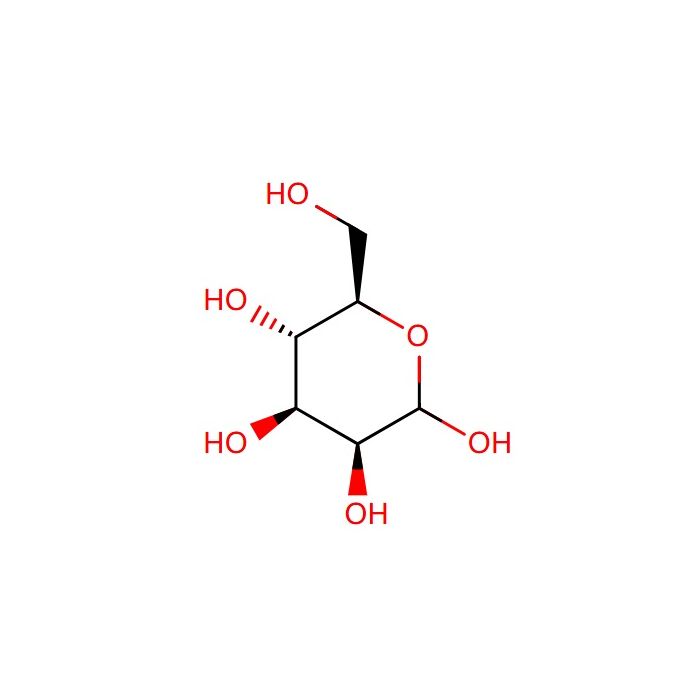
D-Mannose is a simple sμgar.It has been used in a study to assess the synthesis of a family of amphiphilic glycopolymers. It has also been used in a study to investigate the early detection of bronchiolitis obliterans after lung transplantation.
Specifications
Synonyms
D-Mannose | D-Mannopyranose
Specifications & Purity
Moligand™, ≥99%
Biochemical and Physiological Mechanisms
Six-carbon carbohydrate. C-2 epimer of glucose and a critical sugar for protein glycosylation. Can be utilized by the brain as an alternative energy source.
Storage
Room temperature,Argon charged
Shipped In
Normal
Grade
Moligand™
Note
Wherever possible, you should prepare and use solutions on the same day. However, if you need to make up stock solutions in advance, we recommend that you store the solution as aliquots in tightly sealed vials at -20°C. Generally, these will be useable for up to one month. Before use, and prior to opening the vial we recommend that you allow your product to equilibrate to room temperature for at least 1 hour. Need more advice on solubility, usage and handling? Please visit our frequently asked questions (FAQ) page for more details.
Purity
≥99%
Names and Identifiers
Pubchem Sid
WGK Germany
3
Alternate CAS
530-26-7
Molecular Weight
180.16
Beilstein
1564373
Reaxy-Rn
1423215
Documentation
📋 Safety Data Sheet (SDS)
Comprehensive hazard, handling, storage, and regulatory compliance document.
Download SDS →✅ Certificate of Analysis (COA)
Lot-specific quality data. Enter your lot number to retrieve the exact COA.
Look up COA →🔬 Specification Sheet
Full quality attributes and acceptance criteria for this grade.
View spec sheet →Advanced Data
Certificates(CoA,COO,BSE/TSE and Analysis Chart)
C of A & Other Certificates(BSE/TSE, COO):
Analytical Chart:
Find and download the COA for your product by matching the lot number on the packaging.
| Lot Number | Certificate Type | Date | Item |
|---|---|---|---|
 E2612358 | Certificate of Analysis | Mar 13, 2026 | M103969 |
| E2612357 | Certificate of Analysis | Mar 13, 2026 | M103969 |
| E2612356 | Certificate of Analysis | Mar 13, 2026 | M103969 |
| C2626501 | Certificate of Analysis | Mar 13, 2026 | M103969 |
| C2626346 | Certificate of Analysis | Mar 13, 2026 | M103969 |
| C2626345 | Certificate of Analysis | Mar 13, 2026 | M103969 |
| E2114049 | Certificate of Analysis | Nov 07, 2024 | M103969 |
| G2416575 | Certificate of Analysis | Jun 28, 2024 | M103969 |
| B2625207 | Certificate of Analysis | Jun 28, 2024 | M103969 |
| F2520059 | Certificate of Analysis | Jun 28, 2024 | M103969 |
| G2419574 | Certificate of Analysis | Jun 28, 2024 | M103969 |
| G2419575 | Certificate of Analysis | Jun 28, 2024 | M103969 |
| G2419576 | Certificate of Analysis | Jun 28, 2024 | M103969 |
| A2613080 | Certificate of Analysis | Jun 28, 2024 | M103969 |
| G2419577 | Certificate of Analysis | Jun 28, 2024 | M103969 |
| G2419578 | Certificate of Analysis | Jun 28, 2024 | M103969 |
| G2507036 | Certificate of Analysis | Jun 28, 2024 | M103969 |
| H2513059 | Certificate of Analysis | Jun 28, 2024 | M103969 |
| C2414650 | Certificate of Analysis | Feb 29, 2024 | M103969 |
| C2414651 | Certificate of Analysis | Feb 29, 2024 | M103969 |
| L2301203 | Certificate of Analysis | Nov 20, 2023 | M103969 |
| L2301200 | Certificate of Analysis | Nov 20, 2023 | M103969 |
| L2301201 | Certificate of Analysis | Nov 20, 2023 | M103969 |
| L2301202 | Certificate of Analysis | Nov 20, 2023 | M103969 |
| I2328466 | Certificate of Analysis | Sep 08, 2023 | M103969 |
| I2328465 | Certificate of Analysis | Sep 08, 2023 | M103969 |
| I2328464 | Certificate of Analysis | Sep 08, 2023 | M103969 |
| I2328463 | Certificate of Analysis | Sep 08, 2023 | M103969 |
| F2303464 | Certificate of Analysis | Apr 27, 2023 | M103969 |
| F2303467 | Certificate of Analysis | Apr 27, 2023 | M103969 |
| F2303478 | Certificate of Analysis | Apr 27, 2023 | M103969 |
| F2303512 | Certificate of Analysis | Apr 27, 2023 | M103969 |
| F2303463 | Certificate of Analysis | Apr 27, 2023 | M103969 |
| E2114297 | Certificate of Analysis | Feb 14, 2023 | M103969 |
| E2114048 | Certificate of Analysis | Feb 14, 2023 | M103969 |
| A2305354 | Certificate of Analysis | Nov 23, 2022 | M103969 |
| A2305355 | Certificate of Analysis | Nov 23, 2022 | M103969 |
| A2305356 | Certificate of Analysis | Nov 23, 2022 | M103969 |
| A2305374 | Certificate of Analysis | Nov 23, 2022 | M103969 |
| A2305375 | Certificate of Analysis | Nov 23, 2022 | M103969 |
| A2305376 | Certificate of Analysis | Nov 23, 2022 | M103969 |
| A2305377 | Certificate of Analysis | Nov 23, 2022 | M103969 |
| A2305378 | Certificate of Analysis | Nov 23, 2022 | M103969 |
| K2204955 | Certificate of Analysis | Sep 21, 2022 | M103969 |
| B2226304 | Certificate of Analysis | Dec 18, 2021 | M103969 |
| B2226314 | Certificate of Analysis | Dec 18, 2021 | M103969 |
| B2226315 | Certificate of Analysis | Dec 18, 2021 | M103969 |
Chemical and Physical Properties
| Solubility | Soluble in water (1200 g/L at 30 °C), water (500 g/L at 20 °C), and water (2480 g/L at 17 °C). |
|---|---|
| Sensitivity | Hygroscopic;Moisture sensitive |
| Specific Rotation[α] | 15 ° (C=4, H2O) |
| Melt Point(°C) | 133°C |
Documents & Articles
Citations of This Product
Solution Calculators
Reviews
Customer Reviews
Need help choosing the grade?
Our grade selection guide covers purity, stabilizer status, and application suitability for all variants in our catalog.
View Moligand™ grade guide →Remind me later
Products are supplied to verified businesses, institutions, and qualified professionals for research and development use only. Not for use in humans, animals, diagnosis, or therapy.
Copyright © 2023–present Aladdin Scientific Corp. All rights reserved.