
From Nucleophilic to Electrophilic BCB Synthetic Equivalents: Hypervalent-Iodine-Mediated Umpolung Design
From Nucleophilic to Electrophilic BCB Synthetic Equivalents: Hypervalent-Iodine-Mediated Umpolung Design
Note: This article primarily discusses the design logic of electrophilic BCB synthetic equivalents from the perspectives of retrosynthetic analysis and reaction polarity. The specific reagent structures, reaction conditions, substrate scope, and microscopic mechanisms described herein should be evaluated with reference to the corresponding original studies.
1 Core Challenges in Bridgehead Functionalization of BCB
1.1 High Ring Strain Does Not Necessarily Mean Facile Bridgehead Substitution
Bicyclo[1.1.0]butane (BCB) consists of two three-membered carbocycles that share a common bond. Because its geometry deviates substantially from conventional bond angles, the parent BCB is estimated to possess approximately 63.9 kcal·mol⁻¹ of ring strain[1].
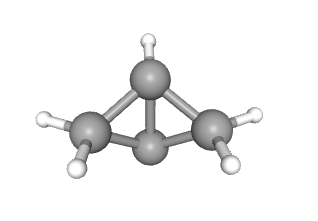
The C1 and C3 atoms of BCB are the two bridgehead carbons. In this article, the bond between C1 and C3 is referred to as the central bridgehead-to-bridgehead C1—C3 bond. Under suitable conditions, this bond can undergo cleavage, cycloaddition, and skeletal rearrangement, enabling the conversion of BCB into cyclobutanes, cyclobutenes, and other bridged-ring structures.
The synthetic objective of preparing 1,3-disubstituted BCBs differs from the strain-release reactions described above: substituents must be introduced independently at the two bridgehead positions while the central bond remains intact. Therefore, the high ring strain of BCB does not imply that bridgehead substitution can be achieved by arbitrary means. Bridgehead functionalization also depends on the reaction polarity of the bridgehead carbon and on whether the reacting partners form an appropriate nucleophile–electrophile combination.
1.2 Traditional Bridgehead Functionalization: Bridgehead Lithiation and Electrophilic Trapping
For a terminal BCB bearing an electron-withdrawing substituent at one end, the basic synthetic design can be represented as follows: bridgehead deprotonation first generates a bridgehead organolithium intermediate, which is then trapped with an electrophile to introduce a new substituent while preserving the central C1—C3 bond.
Two-step reaction sequence
Step 1: Bridgehead lithiation
EWG—BCB—H ⟶ EWG—BCB—Li
Reagent: a strong base or organolithium reagent, such as n-butyllithium or lithium diisopropylamide
Step 2: Electrophilic trapping
EWG—BCB—Li ⟶ EWG—BCB—E
Reagent: an electrophile
The two-step sequence can be represented in a combined form as:
EWG—BCB—H ⟶ EWG—BCB—E
Where:
Symbol | Meaning |
EWG | An electron-withdrawing group located at one bridgehead; in this article, this mainly refers to a sulfone or sulfonamide |
BCB—H | A terminal BCB bearing hydrogen at the other bridgehead |
BCB—Li | A simplified representation of the bridgehead organolithium intermediate |
E | A substituent introduced by the electrophile |
The bond-forming polarity of this route can be summarized as:
Nucleophilic BCB synthetic equivalent + electrophile ⟶ 1,3-disubstituted BCB
This method is suitable for introducing substituents that can be supplied in the form of electrophilic reagents. Thiolates, aryl Grignard reagents, and alkyl Grignard reagents are likewise nucleophilic reaction components and therefore cannot directly trap a bridgehead organolithium intermediate in the same manner as conventional electrophiles. Connecting two nucleophilic fragments generally requires oxidative coupling, transmetalation, or another polarity-conversion process. This limitation primarily arises from a mismatch in bond-forming polarity rather than simply from insufficient reactivity.
2 How Umpolung Changes the Bond-Forming Mode of BCB
2.1 From Nucleophilic to Electrophilic BCB Synthetic Equivalents
Umpolung is the alteration of the nucleophilic or electrophilic role of a reaction center through structural modification, enabling it to form a complementary bond-forming combination with another type of reaction component[2].
The traditional bridgehead-lithiation route corresponds to the following formal relationship:
BCB⁻ synthetic equivalent + E⁺ synthetic equivalent ⟶ BCB—E
Here, E⁺ represents the electrophilic fragment formally supplied by the electrophile.
The target relationship after polarity inversion of BCB is:
BCB⁺ synthetic equivalent + Nu⁻ synthetic equivalent ⟶ BCB—Nu
Here, Nu⁻ represents the formal source of the nucleophilic fragment and may correspond to a thiolate, an aryl Grignard reagent, or an alkyl Grignard reagent. The organic group in a Grignard reagent is nucleophilic, but it does not exist as free Ar⁻ or R⁻ in solution.
“BCB⁺” is a formal synthon used in retrosynthetic analysis and does not imply that a free bridgehead BCB carbocation is generated and accumulates in the reaction system. In this article, a BCB structure in which a bridgehead carbon is bonded as a ligand to a cyclic iodine(III) center is formally designated as BCB-Bx.
The two routes are complementary:
BCB reaction form | Reactivity of the BCB bridgehead | Reaction partner |
Bridgehead organolithium | Nucleophilic | Electrophile |
BCB-Bx | Electrophilic group-transfer capability | Sulfur nucleophile or organometallic nucleophile |
2.2 Structural Representation of BCB-Bx
The following symbols are used in this article to represent BCB-Bx and its reaction components:
Symbol | Meaning |
EWG | A sulfone or sulfonamide electron-withdrawing group located at one bridgehead of BCB |
BCB | The bicyclo[1.1.0]butane framework |
Bx | A cyclic iodine(III) structural unit attached to the other bridgehead carbon |
Nu | A group supplied by an external nucleophile and installed at the BCB bridgehead |
BCB-Bx can be abbreviated as:
EWG—BCB—Bx
This representation indicates the following substitution pattern:
① EWG and Bx are attached to the two bridgehead positions of BCB, respectively;
② the bridgehead bearing EWG is already substituted with a sulfone or sulfonamide group;
③ the other bridgehead carbon is bonded as a carbon ligand to the cyclic iodine(III) center.
2.3 Role of the Cyclic Iodine(III) Structure
Many organoiodine(III) compounds exhibit oxidizing properties or electrophilic group-transfer capability and can be used to construct C—C and C—heteroatom bonds[3,4].
When a BCB bridgehead carbon is attached to a cyclic iodine(III) center, the BCB fragment is converted from a traditionally nucleophilic reaction component into a synthetic equivalent capable of electrophilic transfer. The net structural transformation can be represented as:
EWG—BCB—Bx + nucleophile ⟶ EWG—BCB—Nu
The principal structural changes in this reaction are:
Reaction site | Before the reaction | After the reaction |
One BCB bridgehead | Attached to EWG | Unchanged |
Other BCB bridgehead | Attached to the iodine(III) structure | Forms a new bond with Nu |
Central C1—C3 bond | Intact | Intact |
In terms of bond changes, the process can be summarized as:
Bridgehead C—I(III) linkage ⟶ bridgehead C—Nu linkage
The reaction scheme above represents only the net change in bond connectivity between the reactants and products and does not specify a particular microscopic mechanism. Whether the nucleophile first interacts with the iodine(III) center, and whether the reaction involves ligand exchange, ligand coupling, transmetalation, or a single-electron process, should be determined from mechanistic experiments and theoretical calculations reported in the original study.
3 Structural Role of the Sulfone or Sulfonamide Substituent in BCB-Bx
3.1 Differentiation of the Reaction Functions of the Two Bridgeheads
EWG—BCB—Bx
Here, EWG represents a sulfone or sulfonamide substituent, while Bx represents a cyclic iodine(III) structural unit attached to the other bridgehead carbon. The two groups are located at the two bridgehead positions of bicyclo[1.1.0]butane.
In subsequent C—S or C—C bond-forming reactions, the two bridgeheads perform different functions:
Structural site | Change during the reaction |
EWG-bearing bridgehead | The sulfone or sulfonamide substituent is retained |
Bx-bearing bridgehead | The cyclic iodine(III) structure is replaced by a new sulfanyl, aryl, or alkyl group |
Central C1—C3 bond | Remains intact during bridgehead functionalization |
The net structural transformation can be represented as:
EWG—BCB—Bx + Nu → EWG—BCB—Nu
Here, Nu represents a group formally supplied by a nucleophilic reaction partner and installed at the BCB bridgehead.
Accordingly, the bridgehead bearing the sulfone or sulfonamide constitutes the relatively stable substituted terminus, while the other bridgehead serves as the site for subsequent introduction of a functional group.
3.2 Modulation of the Electronic Properties of the BCB Framework
Sulfone-type and sulfonamide-type sulfonyl groups exert electron-withdrawing effects and may influence bridgehead deprotonation, the electronic distribution of the BCB framework, and the subsequent reactivity of the resulting products. Whether they also improve the stability of the BCB–iodine(III) reagent or suppress nonselective reactions must be determined through substituent-control experiments, stability studies, or theoretical calculations.
3.3 Determination of the Basic Structures of the Resulting BCB Products
The sulfone or sulfonamide is not a temporary activating group that departs during bridgehead functionalization. After C—S or C—C bond formation, it remains attached to one bridgehead of the product.
According to the umpolung design described above, the target products may possess the following basic structures:
Sulfone or sulfonamide—BCB—sulfanyl group
Sulfone or sulfonamide—BCB—aryl group
Sulfone or sulfonamide—BCB—alkyl group
This method constructs 1,3-disubstituted BCBs bearing a sulfone or sulfonamide at one terminus and a newly introduced substituent at the other. The sulfone or sulfonamide both contributes to the electronic modulation of the reagent and remains an integral part of the final product.
4 Formation of a Bridgehead C—S Bond between BCB-Bx and a Sulfur Nucleophile
4.1 Reaction Process and Bond Changes
Under basic conditions, an aryl thiol forms a more strongly nucleophilic sulfur species and reacts with BCB-Bx to form a C—S bond at the bridgehead originally attached to the cyclic iodine(III) structure.
EWG—BCB—Bx+ArSH+base → EWG—BCB—Sar
Symbol | Meaning |
EWG | A sulfone or sulfonamide group located at one bridgehead |
Bx | A cyclic iodine(III) structural unit attached to the other bridgehead |
ArSH | An aryl or heteroaryl thiol |
SAr | An arylthio or heteroarylthio group installed at the BCB bridgehead |
The base can promote formation of a more nucleophilic sulfur species from the aryl thiol, thereby making sulfur an effective nucleophilic reaction center. After completion of the reaction:
Reaction site | Before the reaction | After the reaction |
EWG-bearing bridgehead | EWG—BCB | Unchanged |
Other bridgehead | BCB—Bx | BCB—SAr |
Central C1—C3 bond | Intact | Remains intact |
The net bond change in this reaction is:
BCB bridgehead C—I(III) linkage ⟶ BCB bridgehead C—SAr linkage
Accordingly, BCB-Bx supplies the intact BCB framework bearing an electron-withdrawing substituent, while the aryl thiol supplies the sulfur substituent to be installed at the other bridgehead.
5 Copper-Catalyzed Construction of a Bridgehead C—C Bond in BCB
5.1 Competing Reactions upon Direct Addition of a Grignard Reagent
Grignard reagents are strongly basic and nucleophilic and may also participate in single-electron-transfer or reduction processes. When they come into direct contact with organoiodine(III) reagents, target-group transfer, reduction, coupling, or other competing reactions may theoretically occur; the specific identities and proportions of the by-products must be determined experimentally.
The principal reaction outcome can be summarized as follows:
Target product:
EWG—BCB—Bx + R²MgX ⟶ EWG—BCB—R²
5.2 Design Concept for Copper-Mediated Bridgehead C—C Bond Formation
From a reaction-design perspective, a copper-mediated or copper-catalyzed process may be considered to enable the organic group supplied by the Grignard reagent to form a C—C bond with the BCB bridgehead originally attached to Bx.
The net reaction can be represented as:
EWG—BCB—Bx + R²MgX ⟶ EWG—BCB—R²
Reaction conditions: The specific copper source, catalyst loading, ligand, solvent, temperature, and amount of Grignard reagent should be determined on the basis of the original study or experimental screening.
Where:
Symbol | Meaning |
EWG | A sulfone or sulfonamide group located at one bridgehead |
Bx | A cyclic iodine(III) structural unit attached to the other bridgehead |
R² | An aryl or alkyl group supplied by the Grignard reagent |
X | The halide in the Grignard reagent |
TMEDA | N,N,N′,N′-Tetramethylethylenediamine |
The net bond change in this reaction is:
BCB bridgehead C—I(III) linkage ⟶ BCB bridgehead C—R² linkage
During the reaction, the bridgehead bearing the sulfone or sulfonamide remains unchanged, and the central C1—C3 bond of the BCB framework remains intact.
5.3 Effect of the Copper Catalyst on Reaction Selectivity
In conventional copper-catalyzed coupling reactions involving Grignard reagents, the Grignard reagent can undergo transmetalation with a copper salt to generate organocopper or cuprate-type species, which then participate in subsequent C—C bond formation. Copper may therefore alter the competition among direct reduction, dimerization, and the desired coupling pathway.
6 Scope and Limitations of the Method
6.1 Retention of a Sulfone or Sulfonamide at One Bridgehead
In the EWG—BCB—Bx structural model discussed in this article, one bridgehead bears a sulfone-type or sulfonamide-type sulfonyl group, while the other bridgehead is attached to a cyclic iodine(III) unit. After C—S or C—C bond formation, the sulfone or sulfonamide group remains in the product.
The resulting products mainly possess the following structures:
Sulfone or sulfonamide—BCB—arylthio group
Sulfone or sulfonamide—BCB—aryl group
Sulfone or sulfonamide—BCB—alkyl group
This method allows the substituent at the Bx-bearing bridgehead to be changed but does not yet permit arbitrary combinations of substituents at both bridgeheads. Whether the sulfone or sulfonamide can be further transformed, replaced, or removed while preserving the BCB framework remains an issue that must be addressed to broaden the accessible product space.
6.2 Influence of Product Stability on C—S Bond Formation
The applicability of the C—S bond-forming reaction depends not only on whether the arylthio group can be introduced, but also on whether the resulting 1,3-disubstituted BCB remains stable under the reaction, purification, and storage conditions.
6.3 Limitations of C—C Bond Formation Arising from the Properties of Grignard Reagents
Grignard reagents are strongly basic and nucleophilic and may react with a variety of functional groups. Structures that are readily affected include:
① carboxylic acids, alcohols, and amines containing active hydrogen atoms;
② aldehydes, ketones, and some ester carbonyl groups;
③ halogenated structures prone to halogen–metal exchange;
④ functional groups sensitive to strongly basic, strongly nucleophilic, or reducing conditions.
Therefore, even if the relevant BCB–iodine(III) reagent can participate in a copper-mediated Grignard coupling, the method may still be limited by the conventional functional-group compatibility of Grignard reagents.
6.4 Intended Scope of the Method
From the perspective of synthetic design, electrophilic BCB synthetic equivalents are intended to enable the following transformations:
① formation of a bridgehead C—S bond while preserving the central C1—C3 bond;
② formation of a bridgehead C—C bond under suitable metal-mediated conditions;
③ expansion of the range of nucleophilic reaction partners that cannot be directly paired with traditional nucleophilic BCB synthetic equivalents;
④ preparation of 1,3-disubstituted BCBs that can undergo further derivatization.
7 Basic Reagents Related to BCB, Hypervalent Iodine, and Organometallic Chemistry
Note: The products listed below are basic reagents or candidate screening reagents related to BCB chemistry, hypervalent iodine chemistry, organolithium reagents, Grignard reagents, and sulfur-nucleophile reactions. Their inclusion does not indicate that all of them have been experimentally validated in the BCB-Bx system discussed in this article.
Table 1. Reaction Solvents and Coordination Additives
Category | CAS No. | Aladdin Catalog No. | Product Name | Specification or Purity | Product Features and Applications |
Ether reaction solvent | 60-29-7 | D1506340 | Diethyl ether (regulated precursor chemical) | Anhydrous grade, ACS | Used for the preparation and dilution of Grignard reagents and in organometallic reactions, providing an ether-oxygen coordination environment for magnesium reagents. |
Ether reaction solvent | 109-99-9 | T1491789 | Tetrahydrofuran (THF) | Anhydrous grade, ≥99.9%, inhibitor-free, H₂O ≤30 ppm | Used in reactions involving organolithium reagents, lithium diisopropylamide, and Grignard reagents; suitable for bridgehead deprotonation and carbon–carbon bond formation. |
Polar aprotic solvent | 68-12-2 | N,N-Dimethylformamide (DMF) | Anhydrous grade, ≥99.8% | A commonly used polar aprotic solvent suitable for sulfur-nucleophile reactions and the screening of related reaction conditions. | |
Amine coordination additive | 110-18-9 | Tetramethylethylenediamine (TEMED) | Distilled grade, ≥99.5% (GC) | Commonly used as a coordination additive for organolithium, organomagnesium, and copper species and may be used to regulate the coordination and aggregation states of metal species. |
Table 2. Strong Bases and Organometallic Reagents
Category | CAS No. | Aladdin Catalog No. | Product Name | Specification or Purity | Product Features and Applications |
Primary alkyl Grignard reagent | 925-90-6 | Ethylmagnesium bromide solution | 40% in 2-methyltetrahydrofuran | Provides an ethyl nucleophilic fragment and may serve as a candidate reagent in studies of organomagnesium and copper-mediated coupling reactions. | |
Alkyl Grignard reagent | 75-16-1 | M130050 | Methylmagnesium bromide | 3.0 M solution in diethyl ether | Provides a methyl nucleophilic fragment and may be used to investigate methyl transfer and bridgehead methylation reactions of electrophilic bicyclo[1.1.0]butane reagents. |
Non-nucleophilic strong base | 4111-54-0 | Lithium diisopropylamide solution (LDA) | 2 M in THF/n-hexanes | Used for bridgehead deprotonation of terminal bicyclo[1.1.0]butanes; a commonly used non-nucleophilic strong base suitable for low-temperature deprotonation studies. | |
Primary alkyl Grignard reagent | 927-77-5 | P137863 | Propylmagnesium bromide | 2 M in THF | Provides an n-propyl nucleophilic fragment and may be used to study the introduction of primary alkyl groups at the bridgehead and the applicability of alkyl Grignard reagents. |
Organolithium strong base | 109-72-8 | n-Butyllithium | 2.7 M in hexane (25% solution) | Used for bridgehead lithiation of terminal bicyclo[1.1.0]butanes and may be used for strong-base deprotonation and the preparation of organolithium intermediates. | |
Aryl Grignard reagent | 13139-86-1 | A110248 | 4-Methoxyphenylmagnesium bromide | 1 M in THF | Provides a methoxy-substituted aryl fragment and may be used to investigate bridgehead arylation and the effects of electron-donating aryl substituents on coupling reactions. |
Primary alkyl Grignard reagent | 693-03-8 | B304412 | Butylmagnesium bromide | 1.0 M in THF | Provides an n-butyl nucleophilic fragment and may be used to study copper-catalyzed bridgehead alkylation and the substrate scope of primary alkyl reagents. |
Aryl Grignard reagent | 100-58-3 | P103163 | Phenylmagnesium bromide | 1.0 M in THF | A representative aryl nucleophile used for bridgehead phenylation and carbon–carbon bond formation involving electrophilic bicyclo[1.1.0]butane reagents. |
Fused-ring aryl Grignard reagent | 703-55-9 | 1-Naphthylmagnesium bromide | 0.25 M in THF | Provides a naphthyl nucleophilic fragment and may be used to investigate the steric and electronic effects of fused-ring aryl groups in bridgehead coupling reactions of bicyclo[1.1.0]butanes. |
Table 3. Sulfur Nucleophiles and Bond-Forming Additives
Category | CAS No. | Aladdin Catalog No. | Product Name | Specification or Purity | Product Features and Applications |
Organic strong base | 6674-22-2 | 1,8-Diazabicyclo[5.4.0]undec-7-ene (DBU) | ≥99% | A commonly used organic base that can promote the formation of more nucleophilic sulfur species from thiols and is suitable for screening conditions for related C—S bond-forming reactions. | |
Nitrogen-containing heteroaryl thiol | 2637-34-5 | 2-Mercaptopyridine | ≥98% | A nitrogen-containing heteroaryl sulfur compound that may exist in thiol/thione tautomeric forms and may be used to investigate the reactivity of nitrogen-containing heterocyclic sulfur nucleophiles. | |
Halogenated aryl thiol | 106-54-7 | 4-Chlorothiophenol | ≥98% | A representative aryl thiol that may serve as a nucleophilic sulfur source and a candidate substrate for C—S bond-forming studies. | |
Electron-rich aryl thiol | 696-63-9 | 4-Methoxythiophenol | ≥98% | Provides a p-methoxyphenylthio fragment and may be used to investigate the electronic effects of aryl thiols and the synthesis of bicyclo[1.1.0]butane thioethers. | |
Alkyl-substituted aryl thiol | 106-45-6 | p-Thiocresol | ≥98% | Provides a p-tolylthio fragment and may be used to construct alkyl-substituted aryl thioethers and investigate the effects of aryl substituents on bond-forming reactions. | |
Fused-ring aryl thiol | 91-60-1 | 2-Naphthalenethiol | ≥97% | Provides a naphthylthio fragment and may be used to prepare fused-ring arylthio-substituted bicyclo[1.1.0]butanes and investigate steric effects. | |
Halogenated aryl thiol | 106-53-6 | 4-Bromothiophenol | ≥97% | Provides a p-bromophenylthio fragment for bridgehead carbon–sulfur bond formation while retaining the bromo substituent as a site for subsequent cross-coupling reactions. |
Table 4. Hypervalent Iodine Reagents and Synthetic Precursors
Category | CAS No. | Aladdin Catalog No. | Product Name | Specification or Purity | Product Features and Applications |
Hypervalent iodine(III) reagent | 3240-34-4 | (Diacetoxyiodo)benzene, also known as phenyliodine diacetate (PIDA) | ≥98% | Used in studies of hypervalent-iodine-mediated oxidation, ligand exchange, and electrophilic group transfer; a commonly used organoiodine(III) oxidant and synthetic precursor to other hypervalent iodine reagents. | |
Cyclic hypervalent iodine precursor | 88-67-5 | 2-Iodobenzoic acid | ≥98% | 2-Iodobenzoic acid is an upstream starting material for IBX, Dess–Martin reagent, and certain benzo-fused cyclic hypervalent iodine structures. | |
Hypervalent iodine(III) reagent | 2712-78-9 | [Bis(trifluoroacetoxy)iodo]benzene | ≥97% | Used in electrophilic oxidation, ligand-transfer, and hypervalent-iodine activation reactions and may be used to compare the reactivity of different iodine(III) reagents. | |
Hypervalent iodine(III) reagent | 536-80-1 | Iodosylbenzene | ≥95% (T) | Used in oxygen-atom transfer, the preparation of hypervalent iodine intermediates, and oxidation studies; may serve as a basic reagent in iodine(III) chemistry. |
Note: The products listed above are representative Aladdin products related to scientific research and formulation studies. Additional product specifications, grades, and certificate-of-analysis information may be searched on the Aladdin website using the product name, CAS number, or catalog number.
References
[1] Wiberg K. B., Lampman G. M., Ciula R. P., Connor D. S., Schertler P., Lavanish J. Bicyclo[1.1.0]butane. Tetrahedron, 1965, 21(10): 2749–2769. DOI: 10.1016/S0040-4020(01)98361-9.
[2] Seebach D. Methods of Reactivity Umpolung. Angewandte Chemie International Edition in English, 1979, 18(4): 239–258. DOI: 10.1002/anie.197902393.
[3] Yoshimura A., Zhdankin V. V. Advances in Synthetic Applications of Hypervalent Iodine Compounds. Chemical Reviews, 2016, 116(5): 3328–3435. DOI: 10.1021/acs.chemrev.5b00547.
[4] Merritt E. A., Olofsson B. Diaryliodonium Salts: A Journey from Obscurity to Fame. Angewandte Chemie International Edition, 2009, 48(48): 9052–9070. DOI: 10.1002/anie.200904689.
[5] Kochi J. K., Tamura M. Alkylcopper(I) in the Coupling of Grignard Reagents with Alkyl Halides. Journal of the American Chemical Society, 1971, 93(6): 1485–1487. DOI: 10.1021/ja00735a029.
For more related articles, see below:
Oxetane: Property-Window Optimization and a Building-Block Selection Guide (Tables 1–4)