
Mutant Library Construction, Screening, and Performance Optimization in Protein-Directed Evolution
Mutant Library Construction, Screening, and Performance Optimization in Protein-Directed Evolution
Protein-directed evolution achieves continuous optimization of catalytic activity, stability, and substrate specificity through repeated cycles of gene diversification, variant expression, functional screening, and enrichment of beneficial mutations, without relying completely on prior knowledge of protein structure and mechanism of action.
Keywords: protein-directed evolution; random mutagenesis; error-prone PCR; site-directed mutagenesis; saturation mutagenesis; mutant library; high-throughput screening; continuous evolution; enzyme engineering; substrate specificity
1 Basic Principles and Technical Workflow of Protein-Directed Evolution
1.1 Basic Principles of Directed Evolution
Protein-directed evolution simulates the natural evolutionary process of “variation-selection-inheritance” under laboratory conditions. Researchers first diversify a target gene randomly or in a directed manner to generate a mutant library containing large numbers of different sequences. The corresponding protein variants are then expressed, and clones with the desired properties are enriched through screening or selection. Beneficial mutations obtained from one round can be used as the starting sequence for the next round of evolution, allowing protein performance to improve progressively through multiple iterative cycles.
1.2 Sequence Space and Fitness Landscapes
All possible amino acid sequences of a protein constitute an enormous sequence space, and it is impossible to experimentally enumerate every variant. Directed evolution essentially uses libraries of limited size to identify regions of sequence space with relatively high functional fitness. A single mutation may improve, reduce, or have no effect on protein performance, and combinations of multiple mutations may produce additive, synergistic, or antagonistic effects. Therefore, a beneficial single mutation does not necessarily correspond to the optimal combination.
1.3 Cycles of Mutagenesis, Expression, Screening, and Amplification
A typical directed evolution workflow includes defining the engineering objective, establishing a functional assay, constructing a mutant library, introducing the library into an expression host, expressing protein variants, conducting primary screening, retesting positive clones, sequencing and identifying mutations, and initiating the next round of evolution. Each round should adjust the mutated region, mutation load, and screening pressure according to previous results rather than mechanically increasing the number of mutations.
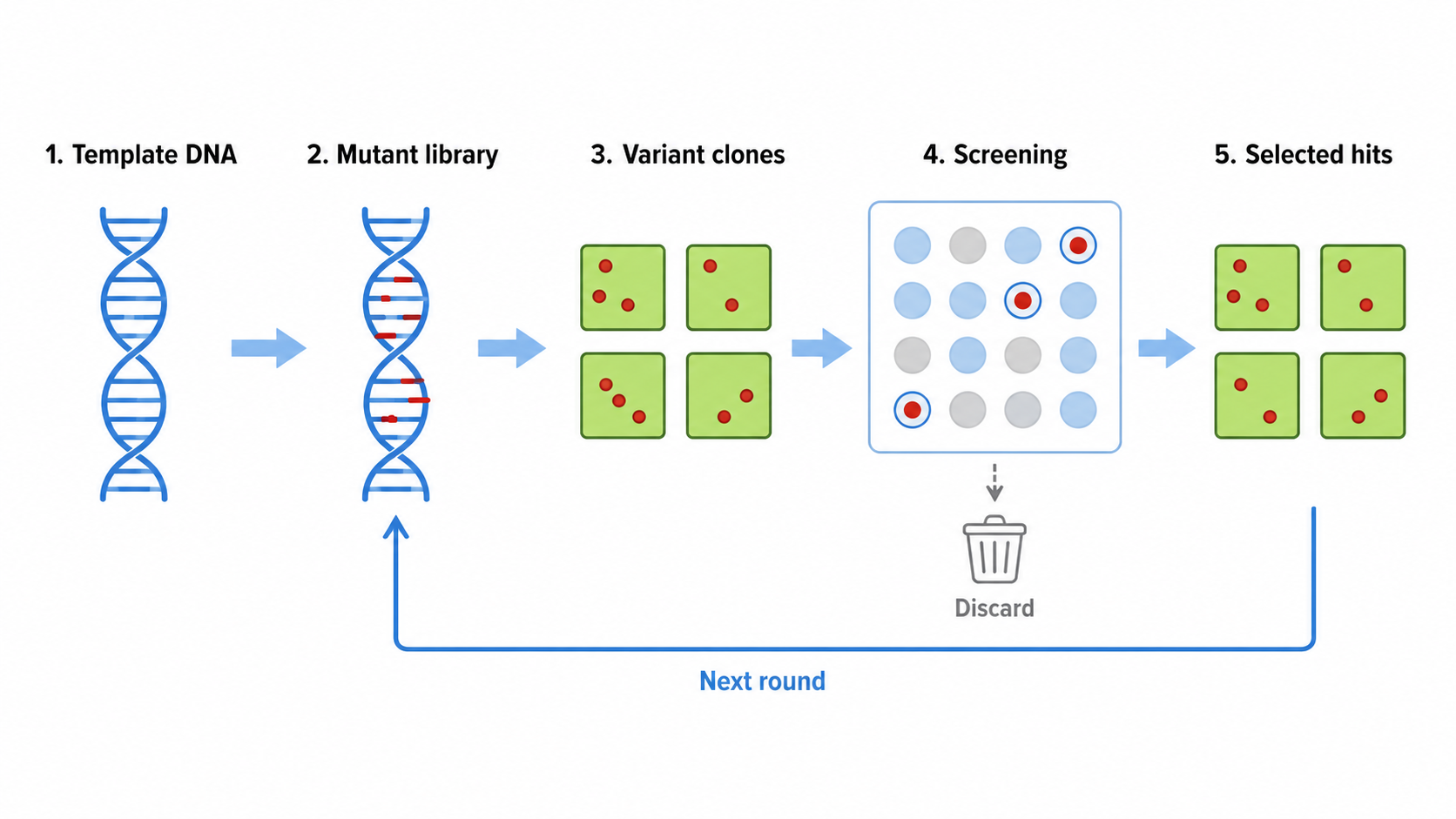
Figure 1 Mutant Library Construction, Screening, and Iterative Evolution Workflow in Protein Directed Evolution
1.4 Genotype-Phenotype Linkage
Directed evolution requires the detected protein phenotype to be accurately traceable to its encoding gene. Microplate screening maintains genotype-phenotype linkage through monoclonal culture. Phage display, yeast display, and cell-surface display connect the encoding sequence with the displayed protein through a particle or cell. Microdroplet systems confine a single cell or gene and its reaction system within an individual droplet. If proteins or reaction products diffuse between wells, colonies, or droplets, signal crosstalk and erroneous enrichment may occur.
1.5 Matching Library Size With Screening Throughput
Library size should match the actual screening capacity. Low-throughput assays are more suitable for saturation mutagenesis of a small number of sites or focused combinatorial libraries, whereas large random mutant libraries require colony screening, automated microplates, flow cytometry, microdroplets, or growth-selection systems. Expanding the library without increasing screening throughput does not effectively increase the probability of identifying improved variants.
2 Comparison of Random, Site-Directed, and Saturation Mutagenesis Strategies
2.1 Random Mutagenesis
Random mutagenesis introduces nucleotide substitutions across a relatively broad region of the target gene and can identify distal regulatory sites outside the active center, conformationally stabilizing mutations, and previously unpredicted functional sites. Error-prone PCR, mutator strains, and chemical mutagenesis can all be used for random diversification. Error-prone PCR can restrict the mutated region through primer design and is suitable for initial exploration and iterative evolution of most proteins. Its main limitations are biased mutation spectra and the presence of many nonfunctional variants in the library.
2.2 Site-Directed Mutagenesis
Site-directed mutagenesis introduces defined nucleotide or amino acid substitutions at specified positions. It is suitable for validating candidate sites identified through structural analysis, sequence conservation analysis, molecular simulation, or previous screening rounds. The variant composition is defined and library size is small, facilitating mechanistic studies. However, only predetermined mutations can be tested, making unexpected distal sites difficult to discover.
2.3 Site-Saturation Mutagenesis
Site-saturation mutagenesis systematically introduces multiple amino acid substitutions at one or more specified codon positions. It is suitable for fine optimization of active centers, substrate channels, binding interfaces, and conformational switch regions. NNK or NNS degenerate codons use 32 codons to cover all 20 standard amino acids but still contain codon redundancy and stop codons. Compressed codons, grouped primers, or iterative single-site strategies can reduce the proportion of ineffective clones and the practical screening burden.
2.4 Combinatorial Mutagenesis and DNA Recombination
Beneficial mutations from different advantageous clones can be recombined through multisite-directed mutagenesis, modular assembly, or DNA shuffling. DNA shuffling generally begins by randomly fragmenting parental genes, followed by primerless reassembly and amplification to generate chimeric sequences. This strategy concentrates beneficial mutations from multiple parents into the same gene. Its core purpose is to recombine existing functional diversity rather than merely increase random point mutations.
Table 1 Comparison of Major Mutagenesis Strategies in Protein-Directed Evolution
Mutagenesis Strategy | Diversification Range | Main Advantages | Main Limitations | Applicable Stage |
Error-prone PCR | Entire gene or specified fragment | Does not require prior knowledge of critical sites and can identify distal mutations | Biased mutation spectrum and many nonfunctional clones | Initial exploration and iterative evolution |
Site-directed mutagenesis | Single site or a few sites | Defined mutations, facilitating functional and mechanistic validation | Narrow search range | Validation of candidate mutations |
Site-saturation mutagenesis | Specified codons | Allows comparison of multiple amino acid substitutions at the same position | Library size expands rapidly with multiple sites | Fine optimization of hotspot sites |
Multisite combinatorial mutagenesis | Multiple known sites | Allows analysis of synergistic and antagonistic effects among beneficial mutations | Large theoretical number of combinations | Integration of beneficial mutations |
DNA shuffling | Homologous genes or beneficial clones | Recombines beneficial mutations and separates deleterious mutations | Limited by sequence homology and recombination efficiency | Middle and late rounds of evolution |
Synthetic gene library | Customized region or full-length gene | Precise control of variant composition and codon distribution | Cost depends on sequence length and library size | Focused and model-guided evolution |
3 Mechanism of Random Mutagenesis Mediated by Error-Prone PCR
3.1 Low-Fidelity DNA Synthesis
Error-prone PCR increases the mismatch frequency during target-gene amplification by reducing the nucleotide-selection fidelity of DNA polymerase. Common systems are based on Taq DNA polymerase and regulate replication fidelity by adjusting Mn²⁺, Mg²⁺, dNTP ratios, template amount, and amplification cycle number. After purification, cloning, and transformation, the resulting PCR products form random mutant libraries containing different combinations of nucleotide substitutions.
3.2 Effects of Mn²⁺ on Replication Fidelity
Mn²⁺ reduces the ability of DNA polymerase to discriminate correct base pairing and increases the probability of incorrect nucleotide incorporation. Increasing the MnCl₂ concentration generally raises the mutation rate but may also reduce amplification yield, increase nonspecific amplification, and increase the proportion of clones carrying high mutation loads. Multiple Mn²⁺ concentration gradients should therefore be tested during library construction rather than directly using the strongest mutagenic condition.
3.3 Regulation by Mg²⁺ and dNTP Ratios
Mg²⁺ is an essential cofactor for DNA polymerization, and increasing Mg²⁺ concentration can reduce base-recognition stringency within a certain range. An imbalanced dNTP system alters the probabilities of different nucleotide substitutions. For example, increasing the concentration of selected dNTPs may increase particular mismatch types. Because these effects depend on the polymerase and target sequence, error-prone PCR produces condition-controlled random mutations rather than completely uniform sequence randomization.
3.4 Template Amount and Amplification Cycle Number
Reducing the initial template amount and increasing the number of PCR cycles causes newly synthesized DNA to undergo more replication rounds, thereby increasing mutation accumulation. However, excessive cycling amplifies early PCR bias, overenriches a small number of early variants, and increases nonspecific products and repeated mutations. The cycle number should generally be limited while still generating sufficient target product, and multiple parallel reactions may be pooled to reduce amplification bias from a single tube.
3.5 Error-Prone PCR Library Construction Workflow
The target gene can be amplified under low, medium, and high mutagenesis conditions. The resulting products are purified, inserted into an expression vector, and transformed into highly competent cells. Libraries generated at different mutation intensities should be stored and evaluated separately to compare average mutation load, functional retention, and the proportion of positive clones. Random mutagenesis kits can simplify preparation of mutagenic reactions and library construction, but the actual mutation rate and spectrum should still be determined by sequencing individual clones before formal screening.
4 Methods for Controlling Mutation Rate and Mutation Spectrum
4.1 Mutation Load and Functional Retention
When the mutation rate is too low, most clones remain similar to the parental sequence, limiting exploration of new functional regions. When the mutation rate is too high, protein folding, active-site integrity, and expression stability are readily impaired simultaneously. The appropriate mutation load depends on protein length, structural robustness, screening throughput, and the desired property. A fixed number of mutations per kilobase cannot be applied universally to all proteins.
4.2 Distribution of Mutation Numbers Among Clones
The number of mutations in an error-prone PCR library generally follows a distribution around a mean rather than being identical in every clone. Even when the average mutation load is appropriate, the library may still contain unmutated clones, low-mutation clones, and highly mutated inactive clones. Library evaluation should therefore report the distribution of mutation numbers across multiple individual clones rather than analyzing only the mean mutation frequency of a mixed sample.
4.3 Nucleotide Substitution Bias
The type of DNA polymerase, Mn²⁺ and Mg²⁺ concentrations, dNTP ratios, and target-gene sequence jointly determine the relative proportions of transitions and transversions. If the mutation spectrum is excessively biased toward a few nucleotide substitutions, some amino acid changes cannot be accessed through a single nucleotide substitution, reducing the practical protein sequence space explored. Different mutagenic conditions can be combined to broaden substitution types, or site-saturation mutagenesis can subsequently be used to introduce missing amino acid changes.
4.4 Restriction of the Mutated Region
Changing PCR primer positions allows random mutagenesis to be restricted to regions near the active site, substrate channel, binding domain, or flexible loop. Regional error-prone PCR concentrates limited screening capacity on sequence regions with high engineering value while preserving other critical domains. However, it may miss distal allosteric sites and global stabilizing mutations.
4.5 Preliminary Experiments and Condition Selection
Before constructing a formal library, multiple levels of MnCl₂, MgCl₂, dNTP ratios, and amplification cycle numbers should be tested to compare target-product yield, amplification specificity, and mutation intensity. A defined number of clones from each condition can be randomly selected for sequencing, followed by integrated evaluation of the average mutation number, proportion of unmutated clones, insertion-deletion frequency, stop-codon frequency, and retention of basal function.
5 Construction and Quality Evaluation of Mutant Gene Libraries
5.1 Assembly of Mutant Fragments Into Expression Vectors
Mutant genes can be inserted into expression vectors through restriction enzyme ligation, homologous recombination, Gibson assembly, or other seamless cloning methods. Promoters, ribosome-binding sites, signal peptides, tags, and termination sequences should remain unchanged during assembly to avoid unintended alteration of regulatory elements. If promoters or translational regulatory regions are mutated simultaneously, screening signals may primarily reflect changes in expression level rather than intrinsic protein performance.
5.2 Transformation Efficiency and Actual Library Size
The actual library size is determined by the number of independent transformants rather than the amount of PCR product or concentration of ligation products. The number of transformants should exceed the theoretical number of variants to compensate for empty vectors, repeated sequences, invalid clones, and uneven variant abundance. The theoretical diversity of multisite-saturation libraries increases rapidly with the number of sites, and iterative single-site or grouped combinatorial strategies should be used when screening capacity is insufficient.
5.3 Parental Template and Empty-Vector Background
Incomplete vector linearization, residual template plasmid, and failed ligation can increase the proportions of parental sequence or empty vector. When methylated plasmid is used as the PCR template for site-directed mutagenesis, DpnI digestion can remove the parental template. Restriction enzyme cloning should include a no-insert ligation control to evaluate vector self-ligation. A high parental proportion consumes screening capacity and reduces the discovery rate of new variants.
5.4 Library Sequence Quality
Sequencing randomly selected individual clones can evaluate insertion accuracy, mutation number, mutation type, sequence coverage, and stop-codon frequency. Small site-directed or saturation libraries can be analyzed by Sanger sequencing, whereas large random libraries and deep mutational scanning libraries can be analyzed by amplicon sequencing to determine variant composition and relative abundance. High-throughput sequencing can also identify amplification bottlenecks and overenrichment of a small number of sequences.
5.5 Amino Acid Coverage in Saturation Libraries
Successful introduction of a degenerate codon cannot be assessed solely from mixed sequencing peaks. The actual codon and amino acid distributions should also be evaluated. Primer synthesis bias, PCR bias, and transformation differences may cause some substitutions to be absent. Representative clones can be sequenced for critical sites, or amplicon deep sequencing can be used to quantify the actual frequency of different substitutions.
5.6 Library Preservation and Amplification Bottlenecks
After transformation, colonies should be collected collectively at sufficient coverage, and plasmid libraries, bacterial suspensions, or glycerol stocks should be preserved separately. Picking only a small number of colonies for subsequent expansion causes irreversible loss of initial library diversity. Bulk expansion should also not be excessively prolonged, because rapidly growing clones with weak target function may become preferentially enriched before screening.
Table 2 Major Quality Evaluation Indicators for Mutant Libraries
Evaluation Indicator | Detection Content | Main Significance |
Actual library size | Number of independent transformants | Determines the theoretical sequence space that can be covered |
Correct insertion rate | Insert length, orientation, and reading frame | Excludes empty vectors and incorrect assembly |
Average mutation load | Number of nucleotide and amino acid mutations per clone | Indicates mutagenesis intensity |
Mutation-number distribution | Proportions of unmutated, low-mutation, and high-mutation clones | Evaluates whether the library is overly concentrated |
Mutation spectrum | Proportions of transitions, transversions, and different nucleotide substitutions | Determines sequence-space coverage bias |
Insertion-deletion rate | Frameshifts, deletions, and unintended insertions | Evaluates the proportion of invalid clones |
Parental proportion | Proportion of unmutated parental sequences | Indicates template carryover and mutagenesis efficiency |
Saturated-site coverage | Actual codon or amino acid coverage | Determines saturation library completeness |
Uniformity of variant frequency | Relative abundance of each sequence in the library | Identifies amplification and transformation bottlenecks |
Functional retention rate | Proportion of clones retaining basal expression or activity | Indicates whether the mutation load is excessive |
6 Expression, Screening, and Functional Validation of Protein Variants
6.1 Expression Hosts and Expression Modes
Escherichia coli is suitable for rapid expression of most soluble enzymes and small proteins. Yeast is suitable for secreted proteins, disulfide-bond-containing proteins, and certain proteins requiring eukaryotic modifications. Mammalian cells are more suitable for complex receptors, membrane proteins, and proteins highly dependent on eukaryotic processing. The expression host should match the folding, modification, localization, and screening requirements of the target protein; otherwise, screening results may primarily reflect host adaptation and expression-level changes.
6.2 Selection and Screening
Selection systems directly enrich qualified variants through cell survival, growth, phage replication, or resistance phenotypes and do not require individual testing of every clone, making them suitable for very large libraries. Screening systems quantitatively analyze each clone, cell, or droplet and can compare activity, stability, and specificity simultaneously, but throughput is limited by assay and automation capacity.
6.3 Colony and Microplate Screening
Colony colorimetric assays and agar plate screening are simple and suitable for secreted enzymes, resistance proteins, and hydrolases that produce clear or colored zones. Microplate screening can measure absorbance, fluorescence, luminescence, and coupled reactions and facilitates inclusion of parental, empty-vector, substrate-blank, and positive controls. Primary screening should prioritize throughput and robustness, whereas secondary screening should use substrates and reaction conditions that more closely resemble the intended application.
6.4 Flow Cytometry and Surface Display
When protein expression, binding, or catalytic function can be converted into a single-cell fluorescence signal, flow cytometry can be used to sort large numbers of variants. Phage display, yeast display, and cell-surface display are suitable for affinity evolution of antibodies, receptors, ligands, and binding proteins. They can also simultaneously measure expression level and ligand binding, reducing false positives caused by highly expressed clones.
6.5 High-Throughput Microdroplet Screening
Microdroplets can encapsulate a single cell or gene together with its reaction substrate in an independent microreaction compartment and can be rapidly sorted according to fluorescence. This method substantially increases coverage of large enzyme libraries, but substrates and products must remain stably confined within the droplet to prevent inter-droplet diffusion from disrupting genotype-phenotype linkage.
6.6 Retesting Positive Clones
Positive clones from primary screening should be restreaked, cultured independently, and re-expressed to exclude well-position effects, cross-contamination, differences in cell density, and occasional overexpression. Retesting should include parental protein, empty vector, and multiple independent culture replicates, with normalization to cell number, culture density, or total protein.
6.7 Functional Validation of Purified Proteins
After candidate genes are confirmed by sequencing, the proteins should be purified and evaluated for specific activity, kinetic parameters, stability, substrate spectrum, and selectivity. Whole-cell or crude lysate signals may be influenced by expression level, cell permeability, cofactor availability, and endogenous enzymes. If the objective is to improve catalytic efficiency, increased protein expression must be distinguished from improved catalytic performance per unit protein.
Table 3 Comparison of Major Screening Methods for Protein Variants
Screening Method | Typical Throughput | Main Readout | Main Advantages | Main Limitations |
Colony or plate screening | Moderate | Colored zones, clear zones, or growth | Simple operation and relatively low cost | Limited quantitative capability |
Microplate screening | Moderate to high | Absorbance, fluorescence, or luminescence | Good quantitative performance and ability to include multiple controls | Throughput limited by automation and reaction cost |
Growth selection | Very high | Survival or growth rate | Direct enrichment of very large libraries | Requires linking target function to host fitness |
Phage or cell display | Very high | Binding signal or affinity | Clear genotype-phenotype linkage | More suitable for binding proteins and surface-detectable functions |
Flow cytometry | Very high | Single-cell fluorescence | High-speed multiparameter sorting | Signal must remain associated with a single cell |
Microdroplet screening | Extremely high | Single-droplet reaction signal | Suitable for very large enzyme libraries and multiparameter screening | Requires specialized chips, compatible substrates, and stable droplets |
Deep mutational scanning | Extremely high | Sequence frequency before and after selection | Generates large-scale sequence-function maps | Depends on a reliable selection system and sequencing analysis |
7 Continuous Mutagenesis and Iterative Directed Evolution Strategies
7.1 Iterative Evolution Over Multiple Rounds
Traditional directed evolution proceeds through repeated cycles of “library construction-screening-sequencing-library reconstruction.” Random mutagenesis can be used in the first round to broaden the search range, followed by low-mutation-rate error-prone PCR, saturation mutagenesis, or combinatorial mutagenesis for local optimization of positive sites. Screening pressure should be increased gradually, because excessively stringent conditions applied too early may eliminate intermediate variants with further improvement potential.
7.2 Recombination of Beneficial Mutations
Mutations from different positive clones can be recombined through DNA shuffling or multisite assembly. Positive or negative epistasis may occur among individual mutations. Therefore, a single sequence containing all beneficial mutations should not be the only construct tested. Different mutation subsets should be retained to identify the truly effective combination.
7.3 Backcrossing and Removal of Neutral Mutations
Screened variants may carry beneficial, neutral, and mildly deleterious mutations simultaneously. Reverting mutations individually, recombining variants with the parental sequence, or constructing mutation subsets can identify the sites that genuinely contribute to the desired property. Removing unnecessary mutations helps restore protein expression, stability, and capacity for further evolution.
7.4 Phage-Assisted Continuous Evolution
Phage-assisted continuous evolution links the function of the target protein to phage infectivity or replication capacity, allowing genes with the desired activity to undergo continuous mutation, selection, and amplification in a continuous culture system. This method can complete many evolutionary cycles with limited manual intervention but requires a reliable genetic circuit that converts target protein function into a phage replication signal.
7.5 Orthogonal Replication-Based Continuous Evolution
Orthogonal replication systems place the target gene on a plasmid replicated by a low-fidelity orthogonal DNA polymerase, allowing sustained high-frequency mutation of the target gene while reducing off-target mutations in the host genome. Continuous passage under selection pressure enables accumulation of multistep adaptive mutations and is suitable for protein and metabolic engineering tasks that require crossing multiple intermediate states.
7.6 Targeted Continuous Mutagenesis Systems
Targeted continuous mutagenesis systems use guide RNAs, nickases, deaminases, or low-fidelity DNA polymerases to continuously introduce mutations near a target region. Compared with genome-wide mutagenesis, this strategy reduces background mutations in the host. However, the mutation window, strand preference, accessible nucleotide-substitution types, and positional dependence still limit actual sequence coverage.
7.7 Positive and Negative Selection
Positive selection alone may produce variants with increased activity but reduced specificity. Studies of substrate specificity, ligand recognition, and nucleic acid binding generally require simultaneous negative selection to eliminate clones that retain high activity toward non-target substrates or ligands. Positive selection, negative selection, and stability pressure can be alternated over multiple rounds to move the engineered property closer to actual application requirements.
8 Applications of Directed Evolution in Engineering Enzyme Activity, Stability, and Substrate Specificity
8.1 Optimization of Catalytic Activity
Catalytic activity engineering may aim to reduce Km, increase kcat, or improve kcat/Km, but high-throughput primary screening generally measures only relative reaction rates. Positive variants should still undergo steady-state kinetic analysis after purification to determine whether improvement results from substrate binding, the chemical catalytic step, product release, or increased expression.
8.2 Thermal and Operational Stability
Stability screening can expose variants to heat, extreme pH, organic solvents, freeze-thaw cycles, or oxidative treatment before measuring residual activity. This approach evaluates functional retention after a defined treatment and is not equivalent to measuring protein melting temperature alone. Practical applications should also distinguish among thermodynamic stability, long-term storage stability, and repeated-use stability.
8.3 Engineering Substrate Specificity
When altering substrate specificity, activities toward both the target substrate and the original substrate should be measured. Increasing the reaction rate toward the target substrate may simultaneously broaden nonspecific activity toward other substrates. A true specificity switch should show increased relative preference for the target substrate. Active-site mutations can directly alter substrate binding, whereas distal mutations may influence substrate selection through conformational equilibria and protein dynamic networks.
8.4 Enantioselectivity and Regioselectivity
Engineering enantioselectivity requires measuring conversion rates for different enantiomers and using a selectivity ratio rather than activity toward a single substrate as the screening indicator. Engineering regioselectivity and chemoselectivity similarly requires simultaneous measurement of the target product and by-product proportions to avoid selecting variants with increased total conversion but poorer product distribution.
8.5 Expression Level, Solubility, and Folding Performance
Increased whole-cell activity in some variants primarily results from improved soluble expression rather than changes in catalytic constants. For industrial production, structural studies, and protein formulation development, solubility, secretion efficiency, membrane expression, and aggregation tendency can also serve as independent evolution targets. Expression-tag signals and functional signals can be measured simultaneously to distinguish improved expression from improved function per unit protein.
8.6 Coordinated Optimization of Multiple Properties
Mutations that increase activity may reduce stability, broadening substrate range may sacrifice specificity, and increasing binding affinity may reduce dissociation rate. Practical evolution can use staged or multiparameter screening. For example, basal activity can first be maintained, followed by heat treatment and negative selection against non-target substrates, and finally integrated comparison of catalytic efficiency, stability, selectivity, expression level, and storage performance.
9 Products
9.1 Products for Random Mutagenesis, Site-Directed Mutagenesis, and Gene Assembly
Catalog # | Product Name | Grade & Purity | Main Application |
Random Mutagenesis Kit | BioReagent, Suitable for molecular biology, sterile | Random mutagenic amplification of target genes and construction of mutant libraries for protein-directed evolution | |
Taq DNA Polymerase | Recombinant, Suitable for molecular biology, EnzymoPure™, for DNA and RNA applications, ≥99% (SDS-PAGE), 5 U/μL | Error-prone PCR amplification and construction of random mutant libraries by adjusting Mn²⁺, Mg²⁺, and dNTP ratios | |
Pfu DNA Polymerase | EnzymoPure™, 2.5 U/μL | Site-directed mutagenesis, saturation mutagenesis, high-fidelity reamplification of candidate clones, and template preparation before sequencing | |
UltraPure dNTP Mix(10 mM each) | 10 mM each | Routine PCR, library amplification, and mutagenesis-condition controls | |
dNTP | 100 mM solutions, pH 7.0 | Independent adjustment of individual dNTP concentrations to establish imbalanced dNTP error-prone PCR systems and alter mutation spectra | |
Manganese(II) chloride solution | BioReagent, Suitable for molecular biology | Provides Mn²⁺ to reduce Taq DNA polymerase fidelity and regulate the random mutation rate | |
Magnesium chloride solution | Suitable for molecular biology, 1.00 M ± 0.01 M | Precise adjustment of Mg²⁺ concentration, amplification efficiency, and mutation intensity in PCR systems | |
T4 DNA Polymerase | Animal Free, carrier-free, bioactive, ActiBioPure™, EnzymoPure™, RNase-free, sterile, 5.0 U/μL | DNA end repair, blunting of overhangs, and processing of cloning fragments | |
T4 Polynucleotide Kinase | Animal Free, carrier-free, bioactive, DNase, RNase free, ActiBioPure™, EnzymoPure™, sterile, 10 U/μL | Phosphorylation of the 5′ ends of DNA fragments or mutagenic oligonucleotides | |
T4 DNA Ligase | Bioactive, recombinant, ActiBioPure™, high-performance, EnzymoPure™, 1,000 U/μL | Ligation of mutant gene fragments into linearized expression vectors |
9.2 Products for Vector Digestion, DNA Purification, and Mutant Library Quality Control
Catalog # | Product Name | Grade & Purity | Main Application |
BamHI | EnzymoPure™ | Expression-vector linearization and directional cloning of mutant genes | |
EcoRI | EnzymoPure™ | Vector digestion, insert cloning, and recombinant plasmid identification | |
NcoI | EnzymoPure™ | Construction of expression vectors containing the start-codon region | |
NdeI | EnzymoPure™ | Directional cloning of target genes into bacterial expression vectors | |
NheI | EnzymoPure™ | Cloning of mutant fragments and modular gene assembly | |
NotI | EnzymoPure™ | Cloning of long DNA fragments, complete open reading frames, and low-frequency restriction sites | |
KpnI | EnzymoPure™ | Vector linearization and directional cloning | |
XhoI | EnzymoPure™ | Double-digestion directional cloning in combination with NdeI, NcoI, or other enzymes | |
UltraBio™ Small DNA Clean Beads | BioReagent, DNase, RNase free, Suitable for molecular biology, for DNA and RNA applications | Removal of primers, short fragments, and reaction impurities and purification of PCR and assembly products | |
Magnetic DNA Purification Kit | BioReagent, Suitable for molecular biology, for DNA and RNA applications | High-throughput purification of mutant PCR products, restriction fragments, and ligation products | |
DNA Gel Extraction Kit | BioReagent, Suitable for molecular biology | Recovery of mutant genes and vector fragments of the desired length from agarose gels | |
Magnetic Plasmid Mini Kit | BioReagent, Suitable for molecular biology, for DNA and RNA applications | Batch extraction of plasmids from individual mutant library clones for sequencing and secondary screening | |
Endo-Free High Purity Rapid Plasmid Mini Kit | BioReagent, Suitable for molecular biology | Preparation of low-endotoxin mutant plasmids for mammalian cell expression and functional screening | |
OmniPur® Agarose PCR Plus | Suitable for analysis of PCR products and small DNA fragments below 1,000 bp | Evaluation of mutant PCR amplification, restriction digestion, and cloned fragment length | |
DuGreen nucleic acid dye | 10,000× in DMSO | DNA fragment staining in agarose gels and quality control during library construction |
9.3 Products for Protein Variant Purification and High-Throughput Screening
Catalog # | Product Name | Grade & Purity | Main Application |
UltraBio™ IDA-Ni Magnetic Agarose Beads | BioReagent, 20% v/v; particle size: 30-100 μm | Batch purification of His-tagged protein variants for sample preparation before microplate secondary screening | |
UltraBio™ NTA-Ni Magnetic Agarose Beads for His-Tag Protein Purification | BioReagent, 10% v/v | High-selectivity purification of His-tagged candidate variants for specific activity and stability evaluation | |
UltraBio™ TED-Ni Magnetic Agarose Beads | See COA | His-tagged protein purification and comparison of different nickel-chelating matrices | |
UltraBio™ GST Magnetic Agarose Beads | BioReagent, 20% v/v; particle size: 30-100 μm | Purification of GST-fusion protein variants and binding-activity screening | |
UltraBio™ Strep Tactin Magnetic Agarose Beads | BioReagent, 20% v/v; particle size: 10-37 μm | Mild affinity purification of Strep-tagged protein variants | |
Dextrin Magnetic Agarose Beads (MBP tag) | BioReagent, 20% v/v; particle size: 50-70 μm | Purification of MBP-fusion proteins and screening of variants with improved soluble expression | |
Streptavidin Magnetic Agarose Beads | BioReagent, 20% v/v; particle size: 30-100 μm | Capture of biotinylated proteins, substrates, or ligands for binding-performance screening | |
NHS activated agarose magnetic beads | BioReagent, 10%(v/v) | Coupling of proteins, antigens, or small-molecule ligands to establish affinity-screening systems | |
UltraBio™ Epoxy Magnetic Agarose Beads | BioReagent, 10%(v/v) | Immobilization of ligands and enzyme substrates containing amino, thiol, or hydroxyl groups | |
UltraBio™ Heparin Magnetic Agarose Beads | BioReagent, 20% v/v; particle size: 10-37 μm | Purification and screening of nucleic acid-binding proteins, polymerases, growth factors, and heparin-binding protein variants |
The key to protein-directed evolution is not simply producing the greatest possible number of mutations, but matching mutation load, library size, sequence diversity, expression system, and screening throughput. By first broadening the search range, then focusing on beneficial sites, and confirming mutation effects through independent secondary screening, purified-protein kinetics, and stability evaluation, protein variants with improved activity, stability, and substrate specificity can be obtained progressively.
For more related articles, please see below:
[1] Rapid PCR targeted mutation assay
[2] PCR mutation experiments by overlap extension and gene SOEing